Resurrecting a Relic: The Java Ring’s Journey from Obscurity to Revival
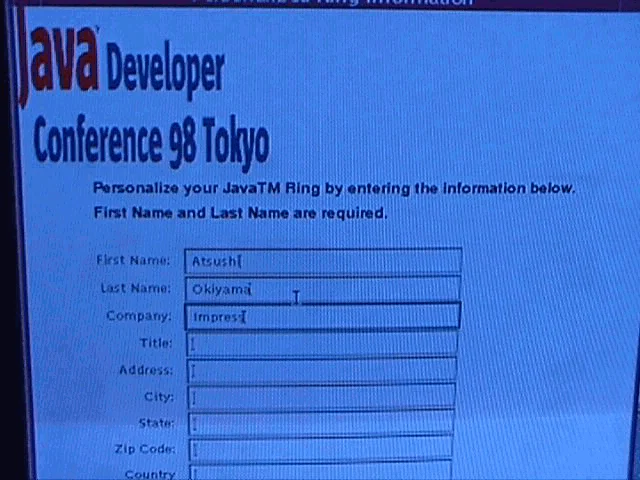
In the annals of technological history, certain artifacts stand as poignant reminders of past ambitions and future visions. Among them, the Java Ring, a peculiar piece of wearable technology from the late 1990s, embodies an era when Java was heralded as the undisputed future of programming. Conceived as a harbinger of smart wearable devices and ubiquitous authentication, this compact, stainless-steel ring briefly captured the imagination of developers before fading into obscurity.
Recently, the dedicated efforts of Japanese digital archaeologist Daisuke Yamazaki have brought this curious device back into the limelight. Yamazaki-san embarked on an intricate journey to revive a Java Ring, confronting decades of technological obsolescence, proprietary software challenges, and the physical degradation of its internal components. His success not only illuminates the ring’s original functionalities but also offers a compelling narrative on the fragility of digital heritage and the unexpected power of community engagement.
Main Facts: A Glimpse into a Forgotten Future
The Java Ring, originally distributed at Java developer conferences in the late 1990s, was Sun Microsystems’ ambitious demonstration of Java’s potential beyond traditional computing. Marketed as a revolutionary authentication key and a pioneer in smart wearables, it represented a vision where personal devices could seamlessly interact with digital environments.
Daisuke Yamazaki’s recent project saw him acquire one of these rare collector’s items with the express goal of restoring its functionality. The ring, an early iteration of an iButton device, was designed to act primarily as an authentication key. Its most memorable, albeit whimsical, application at developer conferences involved storing attendees’ coffee preferences, allowing them to retrieve their bespoke "java" from automated dispensers.
Yamazaki-san’s restoration was fraught with technical challenges, starting with establishing communication via the archaic 1-Wire bus protocol, for which he needed a specialized "Blue Dot adapter." The core hurdles included deciphering the ring’s proprietary Java-based firmware, navigating significant incompatibilities between the original 32-bit Java development environment and modern systems, and ultimately, diagnosing and repairing a critical hardware failure – an expired internal lithium backup battery that had rendered the device inert.
The breakthrough in this challenging endeavor came unexpectedly through national television exposure in Japan, which garnered widespread public interest and crucial technical assistance. This collaboration ultimately led to the successful replacement of the battery and a deeper understanding of the ring’s memory architecture, though the original personalized data proved irretrievable. Yamazaki-san’s project is a testament to the enduring fascination with retro technology and the collaborative spirit of the tech community.
A Journey Through Time: The Java Ring’s Genesis and Revival
The late 20th century was a period of intense innovation and bold predictions in the technology sector. The advent of the internet and the burgeoning digital age fueled a fervent belief that computing was on the cusp of a profound transformation, moving beyond desktop machines into every facet of daily life. At the forefront of this optimistic wave was Sun Microsystems, championing its groundbreaking programming language, Java.
The Dawn of Java’s Ambition (Late 1990s Context)
Java, launched in 1995, quickly gained immense traction due to its promise of "Write Once, Run Anywhere" (WORA). This slogan encapsulated the dream of cross-platform compatibility, suggesting that code written in Java could execute flawlessly on any device equipped with a Java Virtual Machine (JVM), regardless of the underlying hardware or operating system. This vision was particularly appealing in an era grappling with fragmented computing environments and the emerging need for distributed applications.
The excitement surrounding Java was palpable. Developers envisioned a world where Java-powered applications would run on everything from servers and desktop computers to consumer electronics, embedded systems, and even smart appliances. It was within this climate of boundless enthusiasm that the Java Ring emerged. It was not merely a trinket but a tangible, albeit rudimentary, manifestation of Sun’s ambition to position Java as the universal language for ubiquitous computing. The ring was designed to showcase Java’s potential for miniaturization and its application in personal, wearable devices – a concept that, while commonplace today, was revolutionary in 1998. It signaled a future where identity, access, and personalized information could be carried on one’s finger.
Concurrently, the iButton technology, developed by Dallas Semiconductor (later acquired by Maxim Integrated), was already establishing itself in various industrial and commercial applications. These robust, coin-shaped devices utilized a unique 1-Wire communication protocol, offering secure data storage and identification in harsh environments. They found uses in access control, asset management, data logging, and even electronic cash systems. The Java Ring essentially integrated a miniaturized Java-enabled microcontroller into an iButton form factor, attempting to marry the robustness of the iButton with the programmability and platform independence of Java.
Daisuke Yamazaki’s Digital Archaeology
Fast forward nearly three decades, and the Java Ring had become a rare curiosity, a collector’s item primarily appreciated for its historical significance rather than its functionality. It was this historical allure that captivated Daisuke Yamazaki, a modern-day digital archaeologist with a passion for vintage technology. Yamazaki-san, known for his meticulous restoration projects, acquired one of these rings, driven by a desire not just to possess a piece of history but to breathe life back into it.
His motivation transcended mere curiosity; it was a commitment to understanding the technological landscape of the past, to unraveling the engineering choices made, and to confronting the challenges of long-term digital preservation. The initial state of the artifact was unknown – would it still hold any data? Would its internal components have succumbed to time? The anticipation of discovering what digital echoes of 1998 might still reside within its sealed, stainless-steel casing fueled his endeavor.
The first practical step in Yamazaki-san’s revival project was to establish a communication channel with the ring. Given its iButton heritage, this necessitated acquiring a "Blue Dot adapter," a specialized device designed to interface with 1-Wire peripherals. This initial acquisition marked the beginning of a complex and fascinating journey into the technological past, setting the stage for the intricate restoration process that would follow.
Chronology of Restoration: Unraveling Decades of Digital Decay
The revival of the Java Ring was not a straightforward process; it was a testament to persistent problem-solving, meticulous research, and an unexpected reliance on historical digital archives. Each step presented unique challenges, reflecting the rapid evolution of technology and the inherent difficulties in maintaining backward compatibility over prolonged periods.
Establishing Communication: The 1-Wire Protocol
The Java Ring’s foundational technology is the 1-Wire bus, a clever and minimalist communication protocol developed by Dallas Semiconductor. Unlike more complex serial buses, 1-Wire requires only a single data line (plus ground) for both power delivery and bidirectional data transfer. This simplicity made it ideal for devices like iButtons, which often needed to operate with minimal power and a robust physical interface. The protocol works by modulating voltage levels on the single data line, allowing a "master" device (like a PC via an adapter) to communicate with multiple "slave" devices (like the Java Ring) connected to the same bus.
Yamazaki-san’s initial hurdle was to interface with this vintage protocol. The "Blue Dot adapter" served as the bridge, converting the 1-Wire signals into a format compatible with a modern computer’s serial port or USB. His first success was a crucial milestone: the Java Ring happily responded on the 1-Wire bus, confirming that its core communication hardware was still functional. This positive initial response, however, was merely the tip of the iceberg. The deeper challenge lay in deciphering how to interact with the original Java-based firmware embedded within the ring. The question remained: what data, if any, had survived the passage of time, particularly the coffee preferences supposedly programmed into it back in ’98? This required a dive into the software architecture of the era.
The Software Time Capsule: Recovering the Development Environment
To communicate effectively with and reprogram the Java Ring, Yamazaki-san needed the original development tools. This quest led him to the Internet Archive’s "Wayback Machine," an invaluable resource for digital historians. The Wayback Machine, which systematically archives websites, allowed him to recover an installer for the Dallas Semiconductor’s IB-DE IDE (iButton Development Environment). This discovery was a significant breakthrough, providing access to the very tools used by developers when the Java Ring was first introduced.
However, the recovery of the IDE presented its own set of formidable challenges, ironically highlighting the limitations of Java’s famed "Write Once, Run Anywhere" slogan. The IB-DE IDE was a 32-bit Java binary, specifically designed for Java Development Kit (JDK) versions prevalent in the late 90s (likely Java 1.0 or 1.1). Attempting to run this ancient software on a modern Java 25 runtime proved futile. The significant architectural shifts, API deprecations, and changes in security models over nearly three decades meant the legacy IDE simply "didn’t play nice."
This incompatibility forced Yamazaki-san into a software downgrade. He had to set up an environment compatible with 32-bit Java 1.8, a version that itself is now considered old, and even then, he had to contend with communication APIs that had since been removed or significantly altered. This experience vividly underscored the practical challenges of long-term software compatibility, demonstrating that while Java’s WORA promise holds true across different operating systems within a contemporary timeframe, it struggles dramatically across generational shifts in the language itself. The effort required to resurrect this specific software environment was a testament to the dedication needed for digital preservation.
Diagnosing the Heart of the Matter: The Expired Battery
With the IB-DE IDE successfully configured and running in its retro environment, Yamazaki-san could finally begin analyzing the traffic between the Java Ring and the PC-based software. This crucial step allowed him to observe the device’s internal state and identify any anomalies. The analysis quickly revealed persistent CRC (Cyclic Redundancy Check) errors. CRC errors are a strong indicator of data corruption during transmission or storage, often pointing to underlying hardware issues.
The consistent nature of these errors led to a critical diagnosis: the built-in lithium backup battery within the Java Ring had expired. In many embedded systems of that era, a small, non-rechargeable battery was used to maintain the contents of volatile RAM (Random Access Memory) when the device was not actively powered. This battery ensured that user data, configuration settings, or even parts of the operating system (if loaded into RAM) would persist. Without this power, the RAM would lose its contents, leading to data corruption and operational failure.
The design of the Java Ring, with its hermetically sealed stainless-steel case, posed a significant problem. It was engineered to be robust and tamper-proof, but this design also meant that internal components, particularly the battery, were not intended for user replacement. Once the battery died, the device was effectively designed to become e-waste. This design philosophy, common in many consumer electronics, presents a stark contrast to modern sustainability efforts and highlights a fundamental challenge in preserving such artifacts. For Yamazaki-san, this meant confronting a physical barrier that seemed insurmountable without potentially destroying the rare item.
Supporting Data and Technical Insights
To fully appreciate Daisuke Yamazaki’s achievement, it is essential to delve deeper into the technical specificities of the Java Ring and its broader technological context. Understanding its architecture and the ecosystem it belonged to provides valuable insights into both its ambitious vision and its eventual limitations.
Anatomy of the Java Ring
The Java Ring was built upon Dallas Semiconductor’s iButton technology, specifically incorporating a variant of their DS19xx series, likely a DS1991 MultiKey or a custom derivative. These devices were essentially miniature, ruggedized microcontrollers. The key features of the Java Ring included:
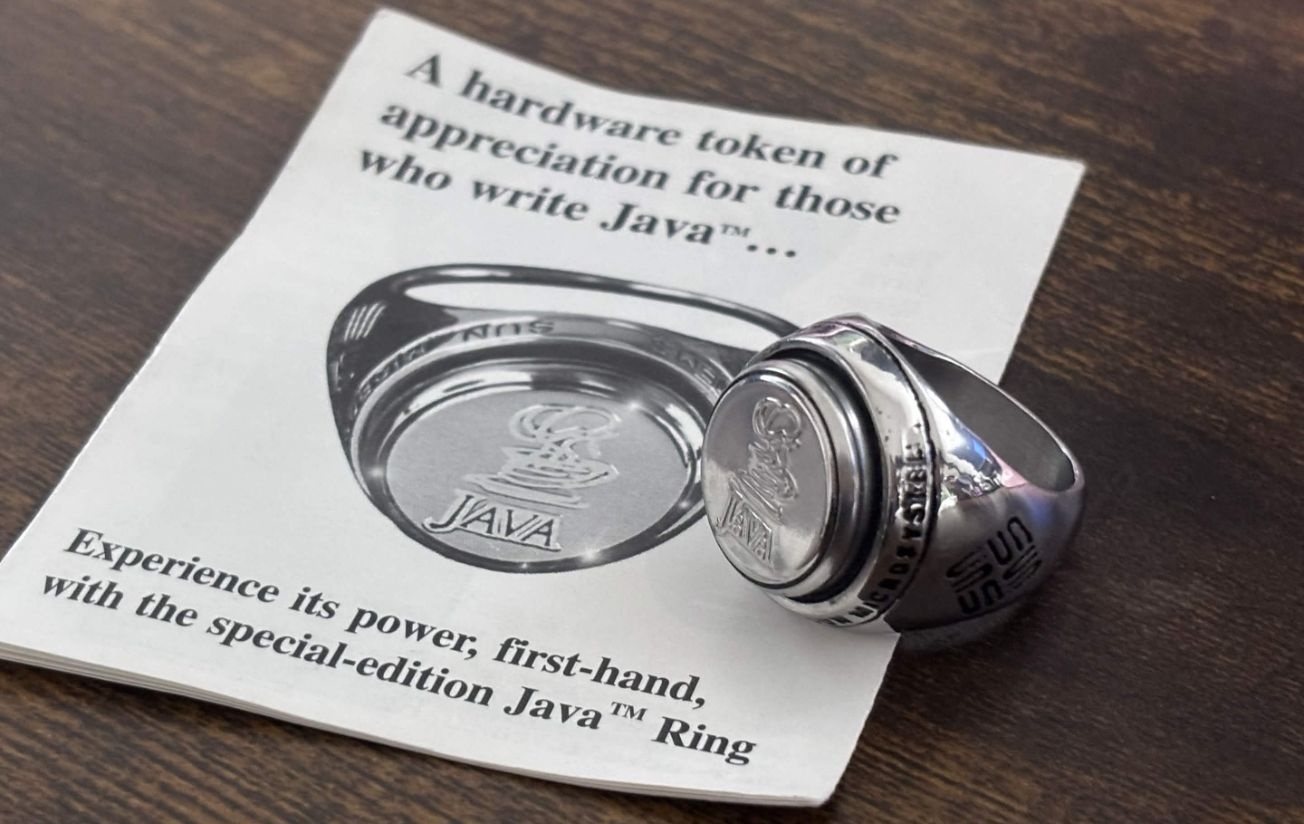
- Embedded Java Virtual Machine (JVM): This was the core innovation. Unlike typical iButtons that executed simple firmware, the Java Ring housed a full-fledged, albeit highly optimized and minimal, Java Virtual Machine. This allowed it to execute small Java applets directly on the device, embodying the "Write Once, Run Anywhere" promise at a hardware level.
- Processor: While specific CPU details are often proprietary and minimal for such embedded systems, it would have been a low-power, 8-bit or 16-bit microcontroller core, highly optimized for Java bytecode execution.
- Memory Architecture: The ring featured a distinct memory layout:
- ROM (Read-Only Memory): Contained the immutable core components, including the Java Virtual Machine (JVM) itself and bootloader code. This memory was non-volatile and unaffected by power loss.
- Battery-backed RAM (Random Access Memory): This volatile memory was crucial for storing user-specific data (like coffee preferences) and any dynamically loaded Java applets or configurations. The internal lithium battery was specifically tasked with preserving the contents of this RAM when the ring was not connected to a reader, providing a semblance of non-volatility for mutable data.
- 1-Wire Interface: As previously discussed, this single-wire interface handled both power and data, simplifying connectivity but limiting data transfer speeds.
- Stainless Steel Encapsulation: This rugged casing made the device incredibly durable and resistant to environmental factors, but also rendered it practically unserviceable.
The Java Ring was truly unique for its time, attempting to bring the power and flexibility of a high-level language like Java to a form factor traditionally reserved for simple data storage or identification. It was an ambitious blend of hardware ruggedness and software sophistication, aiming to create a programmable, secure, and ubiquitous personal authenticator.
The iButton Ecosystem and its Legacy
The iButton technology, from which the Java Ring originated, was a significant innovation in its own right. Its "button-like" form factor, robust stainless-steel casing, and unique 1-Wire communication protocol made it suitable for a wide array of applications where conventional contact-based smart cards or RFID tags were impractical.
Strengths of iButton:
- Ruggedness: Extremely durable, resistant to dirt, moisture, and shock, making them ideal for harsh industrial environments.
- Simplicity: The 1-Wire protocol required minimal wiring and simple interfaces, reducing implementation complexity.
- Unique ID: Each iButton had a factory-lasered, globally unique 64-bit ID, providing a secure basis for identification and authentication.
- Low Power: Designed for minimal power consumption, often drawing parasitic power from the data line.
Applications of iButton:
- Access Control: Used as electronic keys for doors, vehicles, and equipment.
- Asset Tracking: Attaching iButtons to physical assets for identification and inventory management.
- Data Logging: Storing temperature, humidity, or other environmental data for later retrieval.
- Point-of-Sale (POS) Systems: For employee login or customer loyalty programs.
While revolutionary for its time, the iButton technology eventually faced limitations, particularly in data transfer speed and the need for physical contact. The rise of contactless technologies, most notably Near Field Communication (NFC), gradually rendered iButtons largely obsolete in mainstream applications. NFC offered higher data rates, greater convenience (no physical contact required), and broader interoperability standards, making it the preferred choice for modern authentication and data exchange in wearables and mobile devices. However, the iButton’s legacy as a pioneer in robust, compact, and secure identification devices remains undeniable.
The "Write Once, Run Anywhere" Paradox Revisited
Java’s iconic "Write Once, Run Anywhere" (WORA) slogan was a powerful marketing tool and a genuine technological aspiration. It promised developers freedom from the complexities of porting code across different operating systems and hardware platforms, thanks to the Java Virtual Machine. Yamazaki-san’s experience with the Java Ring, however, exposed the practical limitations of this promise, especially when confronted with the vast chasm of time and significant generational shifts in software.
The difficulty in running a 32-bit Java 1.0/1.1 IDE on a modern Java 25 runtime is a stark reminder that WORA often implies "Write Once, Run Anywhere within a reasonable timeframe and compatible ecosystem." Over decades, fundamental changes occur in language specifications, core libraries, security models, and underlying operating system APIs. While modern Java versions often strive for backward compatibility, completely seamless execution of code from the very early days of Java is often an exception rather than the rule, especially for applications with low-level hardware interactions or reliance on deprecated libraries.
This paradox highlights several critical issues in software engineering:
- Version Drift: The continuous evolution of programming languages and platforms inevitably leads to "version drift," where older code struggles to operate in newer environments without modification or dedicated compatibility layers.
- API Rot: Application Programming Interfaces (APIs) are frequently updated, deprecated, or entirely removed as technologies mature. Software reliant on these older APIs will break when run on newer systems.
- Runtime Environment Dependencies: The specific JVM implementation and its underlying system libraries play a crucial role. A 32-bit application requiring a 32-bit JVM will not run on a 64-bit-only system without emulation or a dedicated 32-bit runtime.
- Long-Term Preservation Challenges: Yamazaki’s ordeal underscores the immense challenge of digital preservation. Simply having the source code or even the compiled binary is often insufficient; one also needs the precise runtime environment, operating system, and even specific hardware configurations that existed at the time of its creation.
The Java Ring’s story thus becomes a powerful case study, demonstrating that while WORA was a revolutionary concept, the reality of maintaining software functionality across multi-decade technological shifts remains a complex and often labor-intensive endeavor.
Official Responses and Broader Implications
The journey to revive the Java Ring was not a solitary one for Daisuke Yamazaki. His dedication to technological archaeology captured public attention, particularly within Japan, leading to a crucial intervention that ultimately salvaged the project.
The Role of Public Interest and Media Exposure
The turning point for Yamazaki-san’s Java Ring restoration came when a Japanese television program picked up on his efforts. While the exact nature of the program (e.g., a technology documentary, a hobbyist showcase, or a historical segment) is not detailed, its impact was profound. Featuring his meticulous work on national television brought widespread awareness to the project and, more importantly, mobilized a community of enthusiasts, engineers, and experts.
This media exposure served several critical functions:
- Visibility: It elevated Yamazaki-san’s personal project to a public interest story, garnering attention far beyond the niche circles of retro-tech enthusiasts.
- Community Engagement: It tapped into the collective knowledge and resources of the broader tech community. Specialists with expertise in micro-electronics, battery replacement, or specific vintage hardware might not have otherwise known about the project.
- Problem-Solving: The public appeal led to offers of assistance. The sealed stainless-steel casing and the delicate nature of the internal components made battery replacement a formidable task, requiring specialized tools and skills beyond what a single individual might possess. The collaborative spirit fostered by the TV program enabled him to overcome this seemingly insurmountable physical barrier.
This unexpected turn of events led to a "happy ending," as Yamazaki-san himself described it. With the help of others, the defunct lithium backup battery was successfully replaced without damaging the precious artifact. This crucial intervention not only saved the Java Ring from permanent e-waste status but also allowed for the final stages of his investigation.
Data Preservation and Digital Heritage
The successful battery replacement allowed Yamazaki-san to answer a critical question: which parts of the Java Ring’s firmware and data resided in the volatile, battery-backed RAM, and which were stored in the immutable ROM? The findings, while not fully detailed, revealed a bittersweet outcome: the original user data, specifically the personalized coffee preferences from 1998, were lost forever with the demise of the backup battery. This confirmed that the battery-backed RAM was indeed where this volatile, user-specific information was stored.
However, the ROM (Read-Only Memory), which housed the Java Virtual Machine itself, remained intact and functional. This meant that while the historical data was gone, the core programmable essence of the Java Ring – its ability to run Java applets – was preserved. The ring could now be reprogrammed with new applications, and these programs would be retained across reader sessions, thanks to the now-functional battery.
This outcome has profound implications for digital preservation and the concept of digital heritage:
- Fragility of Data: It highlights the extreme fragility of digital data, especially when tied to specific hardware components like backup batteries. Much of our early digital history, from personal files to historical records, is vulnerable to hardware decay and format obsolescence.
- Importance of Restoration Projects: Projects like Yamazaki’s are vital acts of digital archaeology. They not only salvage physical artifacts but also extract invaluable lessons about past technological paradigms, engineering choices, and the challenges of long-term data survival.
- The "Living" vs. "Static" Artifact: The Java Ring became a "living" artifact again. While its original ephemeral data was lost, its fundamental functionality as a programmable device was restored, allowing future experimentation and study. This distinguishes it from merely being a static museum piece.
From Java Ring to Smartphone: The Evolution of Wearable Authentication
The Java Ring was a visionary product for its time, attempting to condense authentication and personalized information into a discreet, wearable form factor. Its intended purpose, however, has been profoundly re-imagined and realized by subsequent technological advancements, particularly NFC and the ubiquitous smartphone.
NFC (Near Field Communication) standards, which gained widespread adoption in the 2010s, provided a contactless, secure, and fast method for short-range communication. This technology, now embedded in virtually all modern smartphones and an increasing number of smartwatches, effectively rendered bulkier, contact-based devices like iButtons largely obsolete for consumer applications. NFC offers superior convenience, higher data transfer rates, and the ability to integrate seamlessly with a vast ecosystem of payment terminals, access control systems, and smart devices.
The most striking comparison, as the original article wryly notes, is the evolution from the Java Ring to the modern smartphone. The Java Ring aimed to be a tiny, dedicated computer for authentication. Today, we carry an "entire 6-inch smartphone" for that very purpose, and much more. This evolution reveals a cyclical pattern in technology:
- Miniaturization and Specialization: Early attempts like the Java Ring focused on miniaturizing specific functions.
- Consolidation and Versatility: Over time, these specialized functions are absorbed into multi-purpose devices. The smartphone, far from being just a communication tool, has become our primary authentication device (via NFC, biometrics, QR codes), our digital wallet, our personal assistant, and our window to the world.
The irony is not lost: what was once considered a "bulky" ring for a single purpose has been replaced by a device orders of magnitude more complex and powerful, which we now carry as a matter of course. This journey from the Java Ring to the smartphone illustrates the relentless pace of technological convergence and the constant redefinition of what constitutes "wearable" and "convenient" technology.
Conclusion: A Glimpse into Computing’s Past and Future
Daisuke Yamazaki’s remarkable project to revive the Java Ring is far more than a simple restoration; it is a profound act of digital archaeology that offers invaluable insights into the history of computing. It reminds us of a time when Java was poised to dominate the world, and wearable technology was still a nascent dream.
The challenges Yamazaki-san faced—from navigating obsolete communication protocols and incompatible software environments to overcoming physical design limitations—underscore the immense effort required to preserve our digital heritage. His success, fueled by personal dedication and amplified by community support through media exposure, highlights the collaborative spirit essential for such endeavors.
The Java Ring, with its blend of ambitious vision and inherent limitations, serves as a poignant artifact. It stands as a testament to the rapid evolution of technology, the enduring paradoxes of software compatibility, and the cyclical nature of innovation. While its original purpose has been superseded by technologies like NFC and the ubiquitous smartphone, its story, meticulously unearthed by Yamazaki-san, continues to inform our understanding of where we’ve come from and where we might be heading in the ever-evolving landscape of personal computing.