The Resurgence of a Classic: BASIC-256 Embraces Modern Platforms with QT6 and WebAssembly
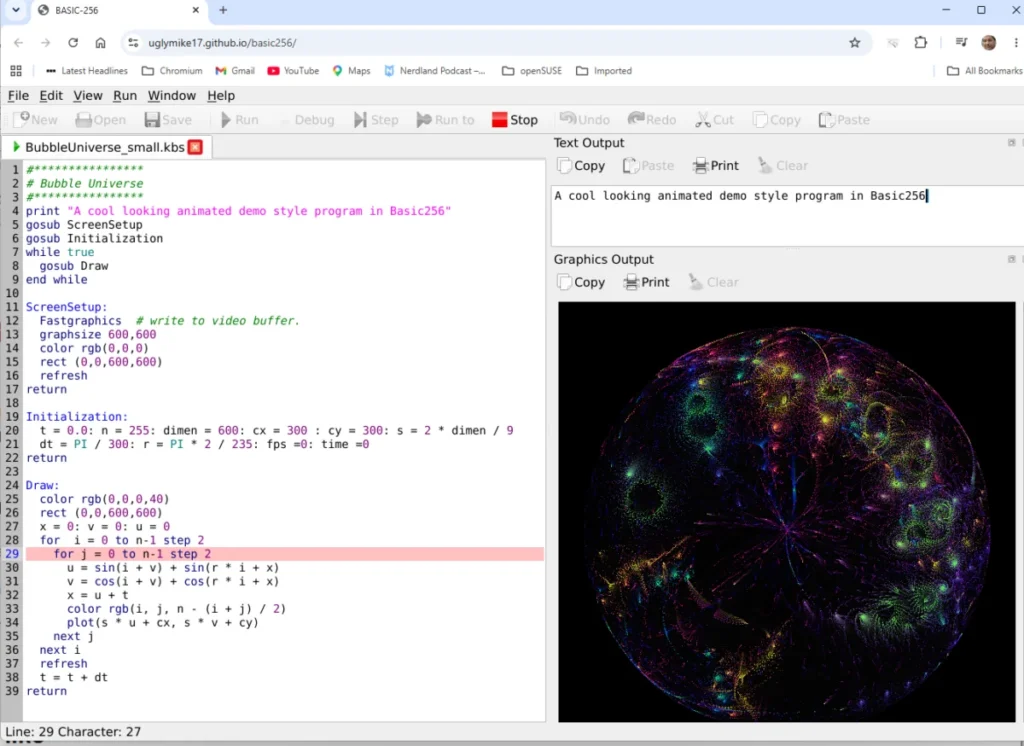
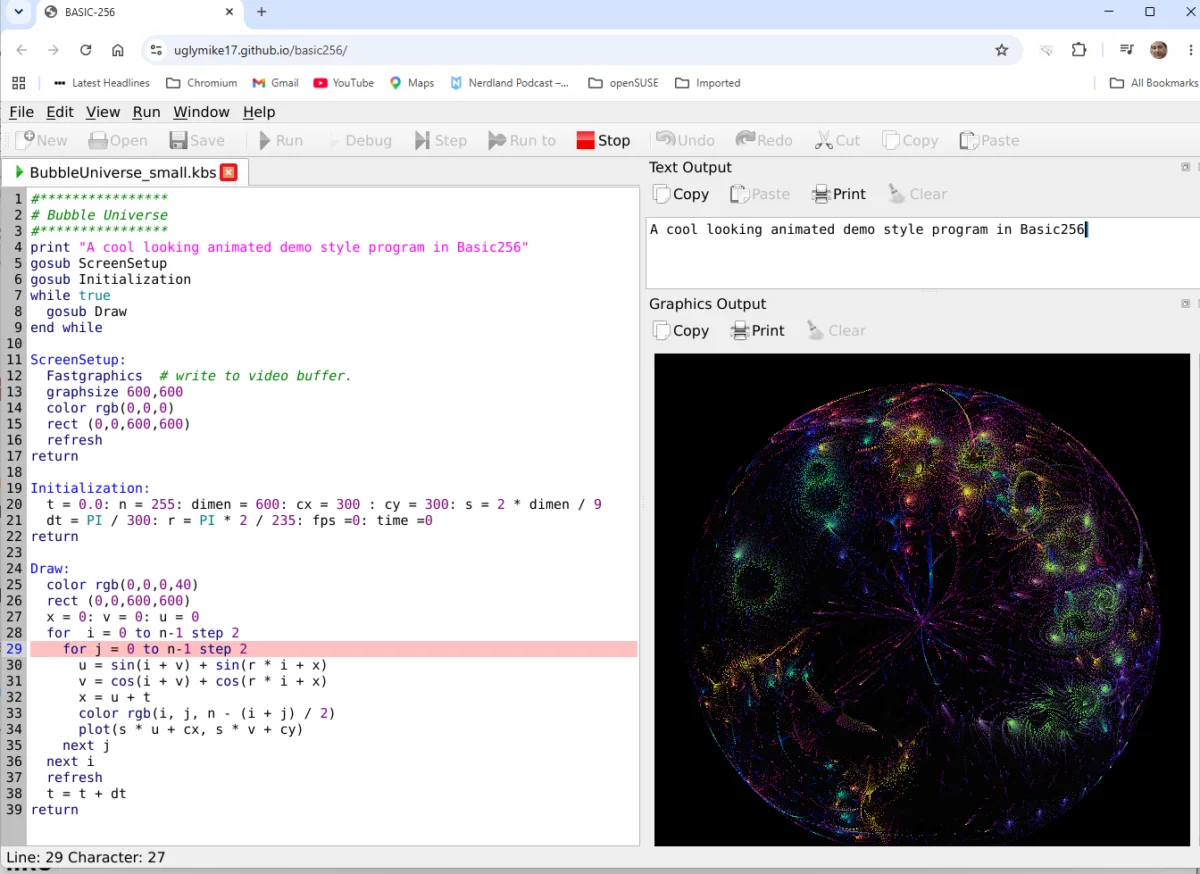
In a significant development poised to impact both programming education and the vibrant retrocomputing community, BASIC-256, a contemporary iteration of the iconic Beginners’ All-purpose Symbolic Instruction Code, has received a transformative update. Under the diligent stewardship of independent developer [UglyMike], the language environment has been meticulously ported to the robust and versatile QT6 framework. This strategic migration not only guarantees expansive multi-platform compatibility across a spectrum of modern operating systems but also heralds the exciting introduction of a WebAssembly (Wasm) version, empowering users to execute BASIC code directly within their web browsers. This innovation effectively democratizes access to a programming language that once served as the foundational gateway to computing for millions, offering a potent blend of nostalgia for seasoned programmers and an exceptionally accessible learning tool for a new generation.
The announcement has resonated particularly within circles advocating for simpler, more direct approaches to programming instruction. While contemporary curricula often prioritize languages like Python for their versatility and widespread industrial application, a compelling argument persists for the pedagogical value of BASIC. Its straightforward syntax, immediate feedback loops, and direct interaction with graphical output make it an ideal starting point for novices, fostering an intuitive understanding of computational logic without the daunting overhead often associated with more complex languages. BASIC-256, building upon the legacy of KidBASIC, aims to bridge this gap, offering a modern, feature-rich environment that retains the simplicity and directness that made its predecessors so beloved.
A New Era for Educational Programming
For decades, the choice for aspiring programmers was often binary: you either embraced BASIC wholeheartedly or found yourself grappling with its perceived limitations. Yet, nearly everyone with a formative interest in computing in the late 20th century could trace their initial steps back to its inviting PRINT "HELLO WORLD" command. Today, while Python has ascended as the de facto educational language, the case for BASIC’s continued relevance, whether for foundational instruction or purely for the joy of nostalgic exploration, remains strong. BASIC-256 is designed precisely to fill this niche, providing a user-friendly integrated development environment (IDE) that simplifies the coding process and makes graphical output intuitively accessible.
The core philosophy behind BASIC-256 and its progenitor, KidBASIC, has always been centered on accessibility and engagement. Recognizing that visual feedback is a powerful motivator for young learners, the environment integrates a suite of "handy-dandy graphics routines." These allow users to effortlessly draw shapes, manipulate colors, and animate objects with just a few lines of code, providing instant gratification and a tangible representation of their programming efforts. Such features are crucial in maintaining interest and illustrating fundamental concepts like loops, variables, and conditional statements in a visually compelling manner.
Core Features of BASIC-256: Blending Simplicity with Modernity
Beyond its pedagogical focus, BASIC-256 boasts several quality-of-life improvements that elevate it above its historical counterparts. The inclusion of 64-bit variables, for instance, addresses a common limitation of older BASIC implementations, allowing for handling larger numbers and more complex data structures without encountering overflow errors. This seemingly minor enhancement brings BASIC-256 into alignment with modern computing paradigms, ensuring that learners aren’t immediately confronted with archaic data type restrictions.
Furthermore, the documentation, readily available online, details a range of other features designed to enhance the coding experience. These include structured programming constructs, improved error handling, and a more robust editor, all contributing to a development environment that feels both familiar to seasoned BASIC users and intuitive to complete newcomers. The ultimate goal is to provide a comprehensive, yet unburdened, platform where the focus remains squarely on learning fundamental programming principles and having fun, rather than wrestling with complex syntactical nuances or environmental configurations. The new QT6 port amplifies these benefits by ensuring that this accessible environment is now available to an even broader audience, regardless of their preferred operating system or even if they only have a web browser at their disposal.
A Journey Through Time: The Evolution of BASIC and Its Modern Revival
To fully appreciate the significance of BASIC-256’s modern port, one must delve into the rich history of the BASIC language itself – a narrative that mirrors the evolution of personal computing and the democratization of digital literacy. From its academic inception to its ubiquitous presence in early home computers, BASIC’s journey is one of profound impact and enduring legacy.
The Genesis of BASIC: Democratizing Computing
BASIC was conceived in 1964 by John G. Kemeny and Thomas E. Kurtz at Dartmouth College. Their vision was revolutionary: to create a programming language simple enough for non-science students to learn and use, thereby making computing accessible to a wider academic audience. Prior to BASIC, programming was largely the domain of specialists, requiring intricate knowledge of assembly languages or complex compilers. Kemeny and Kurtz sought to demystify this process, providing a "Beginners’ All-purpose Symbolic Instruction Code" that could be learned in a matter of hours. Its interactive nature, often implemented via time-sharing systems, provided immediate feedback, fostering a rapid learning curve. This foundational design principle – simplicity and immediate results – would become BASIC’s enduring strength.
The Golden Age and Subsequent Decline
The true explosion of BASIC’s popularity coincided with the microcomputer revolution of the late 1970s and early 1980s. Computers like the Apple II, Commodore 64, TRS-80, and ZX Spectrum came bundled with BASIC interpreters, often residing directly in ROM. For millions, switching on their new home computer meant being greeted by a "READY." prompt, inviting them to type their first program. Microsoft’s various BASIC implementations, particularly for the 6502 and Z80 processors, became industry standards, cementing Bill Gates and Paul Allen’s place in computing history. This era saw a proliferation of BASIC programming, from simple games to utility applications, often shared via printed listings in magazines. It was a period of grassroots innovation, where the barrier to entry for software development was virtually non-existent.
However, as computing evolved, so did the demands on programming languages. BASIC, with its often unstructured nature (typified by GOTO statements), began to be seen as limiting for larger, more complex projects. More powerful, structured languages like Pascal and C emerged, offering better organization, efficiency, and robustness. By the late 1980s and early 1990s, while Microsoft Visual Basic enjoyed significant commercial success for GUI application development on Windows, traditional command-line BASIC waned in prominence as an educational tool, supplanted by languages deemed more "professional" or academically rigorous.
The Rise of Python and the Niche for BASIC
The turn of the millennium saw a significant shift in educational programming, with Python emerging as a dominant force. Python’s readability, extensive libraries, and applicability across various domains (web development, data science, AI) made it an attractive choice for both beginners and experienced developers. Its gentle learning curve, combined with its industrial relevance, cemented its position as a preferred "first language" in many institutions.
Despite Python’s undeniable strengths, a niche for BASIC has persisted. For certain educational contexts, particularly those focusing on very young learners or those seeking a stripped-down, immediate programming experience, BASIC’s unparalleled simplicity remains a powerful asset. It offers a direct path from thought to executable code, minimizing cognitive load and allowing learners to grasp core concepts without getting bogged down in object-oriented paradigms or complex module imports. The retrocomputing movement also fuels this interest, with enthusiasts seeking to recreate the programming experiences of their youth or explore the foundational languages that shaped early software.
The Development Trajectory of KidBASIC and BASIC-256
BASIC-256 traces its lineage back to KidBASIC, a project specifically designed for the educational market. KidBASIC distinguished itself by focusing on a user-friendly environment and built-in graphics capabilities, making it particularly appealing for children and novice programmers. It aimed to capture the essence of early BASIC interpreters while modernizing the interface and underlying capabilities. Over time, KidBASIC evolved into BASIC-256, continuing its mission to provide an accessible and engaging programming platform. The "256" in its name often refers to its graphical capabilities, echoing the early days of computers with limited screen resolutions and color palettes, while also implying a focus on simplicity and directness.
The Strategic Move to QT6 and WebAssembly
The decision to port BASIC-256 to QT6 represents a significant strategic leap. Previous versions, while functional, might have faced challenges in maintaining broad compatibility across rapidly evolving operating systems and hardware architectures. QT, a powerful cross-platform application development framework, provides a robust foundation for building native applications that run seamlessly on Windows, macOS, Linux, and embedded systems. This move ensures the long-term viability and accessibility of BASIC-256.
Furthermore, the creation of a WebAssembly version is a game-changer. WebAssembly, often abbreviated as Wasm, is a binary instruction format for a stack-based virtual machine. It’s designed as a portable compilation target for high-level languages like C, C++, and Rust, enabling deployment on the web for client and server applications. For BASIC-256, this means that the entire development environment, including the interpreter and graphics capabilities, can now run directly within a standard web browser. This eliminates the need for installation, lowers the barrier to entry even further, and opens up new possibilities for online learning platforms and interactive tutorials. It’s a powerful testament to how modern web technologies can breathe new life into classic programming paradigms.
Unpacking the Technology: QT6, WebAssembly, and Multi-Platform Reach
The technical underpinnings of this new BASIC-256 port are crucial to understanding its implications. The choice of QT6 and the implementation of WebAssembly are not arbitrary; they represent a deliberate strategy to maximize accessibility, performance, and future-proofing.
QT6: The Backbone of Cross-Platform Development
QT6 is the latest major iteration of the Qt framework, a comprehensive C++ toolkit for developing graphical user interfaces and cross-platform applications. Its strengths lie in its ability to abstract away operating system specifics, allowing developers to write code once and deploy it natively across multiple platforms with minimal modifications. This is particularly vital for a project like BASIC-256, which aims for widespread educational adoption.
Key advantages of using QT6 include:
- True Cross-Platform Capability: Applications built with QT can run on Windows, macOS, Linux, Android, iOS, and embedded systems, all from a single codebase. This significantly reduces development and maintenance overhead.
- Modern UI Toolkit: QT provides a rich set of widgets and tools for creating contemporary, visually appealing user interfaces, ensuring that BASIC-256 doesn’t feel antiquated despite its historical roots.
- Performance: Being a C++ framework, QT-based applications are compiled to native code, offering excellent performance and responsiveness, which is critical for interactive programming environments.
- Robustness and Scalability: QT is used by major companies and projects worldwide, attesting to its stability and ability to handle complex applications.
By porting to QT6, [UglyMike] has ensured that BASIC-256 can leverage the latest advancements in desktop application development, providing a stable, performant, and visually consistent experience across diverse computing environments.
WebAssembly: Bringing Native Performance to the Browser
WebAssembly (Wasm) is arguably the most exciting technical aspect of this new port. It represents a fundamental shift in web development, allowing high-performance applications to run directly in the browser at near-native speeds. Unlike JavaScript, which is interpreted, Wasm is a low-level binary format that web browsers can execute very efficiently.
For BASIC-256, the WebAssembly version offers several transformative benefits:
- Instant Access: No installation required. Users can simply navigate to a URL and start coding BASIC immediately. This drastically lowers the barrier to entry for learners.
- Cross-Browser Compatibility: Wasm is supported by all major web browsers (Chrome, Firefox, Safari, Edge), ensuring broad accessibility.
- Performance: Running the BASIC-256 interpreter as WebAssembly means that code execution and graphical rendering can be significantly faster than purely JavaScript-based solutions, providing a more fluid user experience.
- Security: WebAssembly runs within a secure sandbox environment provided by the browser, isolating it from the user’s system and preventing malicious code execution.
However, this browser-based execution comes with inherent limitations. The web version "naturally can’t get access to hardware for, e.g., serial ports." This is a deliberate security measure of the browser sandbox, preventing web applications from directly interacting with a user’s local hardware. While this means the WebAssembly version is "somewhat more limited than a full install" for tasks requiring direct hardware control (like interfacing with microcontrollers or specialized peripherals), its advantages for pure educational and nostalgic coding far outweigh this constraint for most users.
Comprehensive Platform Support and Unique Considerations
The new port delivers impressive multi-platform support:
- Windows and Linux (x86): Standard builds are available, catering to the vast majority of desktop users.
- MacOS (Apple Silicon): A dedicated build for Apple’s M1/M2/M3 chips is provided. This is a crucial update, as Apple’s transition away from Intel x86 processors means that many legacy applications struggle without native ARM support. The developer notes this is "less of an issue than it used to be," indicating the increasing ubiquity of Apple Silicon devices.
- Raspberry Pi (ARM): A second ARM build specifically targets the popular Raspberry Pi platform. This is particularly significant for education, as Raspberry Pis are widely used in schools and hobbyist projects to teach computing fundamentals and physical computing.
- WebAssembly: As discussed, this offers unparalleled accessibility via web browsers.
The project’s open-source nature further expands its potential reach. "If you really want to run this on an UltraSPARC system, you are welcome to compile it there," the original article humorously suggests. This highlights the freedom and flexibility inherent in open-source software, where dedicated users or communities can adapt the codebase to virtually any platform they desire, provided they have the technical expertise.
The Open-Source Ethos: Community-Driven Development
BASIC-256 is an open-source project, a philosophy that underpins much of modern software development. This means its source code is freely available for anyone to inspect, modify, and distribute. This model fosters transparency, encourages community contributions, and ensures the long-term viability of the software, as its evolution is not solely dependent on a single developer or commercial entity. The project’s current status as a beta version, with the developer "actively looking for problems," perfectly embodies this open-source ethos, inviting community participation in identifying bugs and suggesting improvements.
The Educational Advantage: Why BASIC Still Matters
In an era dominated by complex frameworks and abstract programming paradigms, BASIC-256 serves as a refreshing counterpoint. Its simplicity allows learners to grasp core programming concepts without being overwhelmed by advanced syntax or object-oriented structures. The immediate visual feedback from its graphics routines makes abstract ideas concrete, transforming lines of code into engaging animations or interactive programs. For educators, it offers a powerful tool to introduce computational thinking, problem-solving, and algorithmic design in a highly accessible and motivating environment. For individual learners, it provides a low-stress entry point into the world of coding, building confidence and a foundational understanding that can later be applied to more advanced languages.
Developer Insights and Community Engagement
The successful porting of BASIC-256 to QT6 and WebAssembly is a testament to the dedication of individual developers within the open-source community. While no extensive "official responses" in the corporate sense are available, the actions and stated goals of the developer, [UglyMike], provide valuable insight, alongside the broader context of community involvement.
The Vision Behind UglyMike’s Port
[UglyMike]’s initiative to port BASIC-256 to QT6 was likely driven by a desire to modernize and future-proof the project. Maintaining software compatibility across diverse and evolving operating systems is a constant challenge, and a robust framework like QT offers a sustainable solution. The specific decision to target QT6 indicates an ambition to leverage the latest advancements in the framework, ensuring performance and stability. The subsequent development of a WebAssembly version further demonstrates a forward-thinking approach, recognizing the growing importance of browser-based applications for accessibility and ease of deployment. While not explicitly stated, the motivation likely encompasses a passion for preserving BASIC’s legacy, making it available to new generations, and contributing to the open-source ecosystem. The tip provided by [UglyMike] himself suggests a keen interest in sharing this work with a broader audience and soliciting feedback.
A Call to Action: Beta Testing and Feedback
Crucially, the current release of BASIC-256 is designated as a beta version. This signifies that while the core functionality is in place, the developer anticipates potential issues and is actively seeking community assistance in identifying and resolving them. "The dev is actively looking for problems – so give it a go and let them know," is a direct appeal to the user base. This collaborative approach is a cornerstone of successful open-source projects. Beta testing allows a wider range of hardware configurations, operating systems, and user scenarios to be tested, uncovering bugs that might be missed by a single developer. For users, participating in beta testing offers an opportunity to directly shape the future of the software and contribute to a project they value. This feedback loop is essential for refining the software, improving its stability, and adding features that genuinely benefit the user community.
Echoes of the Past: Microsoft BASIC’s Open-Source Legacy
The article briefly mentions that "this isn’t the only open source BASIC out there – even Microsoft released their source code, at least for the 6502." This historical note is significant. Microsoft’s decision to open-source its 6502 BASIC interpreter, the very code that powered countless Apple II, Commodore PET, and other early microcomputers, underscores the enduring cultural and historical importance of BASIC. It acknowledges its foundational role in personal computing and allows enthusiasts, historians, and developers to study, preserve, and even adapt this pivotal piece of software history. This move by a major corporation like Microsoft legitimizes the ongoing efforts of independent developers like [UglyMike] who are working to keep BASIC relevant and accessible. It demonstrates that even the most commercially successful software can eventually contribute to the open-source commons, enriching the entire programming community.
Broader Implications: Education, Preservation, and the Future of Accessible Programming
The modernization of BASIC-256 carries implications that extend far beyond the immediate utility of a new programming environment. It touches upon the philosophy of education, the preservation of digital heritage, and the evolving landscape of web-based applications, all contributing to a future where programming might be more accessible than ever before.
Reinvigorating STEM Education
In an increasingly technology-driven world, fostering computational literacy from an early age is paramount. While advanced languages have their place, the initial hurdle of learning to code can be intimidating. BASIC-256, with its renewed accessibility and user-friendly features, offers a compelling solution for reinvigorating STEM education. By providing a low-friction entry point, it can ignite curiosity and build foundational skills that are transferable to any programming language. Children and adults alike can experience the immediate gratification of creating something functional and visual, building confidence and a genuine interest in computing. The ability to run it directly in a browser simplifies classroom deployment immensely, removing the need for complex software installations on individual machines, thus allowing educators to focus on teaching rather than technical support.
Preserving Digital Heritage and Fostering Nostalgia
For the retrocomputing community, the BASIC-256 port is a significant win. It provides a modern, stable platform for reliving the programming experiences of the past, or for exploring a foundational language that many missed. The nostalgia associated with BASIC is powerful, representing a simpler era of computing where the user was often just a PRINT statement away from making the machine do their bidding. This project contributes to the broader effort of digital preservation, ensuring that the essence of early computing languages remains alive and usable for future generations of historians, enthusiasts, and developers. It’s a bridge between the digital past and the present, allowing classic paradigms to flourish in modern environments.
The Expanding Horizon of Web-Based Applications
The WebAssembly version of BASIC-256 is a powerful demonstration of Wasm’s potential. It signifies a growing trend where complex, high-performance applications traditionally confined to desktop installations are now making their way to the web browser. This has profound implications for software distribution, accessibility, and the very nature of computing. Imagine online coding bootcamps where an entire development environment is available instantly, or interactive coding tutorials seamlessly integrated into web pages. WebAssembly is transforming the browser into a universal runtime for almost any application, blurring the lines between desktop and web experiences. BASIC-256 is an excellent example of how this technology can be leveraged to deliver rich, interactive experiences without the traditional hurdles of software installation.
The Enduring Appeal of Simplicity in a Complex World
Finally, the success and continued development of projects like BASIC-256 speak to the enduring appeal of simplicity. In a world saturated with ever-increasing complexity, there is a profound human desire for clarity and directness. BASIC, in its purest form, embodies this. It strips away layers of abstraction, allowing the user to directly interact with the machine’s logic. This simplicity is not a weakness but a strength, particularly for learning and for creative exploration where the goal is immediate results rather than enterprise-grade scalability. The new, modernized BASIC-256, accessible across virtually all platforms, serves as a powerful reminder that sometimes, the most effective tools are those that remain true to their foundational, user-friendly principles. It’s a testament to the idea that a good starting point can remain relevant, even as the technological landscape continuously evolves.