The VMware Exodus Tightens: Broadcom’s Quiet Removal of VDDK Downloads Sparks Industry Alarm
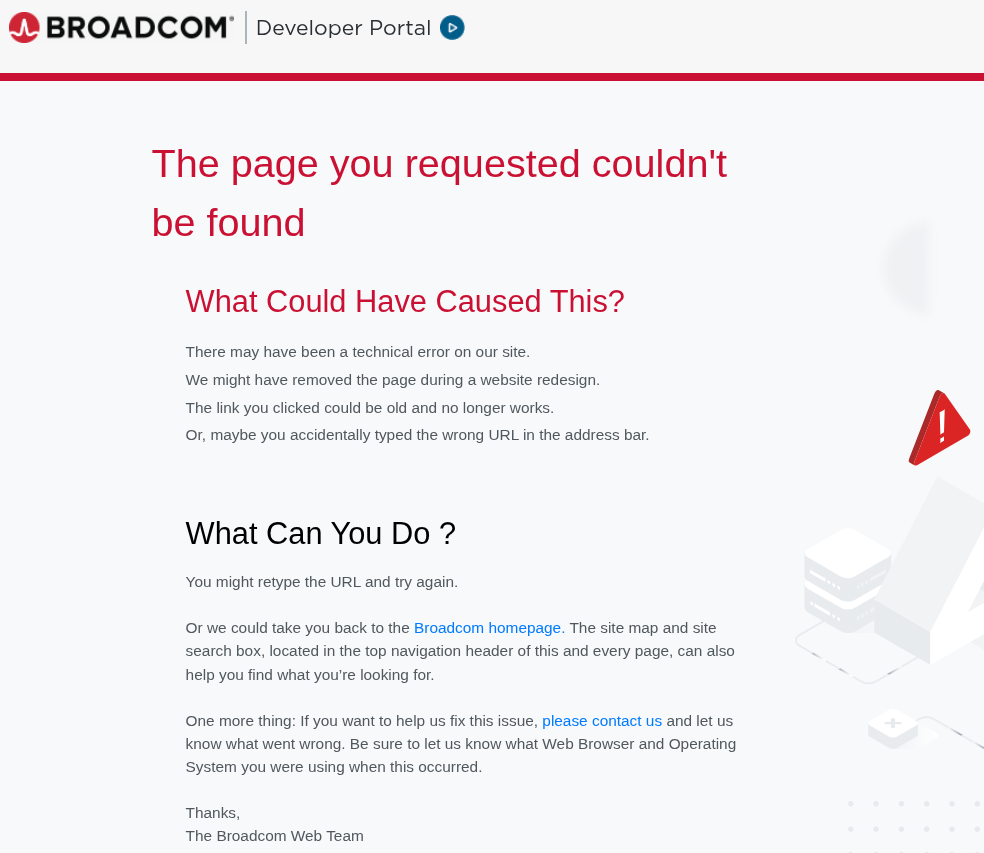
In a move that has sent ripples of concern through the enterprise IT sector, Broadcom has effectively shuttered public access to the VMware Virtual Disk Development Kit (VDDK). Without a formal press release or prior notification to the developer community, the company quietly took down the download pages for VDDK versions 8 and 9 last month. The landing page, once a vital resource for system administrators and backup vendors, now returns a generic error message, signaling a significant shift in Broadcom’s strategy regarding the third-party ecosystem surrounding its flagship virtualization platform.
For over a decade, the VDDK has served as the bedrock of the VMware-centric IT landscape, enabling essential backup, recovery, and migration services. By restricting access to these tools, Broadcom has not only complicated the workflows of countless sysadmins but has also erected a formidable barrier for organizations attempting to transition away from the VMware ecosystem.
A Chronology of the Disappearance
The removal of the VDDK download links was not an overnight event, but rather a slow-moving realization for the industry. Reports of broken links began surfacing in mid-August 2024, primarily on community-driven platforms such as Reddit’s r/sysadmin and various vendor-specific forums.
By August 25, the impact became formalized when ShapeBlue, a consultancy firm specializing in Apache CloudStack, publicly documented the change. This was followed shortly thereafter by Red Hat, which updated its official support documentation regarding its "Migration Toolkit for Virtualization." The support note acknowledged the "not found" or "access denied" errors, confirming that the resources were no longer available through public channels.
Despite these growing reports, Broadcom has maintained a policy of radio silence, failing to issue an official statement to explain the rationale behind the removal or to provide an alternative path for developers and administrators who rely on these libraries.
What is the VDDK, and Why Does It Matter?
To understand the severity of this development, one must first understand the function of the Virtual Disk Development Kit. Launched by VMware in 2008, the VDDK provides a robust set of APIs and libraries that allow third-party software to interact with virtual disks directly from outside the hypervisor.
This capability is the backbone of modern data center management. It enables "agentless" backups—meaning IT teams can perform full-image backups of virtual machines without installing software inside every guest OS—and facilitates seamless, large-scale migrations. Because the VDDK allows software to "talk" to VMware’s proprietary disk formats, it is the fundamental bridge that allows competitive hypervisors and backup solutions to interoperate with the vSphere environment.
However, the VDDK’s utility has always been constrained by a restrictive, proprietary license. Because the library cannot be redistributed, it has never been available in Linux repositories, nor could it be bundled into open-source projects. For years, the standard procedure for any organization or vendor was to point users directly to Broadcom’s download portal. With that portal now offline, the "bridge" has effectively been burned.
The Broader Implications for Migration and Recovery
The most immediate consequence of this policy shift is the disruption of migration paths. Major industry players, including Microsoft, have built their migration documentation around the assumption that the VDDK remains publicly available.
For instance, Microsoft’s documentation for Azure Migrate explicitly directs administrators to download VDDK 8.0 or 9.0 from the Broadcom developer portal to facilitate agentless migration of VMware workloads to the Azure cloud. With the source now unreachable, these instructions are rendered obsolete. Microsoft’s current, albeit inefficient, recommendation is to pivot to "agent-based" migration—a significantly more time-consuming, labor-intensive process that involves installing software on every individual virtual machine, a move that is practically impossible for enterprises managing thousands of servers.

Red Hat, similarly, finds itself in a precarious position. Their Migration Toolkit for Virtualization, designed to help customers migrate to Red Hat OpenShift Virtualization, is hampered by the same inability to distribute the necessary libraries. Red Hat engineers are reportedly searching for a long-term resolution, but in the interim, customers are left with a broken workflow and little guidance beyond "contact Broadcom support."
Official Responses and the "Authorized Partner" Narrative
When pressed by end-users, Broadcom’s support apparatus has provided a clear, if cold, indication of the company’s new philosophy. In a response to a community member seeking access to the files, a Broadcom Customer Care representative provided the following justification:
"To ensure the highest standard of security, reliability, and product features, the Virtual Disk Development Kit (VDDK) is no longer available for use or download. Broadcom continues to actively maintain a variety of APIs and SDKs to enable authorized technology alliance partners to build backup and recovery software solutions that are validated and authorized to integrate, interoperate, or be compatible with Broadcom products."
The message is unambiguous: Broadcom is shifting toward a "walled garden" model. By framing the removal as a security and reliability measure, the company is effectively forcing the market to move toward their "authorized technology alliance partners." For independent developers, small-to-medium-sized IT shops, and open-source contributors, this is a de facto lockout. Unless an organization has the scale and resources to be recognized as an "authorized partner," they no longer have a seat at the table.
A Pattern of Consolidation
This incident is the latest chapter in a broader transformation of VMware following its $69 billion acquisition by Broadcom in November 2023. Since the takeover, the company has aggressively restructured its business model:
- Subscription Overhaul: Within weeks of the acquisition, Broadcom eliminated perpetual licensing in favor of a subscription-only model, forcing existing customers to re-evaluate their entire infrastructure budget.
- Product Bundling: Standalone products were folded into massive, complex bundles, a strategy that led to significant price hikes for many enterprise customers.
- Regulatory Scrutiny: The resulting price increases were severe enough to trigger formal complaints from European industry bodies, such as CISPE, which argued that the pricing changes were anti-competitive.
Yet, it is important to note that Broadcom’s actions have not been uniformly hostile. In a surprising pivot, the company made VMware Workstation Pro and Fusion Pro free for all users in late 2024 and reintroduced a limited free version of ESXi in 2025. These moves were widely interpreted as attempts to maintain a foothold in the developer and homelab communities.
However, the quiet removal of the VDDK suggests that while Broadcom is willing to offer "free" tools for personal use, they are simultaneously tightening their grip on the enterprise infrastructure that underpins the industry.
Conclusion: The New Reality for VMware Admins
For the IT professional, the disappearance of the VDDK is a harbinger of a new, more restrictive era. The message from Broadcom is clear: the era of open-ended, frictionless interoperability with the VMware ecosystem is coming to a close.
Organizations that have relied on the ease of moving data in and out of VMware’s environment will now find themselves facing increased friction, higher costs, and, in many cases, a total reliance on "authorized" vendors. While existing implementations will continue to function, the "fresh start" that many IT teams require for migrations is now a gated resource.
As the industry grapples with these changes, the message for sysadmins is one of caution. The "VMware Tax" is no longer just a matter of subscription pricing; it is increasingly a matter of access to the very tools required to manage, migrate, and maintain one’s own infrastructure. In the evolving landscape of enterprise virtualization, the ability to leave a platform is becoming as important as the ability to use it—and Broadcom has just made the exit sign a lot harder to find.