United Kingdom Targets Cryptocurrency Platform Cryptomus with Crippling Economic Sanctions Over Russian Financial Evasion and Global Cybercrime
LONDON — In a major escalation against the digital infrastructure powering illicit international finance, the United Kingdom has formally issued sweeping economic sanctions against Cryptomus, a chameleonic cryptocurrency payment processor. According to cybersecurity experts and financial intelligence authorities, Cryptomus has served as a central conduit for moving vast sums of money tied to ransomware campaigns, illicit narcotics trafficking, darknet market operations, fraud networks, and sophisticated cybercrime services designed to help Russia bypass Western financial restrictions.
The October 8 sanctions target not only Cryptomus—which has operated under various corporate guises including Certa Payments and Xeltox Enterprises—but also a cluster of affiliated virtual payment platforms, namely VexPay, TokenSpot, and the Tsunami Payments service. Under the U.K. measures, any assets held by Cryptomus within British financial institutions are immediately frozen, and domestic companies are strictly prohibited from conducting business with the platform in any capacity, virtual or otherwise.
The Anatomy of a Chameleonic Payment Processor
Cryptomus emerged onto the digital underground in 2022, rapidly positioning itself as a foundational payment gateway for dozens of Russian cryptocurrency exchanges and websites openly hawking cybercrime-as-a-service operations. Investigative reports and blockchain intelligence firms have long documented how the platform facilitates the laundering of digital currency into hard cash within Russian financial institutions, creating an economic lifeline for the Kremlin’s wartime economy.
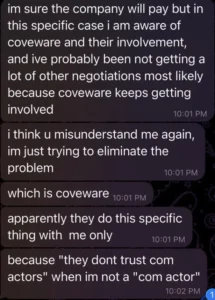
However, as international scrutiny tightened, the platform proved remarkably nimble, shedding identities and spinning off parallel networks to evade law enforcement. Following a massive regulatory clampdown, the platform rebranded itself as “Heleket.” Despite public denials from customer support agents operating on encrypted messaging apps like Telegram, blockchain analysis confirms that Heleket acts as a direct continuation of the Cryptomus infrastructure, retaining its core utility for high-risk and illicit transactions.
The recent U.K. actions strike at the heart of this evolving network. Unlike punitive financial penalties that can often be ignored by offshore entities, economic sanctions criminalize interactions with the designated platforms, effectively cutting them off from Western banking rails and liquidity providers.
Chronology of an Escalating Crackdown
The collapse of Cryptomus’s operational impunity is the culmination of years of international investigative work and escalating regulatory interventions:

- 2022: Cryptomus launches, rapidly establishing itself as a preferred payment processor for Russian cybercrime syndicates and underground marketplaces.
- December 2024: Investigative reporting by cybersecurity researchers exposes the deep integration between Cryptomus, Russian banks, and a network of questionable offshore regulatory shells.
- October 2025: Canadian authorities levy a historic CAD $176 million fine against Cryptomus for severe violations of anti-money laundering (AML) laws. In response, the platform appeals the penalty, launches "Heleket" as a parallel no-KYC (Know Your Customer) service, and continues processing illicit volume.
- April 2026: Blockchain analytics firm TRM Labs publishes data showing that Cryptomus has processed more than $7 billion in cumulative transactions since its inception, including funds tied to child sexual abuse material (CSAM), terrorist financing, and human trafficking.
- October 8, 2026: The United Kingdom officially issues economic sanctions against Cryptomus, Heleket, VexPay, TokenSpot, and Tsunami Payments. Within hours of the announcement, user-facing Telegram support bots confirm that the platform is abruptly failing to process transactions.
Supporting Data and Scale of Illicit Operations
The sheer volume of capital flowing through Cryptomus and its derivatives has made it a focal point for blockchain intelligence firms tracking illicit finance.
According to a comprehensive assessment published by Chainalysis on October 8, the newly sanctioned entities represent a structural pillar supporting Russia’s wartime financial survival. Chainalysis noted that Cryptomus and Heleket emerged as dominant payment hubs, pulling in greater volumes of illicit funds across tracked categories than traditional cryptocurrency mixers. At its peak in late 2025, the number of distinct illicit counterparties interacting with the platform surged to more than 900 in a single month.
Parallel findings from TRM Labs in April 2026 revealed that the platform’s cumulative transaction volume surpassed $7 billion. TRM’s researchers observed a distinct operational pattern: whenever external pressure forced Cryptomus to institute stricter KYC compliance checks—temporarily cratering its transaction volume—its operators would pivot to spin-off entities like Heleket to continue offering frictionless, anonymous payment processing for criminal enterprises.
Blockchain analyst and investigator Richard Sanders, who spent months mapping out the intricate architecture of Cryptomus’s payment infrastructure, emphasized the vital distinction between monetary fines and economic sanctions.
"A fine doesn’t stop a cryptocurrency payment processor from processing payments," Sanders wrote in a public analysis. "Sanctions kill the operation. The distinction matters." Sanders noted that Canada’s record CAD $176 million penalty was ultimately uncollectible due to the platform’s decentralized and opaque structure, making the U.K.’s asset freeze and business ban the necessary death blow to the network.
Official Responses and Cross-Border Collaboration
The U.K.’s decisive action marks a historic milestone in international law enforcement cooperation. According to legal and intelligence analysts, these sanctions represent the first known instance of a "Five Eyes" nation—comprising Australia, Canada, New Zealand, the United Kingdom, and the United States—directly sanctioning a cryptocurrency enterprise incorporated within the jurisdiction of another Five Eyes partner.

While official statements from British regulators emphasize the role of these platforms in sustaining geopolitical adversaries and global organized crime, digital asset watchdogs have praised the move as a blueprint for targeting cross-border crypto evasion. By utilizing state-level sanctions rather than civil monetary penalties, allied nations can compel global liquidity providers, stablecoin issuers, and centralized exchanges to blacklist associated wallet addresses immediately, effectively rendering the platforms radioactive to the legitimate global economy.
Implications: The Fiction of "Western Sahara" Regulation
One of the most bizarre discoveries surrounding the Cryptomus empire involves the source of its purported legal authority and legitimacy. Investigative deep dives into the corporate genealogy of Certa Payments—Cryptomus’s original parent company—reveal a labyrinth of shell companies anchored by fabricated regulatory bodies.
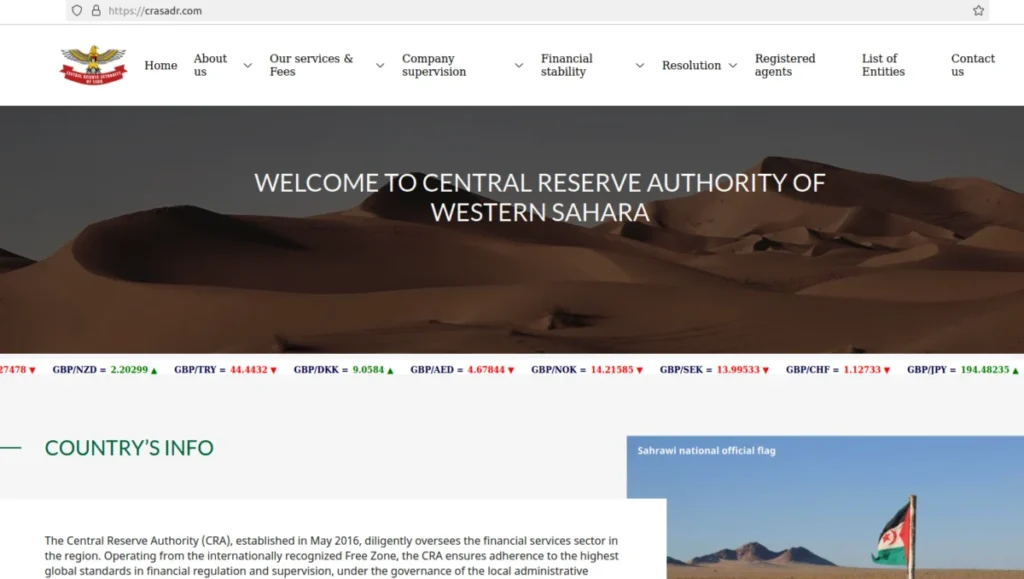
The sole shareholder of Certa Payments was identified as a 25-year-old Ukrainian national who simultaneously managed multiple corporate entities, including the WS Management and Advisory Corporation. This firm marketed itself as an exclusive regulatory authority overseeing licenses for cryptocurrency exchanges, foreign exchange brokers, and online gaming operations within the Western Sahara, a disputed territory in northwest Africa not widely recognized as a sovereign nation.
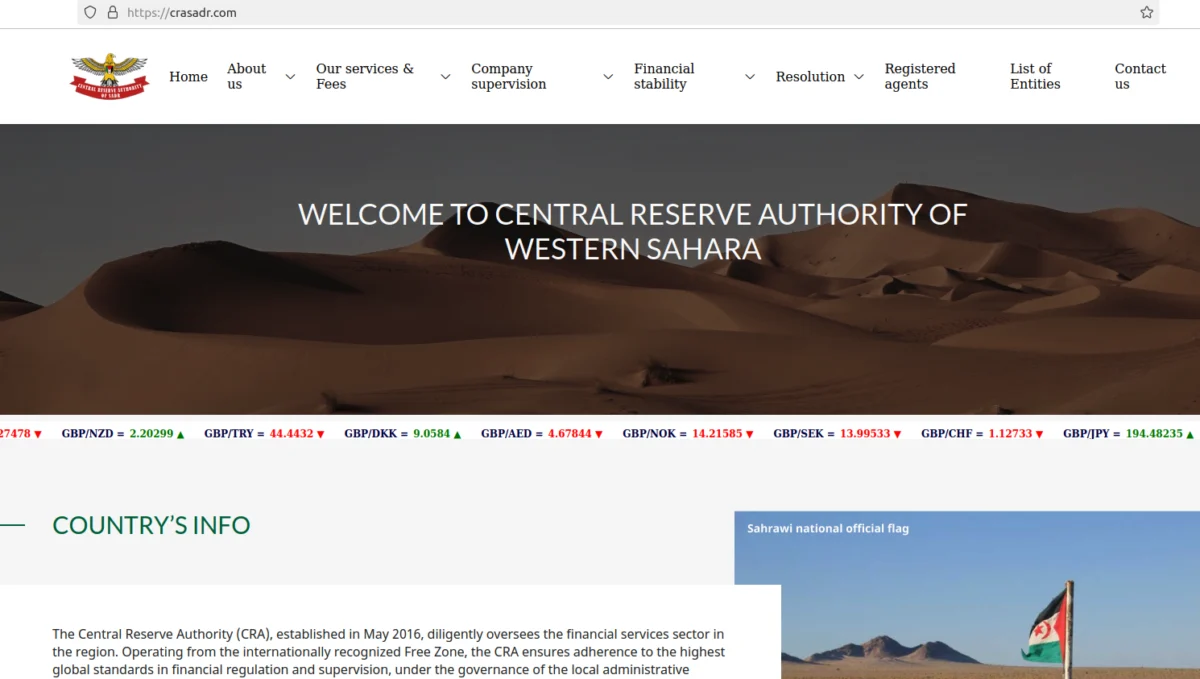
The regulatory front operated through a website (crasadr.com), which purported to represent the Central Reserve Authority of the Western Sahara. Archives and server mapping revealed that Certa Payments shared underlying server infrastructure with domains tied directly to this phantom state regulatory body (rasd-state.ws). By establishing operations under the auspices of a non-existent sovereign regulator, the founders of Cryptomus manufactured a veneer of legal compliance that successfully deceived numerous commercial partners for years.
The Broader Impact on Underground Finance
The takedown of Cryptomus, Heleket, and their sister platforms signals a permanent shift in how Western governments intend to police the intersection of digital assets and state-backed sanctions evasion.
As blockchain analytics become increasingly sophisticated, the era of anonymous or pseudonymous payment processors hiding behind fake offshore regulators is rapidly drawing to a close. With U.K. sanctions cutting off access to institutional banking partners and painting a permanent regulatory bullseye on its operators, the Cryptomus saga demonstrates that while decentralized technologies offer tools for evasion, they remain fundamentally vulnerable to coordinated, sovereign economic force.