Unlocking Relational AI: Google Releases TensorFlow GNN 1.0 for Production-Scale Graph Neural Networks
MOUNTAIN VIEW, Calif. — In a significant milestone for the artificial intelligence and machine learning communities, Google has officially announced the release of TensorFlow GNN 1.0 (TF-GNN). Developed through a cross-disciplinary collaboration between Google Research, Google Core ML, and Google DeepMind, the new production-tested library is engineered to build, train, and scale Graph Neural Networks (GNNs) directly within the TensorFlow ecosystem.
By bridging the gap between discrete, irregular relational structures and traditional deep learning pipelines, TF-GNN 1.0 aims to democratize the use of graph-based machine learning across industries ranging from supply chain logistics and financial fraud detection to biomedical research and social network analysis.
Main Facts: What is TensorFlow GNN 1.0?
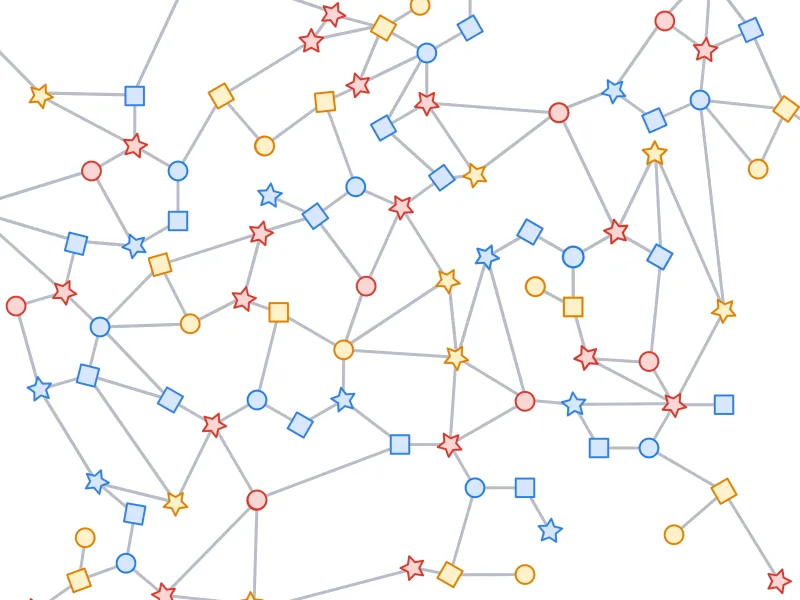
At its core, TF-GNN 1.0 is a comprehensive, production-proven framework designed to handle data structured as graphs—networks of arbitrary nodes (entities) connected by edges (relationships). While standard machine learning models typically process uniform, grid-like inputs such as pixel grids (images) or sequential tokens (text), real-world data is inherently interconnected. Transportation systems, molecular structures, knowledge bases, and financial transactions are naturally modeled as graphs.
TF-GNN 1.0 addresses this limitation by offering:
- Native Heterogeneous Graph Support: Designed from the ground up to handle graphs where nodes and edges possess distinct types and relationships, mirroring real-world complexity.
- First-Class Tensor Integration: Introduction of
tfgnn.GraphTensor, a composite tensor type that integrates seamlessly into core TensorFlow components liketf.data.Datasetandtf.function. - Flexible Subgraph Sampling: Advanced tooling for both interactive, in-memory sampling (ideal for experimentation in Google Colab) and distributed sampling via Apache Beam for datasets scaling to hundreds of millions of nodes and billions of edges.
- Keras API Compatibility: High-level abstractions that allow developers to build GNN layers and architectures using familiar Keras syntax, alongside low-level primitives for customized message-passing designs.
- The TF-GNN Runner: A streamlined orchestration utility that simplifies distributed training, multi-task learning (combining supervised and unsupervised objectives), and model interpretability via integrated gradients.
Chronology: The Path to Production-Grade Graph AI
The journey toward TensorFlow GNN 1.0 reflects the broader evolution of graph machine learning within academia and industry tech giants.

- Early Relational Algorithms (Pre-2015): Early attempts to capture network topology relied on unsupervised feature learning techniques like DeepWalk and Node2Vec, which treated graph structures akin to sentences in natural language processing. While groundbreaking, these methods lacked tight integration with modern deep learning frameworks.
- The Rise of Message Passing (2017–2020): Researchers introduced Message Passing Neural Networks (MPNNs) and Graph Convolutional Networks (GCNs), proving that iterative neighborhood aggregation could yield powerful predictive models for chemistry, physics, and citation analysis. However, implementing these models at scale required bespoke, often fragmented engineering solutions.
- Google’s Internal Development & Research Foundations (2021–2022): Recognizing the need for a unified, industrial-strength library, teams across Google Research, Core ML, and DeepMind began laying the architectural groundwork. In July 2022, foundational research papers outlining the framework’s principles were published, establishing the theoretical viability of scalable graph tensors.
- Iterative Open-Source Refinement (2023): Throughout 2023, the library underwent rigorous testing in internal production environments, accumulating battle-tested optimizations for TPU acceleration, dynamic batching, and distributed data pipelines.
- The 1.0 Launch (February 2024): Google officially releases TF-GNN 1.0 to the global open-source community, accompanied by comprehensive documentation, end-to-end user guides, and benchmark notebooks.
Supporting Data and Technical Architecture
To understand the engineering achievement of TF-GNN 1.0, one must examine how it processes massive datasets that exceed the memory limits of single hardware accelerators.
Training a GNN typically involves millions of labeled nodes, yet individual training steps operate on manageable mini-batches. TF-GNN achieves this through subgraph sampling, extracting localized neighborhoods around targeted root nodes. For massive datasets residing on distributed network filesystems, TF-GNN leverages Apache Beam to parallelize the extraction of subgraphs containing hundreds of millions of entities.
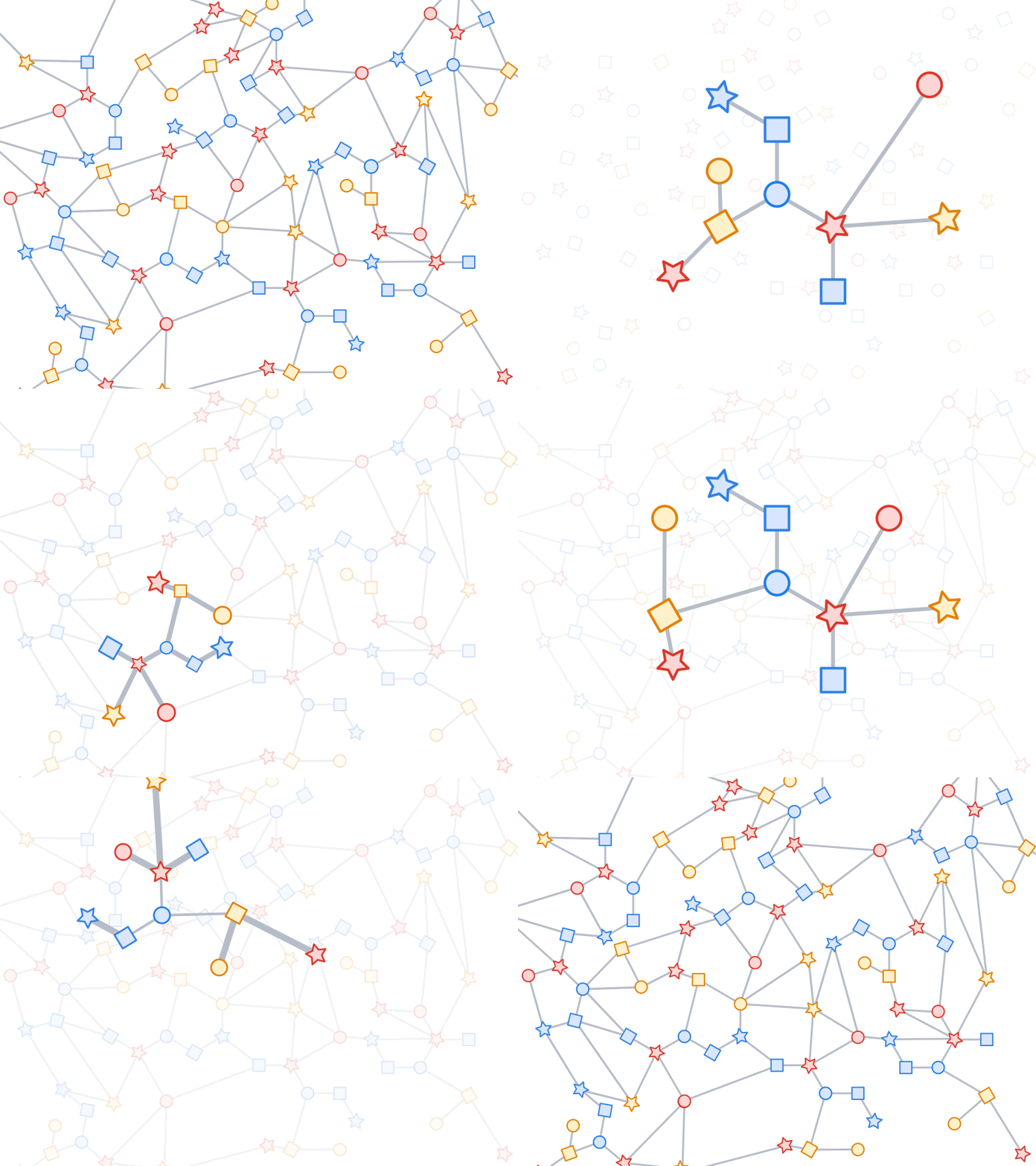
Once subgraphs are fed into the network, information flows via Message Passing. In each round of message passing:
- Nodes aggregate data from their immediate neighbors along incoming edges.
- Hidden (latent) states are updated using specialized neural network layers.
- After $n$ rounds of message passing, the root node’s hidden state encapsulates structural and feature data from all entities within $n$ hops.
import tensorflow_gnn as tfgnn
from tensorflow_gnn.models import mt_albis

def model_fn(graph_tensor_spec: tfgnn.GraphTensorSpec):
  """Builds a GNN as a Keras model."""
  graph = inputs = tf.keras.Input(type_spec=graph_tensor_spec)

  # Encode input features
  graph = tfgnn.keras.layers.MapFeatures(
      node_sets_fn=set_initial_node_states)(graph)

  # Execute rounds of message passing
  for _ in range(2):
    graph = mt_albis.MtAlbisGraphUpdate(
        units=128, message_dim=64,
        attention_type="none", simple_conv_reduce_type="mean",
        normalization_type="layer", next_state_type="residual",
        state_dropout_rate=0.2, l2_regularization=1e-5,
    )(graph)

  return tf.keras.Model(inputs, graph)
Furthermore, TF-GNN 1.0 supports multi-task training orchestration. Developers are no longer restricted to purely supervised paradigms; they can simultaneously train models on classification tasks alongside unsupervised contrastive objectives (such as DeepGraphInfomax) to generate richer, more robust continuous embeddings. Model interpretability is similarly addressed via built-in integrated gradients, outputting a GraphTensor where feature values are replaced by gradient attributions, allowing data scientists to audit precisely which node attributes drive predictions.
Official Responses and Collaborative Development
The release of TF-GNN 1.0 is the culmination of a massive, multi-departmental effort within Google. The library’s development team brought together world-class expertise from across the organization’s premier AI divisions.

The official release credits a collaborative roster of engineers and researchers:
- Google Research: Sami Abu-El-Haija, Neslihan Bulut, Bahar Fatemi, Johannes Gasteiger, Pedro Gonnet, Jonathan Halcrow, Liangze Jiang, Silvio Lattanzi, Brandon Mayer, Vahab Mirrokni, Bryan Perozzi, Anton Tsitsulin, and Dustin Zelle.
- Google Core ML: Arno Eigenwillig, Oleksandr Ferludin, Parth Kothari, Mihir Paradkar, Jan Pfeifer, and Rachael Tamakloe.
- Google DeepMind: Alvaro Sanchez-Gonzalez and Lisa Wang.
While Google has not commercialized the library as a standalone paid enterprise product, the decision to open-source TF-GNN 1.0 under Apache licensing underscores the company’s ongoing commitment to open science and the TensorFlow ecosystem. By providing enterprise-grade infrastructure for free, Google aims to accelerate academic research and commercial adoption alike, establishing TensorFlow as a premier platform for relational machine learning.
Implications for the Future of Machine Learning
The debut of TensorFlow GNN 1.0 carries profound implications for multiple technological sectors:
1. Bridging Relational Databases and Deep Learning
Historically, data engineers maintained a strict wall between relational databases (SQL graphs, knowledge bases) and deep learning pipelines. By encoding discrete relational topology directly into continuous tensor representations (tfgnn.GraphTensor), TF-GNN bridges this divide. Enterprises can now inject rich, interconnected contextual data directly into deep learning architectures without losing structural fidelity.
2. Advancing Scientific Discovery
In fields like computational chemistry and biology, molecules are naturally represented as graphs where atoms are nodes and chemical bonds are edges. With production-ready scaling, researchers can train GNNs on massive pharmacological databases to predict molecular reactions, accelerate drug discovery, and model protein folding with greater precision.
3. Strengthening Fraud Detection and Cybersecurity
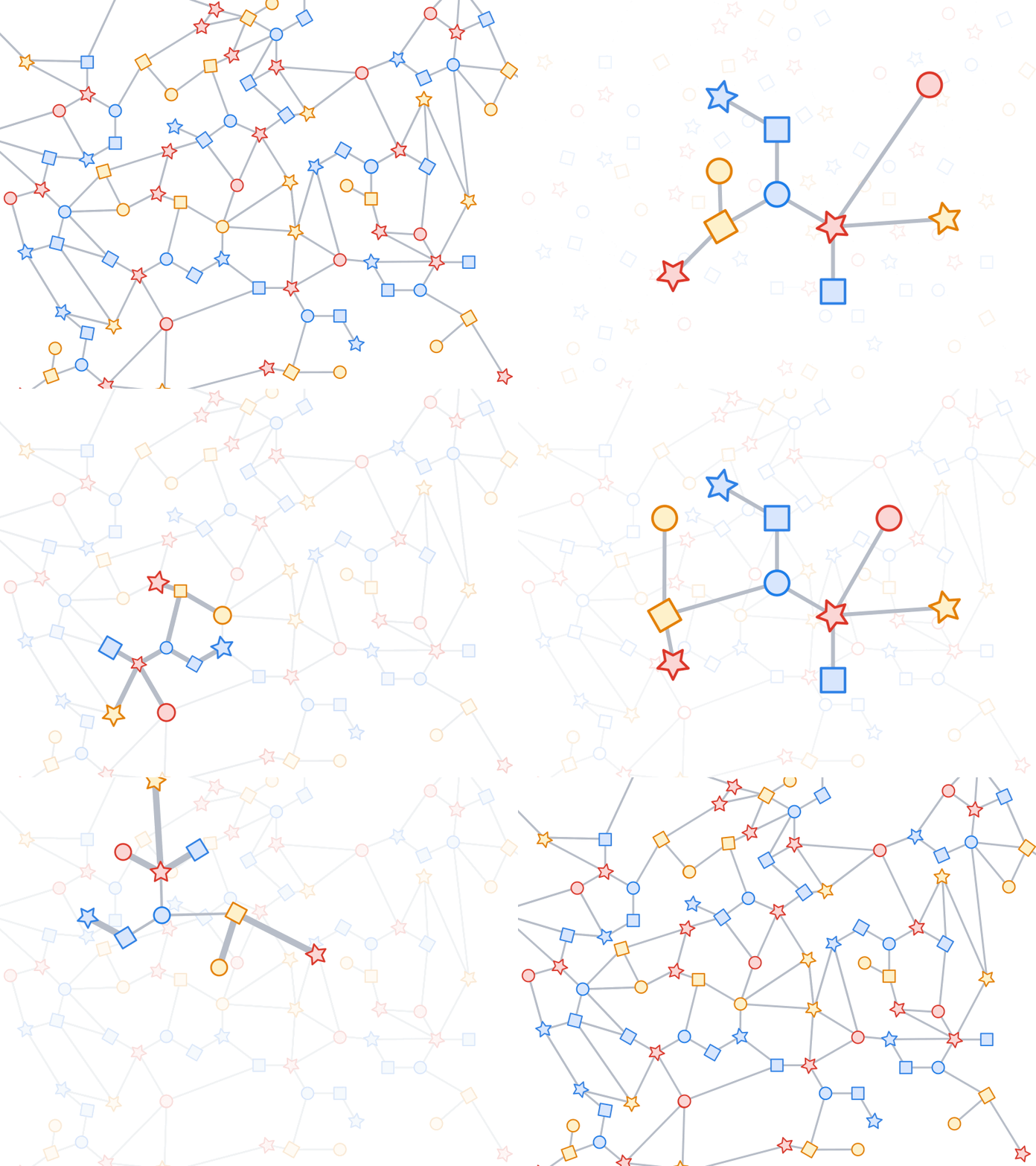
Financial institutions and cybersecurity platforms rely heavily on transaction and communication networks. Fraudsters rarely operate in isolation; they form complex syndicates represented by irregular graph topologies. TF-GNN 1.0 provides the distributed sampling and heterogeneous modeling capabilities required to spot anomalous patterns across billions of financial events in real time.
4. Setting New Benchmarks for Open-Source AI tooling
As large language models (LLMs) continue to dominate AI discourse, TF-GNN 1.0 serves as a timely reminder that structured, symbolic reasoning and graph representations remain vital for tasks requiring factual grounding, knowledge retrieval, and multi-hop inference.
Getting Started
Developers and researchers interested in exploring TensorFlow GNN 1.0 can access the resources provided by the engineering team:
- Interactive Tutorials: Try the end-to-end OGBN-MAG benchmark demo in Google Colab with zero local installation required.
- Codebase & Documentation: Explore the source code, user guides, and pre-built Keras model collections on the official TensorFlow GNN GitHub repository.
- Academic Reference: Read the foundational research detailing the framework’s architecture via the arXiv paper.