Unlocking the Silent Killer: New Cellular Atlas Reveals Why Brain Aneurysms Rupture
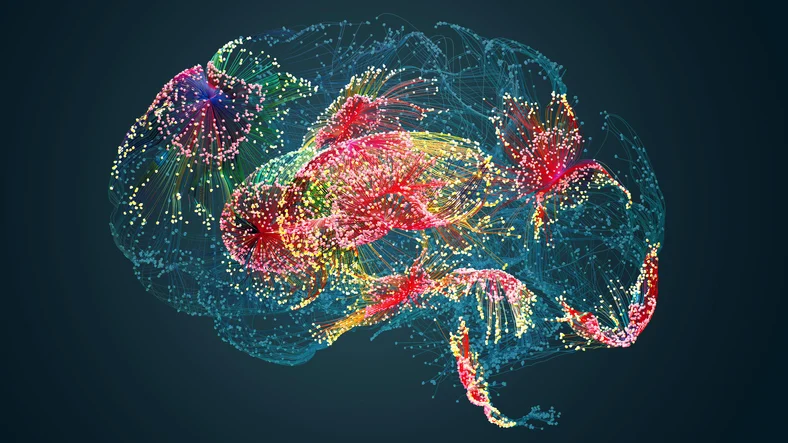
Stroke remains the second leading cause of mortality worldwide, representing a devastating public health crisis that spares few demographics. Among the most precarious forms of this neurological emergency is the ruptured brain aneurysm—a silent, ticking time bomb that can claim a life in an instant. For decades, the medical community has struggled to predict which aneurysms are destined to burst and which will remain dormant.
A groundbreaking study published in Nature Neuroscience, titled "Cerebrovascular vulnerability and fibrosis in human brain aneurysms," has finally pulled back the curtain on the cellular mechanisms driving these vascular lesions. By leveraging single-cell transcriptomics and spatial mapping, researchers have identified a specific "cast of characters"—a combination of fibroblasts and specialized macrophages—that conspire to weaken arterial walls. This discovery not only demystifies the pathology of aneurysms but also heralds a new era of potential non-invasive, therapeutic interventions.
The Silent Menace: Understanding the Clinical Landscape
A brain aneurysm is a localized dilation or "bulge" in a blood vessel within the brain, often occurring at the junctions of major arteries. Estimates suggest that approximately one in 50 people in the United States harbors an unruptured aneurysm. While many exist for a lifetime without incident, those that rupture result in subarachnoid hemorrhage, a condition associated with high mortality rates and significant long-term disability.
Historically, clinical management of aneurysms has been reactive rather than predictive. Surgeons rely on metrics like size, location, and patient-specific risk factors—such as hypertension or family history—to decide whether to perform invasive procedures like coiling or clipping. However, these guidelines are often imperfect. Small aneurysms, typically deemed "low risk" and left untreated, frequently rupture, while much larger lesions may remain stable for years. This paradox has frustrated clinicians and researchers alike, driving the need for a deeper, molecular-level understanding of vessel wall integrity.
Chronology: A Multi-Year Molecular Investigation
The journey to this discovery began with the ambition to move beyond static imaging and into the dynamic biology of the vessel wall.
Phase 1: Data Acquisition
The research team, led by Ethan Winkler, MD, PhD, an assistant professor of neurological surgery, embarked on a comprehensive analysis of over 100,000 individual cells. These samples were sourced from both human aneurysm tissue and healthy brain arteries. By comparing the two, the team sought to identify the specific genetic signatures that distinguish a healthy vessel from a pathological one.
Phase 2: Mapping the Cellular Atlas
Using advanced single-cell RNA sequencing, the researchers identified 19 transcriptionally distinct cell types. They didn’t stop at genetic identification; they utilized spatial transcriptomics to map exactly where these cells resided within the architecture of the blood vessel wall. This provided a "geographical" view of the disease progression, showing how the structural composition of the vessel shifts as an aneurysm develops.
Phase 3: Mechanism Discovery
The final phase of the study involved identifying the interaction between cellular subsets. The team observed a feedback loop where activated fibroblasts—which replace the natural smooth muscle of the artery—communicate with macrophages. This cross-talk was found to be the catalyst for the enzymatic degradation of the artery’s structural integrity.
Supporting Data: The Anatomy of a Rupture
The study’s findings offer a radical reinterpretation of how an artery loses its resilience. Under healthy conditions, the arterial wall is lined with smooth muscle cells that provide the elasticity required to withstand the high-pressure environment of blood flow.
The Fibroblast Takeover
In aneurysm tissue, the researchers noted a marked disappearance of these supportive smooth muscle cells. In their place, a population of "activated perivascular fibroblasts" emerged. Unlike their healthy counterparts, these cells contribute to fibrosis—the formation of excess fibrous connective tissue. This process stiffens the vessel wall, stripping it of its ability to flex and adapt to hemodynamic stress. Crucially, these fibroblasts express genes historically linked to inherited aneurysm risk, providing a genetic link to clinical outcomes.
The Macrophage-Enzyme Cascade
The study also identified a specific type of macrophage, or immune cell, that accumulates near these fibroblasts. These macrophages were found to express a gene typically associated with bone tissue, suggesting a process of "pathological remodeling."

The data revealed a dangerous feedback loop:
- The Signal: Activated fibroblasts release molecular signals into the local environment.
- The Response: These signals recruit and "instruct" macrophages.
- The Damage: The macrophages respond by producing specific enzymes that degrade the structural matrix of the blood vessel.
By conducting experimental blockades of these signals, the researchers proved that when the communication between the fibroblasts and macrophages was inhibited, the destructive enzymatic activity decreased significantly.
Official Perspectives and Clinical Insights
Dr. Ethan Winkler, the senior author of the study, emphasized the significance of these findings in the context of real-world patient care. "We’ve made major steps toward solving the mystery of how aneurysms form," Winkler stated. "We’ve identified the cast of characters involved and seen which ones are implicated at different phases of disease."
For Dr. Winkler, the findings validate observations he made early in his surgical career. He noted that more than 50% of the ruptures he treated occurred in aneurysms below the standard seven-millimeter surgical threshold. The study explains this discrepancy: it is not necessarily the size of the aneurysm that determines rupture risk, but the biological health of the vessel wall. If the wall has been degraded by the fibroblast-macrophage feedback loop, even a small aneurysm may become critically unstable.
The scientific community has lauded the study for its granular approach. By providing a "molecular blueprint," the researchers have given clinicians a potential new metric for risk assessment that is biological rather than purely physical.
Implications: A New Era for Stroke Prevention
The implications of this research are far-reaching, potentially shifting the paradigm from surgical intervention to pharmaceutical prevention.
1. Biomarker Development
If specific genes are linked to the "activated fibroblast" state, clinicians might one day be able to use blood tests or imaging markers to detect the presence of these cells in patients with small, unruptured aneurysms. This could allow for personalized risk profiling, where patients at high biological risk are treated early, while others are spared unnecessary surgery.
2. Targeted Pharmacotherapy
The ability to block the signals between fibroblasts and macrophages presents an exciting therapeutic avenue. If researchers can develop drugs that inhibit these specific signaling pathways, they could effectively "freeze" the progression of an aneurysm, stabilizing the vessel wall and preventing the degradation that leads to rupture.
3. Precision Medicine
This research suggests that aneurysms are not a monolithic condition but a spectrum of biological activities. By understanding the underlying genetic drivers, future treatment could be tailored to the specific cellular landscape of an individual patient’s aneurysm, representing the pinnacle of precision medicine in neurosurgery.
As the authors noted in their paper, the study "nominates new cells and pathways with translational promise." While the journey from laboratory discovery to clinical trial is long, the Nature Neuroscience findings provide the most robust roadmap yet for stopping the silent killer before it strikes. For the millions of people living with the anxiety of an unruptured brain aneurysm, this research offers something long in short supply: the hope of a predictable, treatable, and preventable future.