PolyUAnalog: The Open-Source Revolution in Analog Synthesis from Angers
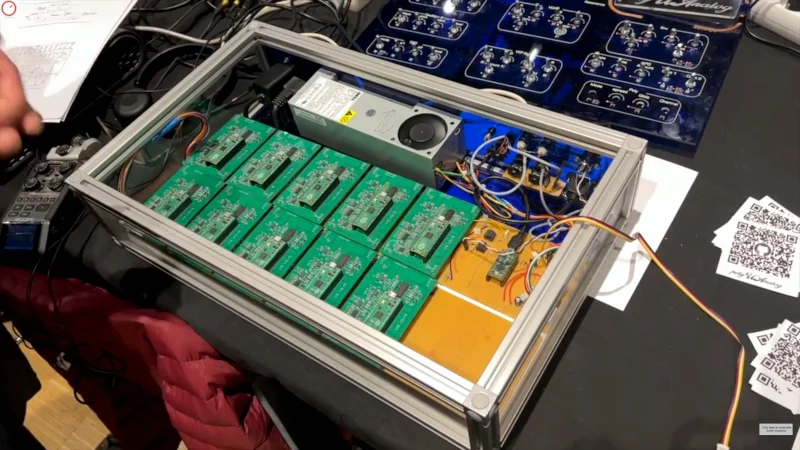
Angers, France – In an era defined by rapid technological convergence, a groundbreaking project emerging from the University of Angers, France, is poised to redefine the landscape of analog synthesis. Dubbed "polyUAnalog," this innovative open-source synthesizer challenges conventional notions of analog instrument design, offering a modern, modular, and highly scalable approach to creating rich, warm, and authentic analog sounds. Far from the sprawling, patch-cable-laden behemoths of yesteryear, polyUAnalog leverages individual "synth-on-a-chip" integrated circuits paired with microcontrollers, promising a new era of accessible and versatile polyphonic analog music production.
The project, born from the intellectual curiosity of two researchers whose primary work lies in the intricate field of spectroscopy, exemplifies the serendipitous cross-pollination of scientific rigor and creative passion. It represents a significant departure from traditional analog synthesis architectures, opting for a distributed, chip-per-voice system that simplifies complexity while expanding capabilities. This novel design philosophy has already captured the attention of the DIY electronics and music technology communities, signaling a potential paradigm shift in how enthusiasts and professionals alike might approach the construction and utilization of analog synthesizers.
Main Facts: A New Blueprint for Analog Sound
At its core, polyUAnalog is a modern interpretation of a polyphonic analog synthesizer, designed with scalability and open-source principles in mind. Unlike classic analog synthesizers that often rely on complex arrays of discrete components or shared voice architectures, polyUAnalog adopts a "one chip, one voice" philosophy. This crucial design choice enables a level of modularity and ease of construction previously unattainable in the realm of true analog polyphony.
The central component of each voice is the AS3397 integrated circuit, a highly regarded "synth-on-a-chip" that encapsulates a complete analog synthesis engine. This chip includes essential building blocks such as a Voltage Controlled Oscillator (VCO), Voltage Controlled Filter (VCF), Voltage Controlled Amplifier (VCA), and even an ADSR (Attack-Decay-Sustain-Release) envelope generator, alongside a Low-Frequency Oscillator (LFO). By integrating these functions into a single IC, the AS3397 dramatically reduces the component count and complexity required for each individual voice.
Each AS3397 chip is paired with a Raspberry Pi Pico microcontroller on a dedicated printed circuit board (PCB), forming a self-contained single-voice analog synthesizer module. The Raspberry Pi Pico, renowned for its cost-effectiveness, robust performance, and ease of programming, acts as the digital brain for each voice, managing its specific parameters and communicating with a central "conductor board." This conductor board, believed to also be powered by a Raspberry Pi Pico (though the project’s README frustratingly omits this detail), serves as the central processing unit, taking MIDI input and other control signals, and intelligently distributing them via the I2C communication protocol to the individual voice modules.
The prototype unit boasts ten distinct voices, demonstrating a formidable polyphonic capability. However, the modular design inherently supports a much greater number, limited only by the processing power of the conductor board and the practicalities of physical assembly. This scalability is a cornerstone of polyUAnalog’s appeal, allowing users to tailor the instrument to their specific needs, from a compact monophonic setup to a sprawling, multi-timbral workstation.
The project is entirely open-source, with all design files, firmware, and documentation available on GitHub under the "PhysicsDptAngers/polyUAnalog" repository. This commitment to open hardware and software not only fosters community engagement and collaborative development but also empowers individuals worldwide to build, modify, and understand their own analog synthesizers. Beyond the code, the researchers have also authored a detailed paper published in MDPI, providing a comprehensive technical overview and academic context for their innovation.
Chronology: From Scientific Inquiry to Sonic Innovation
The genesis of polyUAnalog is a testament to the unexpected intersections of disparate scientific disciplines and personal passions. While the exact inception date remains unstated, the project’s origins can be traced back to the University of Angers, France, where two researchers, whose primary professional focus is in the complex field of spectroscopy, embarked on this "side project." It is plausible that their expertise in designing and working with sensitive electronic instrumentation, data acquisition, and signal processing in a scientific context provided a unique foundation for tackling the intricacies of analog synthesizer design. The precision and systematic approach inherent in spectroscopy research likely informed the meticulous engineering evident in polyUAnalog.
The initial phase of development would have involved extensive research into suitable components, particularly the choice of a robust and versatile "synth-on-a-chip" solution. The selection of the AS3397, a modern reimagining of a classic analog IC, indicates a deliberate choice to leverage established, high-quality analog synthesis capabilities within a contemporary design framework. Concurrently, the integration of modern microcontrollers like the Raspberry Pi Pico would have been crucial for managing digital control, MIDI processing, and inter-module communication.
The development process would have proceeded through iterative stages of PCB design, firmware programming, and rigorous testing. Prototyping each single-voice module, then scaling up to a multi-voice system with the conductor board, would have been essential steps. The decision to use I2C for communication between the conductor and voice boards suggests careful consideration for efficiency and expandability, given the multi-master/multi-slave capabilities of the protocol.
A significant milestone in the project’s timeline was its public unveiling, as indicated by the title of the accompanying YouTube video: "polyUAnalog: Open-Source DIY Poly Analog Synthesizer | SynthFest France 2024." This suggests a presentation or demonstration at a prominent event dedicated to electronic music instruments, providing a platform to showcase the working prototype and engage with the broader synth community. Such an event would have offered invaluable feedback and exposure.
Further cementing its academic and technical credibility, the researchers published a detailed paper about polyUAnalog in the MDPI journal. This publication serves as a formal documentation of their methodology, design choices, and experimental results, allowing for peer review and broader dissemination within scientific and engineering circles. The availability of both a public video demonstration and a peer-reviewed paper underscores the project’s dual nature as both a practical musical instrument and a subject of academic inquiry.
Looking ahead, the open-source nature of polyUAnalog implies a continuous, community-driven development path. The project’s presence on GitHub suggests an ongoing evolution, with potential for contributions from developers, musicians, and electronics enthusiasts worldwide. This collaborative model positions polyUAnalog not just as a finished product, but as a living platform for innovation in analog synthesis.
Supporting Data: Unpacking the Technological Innovation
The true brilliance of polyUAnalog lies in its elegant fusion of classic analog sound generation with modern digital control and open-source principles. A deeper dive into its technical components and design philosophy reveals the sophistication behind its apparent simplicity.
The AS3397: The Heart of Each Voice
The AS3397 is a critical component, serving as the complete analog voice engine for each module. Its lineage traces back to classic Curtis chips (like the CEM3394/3396), which were instrumental in the sound of iconic synthesizers from the 1980s. These chips integrated multiple analog synthesis blocks onto a single silicon die, offering a compact and stable solution for polyphonic instruments. The AS3397, produced by Alfa RPAR, is a modern revival, providing a reliable and accessible source for these complex analog functions.
Within its 28-pin SOIC package, the AS3397 boasts:
- Voltage Controlled Oscillator (VCO): Generates waveforms (typically saw, pulse, triangle) that form the basis of the sound. It’s voltage-controlled, meaning its pitch can be modulated by other signals.
- Voltage Controlled Filter (VCF): Shapes the timbre of the sound by selectively attenuating or boosting certain frequencies. The AS3397 likely includes a resonant low-pass filter, a hallmark of classic analog synth sounds.
- Voltage Controlled Amplifier (VCA): Controls the amplitude (volume) of the sound, often shaped by an envelope generator.
- ADSR Envelope Generator: Defines how the sound evolves over time – its attack (initial rise), decay (fall to sustain level), sustain (held level), and release (fade out after key release). This is crucial for creating various articulations from percussive plucks to sustained pads.
- Low-Frequency Oscillator (LFO): Generates sub-audio frequencies used for modulation effects like vibrato (pitch modulation), tremolo (amplitude modulation), or filter sweeps.
The integration of these complex analog blocks into a single chip significantly reduces the challenges associated with traditional discrete analog design, such as component matching, thermal drift, and PCB routing complexity. For a DIY project, this means fewer parts to source, solder, and troubleshoot, making high-quality analog polyphony far more attainable.
Raspberry Pi Pico: The Digital Maestro for Each Voice
The choice of the Raspberry Pi Pico as the microcontroller for each voice module is a shrewd one. The Pico, powered by the RP2040 microcontroller, offers a compelling balance of performance, cost-effectiveness, and ease of use. Key advantages include:
- Affordability: At just a few dollars, the Pico keeps the cost per voice module exceptionally low, making a multi-voice system economically viable for hobbyists.
- Processing Power: The RP2040’s dual ARM Cortex-M0+ cores provide ample processing power for managing the digital control signals required by the AS3397, handling I2C communication, and potentially implementing other local digital functions.
- GPIO Capabilities: The Pico’s generous array of General Purpose Input/Output pins allows for direct interfacing with the AS3397’s control voltage inputs and digital control lines.
- Ease of Programming: With support for MicroPython and C/C++, the Pico is accessible to a wide range of developers, facilitating the open-source development model.
Each Pico on a voice board is responsible for translating the digital commands received from the conductor board (e.g., note on/off, pitch bend, modulation wheel data) into the appropriate analog control voltages and digital signals that the AS3397 understands. This digital-to-analog conversion is crucial for precise and stable control over the analog synthesis parameters.
I2C Communication and Modularity
The use of the I2C (Inter-Integrated Circuit) serial communication protocol is a cornerstone of polyUAnalog’s modular and scalable architecture. I2C is a two-wire interface that allows multiple "master" and "slave" devices to communicate over short distances. In this setup:
- The conductor board acts as the I2C master, sending commands.
- Each voice module, with its Raspberry Pi Pico, acts as an I2C slave, receiving specific instructions.
This protocol is highly efficient for transmitting control data (e.g., MIDI note numbers, velocity, controller values) to multiple voice modules simultaneously or individually. It simplifies the wiring dramatically compared to systems requiring separate control lines for each parameter of each voice. The ability to assign unique I2C addresses to each voice module allows the conductor board to precisely control any individual voice or broadcast general commands to all voices. This modularity not only simplifies construction but also allows users to add or remove voice modules as needed, adapting the synthesizer’s polyphony to their requirements.
MIDI Integration: Bridging the Digital and Analog Worlds
MIDI (Musical Instrument Digital Interface) remains the universal language for electronic musical instruments. The conductor board’s primary role is to receive MIDI data (via USB or a traditional DIN connector) and translate it into I2C commands for the voice modules. This involves:
- Note On/Off Messages: Translating these into gate signals and pitch values for the VCOs and envelope triggers.
- Velocity Data: Mapping velocity to VCA levels for dynamic expression.
- Controller Messages (CCs): Mapping MIDI CCs (e.g., modulation wheel, pitch bend, filter cutoff) to the corresponding parameters on the AS3397 chips.
This seamless integration ensures that polyUAnalog can be controlled by any standard MIDI keyboard, sequencer, or Digital Audio Workstation (DAW), making it a versatile addition to any electronic musician’s setup.
The Context of Analog Synthesizers
PolyUAnalog enters a vibrant landscape of analog synthesis, which has seen a significant resurgence in recent decades. After a period dominated by digital and software synthesizers, musicians have rediscovered the unique warmth, character, and tactile experience of analog instruments. However, true polyphonic analog synthesizers have historically been complex and expensive to produce due to the need for multiple, identical voice circuits and the challenges of managing their stability and tuning. Iconic polyphonic analogs like the Oberheim OB-Xa or Sequential Prophet-5 were prohibitively expensive, even in their time.
Modern solutions often involve either:
- Digital control of analog circuits: Similar to polyUAnalog, but often with proprietary designs.
- Hybrid designs: Combining digital oscillators with analog filters, for example.
- Digital emulations: Software synthesizers that model analog circuits.
PolyUAnalog distinguishes itself by offering a complete, true analog voice on each module, controlled by open-source digital means. It democratizes access to this specific segment of synthesis, providing a platform for DIY enthusiasts to build high-quality, scalable analog instruments without the astronomical costs or the daunting complexity of fully discrete designs.
Official Responses: The Vision of the Creators and Community Reception
While direct quotes from the University of Angers researchers are not extensively detailed in the initial summary, their "official response" to the challenges of analog synthesis is eloquently articulated through the very existence and design philosophy of polyUAnalog. The research paper published in MDPI serves as their formal declaration, outlining their motivations, methodology, and the technical achievements of the project.
Insights from the Researchers
It can be inferred from the project’s nature that the researchers’ motivation extends beyond mere academic curiosity. Their work in spectroscopy, a field demanding precision, control, and deep understanding of electronic signals, has clearly equipped them with the skills to tackle complex electronic design. The creation of polyUAnalog likely stems from a personal passion for music and synthesis, coupled with an intellectual drive to apply their scientific expertise to a creative endeavor.
Their decision to make the project open-source speaks volumes about their vision. It suggests a desire to foster education, experimentation, and community collaboration. By providing the schematics, code, and documentation freely, they are empowering others to learn, build, and innovate upon their foundation. This approach aligns with the ethos of many academic institutions that seek to disseminate knowledge and contribute to the public good. The project is not merely a synthesizer; it is a pedagogical tool and a platform for further research and development in the fields of electronics, signal processing, and music technology. They are effectively democratizing access to complex analog synthesis, moving it from the realm of specialized industrial production to the hands of curious individuals.
Community Reception and Engagement
The initial reception from communities like Hackaday and the broader DIY synth and electronics enthusiasts has been overwhelmingly positive. The "rabbit hole of technological investigation" that the project spurred in the original author is indicative of its intriguing nature and the depth of its technical innovation.
Key indicators of positive community engagement include:
- Interest on Tech Blogs: Coverage on platforms like Hackaday brings the project to a wide audience of makers, engineers, and hobbyists.
- GitHub Activity: The presence of the project on GitHub (PhysicsDptAngers/polyUAnalog) encourages forks, stars, issue reports, and pull requests, signaling active interest and potential for collaborative development. An active GitHub repository is a strong measure of community adoption in open-source projects.
- YouTube Views and Comments: The video showcasing polyUAnalog at SynthFest France 2024 provides a direct channel for public reaction. Comments would likely reflect enthusiasm for the sound quality, the modular design, the open-source aspect, and the potential for customization. Questions about build difficulty, cost, and future features are also common.
- Discussions on Synth Forums: The unique approach of polyUAnalog would undoubtedly spark discussions on dedicated synthesizer forums and online communities, comparing it to other DIY projects or commercial offerings.
The open-source model ensures that the project’s "official response" isn’t solely from its creators but also from the community that embraces and evolves it. This collaborative ecosystem is crucial for the long-term viability and impact of such a technically sophisticated DIY project.
Implications: Reshaping the Future of Analog Synthesis and Open Hardware
PolyUAnalog is more than just another DIY synthesizer; it carries significant implications for the future of music technology, open hardware, and interdisciplinary innovation.
Impact on DIY Music Production and Education
One of the most profound implications of polyUAnalog is its potential to significantly lower the barrier to entry for building complex, polyphonic analog synthesizers. Traditionally, creating such an instrument from scratch required extensive knowledge of electronics, circuit design, component sourcing, and calibration. By providing a well-documented, modular, and open-source platform, polyUAnalog makes advanced analog synthesis accessible to:
- Hobbyists and Makers: Individuals with moderate electronics skills can now assemble a high-quality analog synth, gaining a deeper understanding of sound synthesis in the process.
- Music Educators: The project serves as an excellent educational tool for teaching electronics, programming, and the principles of subtractive synthesis in a hands-on manner. Students can build their own instruments, fostering engagement and practical learning.
- Emerging Artists: Musicians with limited budgets can construct powerful instruments tailored to their needs, bypassing the high cost of commercial polyphonic analog synthesizers.
This democratization of advanced synthesis technology empowers a new generation of creators to experiment with sound in ways previously reserved for those with significant financial resources or highly specialized expertise.
Future of Analog Synthesis: A Blended Approach
PolyUAnalog exemplifies a growing trend in music technology: the intelligent blending of classic analog components with modern digital control. This "hybrid" approach offers the best of both worlds:
- Authentic Analog Sound: The AS3397 chips deliver the genuine analog warmth, richness, and sonic character that digital emulations often struggle to perfectly replicate.
- Digital Precision and Control: The Raspberry Pi Picos and I2C communication provide stable, precise, and highly flexible digital control over analog parameters, overcoming issues like analog drift and calibration challenges. This also allows for complex modulation routings, preset storage, and seamless MIDI integration.
- Scalability and Modularity: The chip-per-voice, I2C-controlled architecture offers unprecedented scalability for analog polyphony, allowing for instruments with 4, 8, 10, or even more voices, without a proportional increase in complexity.
This model suggests a future where analog synthesis is not just about nostalgia but about smart, efficient, and versatile design, leveraging the strengths of both analog and digital domains. It points towards instruments that are easier to build, maintain, and expand, while still delivering that coveted analog "mojo."
Broader Implications for Open Hardware
The open-source nature of polyUAnalog has broader implications for the open hardware movement:
- Accelerated Innovation: By making the designs freely available, the project encourages community contributions, leading to faster iteration, bug fixes, and the development of new features or modifications (e.g., alternative filter types, custom LFOs, different voice configurations).
- Knowledge Sharing: It promotes a culture of knowledge sharing and transparency, allowing others to learn from the researchers’ work and apply similar principles to their own projects.
- Interdisciplinary Collaboration: The project itself is a testament to the power of interdisciplinary collaboration, bridging physics/spectroscopy, electronics engineering, and music. Its open nature can further encourage collaborations between engineers, musicians, and educators globally.
Challenges and Opportunities
While immensely promising, polyUAnalog also presents certain challenges and opportunities:
- Assembly Complexity: While simplified compared to fully discrete designs, assembling a multi-voice polyUAnalog still requires soldering skills and an understanding of electronics. Documentation and community support will be crucial for newcomers.
- Software Development: Customizing or extending the firmware requires programming knowledge, though the use of popular platforms like the Raspberry Pi Pico and MicroPython/C++ makes this more accessible.
- Commercial Potential: While open-source, the project could inspire commercial entities to produce kits or pre-assembled versions, further broadening its reach. This would need careful navigation of licensing and ethical considerations.
- Further Research: The platform itself could become a testbed for further academic research into new synthesis algorithms, control methodologies, or even integration with other scientific instrumentation.
In conclusion, polyUAnalog represents a significant leap forward in the world of DIY and open-source music technology. By elegantly combining a modern analog synthesis chip with a versatile microcontroller and a modular, open-source architecture, the researchers from the University of Angers have not only created a compelling instrument but also laid down a new blueprint for the future of accessible, scalable, and truly polyphonic analog synthesis. Its impact will likely resonate through the communities of makers, musicians, and educators for years to come, inspiring a new wave of innovation at the intersection of science and sound.