The Dawn of the Agentic Era: Key Takeaways from AWS Summit New York 2026
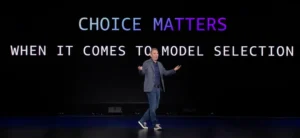
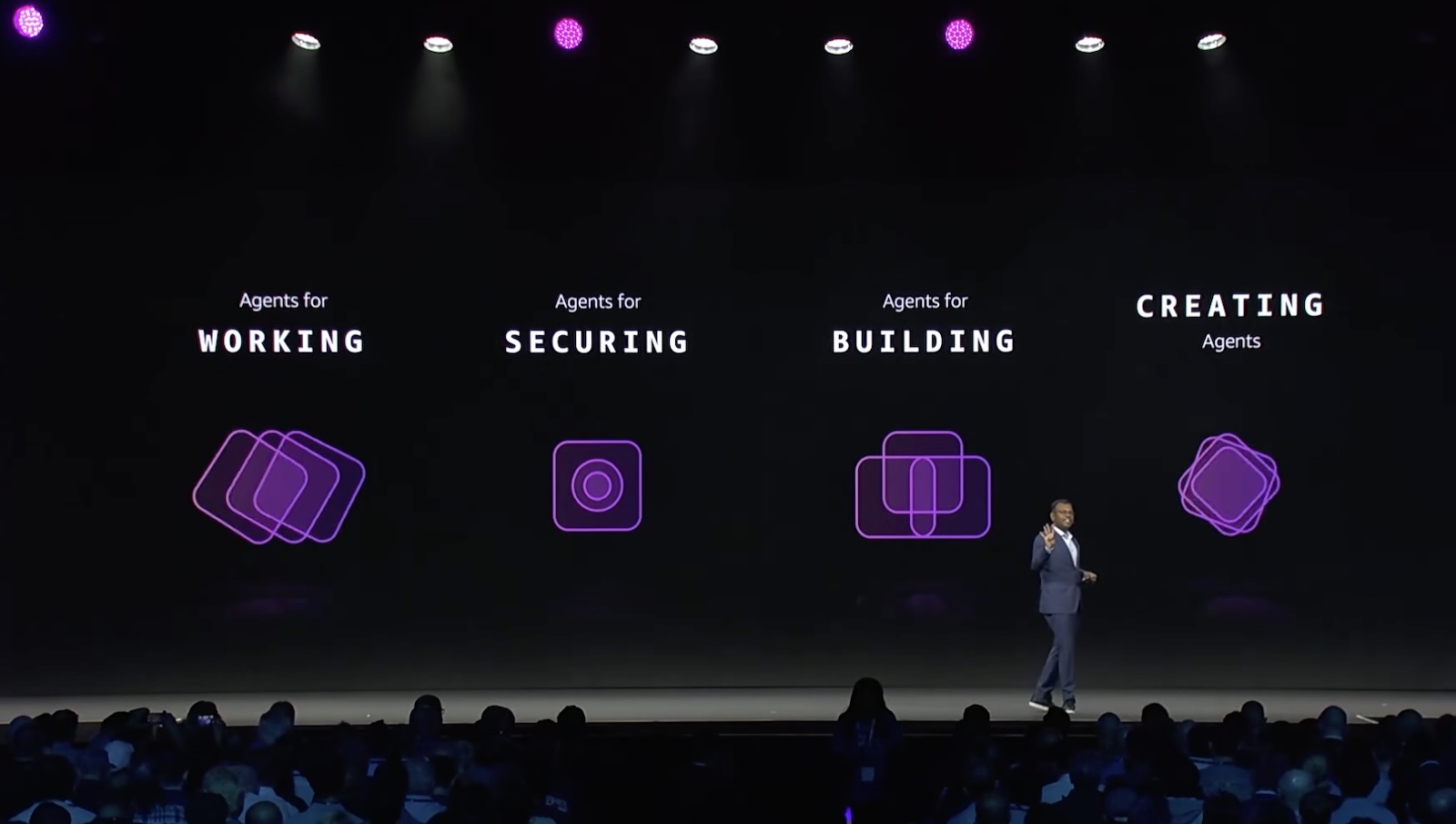
The landscape of generative AI is undergoing a fundamental shift. No longer content with merely generating text or images, the industry is racing toward "Agentic AI"—systems capable of independent reasoning, tool usage, and continuous, autonomous execution of complex business workflows. This transition took center stage today at the AWS Summit in New York City, where Swami Sivasubramanian, AWS Vice President of Agentic AI, delivered a keynote that signals a new chapter for the Amazon Web Services ecosystem.
For developers and enterprise leaders alike, the message was clear: the era of the chatbot is fading, and the era of the intelligent agent has arrived.
Main Facts: A Paradigm Shift in Amazon Bedrock
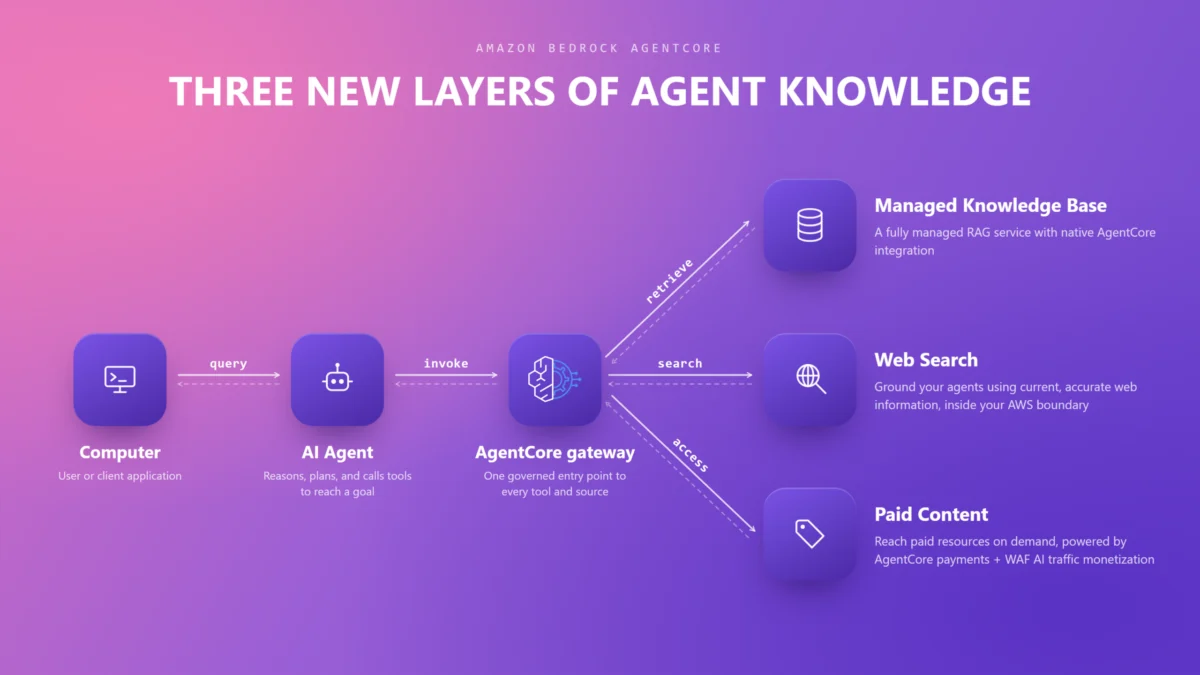
The core of AWS’s strategy revolves around Amazon Bedrock, the company’s flagship service for building and scaling generative AI applications. At the summit, AWS unveiled significant updates to Amazon Bedrock AgentCore, a suite of capabilities designed to make AI agents more reliable, knowledgeable, and governed.
1. Expanding the Knowledge Horizon
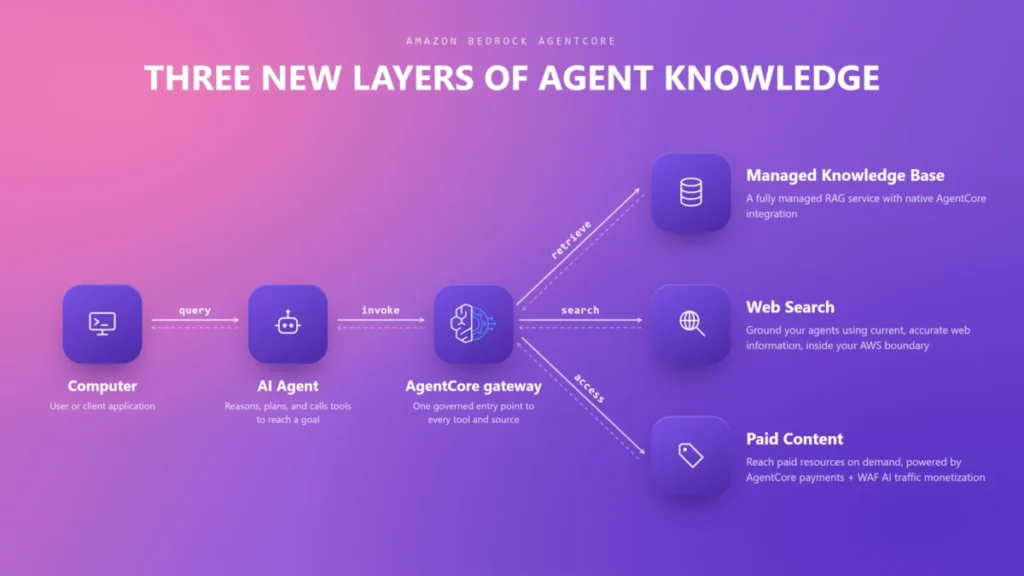
The primary challenge for early-stage AI agents has been "hallucination" and a lack of contextual awareness. Bedrock AgentCore now introduces advanced mechanisms to connect agents directly to organizational, web, and paid knowledge bases. By providing agents with a "real-time" tether to company data, AWS is enabling businesses to deploy agents that do not just guess, but retrieve verified information to perform their duties.
2. Governance at Scale
As organizations deploy hundreds or thousands of agents, security and compliance become massive operational burdens. AWS introduced new guardrails that allow administrators to enforce controls that scale automatically as the agents’ capabilities grow. This ensures that even as an agent learns new workflows, it remains within the defined ethical and operational boundaries set by the enterprise.
3. Continuous Learning and Production Debugging
Perhaps the most significant addition is the focus on "production health." AWS is introducing tools that help teams identify and rectify failures in real-time. If an agent encounters a logic gap or a technical error while executing a task, developers can now trace the decision-making process, "fix" the bottleneck, and redeploy the agent without requiring a total system overhaul.
The Rise of Amazon Quick: Autonomous Agents in the Workflow
While Bedrock provides the infrastructure for custom agents, AWS also announced the launch of Amazon Quick, a new platform designed for specialized autonomous agents. Unlike generalized models, Amazon Quick agents are pre-configured with specific expertise, tone, and access to enterprise toolsets.
Operational Use Cases
- The Finance Agent: Designed to handle order processing, this agent operates in the background, autonomously reconciling invoices and flagging discrepancies in real-time.
- The Sales Agent: This agent monitors a company’s CRM, email communications, and Slack channels. It doesn’t just store data; it proactively drafts follow-up emails, alerts sales teams to risks in the sales pipeline, and provides data-driven recommendations for closing deals.
The Unified Activity Feed
Complementing these agents is a new, AI-driven activity feed. By aggregating emails, calendar invites, messaging platforms, and task lists, the feed learns the user’s professional habits. It understands which threads are high-priority, which tasks are consistently deferred, and which topics are the most influential in driving a user’s weekly performance. This is a move to reclaim the "lost hours" of administrative overhead that currently plague the modern knowledge worker.
Chronology of the Summit
- Morning Keynote (10:00 AM EDT): Swami Sivasubramanian takes the stage to frame the "Agentic AI" vision, emphasizing that the future of business is not just automation, but autonomous orchestration.
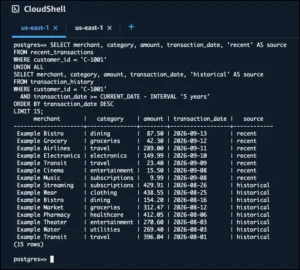
- Mid-Day Technical Deep Dives (1:00 PM – 3:00 PM EDT): AWS engineers hold workshops on implementing the new AgentCore knowledge layers, demonstrating how to connect proprietary SQL databases to agents.
- Product Demos (3:30 PM EDT): Live demos of the Amazon Quick AI Assistant showcase the agent’s ability to summarize a chaotic Slack conversation and generate a Jira ticket automatically based on that discussion.
- Post-Event Update (June 18, 2026): AWS releases a supplementary list of ecosystem launches, including expanded integrations with third-party SaaS providers to further strengthen the "Quick" agent network.
Supporting Data: Why "Agentic" Matters
The shift toward agentic systems is supported by a growing body of data regarding enterprise productivity. Industry analysts have noted that while Generative AI has boosted content creation speed, the execution of workflows—the "last mile" of business processes—remains a manual bottleneck.
- Productivity Gap: AWS internal surveys suggest that knowledge workers spend upwards of 40% of their time on "work about work"—scheduling, summarization, and data entry.
- Scaling Potential: By delegating these tasks to agents, AWS claims that enterprises can see a 3x increase in throughput for back-office operations like procurement and customer support.
- Security Efficacy: Through the new AgentCore governance protocols, AWS reports a 60% reduction in unauthorized data access incidents during agent testing phases compared to previous "sandbox" approaches.
Official Responses and Industry Context
The reception from the developer community and industry partners has been largely positive, though cautious regarding the integration complexity.

"The introduction of Bedrock AgentCore addresses the ‘black box’ problem we’ve been facing," said a Lead AI Architect at a Fortune 500 company in attendance. "By having a clearer path to debug agent reasoning, we can finally move these tools out of the research lab and into our production infrastructure."
AWS’s official statement emphasized the company’s commitment to "Responsible AI." According to Sivasubramanian, "Our goal is not to replace the human element, but to provide an AI colleague that is as capable, reliable, and context-aware as a seasoned employee. The agentic era is about amplification, not automation."
Implications: The Future of the Workplace
The implications of the announcements made at the NYC Summit are profound. We are moving toward a future where the "operating system" of a company is not just a collection of apps, but a network of specialized agents.
1. From UI to Intent-Based Computing
The current user interface (UI) model—clicking buttons, navigating menus, and typing into forms—is rapidly becoming obsolete. In the world of Amazon Quick, the user provides the intent (e.g., "Process these invoices"), and the agent manages the execution (interacting with the ERP, checking the bank, notifying the manager).
2. The New Governance Challenge
With agents capable of autonomous action, the risk surface increases. AWS’s focus on governance at scale acknowledges that corporations are terrified of "rogue agents." The ability to enforce guardrails is not just a feature; it is the fundamental requirement for enterprise adoption.
3. Continuous Evolution
Perhaps the most striking takeaway is the emphasis on "continuous learning." The days of deploying a static model and walking away are over. The new AWS toolchain suggests that an agent is a living product that must be nurtured, monitored, and trained. Developers will need to evolve into "Agent Managers," focusing more on the quality of the data and the logic of the agent’s reasoning than on the underlying architecture.
Conclusion
The 2026 AWS Summit in New York City will likely be remembered as the moment the cloud provider solidified its lead in the race to build the next generation of AI. By pivoting from general-purpose large language models to agentic, purpose-built workflows, AWS is positioning itself as the infrastructure layer for the autonomous enterprise.
For businesses looking to stay competitive, the path forward is clear: the integration of agents into the daily workflow is no longer an optional innovation—it is the new standard of operations. Whether it is a finance agent processing orders or an intelligent assistant managing your calendar, the future of work is rapidly becoming an automated, agent-driven reality. As we look ahead to the remainder of 2026, the success of these tools will depend on how effectively developers can balance the immense power of these agents with the necessary human oversight and governance.