Bridging the Gap: How ‘Wake Vision’ is Revolutionizing the TinyML Landscape

In the rapidly evolving world of artificial intelligence, a quiet revolution is taking place at the very edge of our computing infrastructure. Known as TinyML, this sub-field of machine learning focuses on deploying intelligent models onto microcontrollers and ultra-low-power edge devices. While the potential for smart, responsive hardware is immense—from home automation sensors to industrial safety monitors—the field has long been held back by a critical bottleneck: the lack of high-quality, large-scale datasets tailored to the unique constraints of tiny hardware.
Today, a team of researchers from Harvard University—including Colby Banbury, Emil Njor, Andrea Mattia Garavagno, and Vijay Janapa Reddi—is addressing this challenge head-on with the introduction of Wake Vision. This massive, high-fidelity dataset is poised to transform how we train and deploy vision models on devices with only a few hundred kilobytes of memory, marking a pivotal moment in the maturation of edge AI.
The State of TinyML: A Crisis of Constraints
To understand the significance of Wake Vision, one must first understand the limitations of current TinyML development. Standard machine learning datasets, such as ImageNet, are designed for massive, cloud-based servers equipped with high-end GPUs. These models are bloated, power-hungry, and far too complex for a microcontroller that might operate on a coin-cell battery for months at a time.
For years, the gold standard for TinyML person detection has been the Visual Wake Words (VWW) dataset. While VWW provided the necessary foundation for early research, it has become a victim of its own success. As researchers pushed the boundaries of efficiency, the limitations of VWW—its relatively small size and inherent data noise—became increasingly apparent. In the world of machine learning, where the adage "garbage in, garbage out" remains king, the quality and quantity of training data dictate the ceiling of model performance.

The Chronology of Development: From VWW to Wake Vision
The journey to Wake Vision began as an investigation into the persistent performance gaps in edge-based person detection. The Harvard team recognized that as models became more efficient, they were not necessarily becoming more accurate in diverse, real-world conditions.
- The Assessment Phase: Researchers analyzed existing datasets and identified that under-parameterized models (those designed for microcontrollers) were disproportionately affected by low-quality data.
- The Data Collection Phase: The team embarked on a mission to curate a dataset roughly 100 times larger than the industry-standard VWW. This process involved extensive filtering and meticulous labeling to ensure that the data would be robust enough for modern training pipelines.
- The Validation Phase: By testing models of varying sizes against the new dataset, the researchers confirmed their hypothesis: when you lack the "brainpower" of a multi-billion parameter model, the purity and accuracy of the training data become the primary driver of success.
- The Launch: With the release of Wake Vision, the researchers have now provided the community with the tools to benchmark, iterate, and innovate on a scale previously impossible in the TinyML space.
Supporting Data: Quality Over Quantity in Miniature Models
One of the most compelling insights provided by the Wake Vision team is the counter-intuitive nature of training tiny models. In the era of Large Language Models (LLMs), it is often assumed that throwing more, albeit messy, data at a model will eventually yield better results. However, Wake Vision’s research demonstrates that this logic does not hold for TinyML.
The data shows a clear divergence: while large, overparameterized models can "smooth over" errors in noisy data, small models struggle to differentiate signal from noise. By providing two distinct versions of the training set—one optimized for sheer volume and another for high-precision labeling—Wake Vision allows developers to experiment with the trade-off between scale and quality.
The empirical evidence is striking. Models trained on the high-quality subset showed significantly higher accuracy across the board, proving that for edge devices, the path to performance lies in a refined, high-fidelity curriculum rather than the "more is better" approach of traditional deep learning.

Fine-Grained Benchmarking: Seeing the World Clearly
A primary critique of early TinyML benchmarks was their inability to account for the nuance of real-world environments. A model might perform well in a lab setting but fail when exposed to the unpredictable lighting, occlusions, and demographic diversity of a real-world home or office.
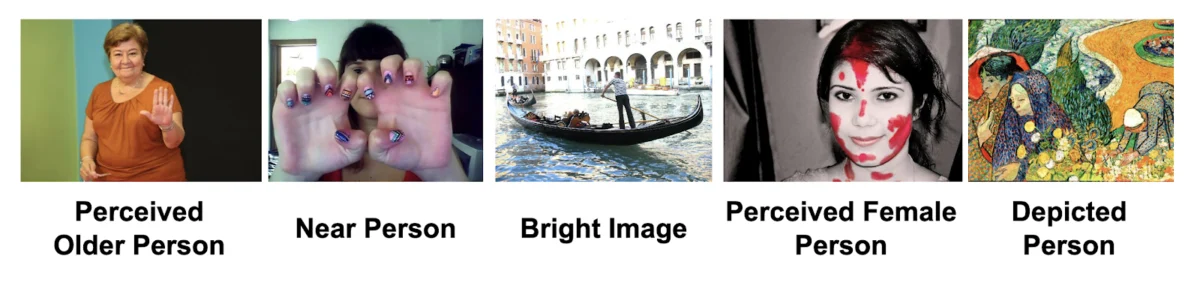
Wake Vision addresses this through comprehensive, fine-grained benchmarks. These tests go beyond simple binary "person/no-person" detection, offering performance metrics for specific categories:
- Perceived Older Person: Assessing detection across different age demographics.
- Near vs. Far Person: Testing spatial awareness and depth perception in limited resolutions.
- Brightness Variations: Challenging the model’s robustness in high-glare or low-light conditions.
- Depicted Person: Evaluating how models handle non-human representations or obscured figures.
By categorizing the data in this way, the Harvard team has enabled a new level of accountability in AI development. Researchers can now identify exactly where their models are biased or failing, allowing for more targeted optimization.
Official Responses and Industry Implications
The academic and industrial reception of Wake Vision has been overwhelmingly positive. By moving the field toward a standardized, high-quality benchmark, the researchers are effectively lowering the barrier to entry for developers and engineers.

"This isn’t just another dataset," says a lead researcher on the project. "It is a deliberate effort to shift the culture of TinyML toward rigor and reproducibility."
The implications for the industry are profound. As we move toward a future of "Ambient Intelligence," where our environments are constantly monitoring and adapting to our needs, the reliability of these tiny models is paramount. Whether it is a wearable health monitor or a smart security camera, the ability to accurately and efficiently detect human presence without compromising battery life or user privacy is the holy grail of edge computing.
The Path Forward: A Call to Innovation
The Wake Vision team has taken deliberate steps to ensure their work is accessible to everyone. The dataset is fully available under a permissive CC-BY 4.0 license, meaning that it can be integrated into both academic research and commercial products without the legal headaches often associated with proprietary data.
Furthermore, the integration with popular machine learning services and the launch of a public leaderboard serve as a catalyst for community-driven progress. The leaderboard is not merely a scoreboard; it is a living library of architectures, optimization techniques, and training strategies. By submitting their models, practitioners contribute to a collective intelligence that benefits the entire ecosystem.

As we look toward the future, the challenge for the TinyML community will be to leverage this new resource to push the boundaries of what is possible. Can we create models that are smaller, faster, and more accurate than ever before? With the foundation laid by the Harvard team, the answer seems to be a resounding yes.
The introduction of Wake Vision is a landmark event. It signals a shift from the "Wild West" era of early TinyML to a period of professionalized, scalable, and highly accurate edge computing. For developers, researchers, and hobbyists alike, the invitation is open: explore the data, test your models, and help define the next generation of intelligent devices.
To get started with the datasets, explore the benchmarks, or contribute to the leaderboard, visit wakevision.ai. The future of intelligence is tiny, and it is finally coming into focus.