OpenPuck: Unleashing the Steam Controller’s True Potential with DIY Multi-Platform Freedom
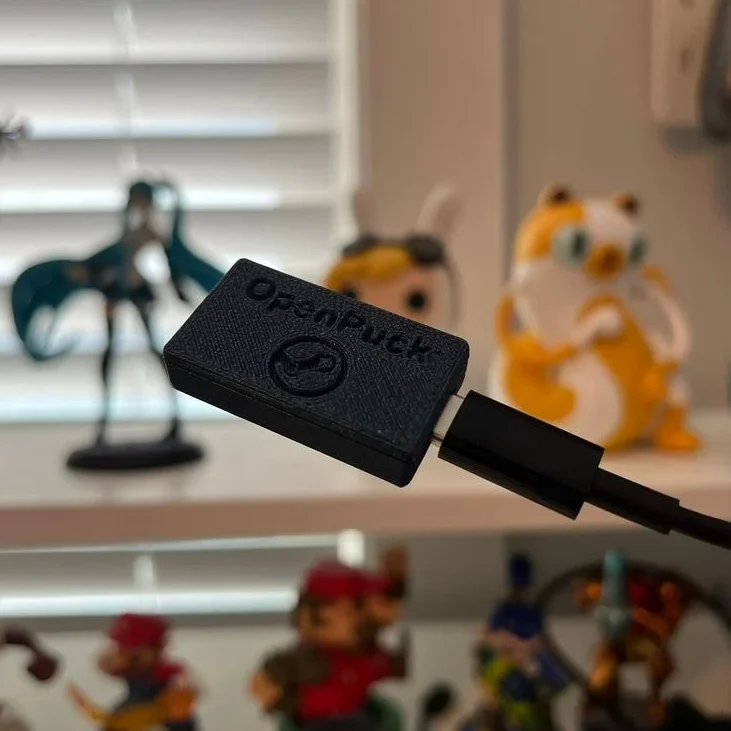
A groundbreaking open-source project, OpenPuck, is set to revolutionize how gamers utilize their beloved Steam Controllers. Born from the ingenuity of the maker community, OpenPuck provides a do-it-yourself solution for a low-latency wireless receiver, capable of not only mimicking Valve’s proprietary hardware but also introducing unprecedented multi-platform emulation for Xbox, Nintendo Switch, and Sony PlayStation consoles. This initiative effectively bypasses the limitations of Valve’s recent hardware refresh, empowering users to extend the utility and lifespan of their unique gaming peripheral far beyond its original scope.
Main Facts: A New Era for the Steam Controller
Valve’s Steam Controller, a device celebrated for its innovative design and highly customizable input methods, recently saw a subtle resurgence with a new iteration featuring an integrated USB puck. This puck serves a dual purpose: a charging station and a dedicated, low-latency wireless receiver. However, a significant drawback emerged for enthusiasts: these new pucks are not available for separate purchase, leaving many existing Steam Controller owners unable to upgrade or replace their wireless dongles with the latest standard.
Enter OpenPuck, a visionary project spearheaded by developer [safijari], which directly addresses this gap. OpenPuck offers a comprehensive, open-source solution that allows users to construct their own wireless receiver. Utilizing the readily available and highly affordable Pro Micro NRF52840 board, OpenPuck is programmed to perfectly emulate the wireless receiver functionality of Valve’s factory puck. This means Steam Controller owners can seamlessly pair their controllers to an OpenPuck, just as they would with the official hardware.
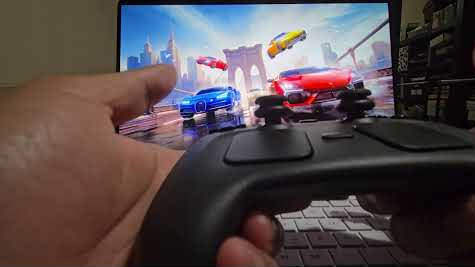
But OpenPuck’s ambition extends far beyond simple replication. Through clever engineering and meticulous protocol documentation, the project introduces a suite of advanced features that elevate the Steam Controller’s versatility to new heights. By inputting specific button combinations, OpenPuck transforms the Steam Controller into a universal input device, capable of emulating Xbox, Nintendo Switch, or Sony PlayStation controllers. This groundbreaking functionality enables Steam Controller users to connect their cherished peripheral to a Nintendo Switch, for example, and have it recognized as an official wired controller, complete with motion sensor support and haptic feedback. This level of cross-platform compatibility is a game-changer, breaking down the walled gardens of console ecosystems and offering unprecedented flexibility to gamers.
Chronology: From Valve’s Vision to Community Innovation
The journey of the Steam Controller is a testament to Valve’s experimental spirit in the PC gaming hardware space. First unveiled in 2013 and officially released in November 2015, the controller was designed to bridge the gap between traditional gamepad gaming and the precision of keyboard and mouse input, particularly for genres like strategy games and first-person shooters on the couch. Its distinctive features, including dual haptic trackpads, a central clickable touchpad, and extensive customization options via Steam Input, garnered a dedicated following. Valve’s vision was to create a controller that could interact with any game, even those not traditionally supporting gamepads, by translating controller inputs into keyboard and mouse commands.
Despite its innovative design, the Steam Controller faced challenges in mainstream adoption, leading to its eventual discontinuation from retail channels in 2019, often sold off at deeply discounted prices. This perceived "failure" paradoxically solidified its status as a cult classic, with a passionate community continuing to champion its unique capabilities. Many users purchased multiple units during the clearance sales, ensuring a supply for years to come.
Fast forward to more recent times, Valve introduced a new variant or refresh of the Steam Controller, notably bundling it with an updated wired USB puck. While this puck offered improved wireless performance and integrated charging capabilities, its exclusivity — not being sold separately — created a new frustration for the existing user base. Those who owned older controllers or simply wanted to leverage the newer puck’s features were left without an official upgrade path.
It was this very limitation that spurred [safijari] to action. Recognizing the unmet need within the Steam Controller community, the developer embarked on the ambitious OpenPuck project. The initial and most formidable challenge was the reverse-engineering of Valve’s proprietary wireless protocol. This painstaking process, meticulously documented within the OpenPuck project’s GitHub repository, involved deciphering the intricate communication layers between the Steam Controller and its receiver. The success of this endeavor laid the foundation for emulating the factory puck’s core functionality.
Following the breakthrough in protocol documentation, the development shifted towards integrating advanced features. The vision was not merely to replicate, but to enhance. The idea of multi-platform emulation emerged as a natural extension, addressing another long-standing desire of Steam Controller users: to use their preferred input device across various gaming systems without relying on complex third-party software layers or limited Bluetooth profiles. The integration of Xbox, Nintendo Switch, and PlayStation emulation modes, triggered by simple button combinations, marked a significant milestone, transforming OpenPuck from a mere replacement part into a powerful, versatile adapter.
The project quickly gained traction within the maker community. An excellent example of this collaborative spirit is the contribution of [jaki-gh], who designed a functional and aesthetically pleasing 3D-printable case for the OpenPuck hardware. This community-driven development underscores the open-source ethos, where individuals contribute their skills to enhance a shared resource, making the project more accessible and user-friendly for a broader audience. The rapid evolution of OpenPuck, from a complex reverse-engineering feat to a feature-rich, community-supported solution, highlights the power of dedicated individuals in filling voids left by larger corporations.
Supporting Data: A Deep Dive into OpenPuck’s Architecture and Advantages
OpenPuck’s brilliance lies in its elegant simplicity and the sophisticated engineering underpinning it. At its heart, the project leverages the Pro Micro NRF52840 board, a cornerstone of its affordability and accessibility.
Hardware: The Pro Micro NRF52840
The NRF52840 is a powerful, highly integrated multi-protocol System-on-Chip (SoC) from Nordic Semiconductor, renowned for its low-power wireless capabilities, particularly Bluetooth Low Energy (BLE). The "Pro Micro" form factor refers to a compact board design popular in the maker community, offering a familiar pinout and USB connectivity. This specific board combines a powerful ARM Cortex-M4 processor with the NRF52840’s radio, making it an ideal candidate for projects requiring both computational power and robust wireless communication.
- Cost-Effectiveness: These boards are widely available from various manufacturers at very competitive prices, often under $20-$30 USD, making OpenPuck an extremely economical DIY solution compared to a hypothetical official replacement puck.
- Capabilities: The NRF52840’s radio is capable of 2.4 GHz wireless communication, precisely what’s needed to interact with the Steam Controller. Its processing power allows it to handle the complex tasks of wireless protocol emulation and real-time input translation for various console modes.
- Accessibility: The Pro Micro form factor is well-supported by development environments like Arduino IDE (with appropriate board support packages), making it relatively straightforward for hobbyists to program and flash the necessary firmware.
Software and Firmware: The Protocol Breakthrough
The core of OpenPuck’s functionality resides in its custom firmware. The most critical component of this firmware is the implementation of the Steam Controller’s wireless protocol. [safijari]’s monumental effort in documenting this proprietary protocol was the linchpin. Proprietary protocols are often closely guarded secrets, requiring meticulous analysis of radio signals, data packets, and timing information to understand how devices communicate. This reverse-engineering work is a hallmark of advanced hardware hacking and is what allows OpenPuck to "speak" the Steam Controller’s language natively.
The firmware on the Pro Micro NRF52840 board is designed to:
- Emulate the Steam Controller’s native wireless receiver: This involves responding to pairing requests and reliably receiving input data from the controller.
- Translate inputs: Depending on the selected emulation mode, the firmware translates the Steam Controller’s unique inputs (trackpad movements, gyro data, button presses) into the expected input signals for Xbox, Switch, or PlayStation consoles.
Emulation Modes: Unlocking Universal Compatibility
The multi-platform emulation feature is arguably OpenPuck’s most compelling advantage. Instead of being tethered to Steam Input for optimal performance, the Steam Controller, through OpenPuck, gains direct compatibility with other gaming systems.
- Mechanism: Users can switch between emulation modes (Xbox 360/One, Nintendo Switch Pro Controller, Sony DualShock 4/DualSense) using simple, predefined button combinations on the Steam Controller itself. This on-the-fly switching adds immense convenience.
- Feature Parity: OpenPuck strives for high fidelity in its emulation. For instance, when emulating a Nintendo Switch Pro Controller, OpenPuck successfully translates the Steam Controller’s internal motion sensors (gyroscope and accelerometer) into Switch-compatible motion data. Similarly, haptic feedback is remapped, providing a familiar tactile experience on the new platform. This ensures that games expecting specific controller features will function as intended.
- Why it’s Crucial: The Steam Controller’s deep integration with Steam Input, while powerful for PC gaming, often limits its utility outside the Steam ecosystem. Without Steam running, many of the controller’s advanced features, especially its trackpads and gyro, might not be recognized or function optimally with non-Steam games or other devices. OpenPuck bypasses this dependency by making the controller directly recognizable as a standard console gamepad, enabling "plug-and-play" functionality on consoles or other PC applications without Steam. This means a single Steam Controller can now serve as a primary input device across a gamer’s entire collection of platforms.
Comparison with the Factory Puck: Advantages and Trade-offs
| Feature | Valve Factory Puck (new version) | OpenPuck (DIY) |
|---|---|---|
| Core Function | Wireless receiver | Wireless receiver |
| Availability | Bundled with new controllers; not sold separately | DIY (components readily available) |
| Cost | Included with new controller purchase | Cost of Pro Micro NRF52840 board (~$15-30) |
| Charging Capability | Yes (wired USB-C, potentially "walking itself") | No (Steam Controller charges via its own USB-C port) |
| Multi-Platform Emulation | No (primarily Steam-focused) | Yes (Xbox, Switch, PlayStation) |
| Open Source | No (proprietary) | Yes (fully open-source hardware/firmware) |
| Customization | Limited | Highly customizable, potential for future features |
| Form Factor | Compact, integrated USB puck | Typically bare board, requires DIY case (e.g., 3D print) |
| Latency | Low-latency wireless | Low-latency wireless (emulates original) |
The primary trade-off with OpenPuck is the absence of a charging function. Valve’s new puck notably serves as a charging station for the Steam Controller, and in some intriguing demonstrations, the controller can even "skitter itself" towards the puck for charging. OpenPuck does not replicate this specific charging mechanism. However, this is a minor inconvenience, as the Steam Controller can still be charged perfectly fine via a standard USB-C cable connected directly to the controller itself. This means users aren’t left without a charging solution; they simply use the controller’s built-in USB-C port rather than the receiver for power.
The ability to reuse a single, highly preferred controller across a multitude of platforms without complex software layers or input wrappers is a powerful incentive for many users. The DIY nature, coupled with the open-source ethos, means that the project is not only accessible but also continuously improvable by the community.
Official Responses: Silence and Community Embrace
As of this report, Valve Corporation has not issued any official statement regarding the OpenPuck project. This is not entirely surprising, given Valve’s historical approach to community-driven projects that interact with their hardware. Typically, Valve maintains a position of non-interference or tacit acknowledgment, particularly when such projects expand the utility of their products without directly competing or infringing on core intellectual property.
Valve has a complex relationship with open platforms. While they champion PC gaming as an open ecosystem and have heavily invested in Linux gaming through SteamOS and the Steam Deck, their hardware ventures often carry proprietary elements. The Steam Controller itself, while having open-source drivers and configuration tools through Steam Input, relies on a proprietary wireless protocol for its dedicated dongle. Valve’s focus has largely shifted to the Steam Deck, which effectively integrates Steam Input capabilities into a portable PC gaming device. Therefore, it’s plausible that community efforts like OpenPuck, which extend the life and versatility of older hardware, are viewed as beneficial for ecosystem engagement, even if not officially endorsed.
The response from the Steam Controller community, however, has been overwhelmingly positive. Forums, social media, and maker platforms have buzzed with excitement about OpenPuck. Users who have long cherished their Steam Controllers but wished for greater cross-platform compatibility see OpenPuck as a revelation. The project has been lauded for its ingenuity, technical prowess, and its embodiment of the hacker spirit – taking control of one’s hardware. The inclusion of a comprehensive setup video and clear documentation further lowers the barrier to entry, inviting more enthusiasts to participate in the DIY process. The immediate demand for such a solution underscores a significant unmet need among Valve’s legacy hardware users.
Implications: Reshaping the Gaming Hardware Landscape
The OpenPuck project carries significant implications across several domains, from individual gamers to the broader gaming and maker industries.
For Steam Controller Users: Enhanced Longevity and Value
The most immediate beneficiaries are the thousands of Steam Controller owners worldwide. OpenPuck breathes new life into a device that many feared was slowly becoming obsolete outside of the Steam ecosystem. It transforms the Steam Controller from a niche PC peripheral into a versatile, universal gamepad. This significantly increases the longevity and perceived value of their investment, allowing them to use a controller they are already comfortable with across PC, Xbox, Switch, and PlayStation platforms. This freedom from platform lock-in is a powerful motivator for consumers. No longer constrained by Valve’s ecosystem, the controller becomes a truly personal input device tailored to individual preferences.
For the DIY and Maker Community: Inspiration and Empowerment
OpenPuck serves as a powerful case study and source of inspiration for the broader DIY and maker communities. It vividly demonstrates the potential of reverse engineering, open-source development, and collaborative innovation. Projects like OpenPuck empower individuals to understand, modify, and enhance their electronic devices, fostering a deeper connection with technology. The detailed protocol documentation provided by [safijari] is particularly valuable, offering insights into complex wireless communication that can inform future projects. It encourages others to tackle similar challenges, breaking down proprietary barriers and fostering an environment of shared knowledge and collective problem-solving. The accessibility of hardware like the NRF52840 boards makes such advanced projects within reach for hobbyists with varying skill levels.
For the Gaming Industry: A Challenge to Proprietary Ecosystems
The success of OpenPuck sends a clear message to gaming hardware manufacturers: consumers desire flexibility and cross-platform compatibility. In an era where gaming often spans multiple devices and platforms, proprietary hardware that locks users into a single ecosystem can become a point of frustration. OpenPuck highlights a demand for more open standards or, at the very least, official solutions that offer similar levels of versatility. It implicitly challenges companies to consider the long-term utility and interoperability of their products, or risk having the community fill those gaps through independent innovation. This could potentially influence future hardware design, pushing for more modularity or open APIs.
Future Prospects of OpenPuck: Evolution and Expansion
The future of OpenPuck looks promising. As an open-source project, it is ripe for continued development and community contributions. Potential future enhancements could include:
- Further console emulation refinements: Ensuring even greater compatibility and feature parity with the latest console controllers.
- Expanded hardware support: Adapting the firmware for other affordable microcontrollers.
- Wireless charging integration: While challenging, the community might explore adding inductive charging capabilities to a future OpenPuck iteration.
- Advanced customization tools: Developing user-friendly interfaces for configuring OpenPuck’s settings without needing to reflash firmware.
- Community-designed cases: Further iterations and stylistic options for 3D printed cases.
The project’s robust foundation and active community engagement suggest a vibrant future, where OpenPuck continues to evolve, adding more features and supporting a wider range of user needs. It could even inspire similar projects for other niche or discontinued controllers, fostering a broader movement towards hardware liberation.
In conclusion, OpenPuck is more than just a DIY wireless receiver; it is a powerful statement about community ingenuity, the enduring appeal of customizable hardware, and the desire for open, flexible gaming experiences. By unlocking the full, multi-platform potential of the Steam Controller, [safijari] and the contributing community have not only provided an essential solution but have also set a compelling precedent for how independent developers can empower users and reshape the landscape of gaming hardware. It stands as a testament to the idea that with enough dedication and an open approach, limitations imposed by proprietary systems can often be overcome, leading to greater freedom and enjoyment for all.