A Silent Breach: The Unpatched Cursor 0-Day Vulnerability and the Perils of AI-Driven Development
In the rapidly evolving landscape of AI-powered development tools, Cursor has positioned itself as a revolutionary integrated development environment (IDE). By integrating advanced machine learning models directly into the coding workflow, it has garnered a massive following among developers seeking to accelerate their productivity. However, a startling security disclosure by cybersecurity firm Mindgard has brought the platform under intense scrutiny, revealing a critical, unpatched 0-day vulnerability that transforms the act of opening a project into a potential security catastrophe.
This vulnerability, which allows for arbitrary code execution on Windows systems, underscores the precarious balance between rapid feature iteration and the fundamental requirements of software security. As developers increasingly rely on "intelligent" editors, the surface area for supply-chain attacks has expanded, and the Cursor incident serves as a sobering case study in how a seemingly minor oversight can lead to systemic compromise.
The Anatomy of the Exploit: How "git.exe" Becomes a Weapon
At the heart of the issue is the way Cursor resolves external dependencies—specifically, the Git binary—upon the initialization of a workspace. In its quest to be a "plug-and-play" solution, Cursor’s underlying architecture is designed to identify the necessary environment tools automatically.
The flaw is deceptively simple: when Cursor loads a project, it scans several pre-defined directories to locate the git executable required for version control operations. Crucially, one of the locations Cursor probes is the root directory of the workspace currently being opened.
If a malicious actor plants a file named git.exe at the root of a repository, Cursor’s startup routine inadvertently executes that file the moment the project is opened. Because this execution occurs as part of the IDE’s internal initialization sequence, it bypasses the typical security checkpoints a user might expect. The developer, simply by opening a folder to begin their workday, unknowingly triggers the execution of potentially malicious code.
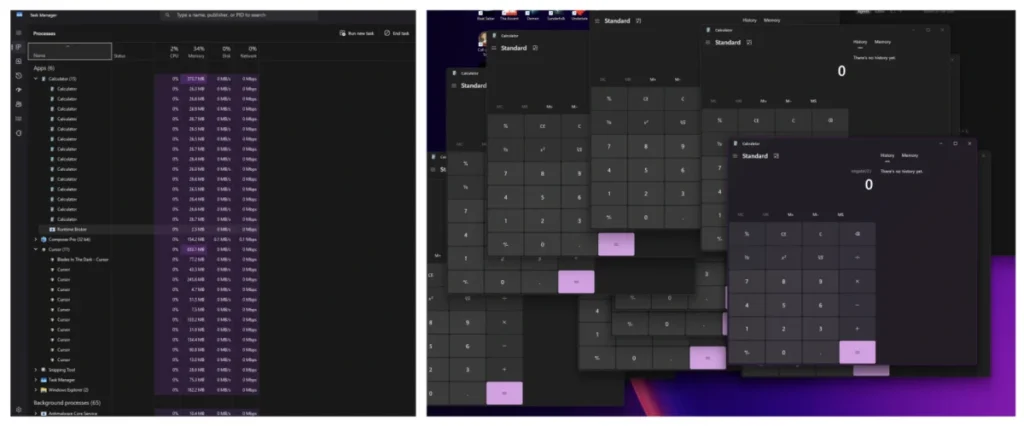
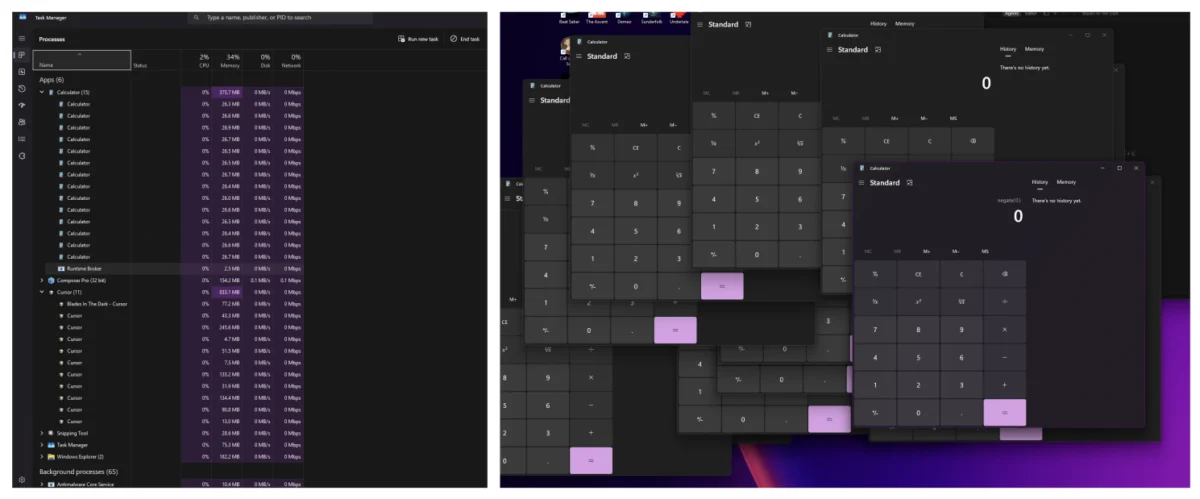
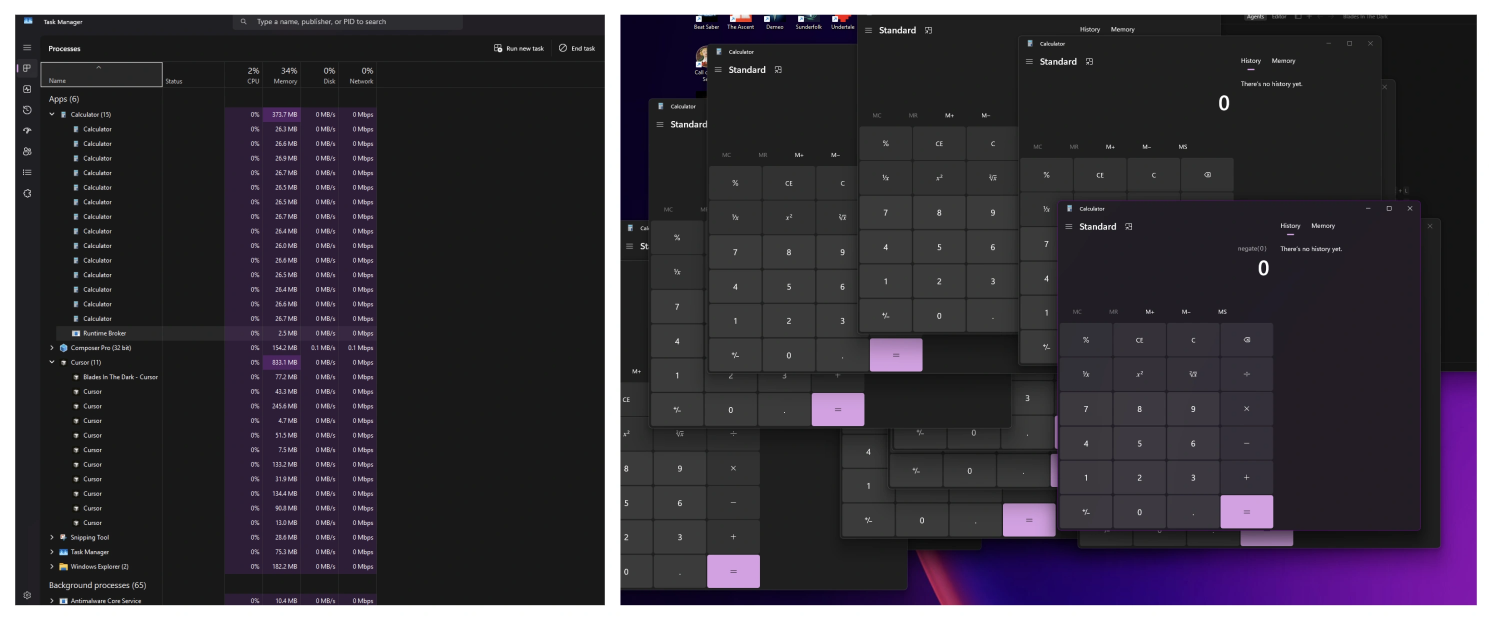
Mindgard demonstrated the severity of this flaw through a proof-of-concept (PoC) that replaced the legitimate git.exe with the Windows Calculator application. Upon opening the infected directory, Cursor immediately launched multiple instances of the calculator, proving that the IDE would blindly run any binary presented to it under that specific filename. In a real-world attack scenario, instead of the harmless Calculator app, an adversary could execute a remote access trojan (RAT), a credential harvester, or a ransomware payload, effectively granting them full control over the host machine.

A Chronology of Neglect: Five Months of "Cat and Mouse"
The most alarming aspect of the Cursor vulnerability is not merely the technical flaw, but the institutional response—or lack thereof—from the company behind the IDE. The timeline of this disclosure paints a picture of a company struggling to manage its security disclosures, leading to a breakdown in trust between the developers and the cybersecurity community.
The Initial Contact (December 2025)
The vulnerability was first identified and reported to Cursor by Aaron Portnoy of Mindgard on December 15, 2025. Following standard industry protocols, Mindgard reached out to ensure the vulnerability could be mitigated before becoming public knowledge. However, the initial report was met with a wall of silence.
The Escalation
Months passed with no substantive communication from the Cursor team. After repeated attempts to establish contact went unanswered, Portnoy took the unusual step of issuing a public appeal on LinkedIn in early 2026. This public pressure finally elicited a response from Cursor’s Chief Information Security Officer (CISO), who attributed the lack of communication to a "broken automation" process that had caused the original HackerOne invitation to be missed.
The HackerOne Standoff
Even after the CISO’s intervention, the path to resolution remained rocky. The vulnerability report submitted to the HackerOne platform was prematurely closed by Cursor staff, categorized as "informative and out of scope." This dismissive classification suggested a failure to grasp the systemic danger posed by the vulnerability. Mindgard pushed back, successfully compelling the platform to reopen the case and acknowledge the validity of the threat.
The Silence Continues
Despite the report being reopened and confirmed, the ensuing months (February, March, and April) saw a return to radio silence. Throughout this period, Cursor continued to ship new updates and feature-rich releases for its AI-driven IDE, seemingly prioritizing user acquisition and feature expansion over the remediation of a critical security flaw that could compromise its entire user base.
Implications for the AI-Driven Development Ecosystem
The implications of this vulnerability are profound, particularly for the enterprise sector. Modern software development often involves cloning hundreds of repositories from various sources, including public GitHub repositories, open-source projects, and vendor-provided codebases. If an IDE can be weaponized simply by including a renamed binary in the root directory, every developer working in a collaborative environment is at risk.
The Trust Gap
Developers choose tools like Cursor to save time, but trust is an implicit component of that choice. When a tool automatically executes binaries from a project folder without sandboxing or verification, it violates the principle of least privilege. This incident highlights the dangers of "feature-creep," where the convenience of automated environment setup creates a direct pipeline for malware.
Supply Chain Security
The Cursor vulnerability is a prime example of a supply-chain attack. By poisoning a repository, an attacker doesn’t need to target the developer directly; they simply need the developer to be curious enough to open their code. In an era where AI-generated code is becoming the norm, the integrity of the IDE becomes just as critical as the integrity of the code itself. If the tool used to write code is compromised, the provenance of all software produced by that tool becomes suspect.
Official Responses and the Need for Transparency
When the story finally broke in the media, Cursor’s response was, by all accounts, underwhelming. An unnamed spokesperson for the company told Dark Reading, "I can confirm we are addressing this and will get back to Mindgard accordingly."

This statement is notably vague and lacks the urgency expected of a firm handling a critical 0-day vulnerability. It does not provide a timeline for a patch, nor does it acknowledge the potential harm to users who have been operating under the assumption that their development environment is secure.
The incident raises broader questions about the maturity of AI startups. As these companies transition from agile, fast-moving teams to critical infrastructure providers, they must adopt more robust security governance. A "move fast and break things" mentality is incompatible with the responsibilities of maintaining a development environment that acts as the gateway to a company’s entire intellectual property.
Moving Forward: Recommendations for Developers
While a formal fix from Cursor is pending, developers must take proactive steps to secure their workstations.
- Vigilance with Untrusted Repositories: Be extremely cautious when cloning and opening repositories from unknown or unverified sources. Before opening a project in an IDE like Cursor, perform a cursory check of the root directory for suspicious binaries.
- Environment Isolation: Whenever possible, run development tools within virtualized environments or containers. This limits the "blast radius" of any potential exploit.
- Endpoint Security: Ensure that robust endpoint detection and response (EDR) software is active on your machine. Tools that monitor for unexpected process spawning—such as an IDE launching the Windows Calculator or command-line shells—can help catch an attack in progress.
- Demand Accountability: As a community, developers should demand higher standards from the tools they use. Security disclosure policies should be transparent, responsive, and treated as a top-tier priority by vendors.
Conclusion
The Cursor 0-day vulnerability is a cautionary tale for the modern era of software development. It highlights that even the most innovative tools are built on fundamental architectural decisions that can have devastating security consequences.
The five-month delay in addressing this flaw reflects a cultural failure within the organization—one that prioritizes the delivery of new, flashy features over the foundational safety of the user. For Cursor to maintain its standing in the developer community, it must do more than offer vague assurances. It must demonstrate a commitment to security that matches the sophistication of its AI models. Until then, developers would be wise to approach their IDEs with the same skepticism they apply to the code they download from the web. The convenience of modern development is a powerful tool, but in the wrong hands, it can be the very thing that undoes us.