High-Definition Vision in Miniature: An In-Depth Look at the 700 TVL SONY CCD Camera Module
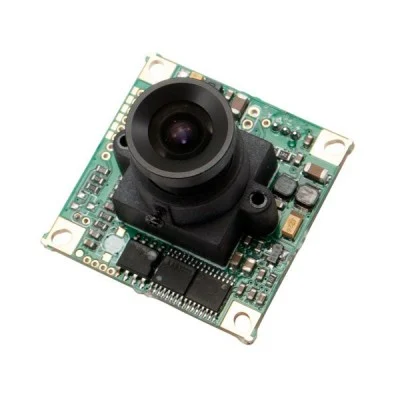
In the rapidly evolving world of electronics, imaging technology remains a cornerstone of innovation. From industrial robotics and surveillance systems to the burgeoning hobbyist market of FPV (First Person View) drones, the demand for compact, reliable, and high-fidelity optical sensors has never been greater. The recent release of the high-resolution 700 TV-line (TVL) color camera module, powered by advanced SONY DSP (Digital Signal Processing) technology, represents a significant milestone in bridging the gap between miniaturized form factors and professional-grade imaging performance.
This article explores the technical specifications, practical applications, and the broader implications of integrating SONY’s CCD (Charge-Coupled Device) architecture into compact camera modules.
Main Facts: The Intersection of Precision and Compactness
The core of this module is its 1/3-inch CCD sensor, a technology long favored for its superior light sensitivity and color reproduction compared to budget-grade CMOS alternatives. By leveraging a 700 TVL resolution, the module provides a level of detail that was previously reserved for much larger, stationary security systems.
Technical Specifications at a Glance:
- Sensor Type: 1/3-inch SONY CCD
- Resolution: 700 TV Lines (Horizontal)
- Lens Specification: 3.6mm fixed focal length
- Light Sensitivity: 0.1 Lux (Low-light operational capability)
- Processing: Integrated SONY DSP for real-time image enhancement
The 3.6mm lens is a strategic choice, offering a wide field of view that is essential for situational awareness. Whether mounted on a drone navigating tight spaces or integrated into a static security housing, the lens provides enough depth and width to capture critical information without the distortion commonly associated with ultra-wide fisheye lenses.
Chronology: The Evolution of CCD Technology in Miniaturization
To understand the importance of this new module, one must examine the trajectory of CCD technology. During the early 2000s, CCDs were the gold standard for quality, though they were bulky and power-hungry. As mobile technology surged, CMOS sensors became the default for small devices due to their power efficiency and lower manufacturing costs.
However, a "CCD Renaissance" occurred in the industrial and FPV sectors. Professionals noted that while CMOS sensors had improved, CCDs still provided a more natural color rendition and better performance in high-contrast environments.
- 2010–2015: The rise of FPV drones demanded cameras that could handle rapid changes in light (e.g., flying from a bright sky into a shaded building). CCD modules with integrated DSPs emerged as the preferred solution.
- 2018–2022: DSP chips became more sophisticated, allowing for better "Wide Dynamic Range" (WDR) and noise reduction, enabling CCD modules to maintain performance while shrinking in size.
- 2024: The current release marks the maturation of this tech, where high-definition resolution (700 TVL) is now available in a standardized, low-profile module compatible with nearly any embedded project.
Supporting Data: Why 700 TVL and 0.1 Lux Matter
In the realm of analog video transmission, "TV Lines" measure the horizontal resolution—the number of vertical lines that can be distinguished in a test pattern. A 700 TVL rating places this camera in the "High-Resolution" category of analog CCTV systems.

The Low-Light Advantage
The 0.1 Lux sensitivity is perhaps the most critical specification for real-world reliability. Lux measures the intensity of light falling on a surface. A clear, moonlit night is approximately 0.1 to 0.3 Lux. By achieving 0.1 Lux sensitivity, this module effectively acts as a "low-light" camera, allowing users to maintain visual contact even when ambient lighting conditions are far from ideal.
The SONY DSP plays a crucial role here. Without advanced digital processing, a sensor at low light would produce excessive "noise" or "grain." The DSP performs real-time temporal and spatial noise reduction, ensuring that the image remains crisp and usable even when the sensor is struggling to capture photons.
Official Perspectives and Industry Implications
Industry analysts point to the "Open-Electronics" approach as a catalyst for this technology’s democratization. By making these modules available to hobbyists and engineers alike, manufacturers are fostering an ecosystem where high-quality optical input is no longer gated by expensive industrial contracts.
Implications for Robotics
For engineers working on autonomous ground vehicles (AGVs), the camera acts as the "eyes" of the system. The high resolution allows for better edge detection and object identification, which are critical for computer vision algorithms. Because the signal output is standard analog, it can be easily converted to digital for processing by microcontrollers like Raspberry Pi or NVIDIA Jetson, making it a versatile tool for R&D.
Implications for FPV and Security
In the security sector, the 3.6mm lens provides a balanced view that is perfect for monitoring doorways or corridors. In the FPV community, the reliability of a CCD sensor ensures that the pilot is not blinded by "jello effects" or rapid blooming (where a bright light source washes out the entire image), which are common failure points in cheaper optical systems.
Deep Dive: The Role of the SONY DSP
One might ask, "Why does the DSP matter so much?"
A sensor only captures raw light data; it is the DSP that interprets this data to create a coherent image. The SONY DSP integrated into this module handles:

- Auto White Balance (AWB): Adjusting color temperatures so that whites appear white, regardless of whether the light source is a fluorescent bulb or the setting sun.
- Backlight Compensation (BLC): If an object is in front of a bright window, the DSP ensures the object is not reduced to a silhouette.
- Gain Control: Automatically boosting the signal when light levels drop, keeping the video feed visible when the environment grows dim.
These functions, when handled in hardware rather than software, ensure that there is virtually zero latency—a critical requirement for remote-piloted operations.
Future Outlook: The Resilience of Analog Modules
While the world is moving toward 4K and 8K digital video, there remains a persistent demand for high-quality analog modules. Digital cameras often suffer from latency—the delay between the light hitting the lens and the image appearing on the monitor. In high-speed drone racing or real-time surveillance, even a 50-millisecond delay can be catastrophic.
This 700 TVL SONY CCD module represents the peak of "real-time" optical performance. It is a testament to the idea that sometimes, the most effective solution is not the one with the highest pixel count, but the one with the lowest latency and the highest reliability.
Conclusion: A Tool for Professionals and Enthusiasts
The integration of a SONY-engineered CCD sensor and a high-performance DSP into a compact, 700 TVL camera module is a significant development for any project requiring reliable, clear, and responsive video input. Whether you are building a custom security solution, upgrading an FPV drone, or prototyping a robotic vision system, the hardware offers a balance of durability and technical excellence that is difficult to surpass.
For those interested in exploring the practical applications of this module, resources such as the Open-Electronics store provide the necessary technical documentation and hardware support to get these cameras operational. As we look toward the future, it is clear that these small but mighty modules will continue to serve as the foundational vision for a new generation of technological innovation.
Disclaimer: Technical specifications provided are based on the manufacturer’s data as of the latest documentation. Users are advised to verify compatibility with their specific video transmission systems before installation.