The Intelligence Revolution: How Android 2026 is Redefining the OS-App Relationship
By Editorial Staff
At Google I/O 2026, the tech giant signaled a seismic shift in the mobile landscape. Android is no longer merely an operating system designed to manage hardware resources and facilitate app navigation; it has evolved into a comprehensive "intelligence system." This fundamental transition aims to harmonize the boundary between user intent and digital execution, effectively positioning Google’s AI—specifically Gemini—at the very heart of the mobile experience.
For developers, this evolution represents both a challenge and an unprecedented opportunity. As Google moves toward an agentic future, the ability to build intelligent, context-aware experiences natively within the OS has become the new benchmark for mobile innovation.
Main Facts: The Shift to an Intelligence-First OS
The core mission of Android in 2026 is to move beyond passive task completion. By leveraging the deep integration of Gemini, Android is transforming into an ecosystem where the OS can "see" and "act" within applications on the user’s behalf.
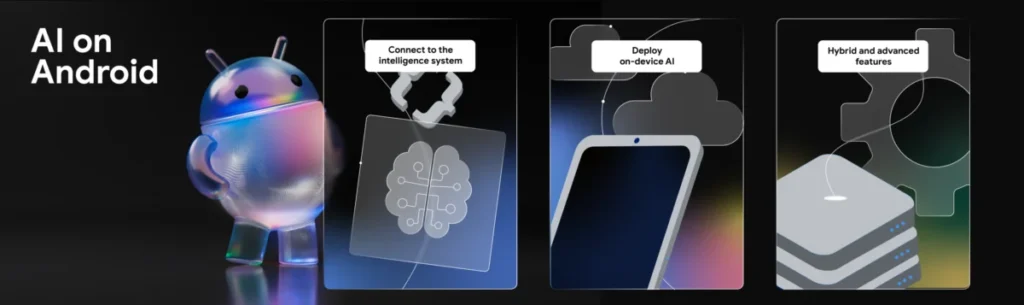
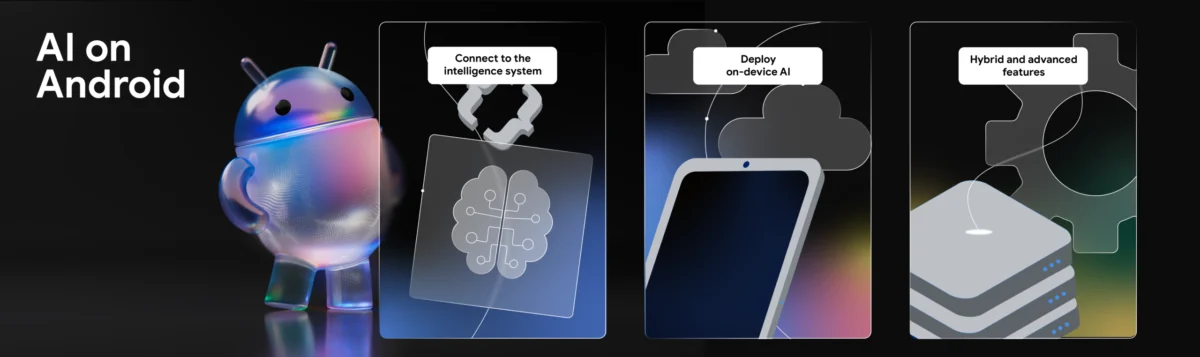
This shift is anchored by three primary pillars introduced at I/O:
- AppFunctions: A new framework that allows developers to surface app capabilities directly to the OS intelligence layer.
- Gemini Nano 4: The next generation of on-device, privacy-preserving AI models.
- Hybrid Inference: A sophisticated architecture that balances on-device privacy with cloud-based computational power.
These updates represent a departure from the traditional "siloed" app model, where an app’s functions were trapped behind a user-facing interface. Now, those functions can be exposed as API-driven services that agents like Gemini can trigger, orchestrate, and execute.
Chronology: The Road to Agentic Android
The trajectory of this transformation has been rapid and deliberate:
- Pre-2025: Android focused on "on-device ML" (Machine Learning), primarily through libraries like ML Kit and TensorFlow Lite, which allowed for static image recognition or basic text suggestions.
- Early 2026 (Gemma 4 Launch): Google unveiled Gemma 4, establishing a new standard for open-weight models, providing the foundation for more capable local agentic intelligence.
- May 2026 (Google I/O): The official pivot from "OS" to "Intelligence System." Google showcased the integration of Gemini into the core Android framework, demonstrating how apps can be "read" by the system to perform complex multi-step tasks.
- Post-I/O 2026: Google has opened the Early Access Program for AppFunctions, inviting developers to integrate their internal app logic into the Android intelligence pipeline.
Supporting Data: Powering the New Intelligence Stack
The technical backbone of this transition relies on a multi-tiered approach to model deployment.
The Rise of Gemini Nano 4
The newest iteration of Gemini Nano—the Nano 4 preview—is engineered specifically for the constraints of mobile hardware. By utilizing the AIcore developer preview, developers can now tap into a model that is more efficient, faster, and more accurate than its predecessors. This is critical for real-time tasks like live translation, real-time transcription, and context-aware suggestions that occur entirely on the device.
Hybrid Inference: The Best of Both Worlds
Not all AI tasks are created equal. Some require the low-latency, privacy-centric nature of on-device processing, while others require the massive parameter counts of the cloud. Google’s new hybrid framework allows developers to:
- Route tasks dynamically: Simple, sensitive queries remain on-device (utilizing Gemini Nano 4 or LiteRT-LM).
- Offload complexity: Resource-heavy tasks (like creative generation or deep data synthesis) are seamlessly routed to the cloud.
This ensures that battery life and data usage are managed intelligently, providing a seamless user experience that doesn’t sacrifice performance.

Official Responses: Insights from the Engineering Frontline
Jingyu Shi, Staff Developer Relations Engineer at Google, emphasized that the goal is to make developers "first-class citizens" in this new intelligence architecture.
"We are moving from a world where users have to hunt for features within apps to a world where features come to the user when they need them," Shi noted during the developer sessions. "By providing the infrastructure for AppFunctions, we are essentially giving developers a standardized language to communicate their app’s capabilities to the Android OS. If an app can do it, the agent should be able to trigger it."
The message to the developer community is clear: The traditional UI-based interaction model is not disappearing, but it is being augmented by a functional API-based model. Developers who adopt these new frameworks early will be the ones whose apps become the "default" actions triggered by Gemini when a user makes a request.
Implications: A New Era for Mobile Development
The shift toward an agentic operating system has profound implications for the future of mobile software:
1. The Death of the "Feature Discovery" Problem
Currently, users struggle to find specific features in complex apps. In an agentic Android world, the AI will know that "Book a flight to Tokyo" involves the specific API call within your airline app. This reduces the friction of navigation and increases the usage of "hidden" features.
2. Privacy as a Competitive Advantage
By prioritizing on-device processing via Gemini Nano 4 and LiteRT-LM, Google is providing a pathway for developers to handle sensitive user data without ever sending it to the cloud. This is a massive boon for enterprise and health-tech applications that must adhere to strict regulatory compliance.
3. The Customization Frontier
With the introduction of LiteRT-LM, developers are no longer restricted to Google’s pre-trained models. They can fine-tune their own small language models (SLMs) and deploy them directly on the device. This allows for niche-specific intelligence—such as a specialized legal document analyzer or a domain-specific coding assistant—that runs locally and securely.
4. A Shift in UX Design
Designers must now think beyond the "screen." They must design for "intent." How does your app describe its functions to the OS? How does the user experience flow when the app is being operated by an AI agent rather than a human finger? The documentation available on the Android AI Hub is currently the primary resource for these new design paradigms.
Conclusion: How to Get Started
The era of the "Intelligence System" is not a distant vision—it is an active, evolving reality. For developers, the transition involves three concrete steps:
- Join the Early Access Program: The AppFunctions API is currently in experimental preview. Registering for the Early Access Program is the fastest way to get your app integrated into the upcoming system-wide intelligence rollouts.
- Experiment with AIcore: Start prototyping with Gemini Nano 4. Use the provided ML Kit GenAI APIs to handle common tasks like text generation and summarization locally.
- Study the Documentation: The Android AI Hub provides comprehensive guides, code snippets, and sample applications that demonstrate how to implement these features.
As Google I/O 2026 proved, the Android platform is no longer just a window into the internet—it is becoming an intelligent partner. For developers willing to adapt, the rewards will be significant: apps that are smarter, more useful, and deeply embedded into the daily lives of billions of users. The future of mobile is agentic, and the tools to build that future are already in your hands.