Elevating Android Intelligence: Mastering Hybrid AI with Firebase AI Logic
In the rapidly evolving landscape of mobile development, the boundary between local on-device processing and cloud-based reasoning is becoming increasingly fluid. As part of the ongoing "Build Intelligent Android Apps" series, Google’s Developer Relations team has unveiled the third installment, focusing on the powerful intersection of Firebase AI Logic and the Jetpacker sample application. This guide explores how developers can architect applications that are not only intelligent but also resilient, cost-effective, and deeply personalized.
Main Facts: Bridging the Gap Between Local and Cloud
The core premise of the latest update to the Jetpacker sample is simple yet profound: no single AI deployment strategy fits every use case. While on-device models like Gemini Nano offer unmatched privacy and offline capability, they lack the vast world knowledge and massive context windows of their cloud-based counterparts.
Firebase AI Logic serves as the orchestration layer, allowing developers to implement:

- LLM Grounding: Connecting models to real-time data, such as museum hours or live event information, to ensure accuracy.
- Hybrid Inference: Dynamically routing tasks between on-device and cloud models to balance performance, cost, and user experience.
- Secure API Pipelines: Leveraging Firebase App Check to prevent unauthorized access to cloud AI resources.
By integrating these features, developers can move beyond static apps and create "agentic" experiences—applications that act on behalf of the user to solve complex problems in real-time.
Chronology of Development: The Jetpacker Evolution
The journey to the current iteration of the Jetpacker application has been a multi-phased endeavor, designed to showcase the full spectrum of modern Android AI capabilities.
- Phase 1: The Foundations: The series began with an introduction to the architectural shifts required to transform standard Android apps into intelligent, user-centric experiences.
- Phase 2: On-Device Dominance: The second installment explored the privacy-first approach, utilizing ML Kit’s Prompt API and Gemini Nano to handle sensitive tasks like itinerary summarization and local receipt parsing.
- Phase 3: Hybrid Reasoning (Current): The present focus shifts to the cloud, demonstrating how developers can "ground" LLMs in external data and implement intelligent routing logic for tasks that require more heavy-duty processing power.
- Future Phases: The roadmap continues with upcoming deep dives into AppFunctions for system-level integration and Agentic Workflows, which will enable end-to-end booking capabilities through the A2UI and ADK frameworks.
Supporting Data: Implementing Advanced AI Features
1. Museum Assistant: Achieving Contextual Accuracy
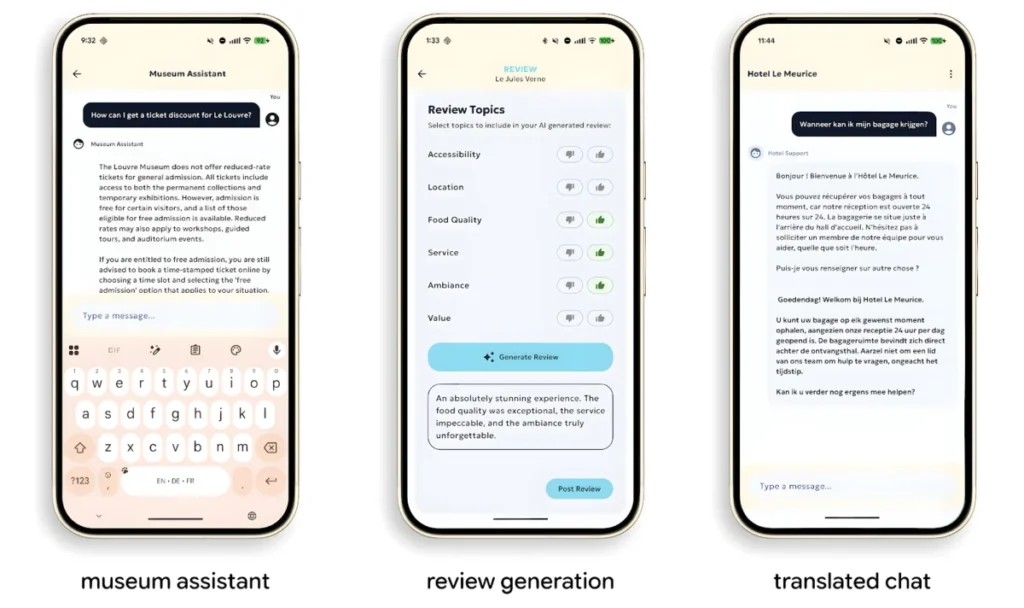
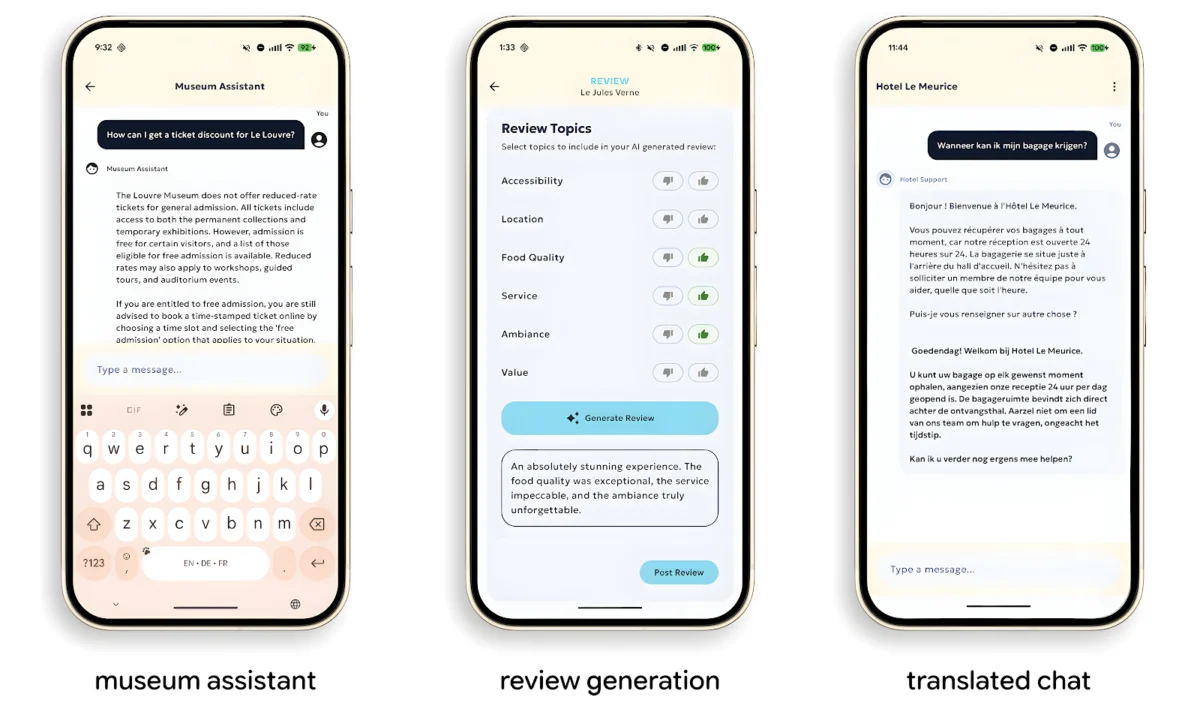
A perennial issue with generative AI is "hallucination"—the tendency for models to confidently state incorrect facts. In the context of a museum guide app, incorrect opening hours or ticket prices can ruin a user’s experience. The Jetpacker solution uses LLM Grounding. By appending specific URL-based context or Google Search results into the model’s prompt window at runtime, the assistant gains access to the "source of truth."

The implementation is modular:
private var toolList = mutableListOf<Tool>()
init
    if (ENABLE_SEARCH_GROUNDING)  toolList.add(Tool.googleSearch())
    if (ENABLE_URL_GROUNDING)  toolList.add(Tool.urlContext())
This approach ensures that when a user asks about a specific exhibition, the model is provided with the most current data before it constructs its answer, effectively eliminating stale information.
2. Hybrid Inference: The Art of Intelligent Routing
Efficiency is the hallmark of professional app development. The restaurant review feature in Jetpacker serves as a prime example of hybrid intelligence. By using the Firebase API for Hybrid Inference, the application checks for the availability of Gemini Nano on the user’s device.

If the hardware is capable, the review is generated locally, saving cloud costs and ensuring the app works in low-connectivity environments. If the device is legacy or lacks the necessary performance overhead, the app seamlessly flips the request to the cloud. This "best-of-both-worlds" strategy ensures consistent feature availability for the entire user base.
3. Custom Routing: Hotel Support Chat
Translating communications in real-time between a hotel receptionist and a traveler requires high precision. The Jetpacker team implemented a custom routing stack that goes beyond simple preference settings. By integrating ML Kit’s Language Identification, the app analyzes the source language of a customer inquiry.
If the language is one where the local model is highly performant (e.g., English or Korean), it routes to the on-device engine. For more obscure language pairs or complex, context-heavy cultural nuances, the app automatically routes the request to the cloud-hosted Gemini model, ensuring the translation remains natural and accurate.

Official Perspectives on Security
A significant focus of this release is the security of AI pipelines. When applications interact with cloud-based LLMs, they become potential targets for API key theft or fraudulent billing.
The Android Developer Relations team emphasizes that Firebase App Check is not optional for production-grade AI apps. By utilizing both Play Integrity for production and a local Debug Provider for development, the team ensures that only authorized requests reach the backend. This creates a secure "handshake" between the device and the model, protecting the developer’s infrastructure while maintaining the integrity of the user’s interaction.
Implications for the Android Ecosystem
The implications of these tools are substantial for the broader development community.

Enhanced User Experience
Users no longer have to worry about whether they have a stable internet connection for their AI features. By prioritizing on-device processing, apps feel snappier, more responsive, and more reliable. When the app does reach out to the cloud, it does so with intent and purpose, providing deep, real-world data that a local model simply cannot store.
Developer Economics
The hybrid approach is a masterclass in cost management. By offloading routine tasks to the device, developers can significantly reduce their cloud infrastructure bills. Simultaneously, by using the cloud for complex, high-value tasks, they maintain a high quality of service without needing to host massive models locally on every device.
Setting the Standard
The "Build Intelligent Android Apps" series is effectively setting the standard for how AI should be integrated into mobile software. It moves the industry away from "AI as a gimmick" toward "AI as a foundational utility." As developers adopt these patterns—grounding, hybrid routing, and rigorous security—the next generation of Android applications will be defined by their ability to provide proactive, context-aware assistance that respects both user privacy and the physical limitations of mobile hardware.

Final Thoughts: The Path Forward
For those looking to get started, the Jetpacker source code on GitHub serves as the primary blueprint. It provides a real-world look at how to structure a project that balances the "AI-everywhere" philosophy with practical engineering constraints.
As we look toward the final installments of this series, the focus on AppFunctions and Agentic Workflows suggests that we are entering an era where Android apps will no longer just answer questions—they will perform actions. Whether it is booking a flight, reserving a table, or coordinating a complex travel itinerary, the integration of Firebase AI Logic is the essential first step in building the intelligent assistants of tomorrow.
For more technical guidance, refer to the Firebase AI Logic documentation and stay tuned to the official Android Developers channels on YouTube and LinkedIn.