Valve Revolutionizes Digital Gifting and Wishlist Management: A Deep Dive into Steam’s Latest Overhaul
In the ever-evolving landscape of digital storefronts, Valve Corporation’s Steam remains the undisputed titan of PC gaming. With its latest suite of updates, Valve has shifted its focus from purely platform-wide sales events to the granular mechanics of user experience, specifically targeting how players gift titles and manage their ever-growing libraries. By introducing guest-checkout gifting, email-based delivery systems, and a sophisticated category-tagging system for wishlists, Valve is effectively lowering the barrier to entry for non-gamers looking to participate in the digital ecosystem.
This comprehensive update represents a strategic pivot toward accessibility, acknowledging that Steam is no longer just a library for the dedicated enthusiast, but a social marketplace that functions as a gift-giving hub for friends and family members who may not even possess their own Steam accounts.
The Core Mechanics of the Update
The recent changes implemented by Valve can be categorized into two primary pillars: the expansion of the gifting ecosystem and the modernization of user-curated wishlists.
Streamlining the Gifting Experience
Historically, gifting a game on Steam was a process tethered strictly to the platform’s social network. To send a title, one had to be "Steam Friends" with the recipient, which required both parties to have established, active accounts. This friction point often deterred relatives or casual acquaintances from buying games for one another, as it necessitated a setup process that was cumbersome for those outside the gaming circle.
Valve’s new update dismantles this hurdle. Users can now gift games directly via email. The recipient does not need to have a pre-existing Steam account to receive the gift; they are simply sent a digital link that allows them to claim the game. If the recipient does not have an account, the process guides them through a quick registration to link the title to their new library.
This update also introduces a more flexible approach to international gifting. While regional pricing and currency restrictions have historically complicated cross-border gifting, Valve has introduced an automated calculation system. During the checkout process, the platform now automatically adjusts the price of a game to match the recipient’s region, provided the sender and recipient are friends on the platform. For those using the new email-gifting feature, geographic limitations remain in place to prevent market exploitation, and a 30-day "claim window" has been implemented; if the gift remains unclaimed after one month, the transaction is automatically refunded to the purchaser.
The New Frontier of Wishlist Organization
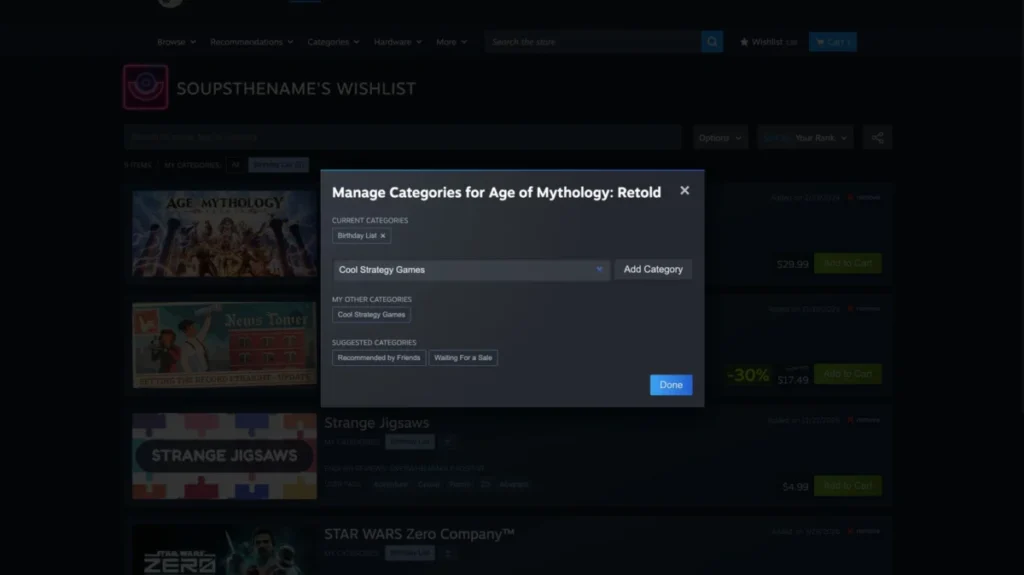
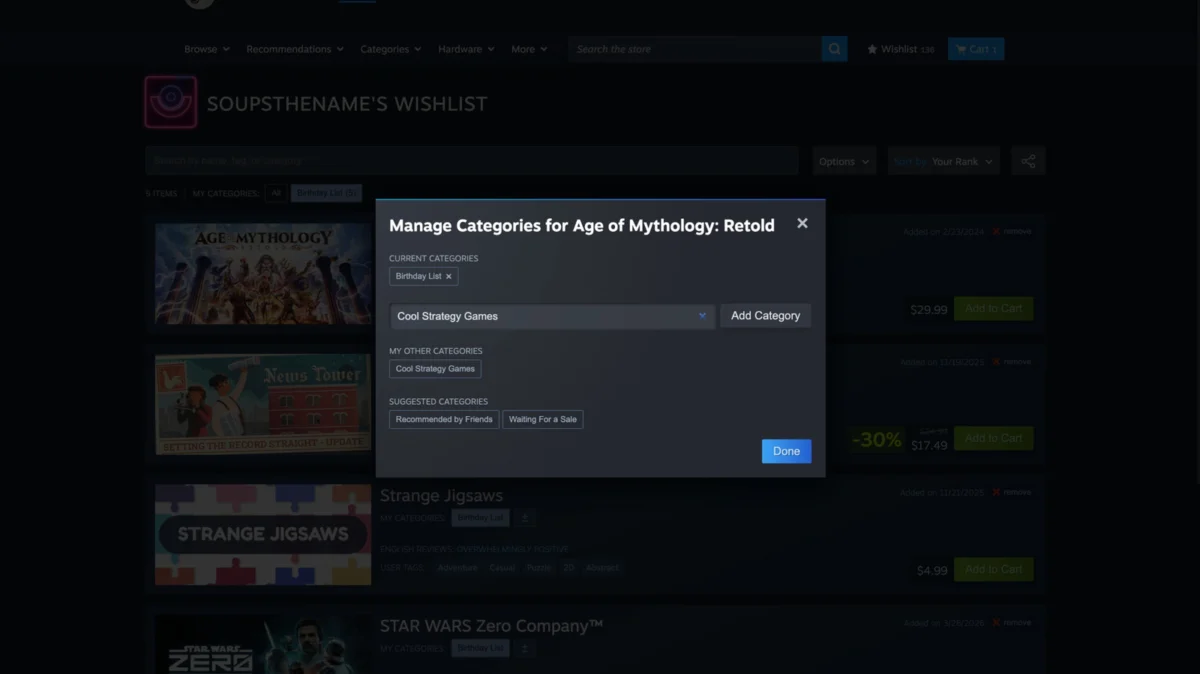
For the veteran Steam user, the wishlist has long been a chaotic "catch-all" document. As the number of titles released on Steam has surged into the thousands annually, the standard linear wishlist has become increasingly difficult to navigate. Valve’s solution is a robust, folder-based categorization system.
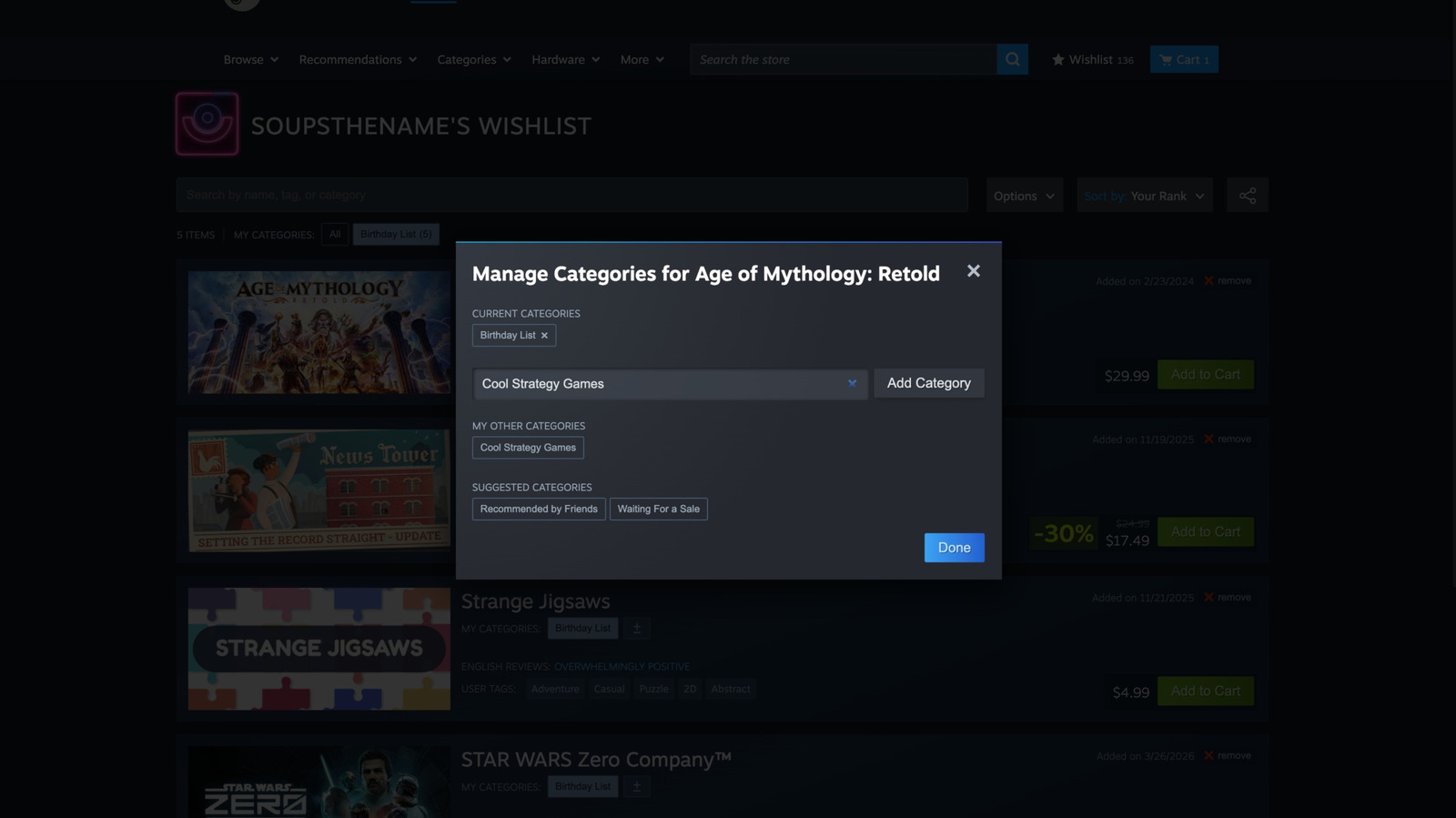
Users can now create custom tags—such as "Must-Play," "Indie Gems," "Co-op for Friends," or "Upcoming RPGs"—and assign games to these categories directly from the store page or the wishlist interface. This granular control allows for a filtered view of one’s desired titles, making it easier to manage expectations during seasonal sales. Furthermore, Valve has integrated smart-filtering for notifications; users can now toggle sale alerts on or off for specific categories, ensuring that their inbox isn’t flooded with notifications for games they may have moved to a lower-priority folder.
Chronology of Development: From Closed Ecosystem to Open Marketplace
To understand why these changes are significant, one must look at the historical trajectory of Steam’s user interface.
- Early 2000s – 2010: Steam began as a proprietary launcher for Valve titles, with a very limited, static store. Gifting was non-existent.
- 2011 – 2015: The introduction of the Steam Workshop, Community Market, and basic gifting features cemented Steam as a social hub. However, gifting was strictly internal.
- 2016 – 2020: The rapid growth of the PC market led to concerns over regional pricing abuse. Valve implemented stricter gifting rules, requiring users to be friends for a set period before sending games, which actually increased the friction for casual gifters.
- 2021 – 2023: As the Steam Deck brought in a wider audience of casual gamers and handheld enthusiasts, the demand for a more intuitive, user-friendly interface reached a breaking point.
- 2024 (Present): Valve shifts strategy. Instead of focusing on locking users into the ecosystem, they are opening the doors to outside participants, prioritizing utility and ease of use over restrictive gatekeeping.
Supporting Data: Why Now?
The data suggests that Valve’s focus on the wishlist and gifting features is a direct response to the "backlog epidemic." According to third-party tracking sites like SteamIDFinder and various analytics dashboards, the average Steam user owns significantly more games than they actively play. By providing organizational tools, Valve is attempting to turn the "wishlist graveyard" into a functional planning tool.
Furthermore, the gaming industry has seen a massive influx of casual consumers following the success of hardware like the Steam Deck. These users are often less familiar with the complexities of Steam’s legacy UI. The new "hover-to-play" trailer functionality and the integration of "Demo Available" badges on the wishlist are designed to reduce the "click-through" fatigue, where users have to navigate away from their list to see if a game is worth buying or if a demo is available.
Official Responses and Internal Sentiment
While Valve famously maintains a lean, decentralized communication structure, the accompanying release notes on the Steam Community forums highlight the company’s commitment to "reducing friction in the digital purchase flow."
A representative for the Steam development team noted in the release blog: "We recognize that Steam is the primary way our users share their passions with friends and family. By removing the requirement for a Steam account to receive a gift, we aren’t just selling games—we’re facilitating human connection. Our goal is to make the act of giving a game as seamless as handing someone a physical box off a retail shelf."
Regarding the wishlist updates, the feedback from beta testers has been overwhelmingly positive. The ability to generate shareable links for specific categories—such as sharing a "Games I Want for My Birthday" category—has been highlighted as a feature that will likely drive increased engagement during the upcoming holiday sales.
Implications for the Industry and the Future of Steam
Impact on Independent Developers
For independent developers, these changes are a boon. A well-organized, category-tagged wishlist is more likely to result in a purchase when that specific title goes on sale. When a user creates a category specifically for "Co-op Games," the visibility of that game increases, and the likelihood of a sale conversion rises significantly. Furthermore, the shareable wishlist links act as organic marketing, allowing users to influence their social circles more effectively.
The Death of the "Gift Card" Dependency?
For years, Steam Gift Cards were the only viable way for non-gamers to participate in the Steam ecosystem. While gift cards will remain a staple, the ability to send specific titles via email creates a more personal gifting experience. It moves the transaction from a "store credit" exchange to a "thoughtful gift" exchange, which is psychologically more satisfying for both the giver and the receiver.
Future Outlook
As Steam continues to refine its platform, we can expect to see further integration of social features. The logical next step for Valve would be the introduction of "shared wishlists" or "collaborative lists," where groups of friends can curate a wishlist for local multiplayer games.
Ultimately, these updates signify that Valve is no longer content with being the best store for gamers; they want to be the best store for everyone. By lowering the barrier to entry, simplifying the purchase path, and providing the tools to manage the digital clutter, Valve is positioning itself to remain the dominant force in PC gaming for the next decade. The company has successfully identified that in a saturated market, the key to growth is not just having the best library—it’s having the most user-friendly way to share it.