The Green-Tech Convergence: How a 3D-Printed Geometric Planter is Redefining Local Home Automation and Indoor Air Quality
By the Tech & Smart Home Desk
Published: October 2023
Main Facts
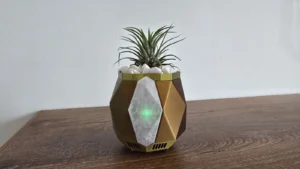
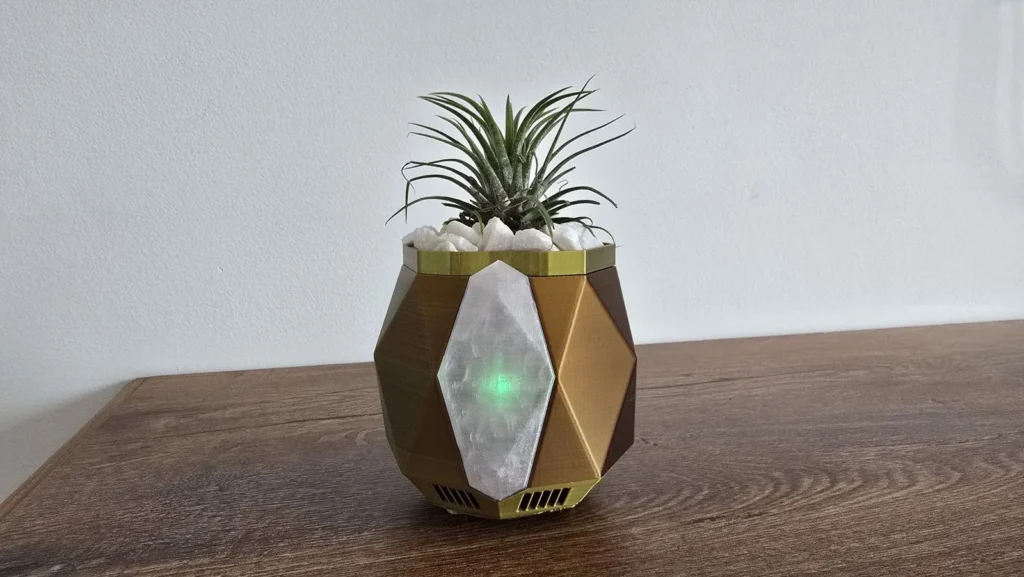
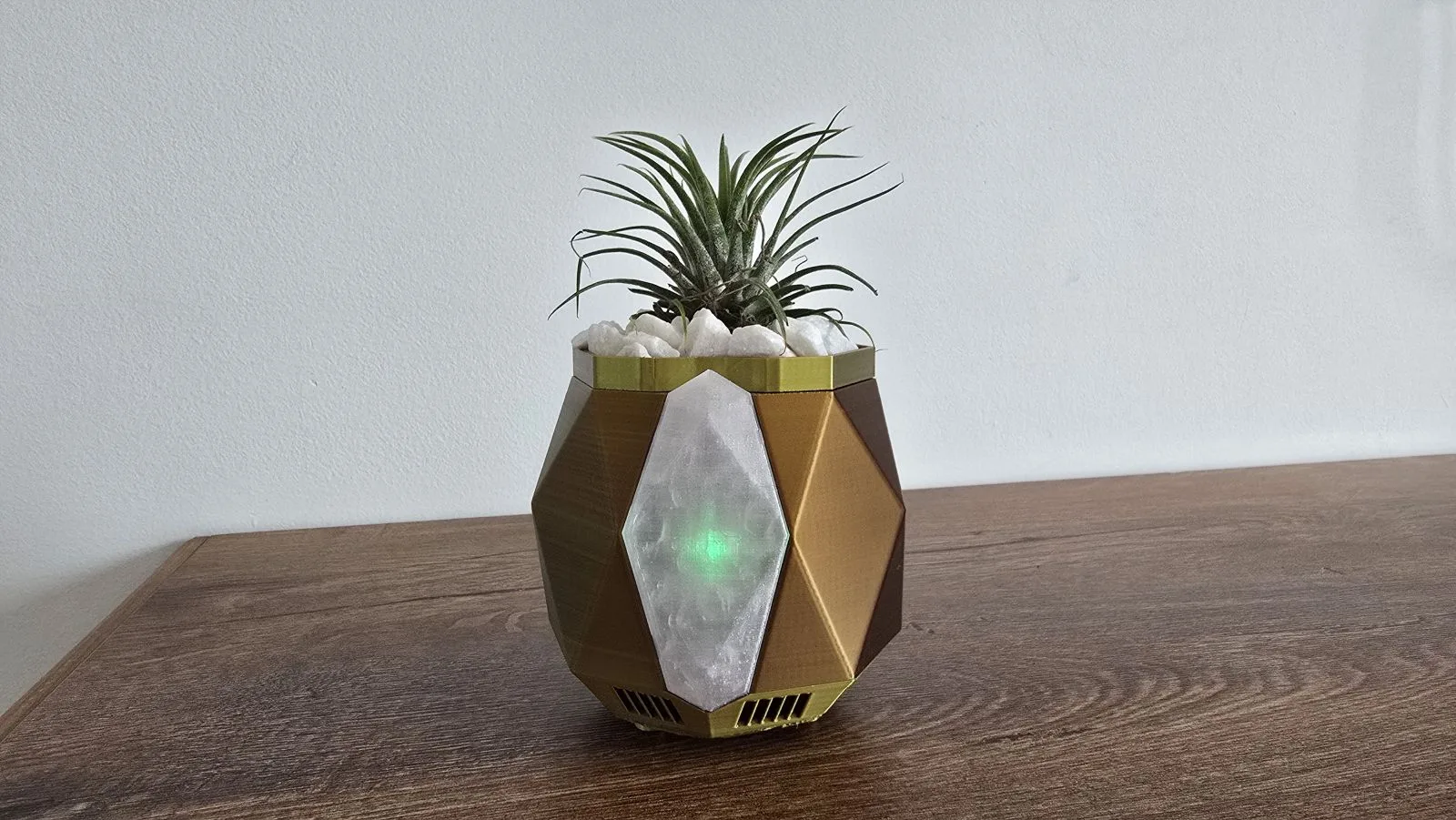
In an era dominated by cloud-reliant smart home ecosystems, subscription models, and privacy concerns, open-source hardware creators continue to push the boundaries of decentralized automation. The latest innovation capturing the attention of the Home Assistant community comes from Murco-design: a sophisticated, highly functional carbon dioxide ($textCO_2$) and environmental monitoring system disguised as a modern, 3D-printed geometric planter.
Far from being a mere novelty item, this project seamlessly merges biophilic interior design with serious home automation engineering. Built entirely around local-first protocols, the device operates independently of any external cloud servers, ensuring that sensitive indoor environmental telemetry remains strictly within the homeowner’s local network.
At the heart of the hardware architecture is an M5Stack AtomS3 Lite microcontroller board, acting as the central processing unit. This compact board is paired with a Sensirion SCD40 nondispersive infrared (NDIR) optical sensor—widely recognized for its precision in measuring carbon dioxide concentration, ambient temperature, and relative humidity. Audio capabilities are driven by a MAX98357A I2S amplifier paired with a $4,Omega$ speaker, transforming the planter into an active voice-notification hub and media player.
Key technical highlights of the Murco-design smart planter include:
- Visual Air Quality Indicators: The onboard RGB LED of the AtomS3 Lite changes color dynamically based on established ASHRAE (American Society of Heating, Refrigerating and Air-Conditioning Engineers) and REHVA (Federation of European Heating, Ventilation and Air Conditioning Associations) indoor air quality thresholds. Green indicates optimal air ($le 420text ppm$), orange signals moderate elevation (up to $1500text ppm$), and red warns of critical $textCO_2$ saturation requiring immediate ventilation.
- Native Home Assistant Integration via ESPHome: The device runs custom, highly refined ESPHome firmware utilizing native encrypted APIs and an integrated local web server.
- Multifunctional Interaction: Beyond air monitoring, the planter features a physical button interface (supporting long-press climate reports and IP-address diagnostics), a dedicated watering reminder pulse for Tillandsia (air plants), a Wi-Fi disconnection watchdog, and an integrated Bluetooth Low Energy (BLE) proxy that extends Home Assistant’s wireless tracking range throughout the home.
With a total component cost hovering between 35 and 40 euros, the project democratizes professional-grade indoor air quality monitoring while proving that smart home technology can enhance physical aesthetics rather than clutter living spaces with plastic gadgets.
Chronology: The Evolution of the Murco-Design Planter
The journey from a conceptual sketch to a polished, open-source smart home hardware project was neither instantaneous nor effortless. The development timeline highlights the iterative nature of open-source engineering:
Phase 1: Conceptualization and Hardware Selection
The project began as an exploration into solving a common dilemma among smart home enthusiasts: the aesthetic friction between functional electronics and interior design. Most industrial $textCO_2$ monitors look clinical, sterile, or overtly technical. Murco-design sought to embed sensors inside everyday decorative objects. Selecting the M5Stack AtomS3 Lite provided a balance of compact form factor, processing power, and cost-effectiveness.
Phase 2: Sensor Calibration and Firmware Iterations (v1.0 to v1.4.5)
Integrating precision environmental sensors into a sealed or semi-sealed 3D-printed enclosure introduces significant thermal challenges. Heat dissipated by microcontrollers and amplifiers can skew temperature and humidity readings.
- The Compiling Milestone: Reaching firmware version
v1.4.5required 58 distinct compilation cycles. These iterations were necessary to fine-tune sensor polling intervals, optimize power consumption, calibrate thermal offsets, and stabilize the I2S audio drivers for the MAX98357A amplifier. - Thermal Management: Through empirical testing, developers accounted for an internal thermal deviation of $3text–6^circtextC$ generated by the board’s components, ensuring that the Sensirion SCD40’s core accuracy of $0.5^circtextC$ could be mathematically corrected in the ESPHome YAML configuration.
Phase 3: Feature Expansion and UX Refinement
Once the core $textCO_2$ metrics were stable, the development expanded into multi-modal user experience (UX) design. Developers introduced physical button shortcuts (such as the four-click IP blink sequence to simplify headless setup) and integrated the BLE proxy feature. This turned the static sensor into a dynamic network node capable of relaying signals from remote Bluetooth-based temperature beacons and plant sensors scattered around the house.
Phase 4: Public Release and Documentation
The final phase culminated in the publication of the complete source code, wiring diagrams, and 3D printing files on GitHub. By ensuring the build guide was simple enough for hobbyists and families to assemble together, Murco-design transitioned the device from a private prototype to a globally accessible community project.
Supporting Data and Technical Specifications
To fully understand the capabilities of the Murco-design planter, it is necessary to examine the hardware bill of materials, electrical specifications, and software parameters that govern its operation.
Component Cost Breakdown
The project achieves an exceptional price-to-performance ratio, totaling roughly €35 to €40:
- Sensirion SCD40 Sensor: ~€23 (representing the bulk of the expenditure due to its high-precision optical NDIR technology).
- M5Stack AtomS3 Lite: ~€8–€10 (ESP32-S3 based microcontroller with Wi-Fi and BLE).
- MAX98357A I2S Amplifier & $4,Omega$ Speaker: ~€4–€6.
- 3D Printing Filament & Misc. Wiring: Negligible for makers with existing supplies.
Electrical and Performance Metrics
- Operating Voltage: 5V via standard USB connection.
- Power Consumption: Ranges consistently between 2W and 3W, making it highly efficient and suitable for continuous 24/7 operation without adding noticeably to domestic energy bills.
- Thermal Performance: Measured ambient temperatures exhibit a baseline offset of $3text–6^circtextC$ due to localized enclosure heat entrapment, which is compensated via ESPHome filters. The sensor maintains an intrinsic accuracy of $pm 0.5^circtextC$.
- Firmware Footprint: ESPHome configuration maps specific General Purpose Input/Output (GPIO) pins (1, 2, 5, 6, 7, 35, and 41) for I2C communication (SCD40), I2S audio output (MAX98357A), and onboard status peripherals.
Software Architecture and Network Protocol
Operating on ESPHome removes the dependency on proprietary manufacturer clouds (such as Tuya, Xiaomi, or Tuya-adjacent ecosystems). Upon initial power-up, the device initiates an Access Point (AP) mode, broadcasting an open Wi-Fi network centered around the IP address 192.168.4.1.
[User Device] ---> Connects to AP (192.168.4.1) ---> Configures Local Wi-Fi Credentials
                                                                |
[Home Assistant] <--- Native Encrypted API / Local LAN <-------+
        |
        +---> Triggers Media Player (Voice Alerts)
        +---> Displays ASHRAE/REHVA Air Quality Status
        +---> Acts as BLE Proxy for Remote Sensors
Once the user inputs their home Wi-Fi credentials via the embedded captive portal, the device drops the AP and joins the local wireless network. Home Assistant instantly discovers the node via native API integration, establishing a secure, encrypted, local-only communication pipeline. Even if broadband internet connectivity is entirely severed, local automations, voice alerts, and sensor polling continue to function without interruption.
Official Responses and Community Reception
The open-source smart home community—particularly within Reddit’s r/homeassistant and the official ESPHome forums—has responded with immense enthusiasm to the Murco-design planter.
Maintainers of the project emphasize that the philosophy behind the build is rooted in digital sovereignty and aesthetic integration. In official project documentation and community Q&A sessions, the creators noted:
"We live in homes filled with screens, blinking routers, and clinical white plastic boxes. Technology should serve our health and comfort without turning our living rooms into server rooms. By housing environmental sensors inside a living organism’s container—a planter—we bridge the gap between nature and technology. More importantly, keeping everything local means your home’s air quality data is nobody’s business but your own."
Early adopters have praised the dual-functionality of the device. Feedback from community builders highlights the convenience of having an audible notification system that doesn’t rely on expensive, cloud-tethered smart speakers. Parents have noted that children respond well to the intuitive color-changing LED, instinctively opening windows when the planter glows orange or red, turning an abstract scientific metric into an interactive household game.
Implications: The Future of Biophilic Smart Homes
The success of the Murco-design $textCO_2$ planter carries profound implications for the future trajectory of consumer IoT (Internet of Things) and interior architecture.
1. The Death of the "Smart Gadget" Aesthetic
For years, consumer electronics have followed a predictable design language: glossy black plastics, aggressive gaming angles, or minimalist white domes. The Murco-design project points toward a future where smart hardware is camouflaged or harmonized with natural materials. As 3D printing and open-source hardware become increasingly accessible, we can expect a surge in "functional decor"—objects that serve a computational purpose while blending seamlessly into rustic, bohemian, or modern minimalist interior designs.
2. Privacy-First Compliance and Local Resilience
As smart home regulations tighten and consumer awareness regarding data privacy grows, reliance on cloud-dependent sensors is becoming a liability. Incidents of cloud outages rendering smart home devices useless have driven a massive migration toward local-first platforms like Home Assistant and ESPHome. This planter is a testament to the fact that advanced features—such as BLE proxy mesh networking, text-to-speech media playback, and real-time telemetry—do not require data to be farmed out to overseas servers.
3. Democratizing Indoor Air Quality (IAQ) Awareness
With post-pandemic awareness of indoor air quality, ventilation, and aerosol transmission at an all-time high, monitoring $textCO_2$ levels has transitioned from an industrial luxury to a residential necessity. High indoor carbon dioxide levels directly correlate with cognitive fatigue, drowsiness, and reduced productivity. By reducing the barrier to entry to a €35 DIY project that anyone can build (and even assemble alongside children), projects like this democratize health data, empowering everyday citizens to take control of their indoor environments.
4. Open-Source Extensibility
Because the project repository is entirely open source, it invites continuous innovation. Developers have already begun discussing forks of the repository that incorporate e-paper displays for numerical data readouts, integration with automated window actuators, or expanded multi-sensor suites capable of detecting volatile organic compounds (VOCs) and particulate matter ($textPM2.5$).
Conclusion
The Murco-design $textCO_2$ monitoring planter is much more than a clever DIY project; it is a manifesto for how modern smart home technology should be built. By prioritizing local control, open-source firmware, aesthetic integration, and affordability, it challenges the status quo of the commercial smart home industry.
Whether you are a seasoned Home Assistant veteran looking to expand your Bluetooth mesh network, a parent wanting to teach children about indoor air quality, or an interior design enthusiast hostile to ugly plastic sensors, this project proves that you no longer have to choose between a smart home and a beautiful home.
For those interested in building their own unit, the complete source code, wiring schematics, and 3D printing files are publicly available on the official Murco-design GitHub Repository.