Two Decades in the Cloud: How Amazon EC2 Rewrote the Rules of Global Computing
SEATTLE — Twenty years ago, the enterprise technology landscape was tethered to physical data centers, racked servers, and months-long procurement cycles. That paradigm shifted forever on a single day in August 2006, when Jeff Barr published a modest blog post introducing the Amazon Elastic Compute Cloud (EC2) Beta.
What began as a single instance type (m1.small) running resizable Linux virtual servers in a solitary Region (US East) has evolved into the invisible digital bedrock of the modern internet. Today, Amazon Web Services (AWS) celebrates the 20th anniversary of Amazon EC2. Over the last two decades, the service has expanded from a radical experiment in utility computing into a sprawling, global infrastructure engine powering everything from garage startups to trillion-parameter artificial intelligence clusters.
As industry analysts and cloud architects reflect on this milestone, the story of EC2 is not merely a chronicle of hardware scaling; it is the definitive biography of how cloud computing conquered the enterprise and redefined global IT architecture.
Main Facts: The Genesis and Scale of Elastic Compute
To understand the magnitude of Amazon EC2’s two-decade reign, one must look at the sheer scale of its evolution. In 2006, the value proposition was deceptively simple: give developers the ability to spin up secure, resizable compute capacity in minutes, bill them by the hour, and eliminate the need for long-term hardware commitments.
That core premise remains unchanged, but the implementation has scaled to proportions unimaginable to the engineers who wrote the original code.
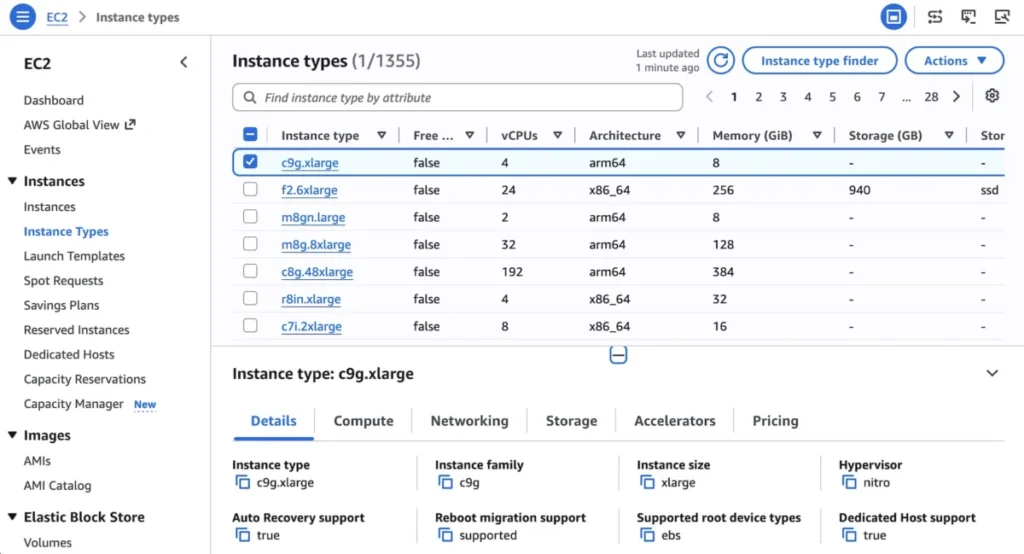
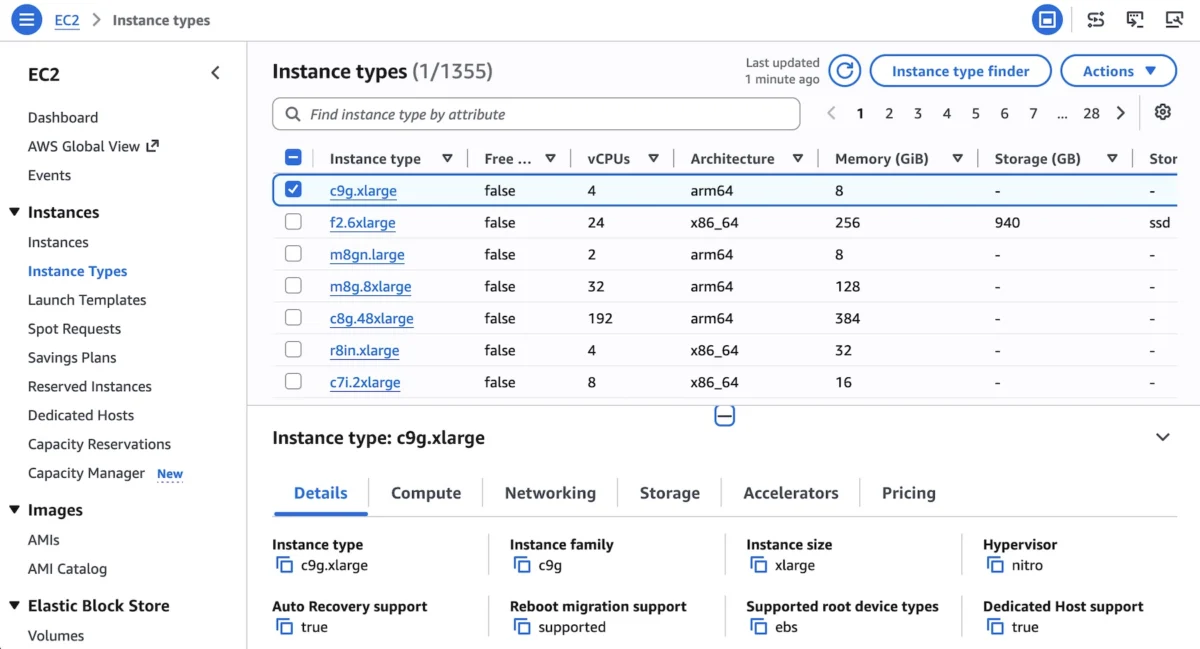
- From One to 1,200+ Instance Types: EC2 has diversified far beyond basic general-purpose Linux servers. Today, customers can choose from more than 1,200 distinct instance types optimized for compute, memory, storage, accelerated computing (GPUs and custom accelerators), and high-performance computing (HPC).
- Global Footprint: What started as a single Region in the United States now spans 39 geographic Regions worldwide. Furthermore, AWS has pushed the boundaries of traditional data center walls through hybrid and edge deployments like AWS Outposts, AWS Local Zones, and AWS Wavelength—the latter embedding EC2 directly inside 5G telecommunication networks for ultra-low latency.
- The Invisible Foundation: EC2 is the beating heart of the broader AWS ecosystem. Higher-level abstractions and managed services—including Amazon ECS, Amazon EKS, AWS Lambda, AWS Fargate, AWS Batch, Amazon EMR, Amazon SageMaker AI, and Amazon Bedrock—all ultimately draw their underlying compute power from EC2.
Every architectural pattern conceived over the past twenty years—from a monolithic LAMP stack serving a local blog to massive distributed neural networks training foundation models—begins with the exact same foundational action: launching an EC2 instance.
Chronology: Milestones That Shaped the Cloud
The history of Amazon EC2 can be mapped through a series of foundational releases that steadily chipped away at the limitations of traditional infrastructure, transforming a basic virtualization tool into a complete enterprise operating system.
The Formative Years: Establishing the Building Blocks (2008–2009)
- 2008 – Amazon Elastic Block Store (EBS): Early cloud instances suffered from ephemeral storage limitations. The introduction of EBS provided persistent, low-latency block storage volumes tailored for EC2, making database workloads and stateful applications viable in the cloud.
- 2009 – Elastic Load Balancing, Auto Scaling, and Amazon CloudWatch: This triumvirate of services transformed EC2 from static virtual machines into dynamic, self-healing applications. Auto Scaling allowed architectures to breathe, expanding and contracting based on real-time traffic, while CloudWatch provided the telemetry necessary to monitor these elastic fleets.
- 2009 – Amazon Virtual Private Cloud (VPC): Security-conscious enterprises had long hesitated to move sensitive workloads to a public multi-tenant cloud. VPC gave customers logically isolated networks, bridging the gap between corporate data centers and public cloud infrastructure.
The Engineering Leap: Custom Silicon and Hyper-Scale (2017–2018)
- 2017 – The AWS Nitro System: By offloading virtualization functions—traditionally handled by the hypervisor and host OS—onto dedicated custom hardware and PCIe cards, the Nitro System reclaimed virtually all CPU and memory resources for customer instances while dramatically boosting security and networking performance.
- 2018 – AWS Graviton Processors: Breaking away from traditional x86 duopolies, AWS introduced ARM-based Graviton processors designed specifically for cloud-native, cost-sensitive scale-out workloads, offering superior price-to-performance ratios.
- 2018 – AWS Outposts: Acknowledging that not all workloads could immediately move to the public cloud due to data residency or latency requirements, Outposts brought native AWS infrastructure and operating models directly into on-premises data centers.
The Edge and AI Era (2019–Present)
- 2019 – Local Zones and Wavelength: AWS began decentralizing its footprint. Local Zones placed compute capacity closer to major metropolitan population centers, while Wavelength embedded EC2 nodes inside telecom 5G networks for edge computing use cases like autonomous vehicles and real-time multiplayer gaming.
- The AI Boom: In the wake of the generative AI explosion, EC2 evolved to house massive clusters of high-end accelerated computing instances, housing the heavy computational lifting required to train and deploy modern large language models (LLMs).
Supporting Data: The Economics and Engineering of EC2
The success of Amazon EC2 rests on a delicate equilibrium between massive economies of scale and relentless hardware innovation. When AWS pioneered pay-as-you-go computing, skeptics questioned the economic viability of multi-tenant cloud infrastructure. Two decades later, the data tells a decisive story.
According to industry utilization metrics, public cloud infrastructure has systematically displaced on-premises hardware procurement across global enterprises. The primary driver of this shift is efficiency. By pooling compute resources across millions of global customers, AWS achieved utilization rates that single-tenant corporate data centers could never replicate.
Furthermore, the introduction of custom silicon has altered the cost-performance curve. AWS Graviton processors have consistently delivered up to 40% better price performance than comparable x86-based instances for a wide variety of workloads. Similarly, the Nitro architecture reduced virtualization overhead to near-zero, ensuring that enterprises get every ounce of computing power they pay for.
The breadth of the EC2 instance catalog reflects the specialization required by modern workloads. While general-purpose instances (T and M series) cater to baseline web applications, memory-optimized instances (R and X series) handle massive in-memory databases like SAP HANA, and accelerated computing instances (P and G series) drive computer vision, deep learning, and graphics rendering. This granular specialization ensures that customers never over-provision or waste capital on mismatched hardware profiles.
Official Responses and Reflections
The milestone has prompted reflection from the architects and leaders who built the service from the ground up, as well as the broader cloud computing community.

Writing on the AWS News Blog, principal technologist Channy Yun reflected on the foundational philosophy that guided the team two decades ago:
"We made strong foundational decisions in 2006, and we left room for the service to grow. Twenty years later, that strategy of creating services that are minimal-yet-useful, launching quickly, and iterating rapidly in response to your feedback continues to guide how we build. The next twenty years of cloud computing will demand capabilities we have not yet imagined. Amazon EC2 will continue to be the foundation where your workloads run."
Jeff Barr, whose original 2006 blog post announced the beta to a nascent developer community, has frequently noted that even AWS leadership could not fully anticipate how deeply the developer ecosystem would embrace utility computing. What was initially conceived as a way for startups to rent cheap servers overnight became the operating system for the global digital economy.
Enterprise customers, ranging from financial institutions processing billions of transactions per day to biotechnology firms sequencing genomes, point to EC2’s reliability and backward compatibility as the cornerstone of their operational resilience. Despite countless updates, an application designed to run on early Linux instances can largely find a modernization path forward without rewriting the underlying business logic—a testament to rigorous platform engineering.
Implications: The Next Twenty Years of Cloud Computing
As Amazon EC2 enters its third decade, the technical challenges confronting infrastructure architects are vastly different from those of 2006. The era of simple virtualization and web hosting has given way to the age of autonomous systems, distributed edge computing, and artificial intelligence at scale.
1. The Convergence of Cloud and AI Infrastructure
The primary battleground for cloud computing is no longer general-purpose CPU compute; it is specialized AI acceleration. As foundation models grow larger and enterprise adoption of generative AI accelerates, EC2 is rapidly transforming into the primary engine for machine learning training and inference. The design of future EC2 instances will increasingly prioritize high-speed interconnects, ultra-low-latency networking (such as Elastic Fabric Adapter), and custom silicon designed specifically for neural network workloads.
2. Sustainability and Energy Efficiency
With data centers consuming unprecedented amounts of global electrical power, the environmental footprint of cloud computing has become a critical board-level concern. The next decade of EC2 development will be heavily defined by power efficiency. Custom silicon like Graviton and Trainium, combined with advanced liquid cooling and optimized data center design, will dictate which cloud providers can deliver high-performance compute without exacerbating global carbon emissions.
3. Radical Decentralization
While centralized availability zones will remain the backbone of large-scale enterprise deployments, the proliferation of Internet of Things (IoT) devices, 5G networks, and autonomous systems means compute must live closer to the data source. Services like Outposts, Local Zones, and Wavelength represent the early stages of a fully distributed cloud topology where EC2 instances can run anywhere—from a factory floor to a cellular base station.
Conclusion
When Jeff Barr hit ‘publish’ on his blog post twenty years ago, the technology world was standing on the precipice of a quiet revolution. By turning compute capacity into a measurable, scalable utility, Amazon EC2 dismantled the physical barriers to innovation.
As it turns twenty, EC2 is no longer just a product within a catalog; it is the fundamental infrastructure upon which modern civilization builds its digital future. Whether powering a simple website or orchestrating a global fleet of autonomous AI agents, the cloud remains, above all else, an engine built on the simple promise of an instance ready to launch.