AWS Expands Generative AI Capabilities with Amazon Bedrock Managed Agents Powered by OpenAI
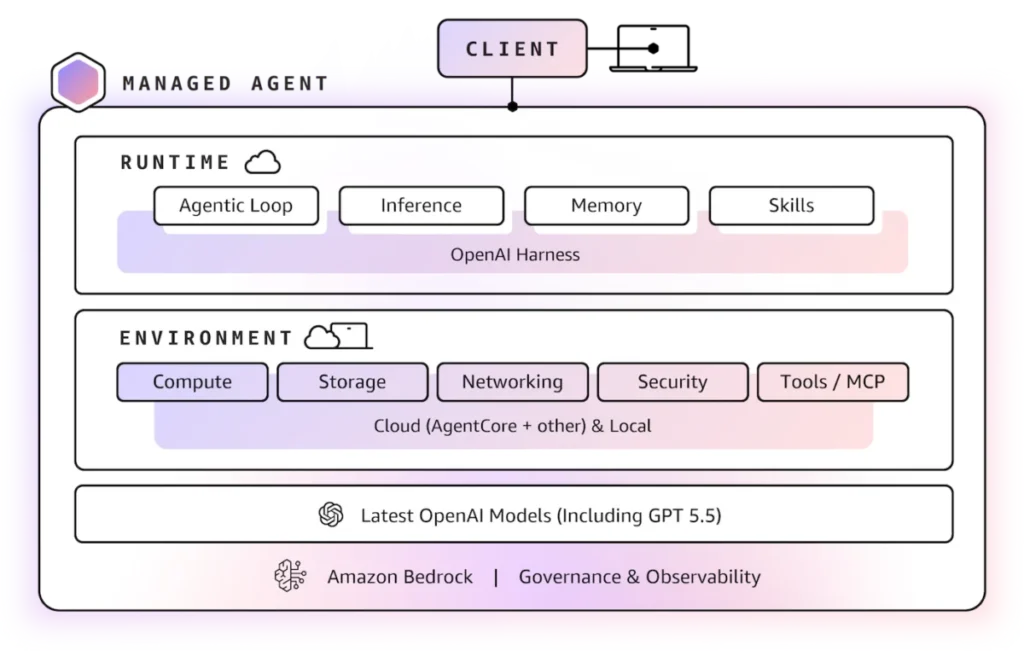
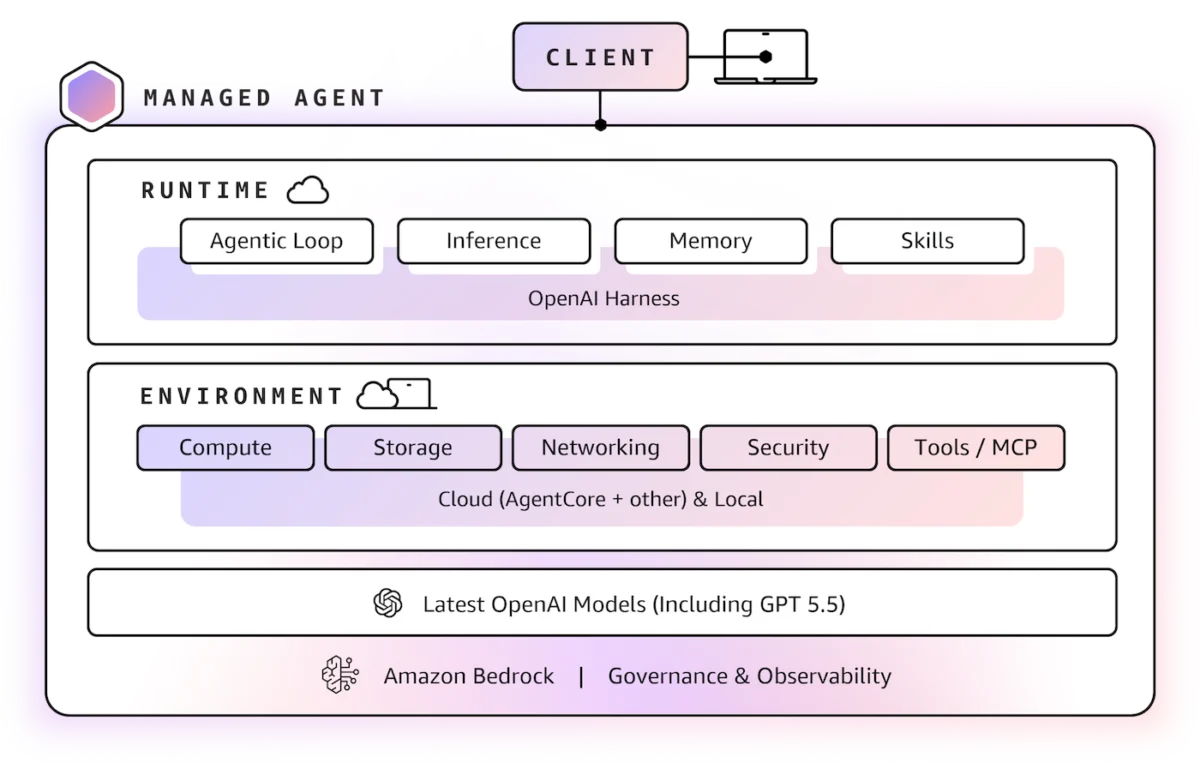
SEATTLE — Amazon Web Services (AWS) has announced a major expansion of its artificial intelligence ecosystem with the public preview of Amazon Bedrock Managed Agents powered by OpenAI. This development bridges two of the most prominent forces in enterprise technology, combining OpenAI’s advanced model architecture with AWS’s robust enterprise infrastructure, security controls, and governance frameworks.
The announcement, detailed in the latest AWS weekly roundup by Principal Developer Advocate Channy Yun, highlights Amazon’s ongoing strategy to provide developers and enterprise architects with unprecedented flexibility. By integrating a customized version of OpenAI’s Agents API directly into the AWS-native environment, organizations can now construct, deploy, and scale intelligent agents optimized for OpenAI models while retaining their existing identity management, compliance frameworks, and data governance policies.
Main Facts
The core of the recent announcement centers on the public preview of Amazon Bedrock Managed Agents powered by OpenAI, which introduces a streamlined path for building sophisticated, autonomous AI workflows.
- AWS-Native Integration: The new offering is built on a custom iteration of OpenAI’s Agents API. It is engineered specifically to function natively within the AWS ecosystem, ensuring seamless communication with other AWS services.
- Unified Governance and Security: Developers can build and deploy agents that utilize pre-existing AWS security constructs, including AWS Identity and Access Management (IAM), fine-grained permission boundaries, and centralized governance frameworks.
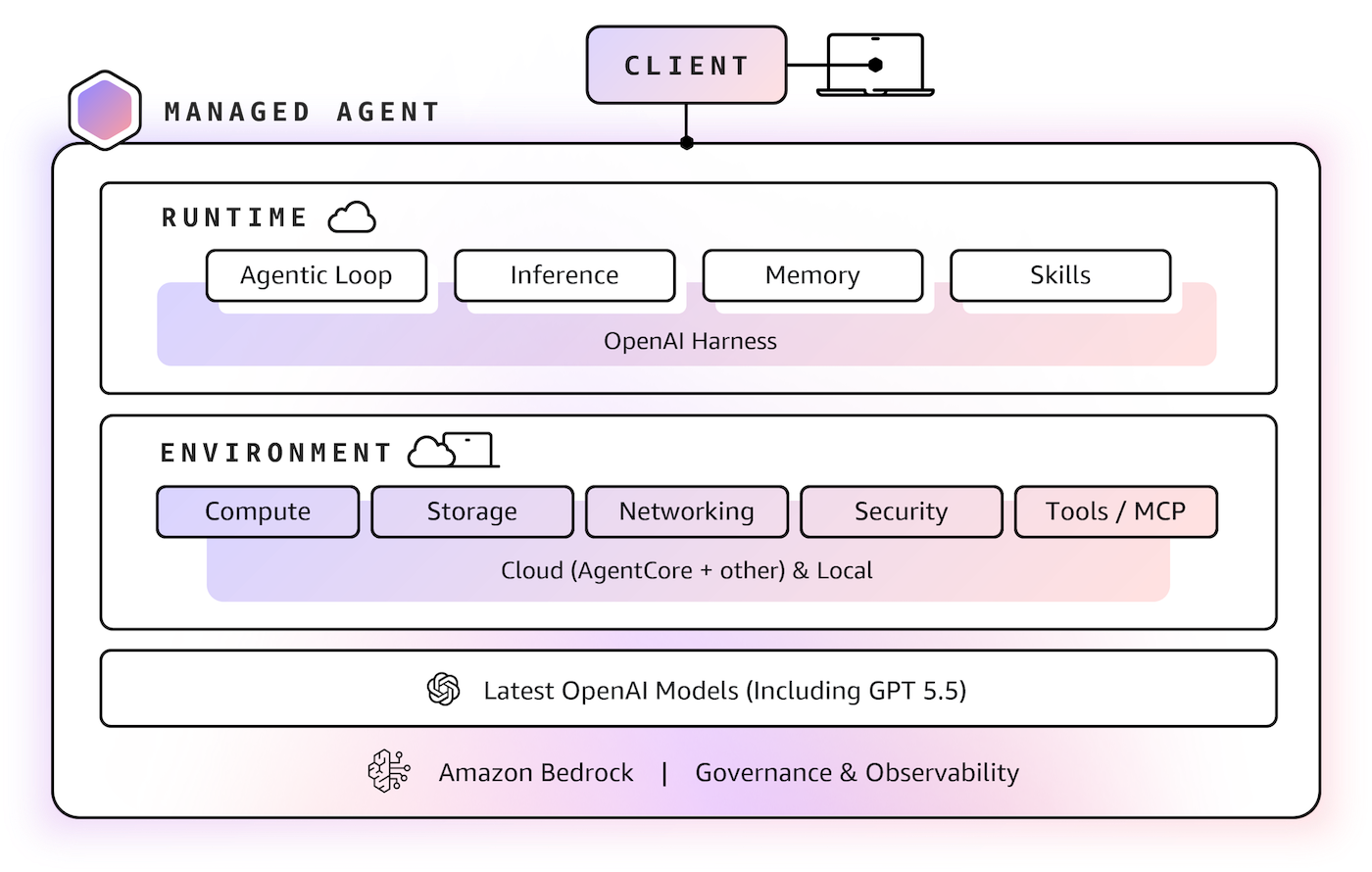
- Flexible Execution Environments: AWS has introduced two primary paths for running these managed agents:
- Self-Hosted Compute: Ideal for developers looking to use existing development machines, localized containers, or custom on-premises and cloud compute environments.
- Amazon Bedrock AgentCore Runtime: A fully managed runtime environment designed to handle sessions smoothly while offering configurable, secure storage options directly inside the user’s AWS account.
- Expanding Frontier Models: Alongside the OpenAI integration, AWS continues to broaden its model catalog on Amazon Bedrock, giving enterprises a wider array of high-performance foundation models to choose from for specific domain tasks.
- Lifecycle and Maintenance Updates: Alongside new feature releases, AWS issued scheduled product lifecycle adjustments, shifting certain legacy services into maintenance, sunset, and end-of-support statuses to streamline its portfolio and encourage migration to modern alternatives.
Chronology of the Release and Ecosystem Evolution
The arrival of Amazon Bedrock Managed Agents powered by OpenAI represents the culmination of a multi-year shift in how cloud providers approach generative AI interoperability.
Early Foundations and Model Choice
When Amazon Bedrock was first introduced, its core value proposition was providing serverless access to leading foundation models—such as Anthropic’s Claude, AI21 Labs’ Jurassic, Cohere, and Meta’s Llama—through a unified API. Enterprises welcomed this multi-model approach because it mitigated vendor lock-in and allowed teams to swap models based on cost, latency, and capability.
The Rise of Autonomous Agents
As foundation models matured from simple text generators into reasoning engines capable of executing multi-step workflows (agents), the complexity of managing these systems grew. Enterprises demanded agentic frameworks that could securely query internal databases, invoke APIs, and maintain conversational state without exposing sensitive corporate data to external risks.
The OpenAI-AWS Convergence
Until recently, deploying OpenAI-based applications often required managing separate infrastructure, API keys, and external security layers outside of traditional cloud environments like AWS. The introduction of a customized OpenAI Agents API running natively within Bedrock bridges this gap.
- September 2026: AWS officially announced the public preview of Amazon Bedrock Managed Agents powered by OpenAI, accompanied by runtime architecture choices via the Bedrock AgentCore Runtime.
- Late September 2026: AWS updated its product lifecycle documentation, detailing maintenance transitions and end-of-support timelines to clear a path for newer AI-centric workloads.
- Ongoing Expansion: AWS continues to promote community engagement through upcoming developer events, AWS re:Invent preparations, and community days to educate builders on integrating these advanced multi-model architectures.
Supporting Data and Technical Architecture
To understand the practical impact of Amazon Bedrock Managed Agents powered by OpenAI, enterprise architects must examine how the underlying runtime and security layers interact.
Execution Environment Comparison
| Feature / Dimension | Self-Hosted Compute | Amazon Bedrock AgentCore Runtime |
|---|---|---|
| Primary Use Case | Local development, custom edge computing, or existing on-prem/cloud clusters. | Fully managed serverless sessions optimized for production scale. |
| Infrastructure Management | Managed entirely by the customer (OS patches, scaling, networking). | Handled by AWS; automatic provisioning and scaling. |
| Storage Configuration | Dependent on the external environment configuration chosen by the developer. | Configurable, secure storage natively mapped inside the user’s AWS account. |
| Security & Identity | Tied to local environment configurations and manual credential management. | Natively integrated with AWS IAM, CloudTrail auditing, and enterprise encryption keys. |
Lifecycle and Service Transitions
In tandem with the AI announcements, AWS released routine product lifecycle management updates on September 29, 2026. These updates affect legacy features and services, pushing them into distinct operational phases:
- Maintenance Phase: Services entering this tier will no longer be accessible to new customers starting October 29, 2026. Existing customers are provided with transition documentation and migration support.
- Sunset Phase: Services that are actively being phased out with fixed deprecation timelines.
- End of Support: Services that have reached the conclusion of their lifecycle, requiring immediate migration to recommended AWS alternatives to avoid operational disruptions.
Official Responses and Industry Perspectives
The convergence of OpenAI technologies with AWS infrastructure has generated significant discussion within the cloud computing and artificial intelligence communities.

Industry analysts view the move as a pragmatic acknowledgment of developer preferences. While AWS has historically championed its proprietary Titan models and close partnership with Anthropic, the enterprise demand for OpenAI’s specialized reasoning and agentic capabilities has been undeniable. By bringing OpenAI’s Agents API into the Bedrock fold, Amazon is positioning itself as an agnostic "supermarket" for enterprise AI, where customers are not forced to migrate off AWS to utilize market-leading models.
Speaking through the weekly AWS Developer Community updates, leadership emphasized that security and governance remain non-negotiable for enterprise adoption. "You can now build agents optimized for OpenAI models that run entirely inside AWS with the identities, permissions, and governance controls you already use," notes the engineering briefing from the AWS News Blog. This assurance directly addresses chief information security officers (CISOs) who have historically hesitated to adopt third-party AI agents due to data leakage concerns and opaque API boundaries.
Implications for Enterprises and Developers
The launch of Amazon Bedrock Managed Agents powered by OpenAI carries far-reaching implications for software development lifecycles, cloud architecture, and corporate IT spending.
1. Simplified Multi-Model Strategy
Organizations no longer need to maintain separate cloud architectures to leverage OpenAI capabilities alongside AWS workloads. Data pipelines residing in Amazon S3, warehouses in Amazon Redshift, and serverless logic in AWS Lambda can now interface directly with OpenAI-powered agents through a unified management layer.
2. Enhanced Enterprise Compliance
Regulatory compliance—such as GDPR, HIPAA, and SOC 2—often complicates AI deployments. Because these managed agents operate within the customer’s AWS boundary utilizing established IAM roles and encryption standards, compliance officers can audit agent behaviors, track API calls via AWS CloudTrail, and enforce strict data residency rules.
3. Accelerated Time-to-Market for Agentic Workflows
Building autonomous agents that can reliably execute multi-step business logic has traditionally required complex orchestration code. By utilizing the Bedrock AgentCore Runtime or self-hosted deployment models, developers can offload session management, state tracking, and error handling to AWS and OpenAI’s optimized frameworks, drastically reducing development cycles.
4. Navigating Infrastructure Shifts
As AWS updates its service availability and lifecycle policies, engineering teams must maintain vigilance. Transitioning away from sunsetted services while adopting cutting-edge features like Bedrock Managed Agents requires a balanced IT strategy. Organizations are encouraged to review the AWS Product Lifecycle Changes documentation regularly and engage with AWS Support or attend upcoming developer conferences—such as AWS re:Invent and local AWS Community Days—to stay ahead of architectural shifts.
As these tools move from public preview to general availability, they promise to redefine how businesses automate complex operations, blending the cutting edge of conversational intelligence with the unyielding reliability of enterprise cloud infrastructure.