OpenAI’s GPT-6 Astra Arrives on Amazon Bedrock: A New Era for Enterprise AI and Cloud Architecture
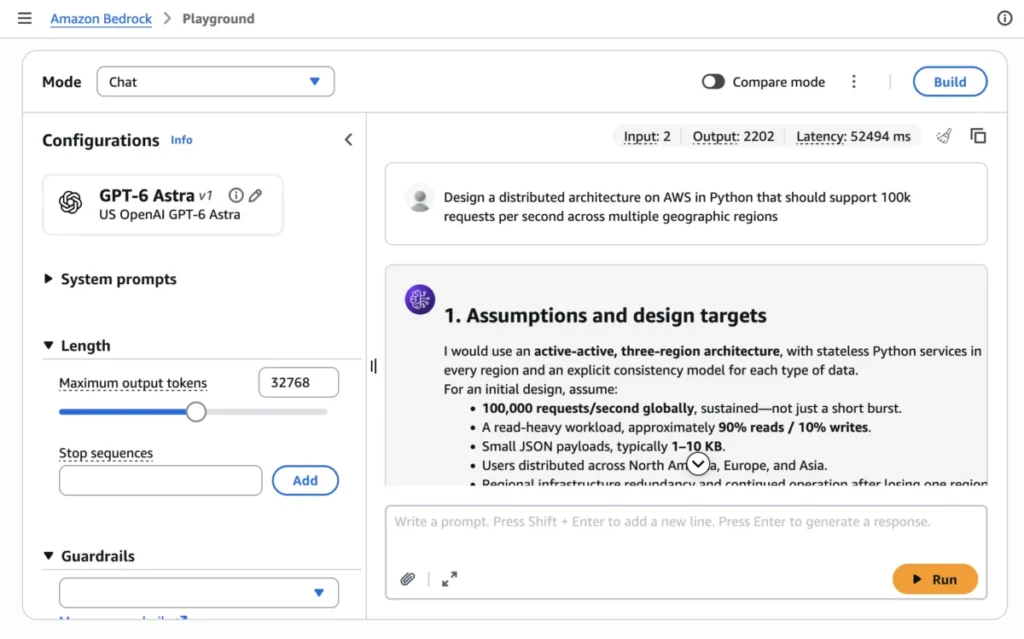
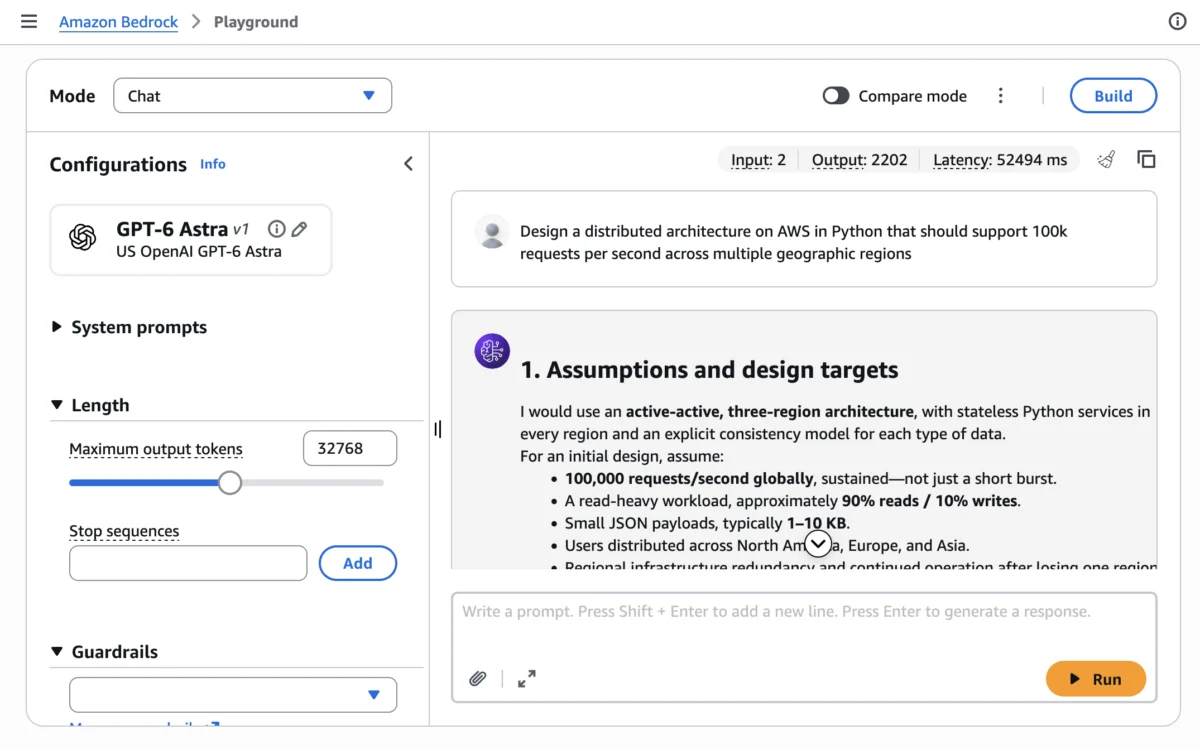
NEW YORK — The unmistakable energy of mid-September has taken hold of New York City. As the crisp autumn breeze sweeps through the boroughs and the first wave of seasonal routines settles in, the technology sector is moving at a matching, breakneck pace. True to form, the AWS launch calendar has shifted into high gear. This week, the intersection of enterprise cloud infrastructure and frontier artificial intelligence delivered a landmark announcement: the official general availability of OpenAI’s most advanced model to date, GPT-6 Astra, directly on Amazon Bedrock.
While new model drops have become increasingly frequent, the arrival of GPT-6 Astra on AWS represents a structural shift in how large-scale organizations deploy, govern, and scale generative artificial intelligence. Coupled with recent updates to Amazon Quick and a growing consensus that AI agents require fundamental workflow redesigns rather than just better tooling, this week’s developments signal that enterprise AI is moving past its experimental phase and deep into mission-critical deployment.
Main Facts: GPT-6 Astra Lands on Amazon Bedrock
The centerpiece of this week’s announcements is the integration of OpenAI’s GPT-6 Astra into Amazon Bedrock, the fully managed AWS service that offers developers a choice of high-performing foundation models through a single API.
Engineered for the most demanding enterprise workloads, GPT-6 Astra introduces a quantum leap in capabilities across several critical dimensions:
- Advanced Reasoning and Judgment: The model is optimized for complex problem-solving, capable of navigating multi-step logic puzzles, financial modeling nuances, and strategic operational decisions with minimal human intervention.
- Professional-Quality Content Generation: Beyond basic text generation, Astra delivers publishing-grade writing, code generation, and structural design capabilities suitable for direct-to-consumer or executive-level output.
- Autonomous Computer and Browser Use: Astra features native capabilities to interact with software interfaces, navigate web browsers, and execute digital tasks across common enterprise software ecosystems.
- Massive Context Window: Supporting up to 1 million input tokens, the model can ingest entire software codebases, multi-volume legal contracts, or extensive corporate document repositories simultaneously, enabling it to reconcile competing inputs and extract hyper-specific insights across vast troves of data.
Enterprise customers can invoke GPT-6 Astra via standard, supported Amazon Bedrock APIs or configure specialized developer environments—such as ChatGPT Work and Codex—to leverage the model directly within their existing AWS architectures. To support these autonomous capabilities, OpenAI is concurrently launching a suite of enterprise plugins for ChatGPT Work, extending Astra’s browser-use functionalities securely into daily business applications like CRM systems, ERP suites, and collaborative workspace tools.
Chronology: The Path to Enterprise Autonomy
The journey toward running frontier models like GPT-6 Astra natively within hyperscale cloud environments has accelerated dramatically over the past 24 months.
- Early 2024: Generative AI adoption was largely characterized by isolated proofs-of-concept. Organizations experimented with smaller, open-source or proprietary models via basic chat interfaces, struggling with data governance, latency, and context window limitations.
- Late 2024 to 2025: As multi-modal capabilities matured, the industry shifted toward agentic workflows. Enterprises demanded models capable of not just answering prompts, but executing end-to-end tasks. Context windows expanded from tens of thousands of tokens to hundreds of thousands, allowing models to process entire documents rather than isolated snippets.
- Mid-2026: The launch of Amazon Bedrock integrations for OpenAI’s premier architectures reflects a maturing ecosystem where cloud providers and AI creators collaborate to bridge the gap between frontier intelligence and enterprise-grade security.
- September 2026: GPT-6 Astra achieves general availability on Amazon Bedrock. This milestone moves the needle from "chat-based assistance" to "autonomous digital labor," allowing systems to reason across massive datasets, navigate web applications, and execute complex workflows under strict organizational governance.
Supporting Data and Technical Specifications
To understand the operational impact of GPT-6 Astra on Amazon Bedrock, one must examine the underlying mechanics of its infrastructure, data governance, and scalability metrics.
Context Window and Ingestion Capacity
The 1-million-token context window is not merely an incremental upgrade; it is a fundamental architectural enabler. In practical terms, 1 million tokens equate to roughly:
- 750,000 words, or approximately 1,500 standard pages of text.
- Entire enterprise code repositories containing thousands of individual files, allowing for holistic refactoring and security auditing.
- Decades of historical financial records or legal discovery documents, enabling cross-document reconciliation in a single inference call.
Security, Compliance, and Data Governance
One of the primary friction points for enterprise AI adoption has been data privacy. AWS and OpenAI have structured the Amazon Bedrock integration to address these concerns directly:
- Zero Data Training Policy: Customer inference data, prompts, and generated outputs processed through Amazon Bedrock are not used to train OpenAI’s foundational models or improve future iterations.
- Enterprise Security Controls: Organizations can leverage established AWS security primitives—including AWS Identity and Access Management (IAM), AWS Key Management Service (KMS) for encryption at rest and in transit, and Amazon CloudWatch for auditing model invocation activity.
- Data Residency: Workloads remain bound within specified AWS regions, ensuring compliance with regional data sovereignty regulations such as GDPR, HIPAA, and CCPA.
Official Responses and Industry Perspectives
The release has drawn significant commentary from enterprise technology leaders, cloud architects, and AI researchers, highlighting the tension between raw model capability and organizational readiness.
"The bottleneck to enterprise AI value has officially shifted from model intelligence to workflow design," noted Micah, host of the AWS Weekly Roundup series. "The developers and organizations seeing the biggest gains from AI agents aren’t just using better tools—they’re fundamentally rethinking how they work."
Industry analysts point out that while models like GPT-6 Astra possess the intelligence to run complex operations autonomously, the true differentiator for enterprises will be how well they integrate these capabilities into existing operational pipelines.
"We are moving past the era where a wrapper app over a large language model constitutes a viable software product," said a leading enterprise cloud strategist. "With 1 million tokens of context and native browser-use capabilities, models on Bedrock are acting as virtual coworkers. The responsibility now falls on IT leadership to ensure these digital agents are granted the right guardrails, permissions, and ethical boundaries."
OpenAI engineering leads emphasized the collaborative nature of the Bedrock deployment. By pairing OpenAI’s most sophisticated reasoning engine with AWS’s robust enterprise scaffolding, organizations no longer have to choose between cutting-edge AI performance and institutional-grade security compliance.

Implications for the Future of Enterprise IT
The general availability of GPT-6 Astra on Amazon Bedrock carries profound implications across multiple facets of the technology landscape:
1. Transformation of Software Engineering
With a 1 million token context window and advanced code-generation capabilities, software development lifecycles are set to accelerate. Junior and senior developers alike are transitioning from writing boilerplate code to acting as "system architects and editors," overseeing AI agents that can refactor legacy monoliths, write comprehensive test suites, and execute end-to-end debugging across massive repositories.
2. Redefining Business Process Outsourcing (BPO) and Back-Office Operations
The ability of Astra to use web browsers and interact with enterprise software applications natively means that repetitive, swivel-chair tasks—such as data entry across disparate CRM and billing platforms, invoice reconciliation, and compliance auditing—can now be fully automated. This shifts human labor toward strategic oversight, exception handling, and customer relationship management.
3. The Consolidation of Cloud-Native AI Ecosystems
By hosting premier frontier models alongside proprietary AWS models (like Amazon Nova and Anthropic Claude via Bedrock), AWS is solidifying its position as the Switzerland of enterprise AI. Organizations are no longer forced into single-vendor ecosystems; instead, they can orchestrate multi-model strategies tailored to specific cost, latency, and capability requirements, all while maintaining a unified security and governance posture.
Looking Ahead
As autumn settles over New York and the AWS launch cadence continues to pick up steam, developers and enterprise leaders are encouraged to engage with the broader community.
Builders looking to experiment with GPT-6 Astra on Amazon Bedrock can access documentation and tutorials through the AWS Builder Center, which offers collaborative spaces to share solutions, review reference architectures, and connect with peers navigating the frontier of generative AI.
As this week’s announcements clearly demonstrate, the tools of tomorrow are fully operational today. The challenge—and the opportunity—now lies in how creatively and responsibly enterprises choose to wield them.