The Secret of the Century: Unlocking the Genetic Resilience of Jonathan, the World’s Oldest Land Animal
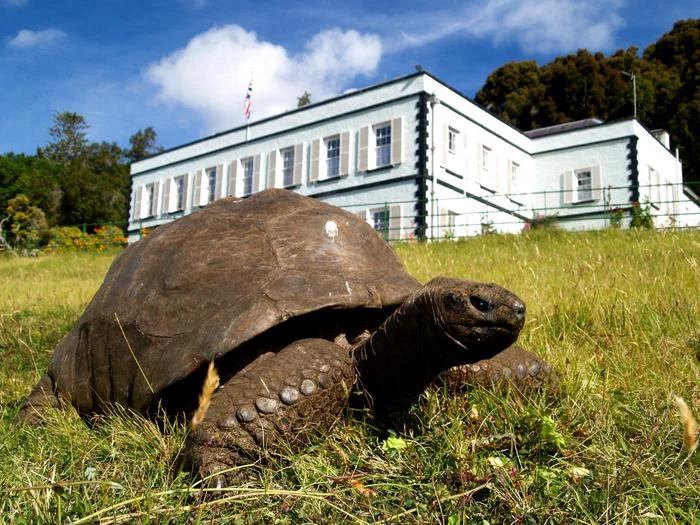
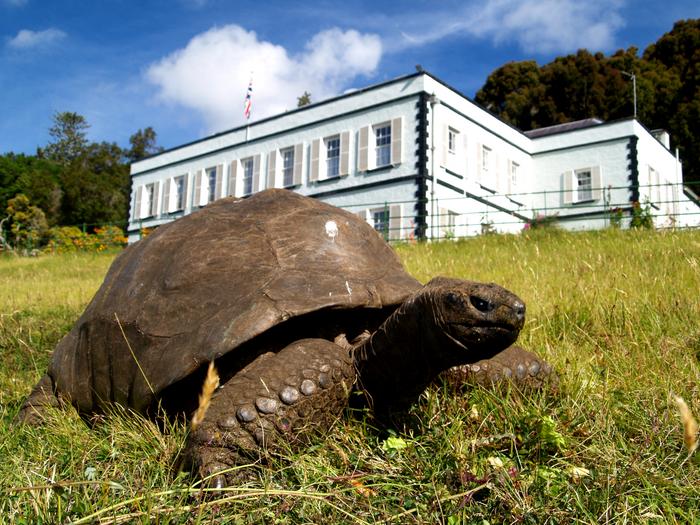
On the remote, windswept island of St. Helena, a British Overseas Territory in the South Atlantic, resides a creature whose life spans the breadth of modern history. Jonathan, an Aldabra giant tortoise (Aldabrachelys gigantea), is not merely a resident of the governor’s estate; he is a living monument. At an estimated 194 years of age, Jonathan holds the Guinness World Record as the oldest known living land animal.
While his longevity has long been the subject of local legend and international fascination, a groundbreaking study published in Science Advances has finally peered beneath his rugged, ancient shell. By sequencing Jonathan’s genome, a team of researchers led by the Kallel Foundation has uncovered the biological machinery that allows this titan of the animal kingdom to defy the typical senescence that plagues nearly all other living things.
The Chronology of an Icon: From Victorian Era to the Digital Age
To understand the magnitude of Jonathan’s existence, one must look at the timeline he has traversed. Jonathan is believed to have hatched around 1832. To put this in historical perspective, he was alive during the reign of King William IV, was a contemporary of Charles Darwin, and lived through almost the entirety of Queen Victoria’s long tenure.
He arrived on the island of St. Helena in 1882, brought from the Seychelles as a gift for the then-governor, Sir William Grey-Wilson. When he arrived, he was already considered a fully grown adult, suggesting he was at least 50 years old at the time. For 144 years, he has roamed the lush, protected grounds of Plantation House, the official residence of the governor. Throughout his tenure on the island, he has witnessed the rise and fall of empires, the birth of the industrial age, and the advent of the digital revolution—all while maintaining a stoic, steady pace of life that seems untouched by the frantic acceleration of the world outside.
Unlocking the Genetic Blueprint: How Science Approached the Legend
For years, the scientific community has been captivated by the potential of giant tortoises to teach us about the mechanisms of aging. However, studying such an iconic animal comes with significant ethical and logistical challenges. Jonathan is a national treasure; invasive procedures, such as blood draws, are strictly prohibited to ensure his continued health and comfort.
To circumvent this, the research team, led by Stephen Clark, MD, PhD, founder of the Kallel Foundation, devised a clever, non-invasive strategy. By teasing Jonathan with the promise of his favorite snacks, the team successfully enticed him to open his jaws wide enough to collect buccal (cheek) scrapes and saliva samples. This innovative approach allowed for the isolation of high-quality genomic DNA (gDNA) without causing the tortoise a moment of distress.
The Science of Longevity: Epigenetic Stability
The core of the research focused on comparing Jonathan’s genome and methylome—the collection of chemical tags that act as "on/off" switches for genes—against those of four other Aldabra giant tortoises of varying ages.
As organisms age, their epigenomes typically undergo "entropy," a process where the orderly regulation of genes begins to break down. This degradation is a primary driver of the physical decline associated with aging. However, when the researchers analyzed Jonathan’s epigenetic markers, they found something extraordinary: his gene regulators remained remarkably stable.
Specifically, the study identified 287 unique gene variants in Jonathan that appear to bolster his resilience. These variants are linked to critical pathways including DNA repair, telomere maintenance, mitochondrial function, insulin regulation, and cancer prevention.
Justin Gerlach, PhD, a research associate at Peterhouse, University of Cambridge, who collaborated on the study, noted the significance of these findings. "We found that the gene regulators involved in energy production and DNA repair have remained incredibly stable in Jonathan over almost two centuries," Gerlach stated. This stability suggests that Jonathan’s body is remarkably efficient at performing the "housekeeping" tasks—such as repairing damaged DNA and managing cellular energy—that keep an organism functional over the long term.
Official Findings: The Low-Entropy Model
The paper, titled "Epigenetic insights into extreme longevity in the world’s oldest terrestrial animal, Jonathan," outlines a clear conclusion regarding the tortoise’s success. The authors argue that Jonathan’s life is supported by a biological model of "low methylation entropy."
In simpler terms, the chemical switches in Jonathan’s cells are not "flipping" randomly or incorrectly as often as they do in other species. By maintaining this low-entropy state, particularly in the promoters of genes responsible for mitochondrial energy production and RNA processing, Jonathan ensures that his cells are constantly operating with high fidelity.
"Our findings support a model for aging wherein the maintenance of low methylation entropy in gene promoters is coupled to efficient mitochondrial energy production, efficient RNA processing, and efficient genomic repair," the researchers concluded. Essentially, Jonathan has not just been "lucky" with his genes; he possesses a high-functioning maintenance system that prevents the accumulation of the "wear and tear" that leads to age-related frailty.
Implications for Human Longevity Medicine
The study, the first of its kind to investigate the epigenome of a giant tortoise, holds profound implications for human health. Stephen Clark, the senior author of the paper, believes that Jonathan’s genetic code provides a literal blueprint for cellular resilience.
"Nature has already solved the puzzle of aging in remarkable ways, and Jonathan’s genome provides a blueprint for cellular resilience," Clark said. "Our goal is to take these evolutionary insights and immediately translate them into practical, affordable treatments for everyday people. Aging is the greatest risk factor for nearly every chronic disease we face, and through the generosity of philanthropic partners, we can democratize access to longevity medicine."
The researchers suggest that if these pathways—DNA repair, metabolic efficiency, and epigenetic stability—can be targeted through therapeutic interventions, it could potentially delay the onset of age-related diseases in humans. By "democratizing" the insights gleaned from a 194-year-old tortoise, the Kallel Foundation hopes to move beyond the study of longevity as a curiosity and toward the development of actionable medicine.
A Collaborator, Not a Subject
Beyond the cold, hard data of genomic sequencing, the researchers expressed a profound sense of humility in working with Jonathan. For Justin Gerlach, who has spent decades studying tortoise ecology, this project was unlike any other.
"There are few creatures that could tell us more about aging than the giant tortoises of the Galapagos and Seychelles islands," Gerlach remarked. "Working with a really old giant tortoise is such a privilege: you get a sense of the tortoise being your collaborator, not your study subject."
This sentiment underscores the unique position Jonathan occupies. He is an ambassador for his species—a group of animals that once dominated island ecosystems across the globe but now exists only in remnants. Aldabra giant tortoises are known for their long lives, but Jonathan is an outlier even among his own kind, living nearly a century longer than the average member of his species.
Conclusion: The Living Archive
As Jonathan continues his quiet life on St. Helena, grazing on the grounds of the governor’s estate, he remains a symbol of the possibilities of biology. He is a living archive, a bridge between the 19th century and the future of genomic medicine.
The Kallel Foundation’s research has done more than just solve the mystery of Jonathan’s age; it has provided a window into the potential of life itself. By revealing that the secret to a multi-century lifespan lies in the maintenance of high-fidelity genetic expression and the mitigation of epigenetic entropy, science has taken a significant step toward understanding how to keep the human body functional for longer.
For now, Jonathan remains the world’s oldest, most resilient patient. As researchers continue to analyze the data he has so generously provided, the world watches with bated breath—not just to see how many more years the great tortoise will add to his record, but to see what other secrets his genome might hold for the future of human longevity. In the quiet, slow-moving world of a St. Helena tortoise, we have found one of the most exciting, high-speed scientific frontiers of the 21st century.