Inside ‘Pi Towers’: How Raspberry Pi Built a Low-Cost, Open-Source Blueprint for Corporate Net Zero
CAMBRIDGE, UK — In an era when corporate sustainability commitments are frequently dismissed as little more than greenwashed public relations, computing pioneer Raspberry Pi is proving that systemic change is possible without breaking the bank. Following what climate scientists confirmed as the hottest and driest summer on record, the tech company has provided a transparent, data-driven update on its journey toward absolute net zero at its headquarters, affectionately known as "Pi Towers," in Cambridge.
Rather than outsourcing its sustainability strategy to expensive third-party consultants or buying its way out of the problem through opaque carbon offsets, Raspberry Pi has chosen a characteristically hands-on approach. By weaponizing its own affordable hardware, embracing open-source software, and treating its property portfolio as an active engineering puzzle, the company has bypassed six-figure corporate overheads to slash its carbon footprint dramatically.
Main Facts: The Anatomy of a Low-Cost Green Transition
Raspberry Pi’s ongoing transformation of its Cambridge real estate portfolio is built on a practical thesis: true sustainability requires relentless data capture, aggressive energy reduction, and the creative repurposing of existing infrastructure rather than wasteful wholesale replacements.
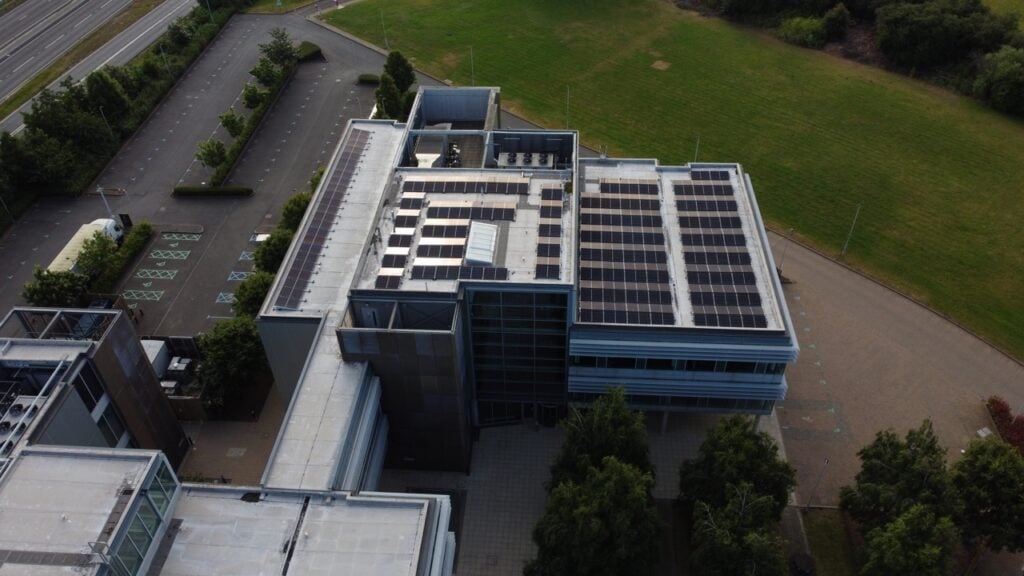
The centerpiece of the company’s physical adaptations is a massive push toward on-site renewable generation and strategic electrification.
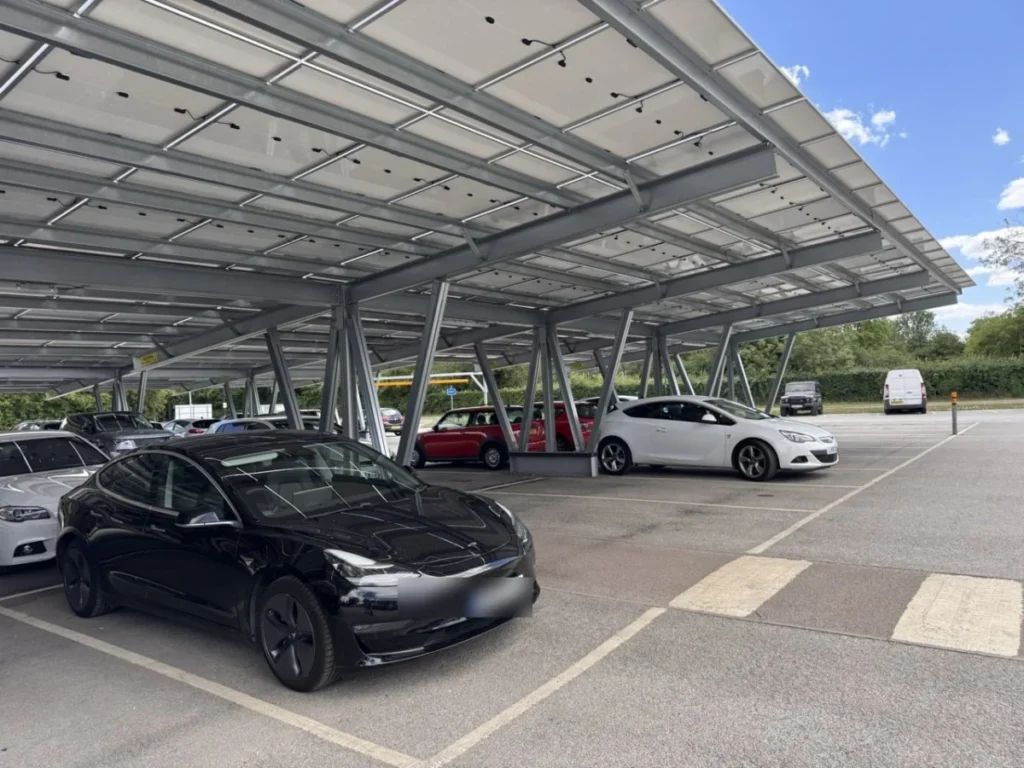
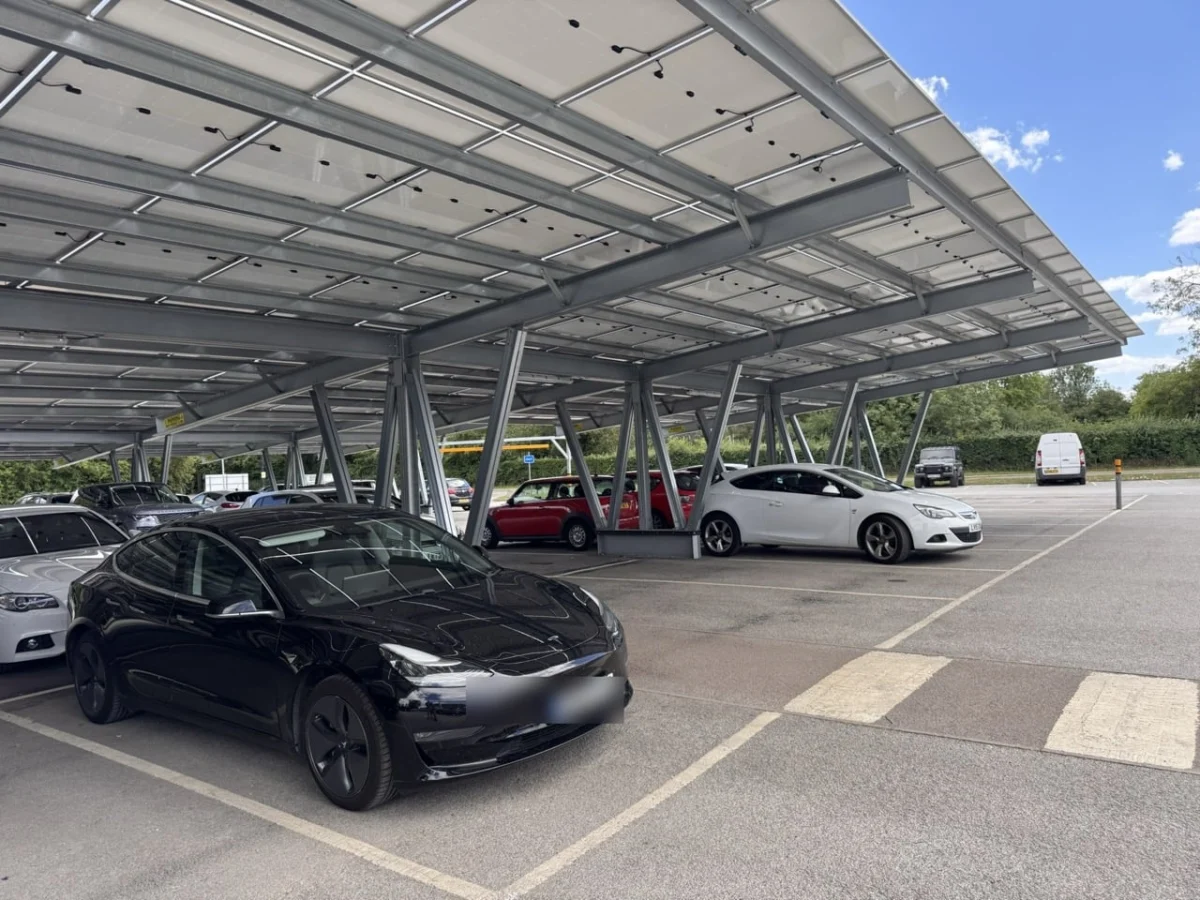
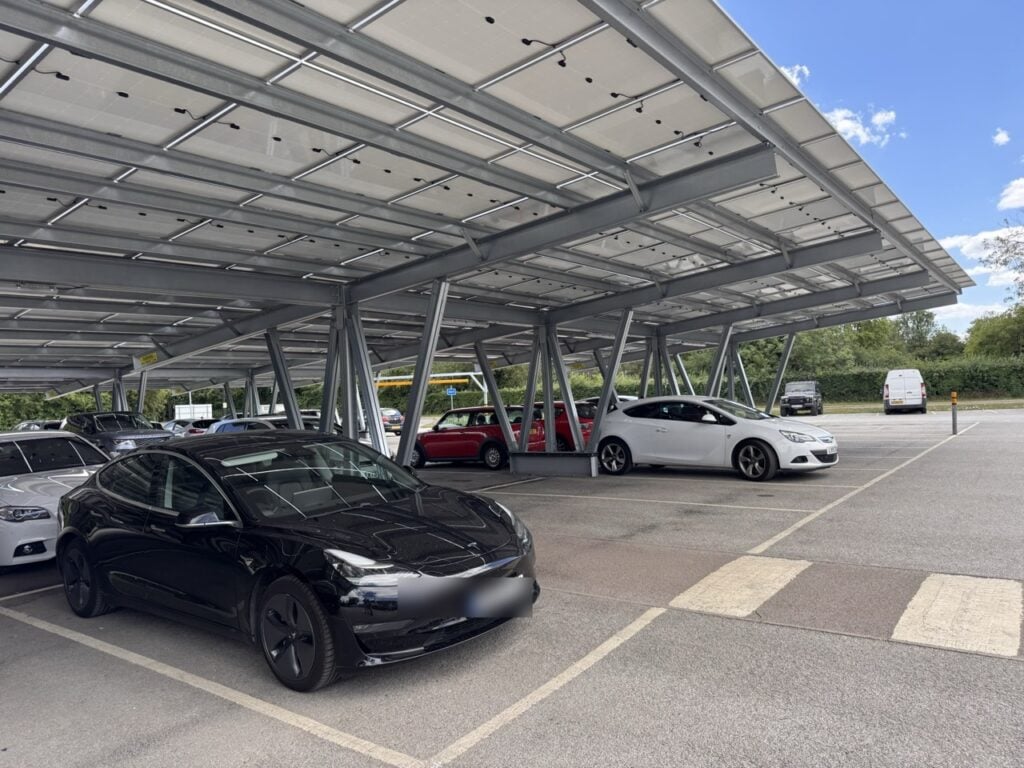
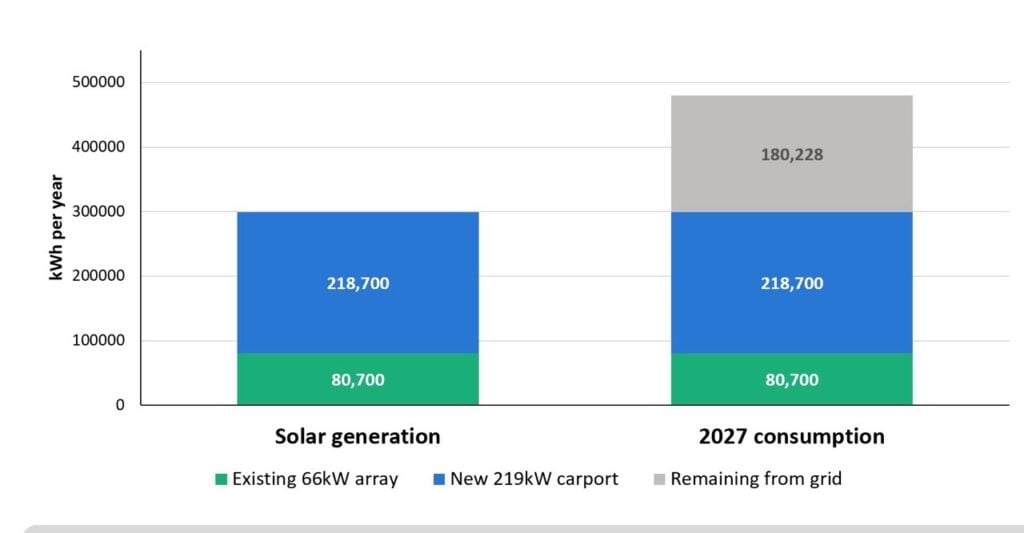
- Solar Power Expansion: An initial 85.5kW rooftop solar array went live in June 2024. In just 26 months, it has generated an astounding 192,000 kWh of electricity, putting the installation on track for a near-miraculous return on investment (ROI) in just 2.7 years. Building on this success, Raspberry Pi has partnered with landlord agents Stanhope to develop a 219kW solar carport system. Once completed, the combined 304kW site array will cover an impressive 63% of the building’s predicted summer electricity demand.
- EV Infrastructure: Aligning with a newly introduced staff salary-sacrifice electric vehicle (EV) scheme, the company installed 24 Easee chargers in August 2024. EV adoption among employees skyrocketed from 11 vehicles to nearly 60 active passes, regularly overwhelming the initial banks. A second phase of 24 chargers is currently underway to future-proof the site.
- The Gas-Free Milestone: In a major operational breakthrough, Pi Towers officially turned off its natural gas supply on June 25, 2026. Two legacy Potterton boilers were powered down, allowing July and August 2026 to pass as the first fully gas-free months in the building’s history.
- Open-Source Building Management: When a proprietary 17-year-old Building Management System (BMS) interface failed in early 2026, a like-for-like replacement was quoted at a staggering £150,000. Instead, Raspberry Pi’s engineering team deployed an open-source BACnet system running on Raspberry Pi hardware (BASview and BASpi) for a mere £7,800.
Chronology: A Step-by-Step Roadmap to Sustainability
Raspberry Pi’s net zero roadmap has evolved systematically since the publication of its initial four-part sustainability manifesto in 2025. The timeline highlights how quick-win behavioral adjustments quickly snowfilled into major engineering overhauls.
Phase 1: Generation and Quick Wins (2024–2025)
- June 2024: The initial 85.5kW rooftop solar array is energized, immediately beginning to feed clean electricity into Pi Towers.
- August 2024: 24 Easee EV charging ports are installed, laying the groundwork for the staff salary-sacrifice electric vehicle incentive program.
- Late 2025: A domestic hot water heat pump becomes operational, taking over hot water duties entirely and providing a preview of a gas-free future.
Phase 2: Granular Data and System Overhauls (Early–Mid 2026)
- Early 2026: Faced with a failing proprietary BMS, engineers install a custom, Raspberry Pi-powered open-source control system. Simultaneously, every circuit breaker in the building is clamped using Emporia technology paired with Raspberry Pi 4 and 5 units running Home Assistant.
- June 25, 2026: The definitive moment arrives: the natural gas boilers are switched off. For the first time, Pi Towers operates completely free of gas throughout July and August.
- Summer 2026: Heat recovery systems are implemented, including a server room condenser routed under the atrium staircase to push waste heat into the building during colder cycles. Upgraded PIR-controlled extractor fans and individual floor air handling unit (AHU) dampers are introduced.
Phase 3: The Final Push to Year-Round Net Zero (2027 Target)
- Upcoming Interventions: To prevent the need to switch the gas boilers back on during the bleakest winter months, the engineering team has mapped out three final projects:
- Installing a new AHU direct expansion (DX) coil to electrify fresh air heating.
- Implementing a bypass damper to recycle and capture treated indoor air, cutting thermal waste.
- Deploying dedicated heat pumps to replace the gas boilers entirely, supplying an estimated 150kW to 250kW of thermal output to meet a 300,000 kWh annual heating demand.
- Broader Portfolio Integration: Expansion plans continue as the company prepares to onboard a completely electric off-site warehouse. Meanwhile, the Raspberry Pi retail store in Cambridge’s Grand Arcade operates as a fully electric commercial space.
Supporting Data: The Numbers Behind the Green Revolution
Transparency is a cornerstone of Raspberry Pi’s corporate ethos, and the data telemetry collected from Pi Towers provides a compelling masterclass in modern energy accounting.
| Metric / Initiative | Traditional / Previous Approach | Raspberry Pi Solution | Impact / Financial Result |
|---|---|---|---|
| BMS Replacement | Proprietary Trend 963 interface (~£150,000 quote) | Contemporary Controls BASview & BASpi on Raspberry Pi hardware (~£7,800) | £142,200 saved, alongside vastly superior data granularity. |
| Rooftop Solar Array | Grid-dependent consumption | 85.5kW rooftop installation | 192,000 kWh generated in 26 months; ROI achieved in 2.7 years. |
| Combined Solar Array | Partial coverage | Proposed 219kW solar carport + 85.5kW roof array (Total: 304kW) | Covers 63% of predicted summer peak electricity demand. |
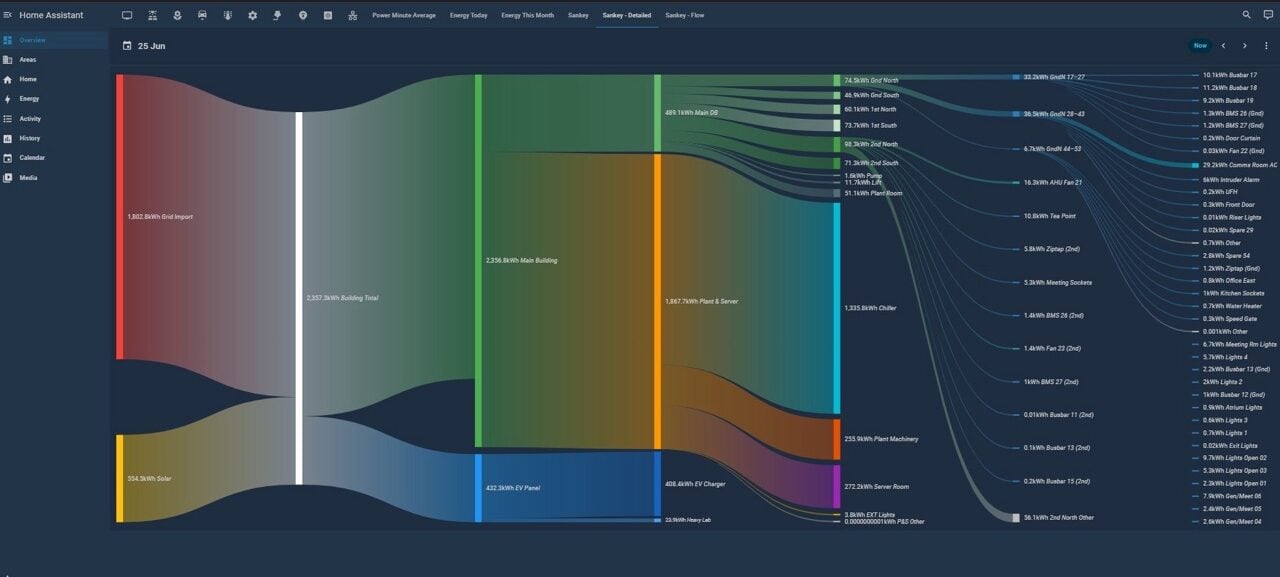
| Energy Base Load Control | Unmonitored building circuits | Emporia circuit clamps + Home Assistant software powered by Raspberry Pi 4 & 5 | Live Sankey diagrams tracking every kilowatt-hour; 130,000 kWh saved annually through targeted automation and lighting cuts. |
| Scope 2 Offset Procurement | Standard market renewable tariffs | Partnership with Granular Energy | 100% renewable energy procurement with enhanced certificate traceability. |
Official Responses and Engineering Insights
The philosophy driving Raspberry Pi’s sustainability drive is rooted in a fundamental democratization of data. When modern commercial buildings electrify, they often encounter a steep trap: simply shifting systems to electricity without understanding baseline consumption patterns can trigger massive cost spikes and grid inefficiencies.
"The further we go on this journey, the more we’re enjoying harnessing the capability of our own Raspberry Pi products to help us achieve our aims," engineering leads noted in the company’s internal project tracking. "The key to success in this field is getting your hands on the data, being able to analyse it, and in doing so, gaining better control."
Rather than yielding to the sunk-cost fallacy—which dictates that legacy heating infrastructure must be entirely ripped out and replaced with brand-new, multi-million-dollar commercial systems—Raspberry Pi has championed an adaptive engineering philosophy. By capturing waste heat from server room air conditioning condensers and rerouting it through the central atrium, the company demonstrates a circular approach to thermodynamics.
Furthermore, by procuring their remaining Scope 2 energy shortfalls through Granular Energy, Raspberry Pi has established a gold standard for supply chain accountability, ensuring that green energy claims are backed by hourly, verifiable generation certificates rather than vague annual averages.
Implications: A Blueprint for the Tech Industry and Beyond
The implications of Raspberry Pi’s Cambridge blueprint extend far beyond a single office building. For the technology sector—an industry notoriously plagued by high-density data centers, massive supply chain footprints, and greenwashing allegations—Pi Towers offers an actionable, open-source model for corporate responsibility.
1. Democratizing Facilities Management
Historically, building automation and energy management systems have been locked behind expensive, proprietary software walls controlled by legacy industrial giants. By proving that low-cost, credit-card-sized single-board computers can reliably manage complex commercial HVAC (Heating, Ventilation, and Air Conditioning) protocols, weather compensation, and CO2-based ventilation, Raspberry Pi has opened the door for small-to-medium enterprises (SMEs) to take control of their own properties without requiring corporate-tier budgets.
2. Redefining Corporate Capital Expenditure
The disparity between a £150,000 proprietary replacement system and a £7,800 open-source alternative highlights a systemic inefficiency in modern commercial real estate. When companies empower internal engineering talent to build bespoke, modular solutions using accessible hardware, capital expenditure drops precipitously while operational agility increases.
3. The Path to 2027 and Beyond
As Raspberry Pi enters the final phases of its net zero transition—targeting full electrification of its heating systems and finalizing its zero-emission warehouse network—the company is positioning itself as a rare corporate entity that treats environmental sustainability with the same rigorous, iterative engineering principles applied to its silicon chips.
As businesses worldwide grapple with tightening climate regulations and volatile energy markets, Raspberry Pi’s experiment in Cambridge offers a reassuring message: achieving net zero does not require a blank check. Often, it simply requires better data, open-source ingenuity, and the willingness to look at existing infrastructure through a smarter lens.