The Agentic Shift: How Gemini 4 Argon is Redefining Android Development
By Jason Buchel, Creative Technologist, Platform & Devices
The landscape of software engineering is undergoing a seismic shift. For years, the developer’s workflow has been defined by a paradigm of assistance—tools that suggest the next line of code or provide quick documentation lookups. Today, Android engineering crosses a new frontier, moving beyond simple code completion into the era of agentic development.
With the introduction of Gemini 4 Argon, Google is enabling a future where developers act less as manual laborers and more as architects, directing autonomous agents to execute complex, end-to-end software tasks. This evolution offers unprecedented flexibility, empowering developers to choose the models and agentic frameworks that best suit their specific workflows.
Main Facts: The Power of Argon
Gemini 4 Argon is not merely an incremental update; it is a specialized engine designed for deep work. Engineered to excel in high-stakes, multi-domain environments—including cybersecurity, finance, legal analysis, and scientific research—Argon brings this same level of rigor to the Android development lifecycle.
Starting today, developers can harness the power of Gemini 4 Argon across their primary development surfaces. Whether working within Google Antigravity (both as a standalone tool and integrated into Android Studio Canary) or through the Gemini API within Google AI Studio, the model is designed to handle the heavy lifting of modern mobile development. For Google AI Ultra subscribers, this represents a significant expansion in capabilities, effectively turning the IDE into a collaborative, agentic partner.
Chronology: The Path to Autonomous Development
The trajectory of AI-assisted development has moved with breakneck speed. To understand where we are, we must look at the timeline of innovation:
- The Assistive Era (2022–2023): The initial wave of AI integration focused on "Copilots." These tools were reactive, providing snippets and syntax suggestions based on active cursor placement.
- The Context-Aware Era (Early 2024): Large Language Models began to understand entire repositories, allowing for improved refactoring and bug detection.
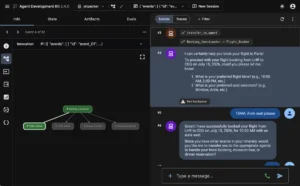
- The Agentic Milestone (Today): With the launch of Gemini 4 Argon, we transition to "Closed-loop execution." The agent no longer just suggests code; it plans, executes, tests, iterates, and self-corrects based on real-time feedback from the compiler and the Android runtime.
This chronology marks the shift from suggestion to autonomy. By providing agents with the ability to "think" in terms of project-wide outcomes rather than just line-by-line syntax, Google is fundamentally altering the developer experience.
Supporting Data: Why "Closed-Loop" Matters
The core differentiator of Gemini 4 Argon is its "closed-loop build self-correction" capability. In traditional AI-assisted workflows, a hallucinated syntax error or a failing build required manual intervention. Argon changes this by leveraging long-horizon autonomous execution.
Key Technical Advantages:
- Multi-Step Planning: Argon breaks down high-level requests (e.g., "Implement a modular login flow using OAuth") into granular, executable tasks.
- Iterative Self-Correction: When the agent triggers a build and encounters an error, it doesn’t stop. It parses the log, identifies the misaligned dependency or syntax issue, modifies the code, and re-triggers the build until the goal is achieved.
- UI Sophistication: The model is pre-trained on modern design systems, specifically generating production-ready Jetpack Compose code. It understands the nuances of fluid motion, state management, and shader-backed UI, ensuring that the generated code is not only functional but visually consistent with modern Android design standards.
Furthermore, the Android CLI plugin serves as the "nervous system" for these agents. By providing a standardized interface that connects agents to local Android tools, it allows the model to execute programmatic commands—such as running Gradle tasks, managing emulator instances, or executing custom developer scripts—directly from the command line.

Official Responses and Strategic Vision
During the internal rollout of Argon, the engineering teams at Google emphasized that "total flexibility" was the guiding principle.
"Our goal is to meet the developer where they are," says the Android Platform team. "By keeping the system open, we allow developers to layer their own specialized agents on top of the Argon engine. We aren’t just providing a tool; we are providing a foundation for the next generation of mobile experiences."
The decision to integrate Argon into the Android Studio Canary channel reflects a commitment to the "bleeding edge" of development. By placing these tools in the hands of the most active community members early, Google aims to refine the agentic loop through real-world stress testing. The feedback loop is already active, with early adopters noting that the reduction in "boilerplate fatigue" allows them to focus on high-level architectural decisions that were previously sidelined by the sheer volume of implementation tasks.
Implications: The New Frontier of Mobile Engineering
The implications of this shift are profound, impacting everything from startup velocity to the nature of software craftsmanship.
1. Velocity and Scale
Small teams can now achieve the output of much larger organizations. By offloading the "heavy lifting" of build-system maintenance and UI implementation to Argon, developers can dedicate their time to user experience design, security architecture, and performance optimization.
2. The Death of Boilerplate
As Argon matures, the role of the developer will evolve. Writing standard Activity lifecycles or boilerplate networking code will be viewed as a legacy task. The new "craftsmanship" will lie in the ability to curate prompts, manage agentic workflows, and oversee the quality of the autonomous output.
3. A Shift in IDE Utility
The IDE is no longer just a text editor with a compiler attached. It is becoming an agentic workspace. In this new world, the developer acts as a supervisor, auditing the autonomous actions taken by the AI. This requires a new set of skills: prompt engineering, system oversight, and a deeper understanding of the underlying Android architecture to effectively "debug" the agent’s logic.
Getting Started with the Frontier
Accessing Gemini 4 Argon is designed to be seamless for those already embedded in the Google ecosystem. Whether you are a solo developer working on a side project or an enterprise engineer building complex, cross-platform mobile apps, the onboarding process is tiered to provide maximum value:
- Google Antigravity: The primary interface for agentic interaction. It is available as a standalone desktop application and integrated directly into the latest build of Android Studio Canary.
- Google AI Studio: For those who prefer a web-based, API-driven approach, the Gemini API now supports Argon for all paid-tier developers.
- Android CLI Plugin: This is the bridge between your terminal and your agent. Developers are encouraged to install the latest plugin version to ensure full compatibility with Argon’s autonomous task-execution capabilities.
Steps to Begin:
- Update Your Environment: Ensure that you are running the latest version of Android Studio Canary.
- Configure the Workspace: Open the Antigravity tab and authenticate using your Google AI Ultra credentials.
- Define Your Scope: Start by delegating a discrete, multi-step task—such as creating a custom animation or migrating a library to a newer dependency—to the agent.
- Monitor the Loop: Observe the agent as it navigates the build process, and provide course corrections via the chat interface as needed.
As we move forward, the definition of "developer" will continue to expand. We are no longer limited by our typing speed or the number of hours in a day; we are limited only by the clarity of our vision.
We are incredibly eager to see the high-craft Android experiences you build at this new frontier. Share your projects, your breakthroughs, and your feedback with us on X (@AndroidDev) and LinkedIn. The future of Android is agentic—and it starts today.