The Architecture of Tomorrow: How Meta and Google Re-Engineered Instagram Direct for an AI-Native Future
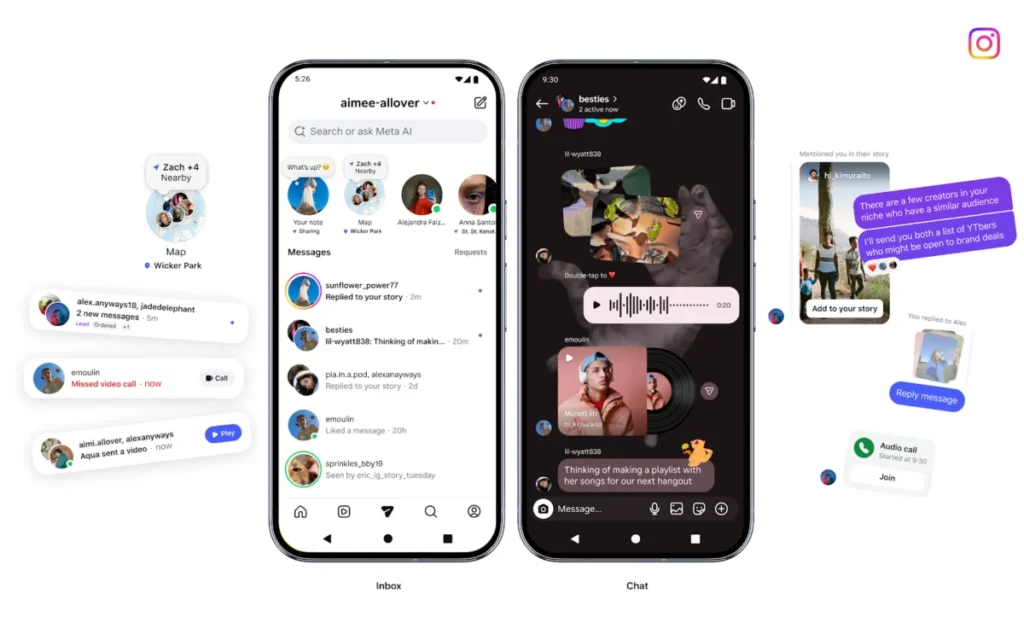
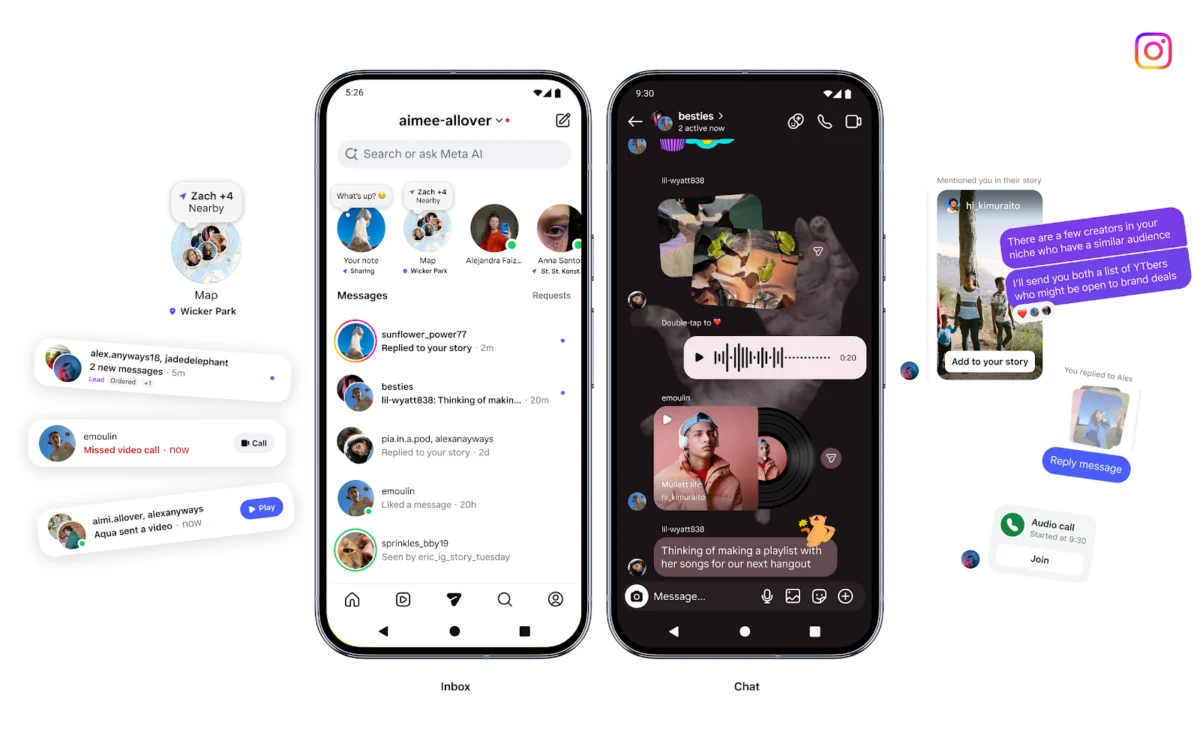
In a landmark collaboration that bridges the gap between massive-scale mobile engineering and the burgeoning era of artificial intelligence, Meta and Google have unveiled the results of a multi-year project to migrate the Instagram Direct messaging surface to Jetpack Compose. This was not merely a cosmetic UI refresh; it was a fundamental architectural overhaul designed to make one of the world’s most complex mobile interfaces "AI-native."
By moving away from the legacy Android View system, the Instagram Direct team achieved a 50% reduction in UI code volume while setting a new performance benchmark for the Android ecosystem. The project, detailed by Meta Software Engineer Pavlo Stavytskyi and Google Developer Relations Engineer Rebecca Franks, offers a blueprint for how large-scale organizations can prepare their codebases to thrive in a development landscape increasingly dominated by AI coding assistants.
Main Facts: A New Paradigm for UI Development
Instagram Direct serves hundreds of millions of users daily, managing billions of messages. The complexity of this surface is staggering: a single conversation screen can render over 200 distinct message types, with individual UI components supporting more than 160 state permutations.

For years, the team squeezed every micro-optimization out of the traditional Android View system. However, the accumulation of technical debt made the legacy codebase difficult to maintain and poorly suited for AI-assisted workflows. The shift to Jetpack Compose—a modern, declarative UI toolkit—was driven by the need for a structure that AI models could "reason" about more effectively.
The Key Performance Wins:
- 50% Reduction in Code Size: By adopting a declarative approach, the team slashed the volume of code required to maintain the surface.
- 35% Faster AI Execution: AI agents now complete tasks significantly faster because the code structure is less prone to the "state-leaking" bugs common in legacy systems.
- 32% Fewer Engineer-Agent Exchanges: The clarity of the new architecture means AI models require less human guidance and correction to arrive at the correct implementation.
- 33% Reduction in Token Cost: Smaller, more predictable codebases mean that AI agents consume fewer compute tokens, leading to greater operational efficiency.
Chronology: The Road to AI-Native Architecture
The migration of Instagram Direct was not a "big bang" release. It was a methodical, years-long endeavor characterized by rigorous A/B testing and incremental deployment.
Phase 1: The Hybrid Foundation
Initially, the team attempted to integrate Compose components into the existing View hierarchy. While this provided a path for incremental adoption, it introduced "bridging" friction. The team quickly realized that mixing imperative and declarative paradigms confused AI models, which often took the "path of least resistance," leading to subtle bugs and performance regressions.

Phase 2: Defining the AI-Native Standard
Recognizing the limitations of hybrid code, the team established a new rule: UI components must be fully isolated from internal state and class members. By forcing components to rely solely on constructor arguments—essentially treating them as pure functions—the team created a codebase that AI could interact with without the risk of polluting state across recycled list items.
Phase 3: The Parallel Migration
To maintain velocity, the team utilized a two-stage migration process per screen. One engineer would establish the architectural "skeleton" and handle edge cases, while others would follow to fill in the UI details. This allowed the team to keep shipping features for millions of users while simultaneously re-architecting the foundation of the app.
Supporting Data: Why "AI-Readiness" Matters
The partnership between Meta and Google produced a fascinating data set regarding the relationship between code quality and AI efficiency. Meta tracked a "risk score" for code changes—a composite metric evaluating potential for production incidents.

When a file’s accumulated risk score doubled, AI agent efficiency dropped by 30% in the legacy Android View system. In stark contrast, the drop in efficiency for the Jetpack Compose implementation was a mere 9%. This suggests that as software projects grow in age and complexity, declarative frameworks like Compose offer a significant "buffer" against the degradation of AI productivity.
Furthermore, the team moved away from RecyclerView to LazyColumn for its core list-rendering needs. By abstracting Compose UI components from the underlying framework, the team enabled a system where they could toggle between RecyclerView and LazyColumn at runtime via feature flags. This provided the safety net required to roll out the new architecture without risking the stability of the core messaging experience.
Official Responses and Technical Partnership
The collaboration between Google and Meta was hands-on, with engineers from both sides analyzing production metrics to pinpoint where Compose needed to evolve.

"The goal was to preserve the high-quality experience with no regressions," noted the engineering team. This partnership resulted in several upstream contributions to Jetpack Compose that have now been rolled out to the entire Android developer community:
- Pausable Composition: Enabled by default in Compose 1.10, this feature allows expensive list items to be composed incrementally across frames, preventing "jank" (stuttering).
- LazyLayoutCacheWindow: A critical addition that allows the framework to retain off-screen items within a pixel-based band. This ensures that when a user performs a fast scroll or "fling," the content is already prepared and ready for display. Internal Meta testing showed this reduced large frame drops by approximately 13%.
- onVisibilityChanged: Added in Compose 1.9.0, this API provides a consistent way to track when a UI element is visible. This replaced fragmented, custom-built solutions and is now used across hundreds of files in Instagram Direct to track product quality metrics.
Implications: The Future of Android Development
The Instagram Direct migration sends a clear message to the broader mobile development community: the future of UI engineering is not just about the final pixels on the screen, but about the "readability" of the code for non-human intelligence.
1. The Death of the "Big View"
The transition highlights that legacy patterns—such as monolithic RecyclerView item holders—are becoming obsolete in an AI-assisted world. By moving toward stateless, declarative components, teams can create architectures that are inherently safer and easier to refactor using LLMs (Large Language Models).

2. Performance as a Collaborative Effort
The improvements made to Jetpack Compose (such as LazyLayoutCacheWindows) demonstrate the power of large-scale testing. Because Instagram acts as a "stress test" for the Android platform, the optimizations forced by this migration benefit every developer using Jetpack Compose, regardless of the size of their project.
3. The Shift to AI-Centric Workflow
We are entering a phase where architectural decisions will be judged by their "AI-efficiency." Developers must now consider how their code structure impacts the cost and speed of AI-assisted maintenance. The Instagram team has proven that by following clear, restrictive design patterns, they can unlock massive gains in both developer productivity and application performance.
4. A Template for Large-Scale Migration
The Instagram team’s success serves as a template for other large organizations. By focusing on "AI-native" principles—such as strict state boundaries and the decoupling of UI from business logic—large teams can modernize legacy systems without halting feature delivery.

Conclusion
The successful migration of Instagram Direct to Jetpack Compose is more than a technical victory; it is a fundamental shift in how we build software at scale. By treating the codebase as an interface for both humans and AI, Meta and Google have not only secured the future of Instagram’s performance but have also provided a roadmap for the next generation of Android development. As AI continues to integrate into the development lifecycle, the ability to build, maintain, and optimize "AI-native" architectures will likely become the defining competitive advantage for high-performance mobile engineering teams.