The Evolution and Economic Boom of the Global Software Testing Services Market: Trends, Growth Forecasts, and Career Landscape
As digital transformation accelerates across every major industry, the software testing and quality assurance (QA) sector has transitioned from a routine back-end procedure to a critical pillar of modern product development. Gone are the days when quality assurance was treated as an afterthought, relegated to the final stages of the software development life cycle (SDLC). Today, software testers, quality analysts, and automation engineers are recognized as indispensable members of core product teams.
Questions like "What is the future of the software testing business?" or "Should I consider software testing as a viable career option?" are being answered definitively by unprecedented market expansion, booming job creation, and rapid technological modernization.
Main Facts: Market Valuation and Explosive Growth
Recent comprehensive market research and industry reports paint an exceptionally bright picture for the global software testing services market. Far from stagnating, the sector is experiencing a historic surge fueled by the proliferation of mobile applications, the complexities of cloud architecture, and the urgent need for enterprise cybersecurity.

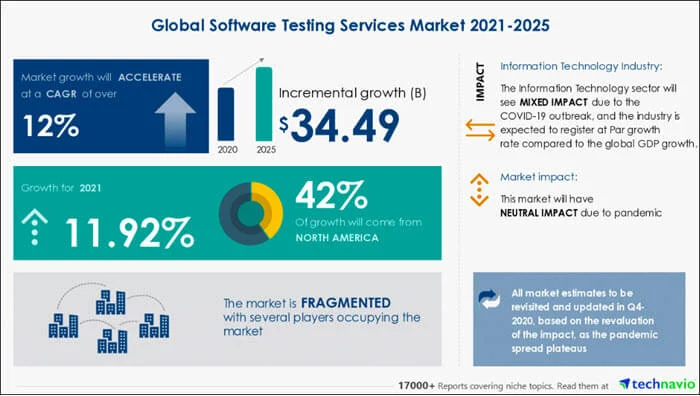
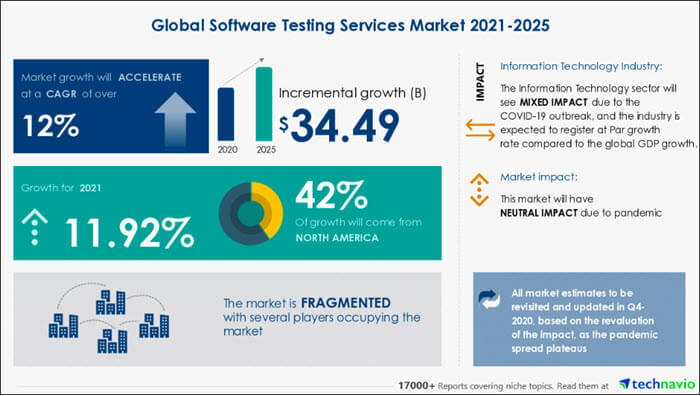
- Market Projections: According to insights published by PR Newswire, the global software testing services market is projected to expand by a staggering $90 billion between 2021 and 2030, registering a robust Compound Annual Growth Rate (CAGR) of 12.39%.
- Baseline Valuations: Concurrently, Global Market Insights reported that the software testing market surpassed $40 billion in 2020 alone, with expectations of a steady 7% CAGR through 2030.
- The Rise of Test Automation: Industry surveys underscore that test automation is no longer a luxury, but a standard operating procedure. Data from Tricentis reveals that in over 80% of organizations, dedicated testers or QA professionals execute functional test automation. Research from Forte Group further indicates that 12% of QA practitioners report fully automated testing pipelines, while 35% are halfway toward complete automation.
Chronology: The Journey to Modern Quality Assurance
To understand how the software testing market reached its current multi-billion-dollar valuation, it is essential to trace its evolution over the past decade:
- The Traditional Era (Pre-2015): Software testing was largely manual, siloed, and performed at the very end of development cycles. This often created bottlenecks, delayed product releases, and increased costs.
- The Agile and DevOps Revolution (2015–2019): As businesses adopted Agile and DevOps methodologies, testing shifted left. Continuous testing became necessary, requiring QA teams to integrate automated scripts directly into fast-paced deployment pipelines.
- The Intelligent Automation Boom (2020–Present): Sparked by the demands of remote work, mobile-first strategies, and cloud migration, the industry embraced Artificial Intelligence (AI), Machine Learning (ML), and Robotic Process Automation (RPA). Testing evolved into an intelligent, data-driven discipline capable of predicting software failures before they impact end-users.
Supporting Data: Tools, Frameworks, and Industry Metrics
Data compiled from developer ecosystems and quality reports highlights the technical backbone driving today’s software testing market.
Popular Frameworks and Technologies
According to comprehensive developer ecosystem research by JetBrains, technical stacks within QA have stabilized around specific industry-standard tools:
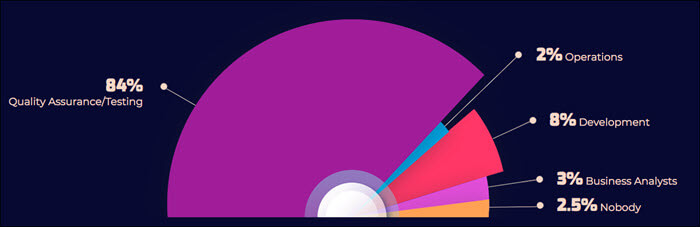
- Programming Languages: Java remains the undisputed frontrunner and the most common programming language utilized for test automation.
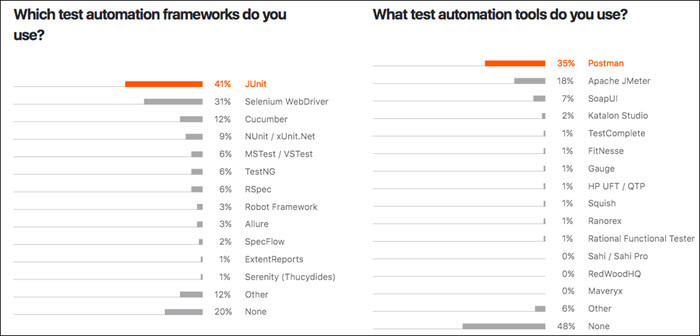
- Automation Frameworks: JUnit and Selenium WebDriver continue to dominate as the most widely adopted test automation frameworks.
- Testing Utilities: Postman and Apache JMeter lead the market for API testing and performance/load testing, respectively.
Corporate Spending and Quality Goals
The World Quality Report by Micro Focus emphasizes that quality assurance is now deeply embedded in enterprise engineering budgets:
- 90% of businesses report experiencing organizational growth driven by AI integration.
- 69% of businesses successfully meet their predefined quality goals, directly attributing their success to rigorous QA practices.
- Demand for specialized external software testing companies is at an all-time high as organizations look to outsource complex verification tasks.
Furthermore, cybersecurity testing has emerged as a paramount concern. Research from Amzur indicates that 68% of large enterprises view cybersecurity threats as an escalating danger. Consequently, global spending on cybersecurity and automated security testing is projected to scale dramatically, with overall cybersecurity spending anticipated to reach $133.7 billion.
Official Responses and Expert Perspectives
Industry leaders and research bodies agree that the integration of Artificial Intelligence and Machine Learning is reshaping the horizon of quality assurance.
According to projections by Katalon, AI will remain omnipresent across all innovative technology sectors, with the broader AI market expected to skyrocket to $200 billion by 2030. In the realm of quality assurance, intelligent automation allows testing teams to optimize workflows, drastically reduce false positives, and ensure seamless end-user experiences.
Organizations are increasingly leveraging AI and RPA to automate security testing, ensuring infrastructure safety and compliance with international security standards. Experts note that as systems grow more interconnected—driven by the Internet of Things (IoT) and blockchain technologies—the role of the tester has expanded into performance engineering and complex scenario modeling.
Implications: Career Opportunities and the Future of QA
For professionals evaluating career paths in technology, the data provides an unequivocal endorsement of the software testing profession.
The Modern QA Professional Profile
Data compiled by QA Lead highlights key demographic and competency metrics for software testers globally:
- Per Capita Presence: There is an average of 5.2 software testers per 100,000 people globally.
- Education and Upskilling: 56% of testers rely on self-study and technical books, while 44% have completed formal certification classes and professional training programs.
- In-Demand Skills: Employers place a high premium on a hybrid skill set. Approximately 75% of respondents emphasize strong communication skills as vital, while 63% highlight the necessity of scripting and automation expertise.
Key Technological Trends Shaping the Future
As the industry marches toward 2030, several cutting-edge trends will dictate the evolution of the software testing market:
- Codeless Test Automation: Lowering the barrier to entry for test creation, allowing business analysts and manual testers to build automated scripts without deep coding knowledge.
- IoT-Driven Testing: Ensuring flawless performance across a vast ecosystem of smart devices and interconnected hardware.
- AI/ML in Test Automation: Self-healing test scripts that automatically adapt to UI changes, drastically reducing maintenance overhead.
- Blockchain Testing: Verifying the integrity, security, and smart contract execution of decentralized applications.
- Performance Engineering: Moving beyond simple load testing to engineer resilient applications capable of scaling seamlessly under extreme pressure.
Conclusion
The global software testing services market has cemented its status as a cornerstone of the modern digital economy. Driven by multi-billion-dollar market growth, a shift toward intelligent automation, and an ever-increasing emphasis on cybersecurity, the software testing sector offers unprecedented stability and growth potential. For organizations, investing in robust quality assurance is no longer optional—it is the baseline for survival. For professionals, entering the software testing field offers a dynamic, lucrative, and future-proof career path at the cutting edge of technological innovation.