The Impossible Port: Why DOOM Now Runs on a $30 Electrical Clamp Meter
It is the quintessential benchmark of the modern hacker ethos: if a device possesses a processor and a screen, it is only a matter of time before it is forced to render the blood-soaked corridors of id Software’s 1993 masterpiece, DOOM. From pregnancy tests and oscilloscopes to smart lightbulbs and tractors, the game has transcended its original silicon roots to become the universal "Hello World" of the embedded systems community.
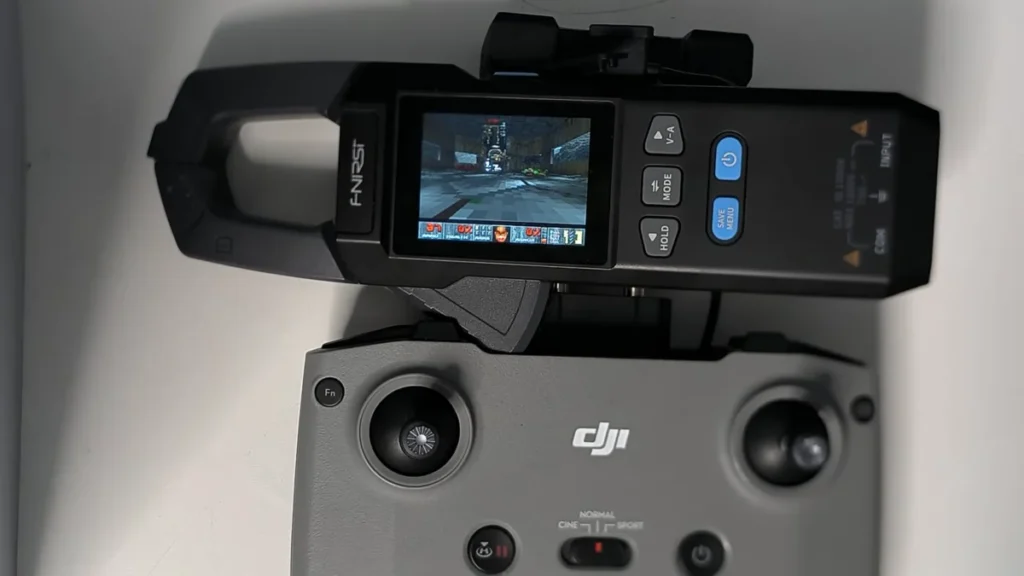
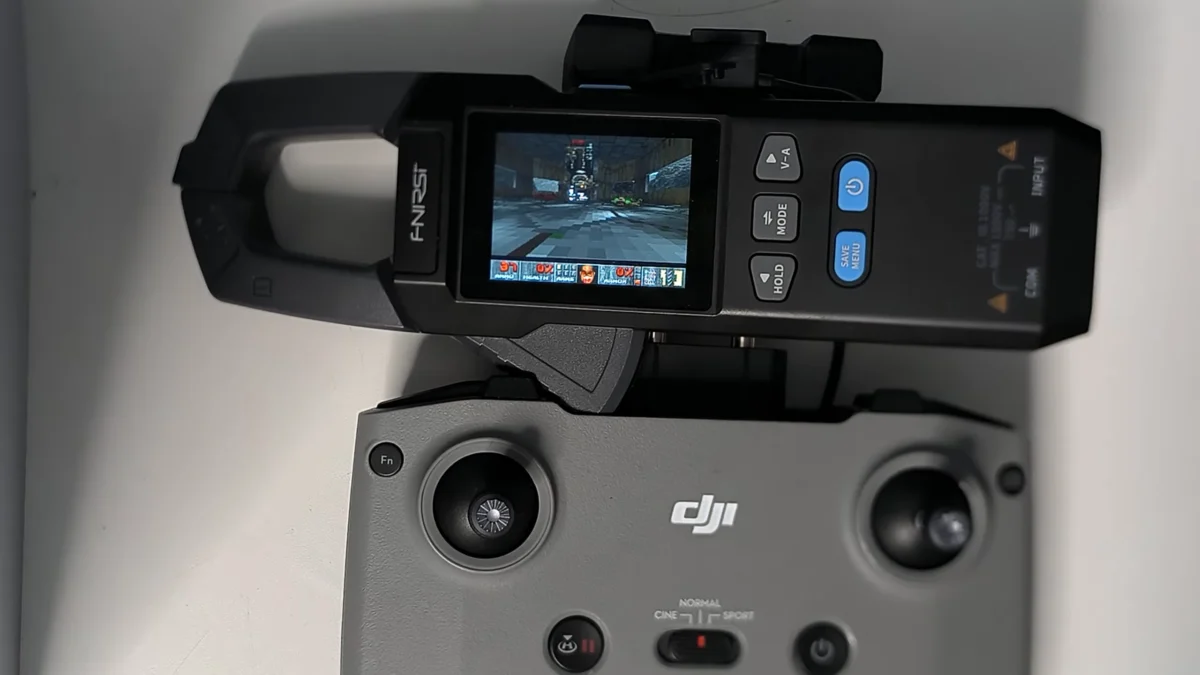
The latest frontier in this relentless march of porting is perhaps the most improbable yet. Developer Artur Bieniek has successfully ported DOOM to the FNIRSI DMC-100, a budget-friendly electrical clamp meter that typically retails for approximately $30. This feat represents a staggering achievement in hardware optimization, pushing the boundaries of what is possible with severely constrained memory and processing architectures.
Main Facts: Architecture vs. Apocalypse
The FNIRSI DMC-100 is designed for the mundane tasks of measuring electrical current, voltage, and continuity in industrial or residential settings. It is not a gaming console, nor is it a high-end microcontroller development board. At its heart sits the Artery AT32F415, a Cortex-M4-based microcontroller. While its 150 MHz clock speed is respectable for a budget tool, the project faced an insurmountable wall: the chip features only 32 KB of RAM.
To put this in perspective, the original DOOM release in 1993 required a PC with at least 4 MB of RAM. Bieniek’s port is not merely an emulation; it is a surgical adaptation of the doomgeneric engine, stripped down to its absolute, bare-metal essence to fit within a footprint smaller than a modern text file.
Despite the extreme limitations, the project includes:
- Full Episode Support: The entirety of Freedoom: Phase 1 (E1M1 through E1M9).
- UI Integration: Functioning title screens, intermission sequences, a finale, and a functional game menu.
- State Management: Four dedicated save slots, a luxury rarely seen in such constrained ports.
- Visuals and Audio: The device’s native 320×240 color screen displays the action, while the meter’s built-in buzzer provides the iconic, if somewhat synthesized, sound effects of demon-slaying.
- Controller Integration: Because the clamp meter’s own interface is ill-suited for FPS movement, Bieniek mapped the controls to a DJI RC-N1 drone controller, adding a layer of logistical absurdity to the gameplay experience.
Chronology: The Road to the DMC-100 Port
The history of DOOM porting is a timeline of iterative miniaturization. The "It Runs Doom" movement began in earnest in the late 90s, but exploded with the advent of accessible microcontrollers like the Arduino and ESP32.
The Early Phase (2000–2010)
During this era, enthusiasts focused on porting the game to handheld consoles and early smartphones. The challenge was largely one of software compatibility and operating system overhead. The porting process involved translating the game’s C code to run on alternative OS kernels.
The Embedded Era (2010–2020)
As microcontrollers became cheaper, the focus shifted to "bare metal" ports. Hackers began bypassing operating systems entirely, writing directly to the hardware registers. Projects involving the Raspberry Pi and ESP32 became common, proving that DOOM could exist without a full-blown OS.
The "Micro-Constraint" Era (2020–Present)
This current era is defined by extreme resource scarcity. When enthusiasts began running DOOM on the display of a digital camera or a smart fridge, the challenge moved from "Can it run?" to "How little RAM can we use?" Artur Bieniek’s work on the DMC-100 represents the current pinnacle of this philosophy. By choosing a device with a 32 KB memory limit, Bieniek forced the DOOM engine to undergo a process of aggressive pruning, essentially rewriting the game’s memory management to treat every byte as a precious commodity.
Supporting Data: The Math of Minimalist Gaming
To understand the scale of Bieniek’s achievement, one must look at the resource allocation. Modern software development often ignores memory footprints, with applications frequently consuming gigabytes of RAM for simple tasks.
- The RAM Paradox: The AT32F415’s 32 KB is effectively smaller than the space required to hold a single high-resolution texture in a modern AAA title. To accommodate the game, Bieniek had to utilize a highly optimized version of the
doomgenericengine. This engine acts as a bridge, stripping away the complex overhead of the original DOS-based system calls and mapping them directly to the hardware’s I/O pins. - The Display Pipeline: The 320×240 resolution is a clever utilization of the DMC-100’s display controller. By managing the frame buffer directly in the limited SRAM, the system manages to maintain a playable, if visually jittery, frame rate.
- The Input Latency: The integration of a drone controller (the DJI RC-N1) adds a layer of complexity. The signal must be processed through the drone controller’s proprietary protocol and passed to the clamp meter via an interface that was never intended for gaming input, requiring custom firmware to map the joystick inputs to movement, strafing, and firing commands.
Official Responses and the Community Impact
The response from the developer community and even from industry observers has been one of collective awe. While FNIRSI has not released an official statement regarding their clamp meter being used as a gaming platform, the project has gained significant traction on platforms like GitHub and Hackaday.
"It’s a masterclass in optimization," says one prominent embedded systems engineer familiar with the Artery architecture. "Most people would look at 32 KB of RAM and see an impossible task. Artur didn’t just see a limitation; he saw a puzzle. He treated the game code like a puzzle piece that needed to be whittled down until it fit into the tightest possible space."
The project has sparked a renewed interest in the Artery AT32F415 chip, which is now being viewed by hobbyists not just as a tool for electrical measurement, but as a surprisingly capable platform for low-level experimentation. The open-source nature of the project—hosted on GitHub—has allowed other developers to download the source code, study the memory management techniques, and potentially apply them to other industrial tools.
Implications: The Future of "Can It Run Doom?"
What does it mean for the future of technology when we can run a 30-year-old game on a $30 electrical tool?
1. Education and Skill Development
The most significant implication is educational. Projects like this serve as a gateway for young engineers to learn about low-level programming, assembly language, and hardware-software integration. By working within the constraints of a device like the DMC-100, developers learn how to write efficient, lean code that respects hardware limitations—a skill that is increasingly lost in an era of cloud computing and abundant resources.
2. The Longevity of Software
The endurance of DOOM is a testament to the brilliance of John Carmack and the id Software team’s original engine design. Because the code is modular and conceptually simple, it serves as the perfect baseline for testing the capabilities of new hardware. If a new chip hits the market, the ultimate "stress test" for its documentation and developer support is often: "Can we get DOOM running on it?"
3. The Democratization of Hardware
The DMC-100 port proves that high-end performance is not just a matter of expensive silicon, but of clever engineering. As we move toward a future of ubiquitous IoT (Internet of Things) devices, the ability to squeeze performance out of low-power, low-cost hardware will be paramount. Bieniek’s project is a microcosm of the larger challenge of the next decade: making smart, capable devices out of the most minimal, cost-effective components available.
4. A Philosophical Benchmark
Finally, there is the philosophical element. DOOM represents the spirit of defiance against planned obsolescence. By taking a tool meant for utility and forcing it to provide entertainment, the maker community asserts control over the hardware they purchase. It is a digital rebellion against the idea that a device should only do exactly what its manufacturer intended.
Conclusion
The porting of DOOM to the FNIRSI DMC-100 is more than just a novelty; it is a profound demonstration of technical ingenuity. It reminds us that at the intersection of extreme constraints and human creativity, there is no limit to what can be achieved. As long as there are screens to display pixels and processors to calculate movement, the demons of Hell will continue to find their way onto the most unlikely of devices. Artur Bieniek has not only added another entry to the long, storied list of DOOM platforms; he has set a new standard for what it means to push hardware to its absolute, breathless limit.