Arrow Electronics and NXP Semiconductors Bring NXP Ara240 Neural Processing Unit to the Cloud via Digital Test Drive
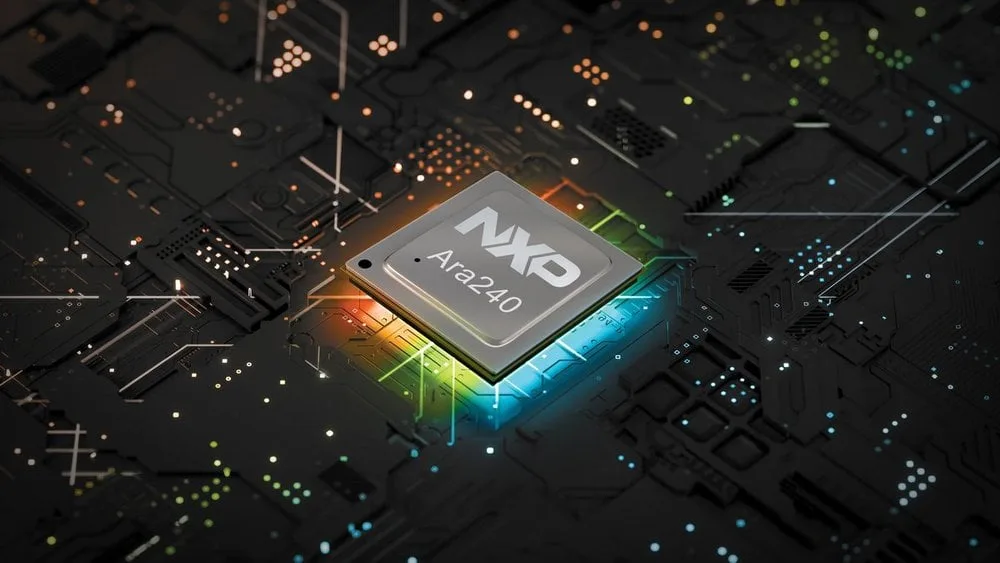
MUNICH, GERMANY / CENTENNIAL, COLORADO — In a major development for the edge computing and artificial intelligence sectors, Arrow Electronics has announced global, remote access to NXP® Semiconductors’ discrete Ara240 neural processing unit (DNPU) through its cloud-based Digital Test Drive platform.
This strategic initiative aims to democratize access to advanced edge AI hardware. It allows design engineers, original equipment manufacturers (OEMs), and embedded systems developers to remotely evaluate cutting-edge computer vision, generative AI, and multimodal systems directly over the web. By eliminating traditional logistical bottlenecks such as kit availability and shipping delays, Arrow and NXP are enabling engineering teams to test model performance and validate project feasibility before making substantial capital investments in physical hardware.
Main Facts
The collaboration centers on the integration of NXP’s high-performance Ara240 DNPU into Arrow Electronics’ Digital Test Drive—a managed, remote hardware testing and development ecosystem.
- The Technology: The NXP Ara240 DNPU is a discrete neural processing unit engineered to deliver up to 40 tera eTOPS (equivalent operations per second). It supports demanding AI workloads, including large language models (LLMs), vision language models (VLMs), advanced transformers, and convolutional neural networks (CNNs).
- Memory and Capabilities: Featuring support for up to 16 GB of LPDDR4 memory, the Ara240 allows complex, data-heavy AI models to execute locally at the edge without requiring constant cloud connectivity.
- The Platform: Arrow’s Digital Test Drive provides developers worldwide with browser-based access to live, physical embedded systems. These evaluation setups pair NXP i.MX applications processors with the Ara240 DNPU.
- Core Value Proposition: Engineers can run live evaluations of real-world workloads—such as machine vision and natural language processing inference—without relying solely on static datasheets or theoretical benchmark data, thereby streamlining the architectural decision-making process.
Chronology of Edge AI and Remote Evaluation
To understand the significance of the Arrow-NXP collaboration, it is helpful to trace the evolution of edge computing and remote engineering methodologies.
The Shift to the Edge (2018–2022)
In the early days of the modern artificial intelligence boom, nearly all deep learning inference and training relied heavily on centralized cloud infrastructure. Massive server farms housed high-powered GPUs capable of crunching vast volumes of data. However, as IoT (Internet of Things) deployments scaled across industrial automation, smart retail, and autonomous robotics, industry stakeholders identified critical limitations in cloud-only paradigms:
- Latency: Sending high-bandwidth sensor or video data to a cloud server and awaiting a response introduced unacceptable delays for time-sensitive applications like collision avoidance or high-speed manufacturing inspection.
- Bandwidth Costs: Continuously streaming raw video feeds and telemetry data over cellular or broadband networks proved economically unsustainable.
- Privacy and Security: Transmitting sensitive data—such as proprietary industrial telemetry or video streams from private facilities—raised serious regulatory and security concerns.
These challenges drove a massive industry-wide pivot toward "Edge AI," moving processing power physically closer to where data originates.
The Rise of Remote Hardware Evaluation (2020–2024)
Simultaneously, global supply chain disruptions, remote work trends, and the increasing complexity of embedded system design created friction in traditional evaluation cycles. Historically, testing a new silicon architecture meant waiting weeks for evaluation kits to clear customs, setting up complex bench power supplies, and troubleshooting intricate toolchain installations.
Platforms like Arrow’s Digital Test Drive emerged to solve this friction. By decoupling physical hardware ownership from the evaluation phase, these cloud-managed test environments allowed engineering teams to log in, flash firmware, run test scripts, and observe real-time hardware behavior from anywhere in the world.
The Integration of the Ara240 DNPU (Present)
With the launch of this global access program, Arrow and NXP have married two powerful trends: high-performance edge neural processing and frictionless cloud-based hardware evaluation. Developers no longer need to wait for physical inventory to arrive on their desks to begin benchmarking complex models like VLMs or LLMs on NXP silicon.
Supporting Data and Technical Architecture
The technical specifications of the NXP Ara240 DNPU highlight its capability to handle enterprise-grade AI workloads within power-constrained embedded environments.
Performance and Compute Metrics
- Throughput: Capable of delivering up to 40 tera eTOPS, the Ara240 provides the computational horsepower required for modern deep learning models without necessitating power-hungry server-class processors.
- Memory Bandwidth: With support for up to 16 GB of LPDDR4 memory, the device overcomes one of the most persistent bottlenecks in edge AI: memory capacity. Running large language models and vision transformers locally requires substantial RAM to store model weights and activation states. The Ara240’s memory subsystem ensures these large models can execute efficiently at the edge.
Supported Model Architectures
The hardware is engineered for versatility, supporting a broad spectrum of neural network topologies:
- Large Language Models (LLMs): Enabling local text generation, summarization, and command parsing.
- Vision Language Models (VLMs): Allowing systems to analyze images and respond to natural language queries about visual content.
- Transformers: Powering advanced sequence-to-sequence tasks across industrial and automotive applications.
- Convolutional Neural Networks (CNNs): Supporting traditional computer vision tasks such as object detection, classification, semantic segmentation, and anomaly detection.
How Digital Test Drive Works
The Arrow Digital Test Drive environment bridges the gap between theoretical exploration and hands-on validation:
- Zero Setup Overhead: Users access the test bench via a standard web browser, bypassing software installation, driver configuration, and board-level troubleshooting.
- Real Hardware Access: Rather than interacting with a software simulator, users interface with real physical boards featuring NXP i.MX applications processors paired with the Ara240 DNPU.
- Interactive Benchmarking: Developers can upload or test their own models and sample scripts, observing latency, power consumption, and accuracy metrics in real time.
Official Responses and Industry Perspective
Key executives from both NXP Semiconductors and Arrow Electronics emphasized the strategic importance of making advanced edge AI tools universally accessible.
Justin Mortimer, Senior Director of Product Marketing for Secure Connected Edge at NXP Semiconductors, highlighted the necessity of experiential evaluation in modern design cycles:
"Developers need a hands-on way to understand how advanced AI technologies will behave in real applications. By providing access to NXP’s Ara240 DNPUs through Digital Test Drive, Arrow lets designers evaluate real edge AI performance more quickly and make design decisions more knowingly."
Shelby Schnurrenberger, Vice President of Global Semiconductor Management and Suppliers at Arrow Electronics, elaborated on Arrow’s broader mission to eliminate friction in the technology adoption lifecycle:
"At Arrow, we are committed to helping customers accelerate their AI journey by removing the barriers between innovation and implementation. By integrating NXP’s Ara240 AI accelerator into our Digital Test Drive platform, designers can immediately evaluate advanced edge AI workloads, gaining the necessary hands-on experience with the technology before investing in hardware.
Together with NXP, we are enabling them to move faster from initial idea to production and to unlock new opportunities in intelligent edge applications. Digital Test Drive extends global access to NXP’s AI portfolio, making it possible to evaluate performance, explore use cases, and shorten development cycles anywhere in the world. This collaboration strengthens our commitment to making edge AI more accessible, scalable, and practical for customers working in industrial, robotics, computer vision, and emerging intelligent systems sectors."
Implications for Industry Sectors
The integration of the NXP Ara240 DNPU into Arrow’s remote testing ecosystem carries far-reaching implications across multiple vertical markets.
1. Industrial Automation and Robotics
Industrial environments demand high reliability, low latency, and robust data privacy. Automated guided vehicles (AGVs), autonomous mobile robots (AMRs), and robotic arm controllers require real-time computer vision and spatial reasoning to navigate dynamic factory floors safely.
By utilizing the Ara240 via Digital Test Drive, roboticists can test perception models that process high-resolution video streams locally. This ensures split-second reaction times without relying on flaky or congested factory Wi-Fi networks connected to remote cloud servers.
2. Intelligent Vision and Smart Infrastructure
Smart city deployments, retail analytics systems, and security monitoring setups process massive streams of video data. Running vision language models and convolutional neural networks locally at the edge reduces bandwidth consumption across municipal or corporate networks.
Engineers working on intelligent vision products can use the remote test platform to benchmark how many concurrent video streams the Ara240 can process simultaneously, allowing for precise hardware sizing during the architectural phase.
3. Democratization of Embedded AI Development
Historically, smaller engineering firms and startups faced significant financial and logistical barriers when evaluating high-end silicon. Purchasing multiple evaluation kits, stocking specialized components, and maintaining diverse hardware test benches tied up valuable capital.
By shifting the evaluation phase to a cloud-managed, on-demand model, Arrow and NXP are leveling the playing field. Smaller teams can now benchmark enterprise-grade neural processing units with zero upfront hardware expenditure, accelerating innovation across the broader embedded ecosystem.
Availability and Next Steps
The NXP Ara240 evaluation environment is live and fully accessible through the Arrow Digital Test Drive platform. Engineering teams and system architects looking to streamline their development cycles can bypass traditional supply chain hurdles and begin testing immediately.
For further technical documentation, platform guidelines, and to schedule a remote testing session, visit the official resource portal: Digital Test Drive – Remote Hardware Testing.