Amazon Unveils CloudWatch Omni: An AI-Powered Observability Platform Unifying Application and Agentic Workloads
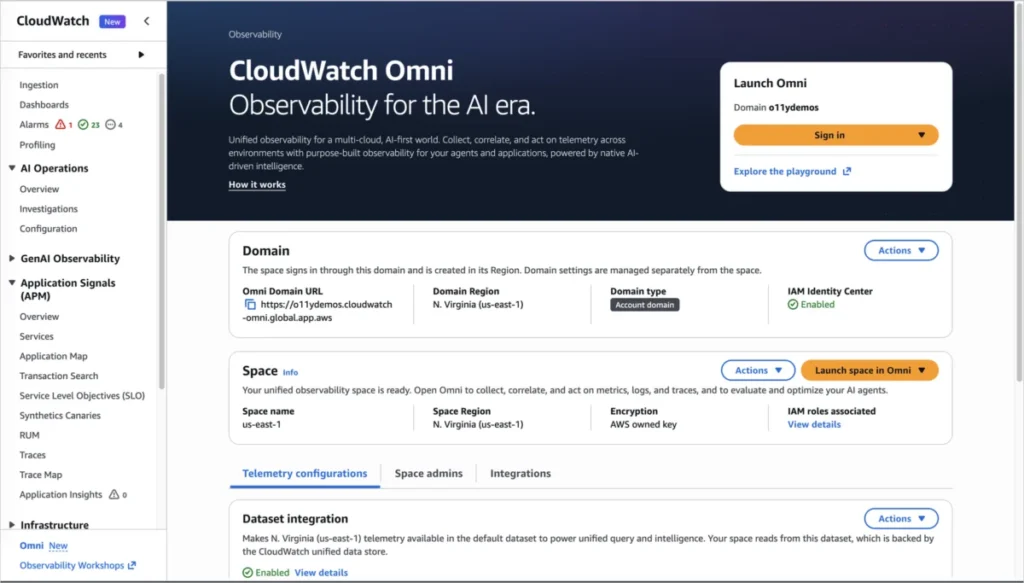
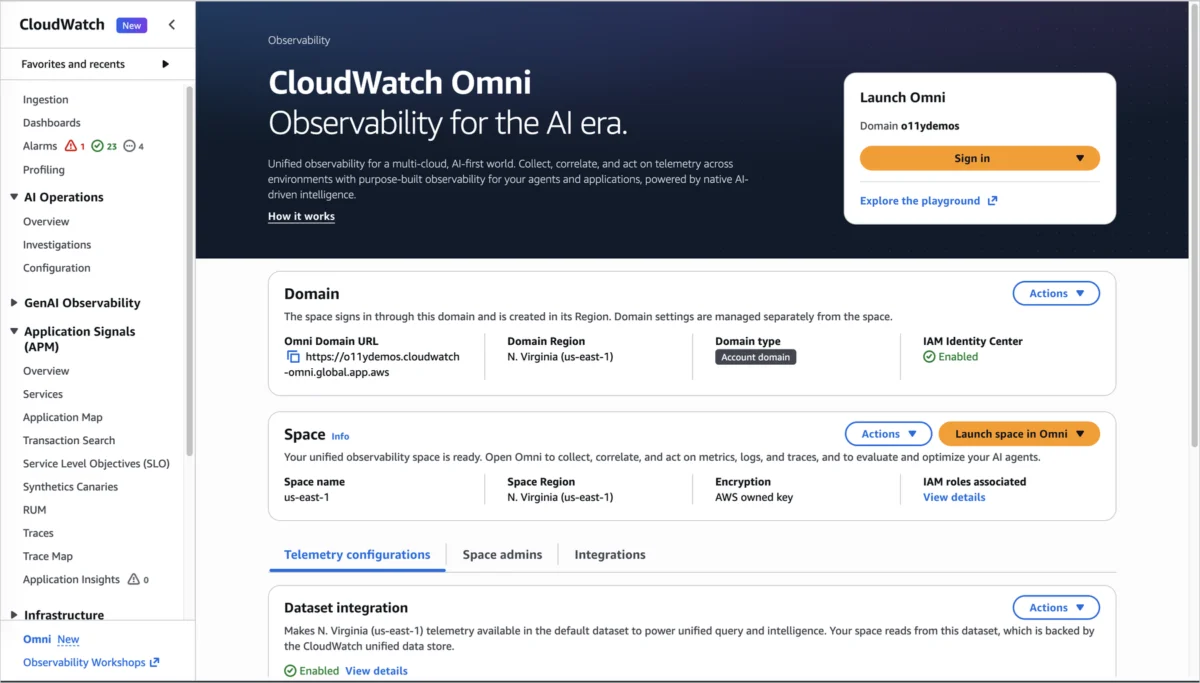
SEATTLE — In a major move to streamline enterprise software management, Amazon Web Services (AWS) has officially launched Amazon CloudWatch Omni. This next-generation, AI-driven observability experience is designed to bridge a long-standing chasm in software engineering: the fragmented monitoring of traditional applications, cloud services, and modern generative AI (GenAI) agents.
By unifying telemetry around application topology rather than isolated technical signals, CloudWatch Omni seeks to eliminate the friction, tool-switching, and context loss that historically plague engineering teams during critical incidents. Built natively on OpenTelemetry and integrated with advanced artificial intelligence, the platform allows cross-functional teams to collaborate seamlessly through dedicated organizational workspaces without ever needing direct access to the underlying AWS Management Console.
Main Facts: What is Amazon CloudWatch Omni?
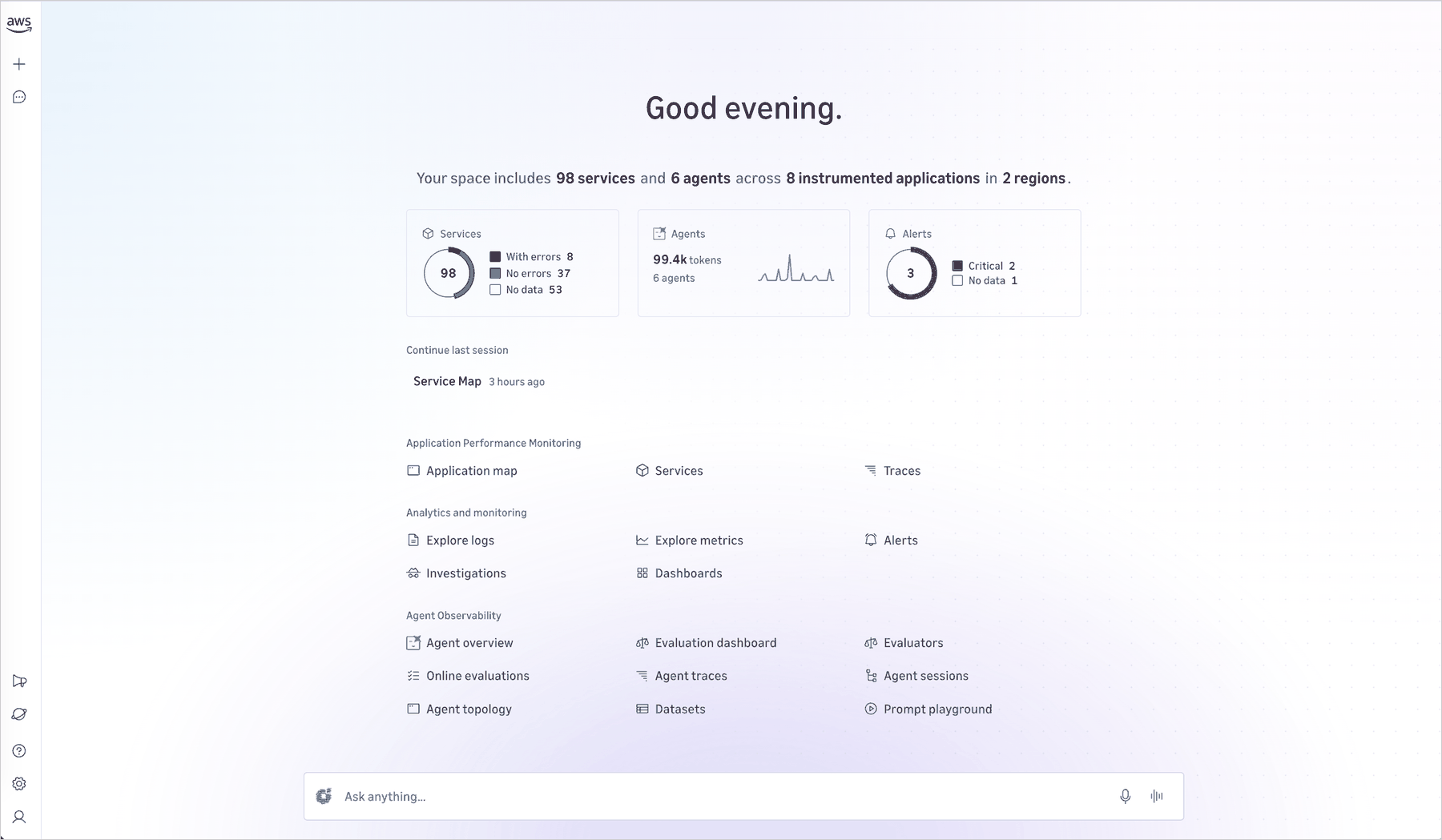
At its core, CloudWatch Omni is a collaborative observability workspace that aggregates logs, metrics, traces, and alarms into a single, cohesive interface. Rather than forcing site reliability engineers (SREs), developers, database administrators, and managers to hop between disparate monitoring screens, Omni organizes data dynamically around applications and their underlying dependencies.
Key components of the launch include:
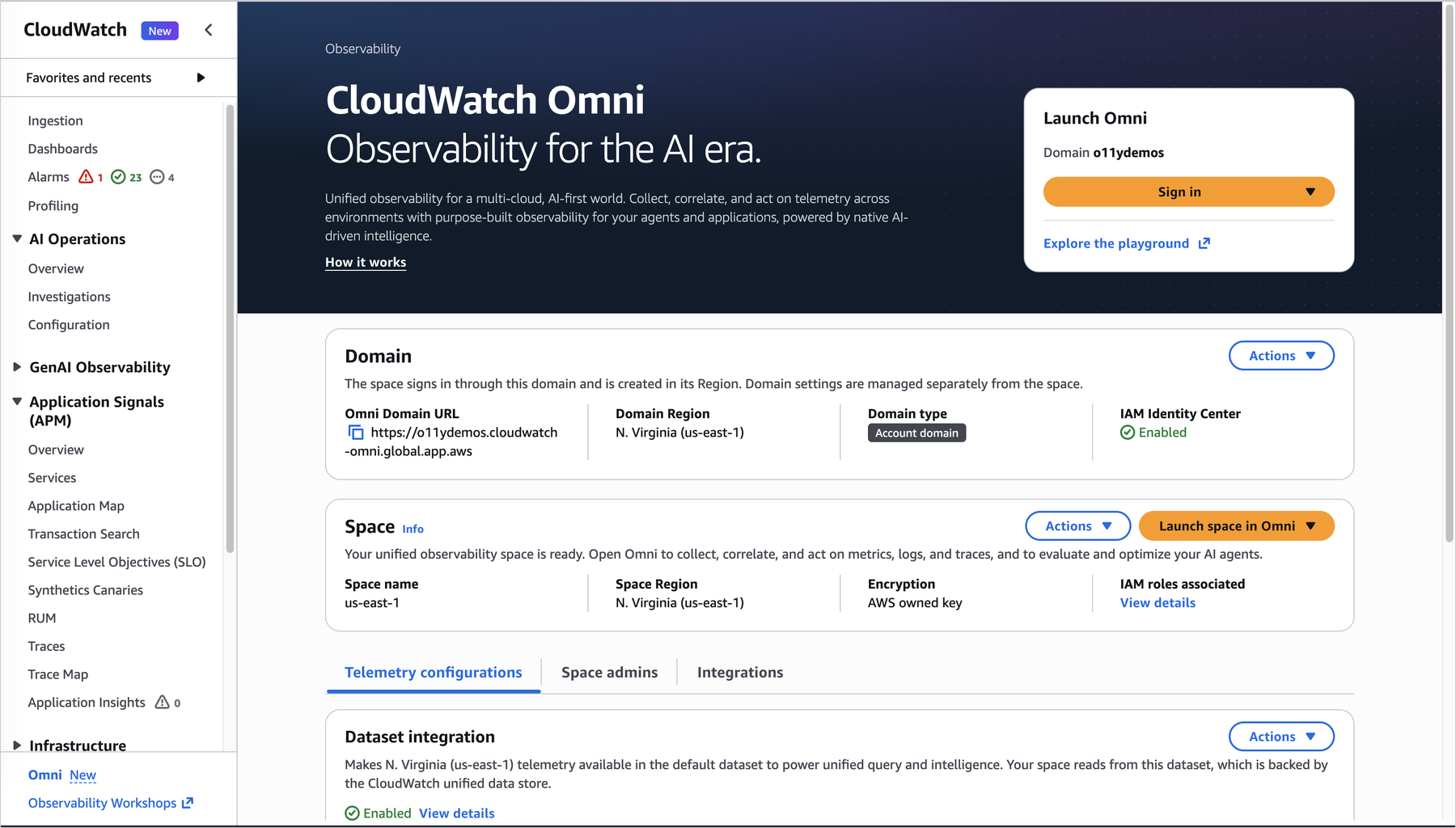
- Decoupled Access via Enterprise SSO: Users log in through a dedicated URL provisioned for their organization, leveraging existing identity providers (such as Okta, Microsoft Entra ID, and other SAML 2.0-compliant systems) via AWS IAM Identity Center. AWS Console credentials are entirely optional for day-to-day observability work.
- OpenTelemetry-Native Foundation: Omni seamlessly hooks into existing CloudWatch data with zero required data movement or reconfiguration. Furthermore, any external workload instrumented with OpenTelemetry can stream its telemetry directly to an OpenTelemetry Protocol (OTLP) endpoint.
- Application-Centric Topology: The platform automatically discovers services, maps complex dependencies, and dynamically adjusts alarms based on declarations of intent (such as latency budgets, error rate thresholds, and availability targets) rather than static, manually tuned dashboards.
- Amazon DevOps Agent Integration: An embedded AI assistant participates actively in investigation sessions. Grounded in real-time telemetry, the DevOps Agent correlates anomalies across services, tracks root-cause pathways, and auto-generates comprehensive incident histories.
- Unified GenAI and Application Observability: Omni provides a dual-purpose architecture capable of monitoring both classical multi-tier application architectures and advanced generative AI agentic workloads from a single interface.
Chronology: The Evolution Toward Autonomous Observability
The journey toward CloudWatch Omni reflects a broader industry shift away from manual dashboard curation toward automated, context-aware system monitoring.
Pre-Omni Era: The Siloed Monitoring Dilemma
For years, enterprise engineering teams relied on specialized tools to monitor logs, infrastructure metrics, application performance, and security events. When an incident occurred—such as a spike in HTTP 500 errors—teams faced a tedious triage process:
- An alarm would trigger, often alerting an on-call SRE via automated paging systems.
- The engineer would log into the AWS Management Console or a third-party observability platform, navigating a maze of static dashboards.
- Context would frequently get trapped in Slack threads, scattered screenshots, and disjointed chat logs as different domain experts (e.g., database teams versus API gateway teams) were pulled into the investigation.
- Post-incident reporting required manual aggregation of timelines, root causes, and resolutions.
The Rise of Generative AI and Agentic Workloads
As organizations began deploying complex generative AI models and autonomous agentic workflows—systems where AI agents dynamically call APIs, execute code, and make autonomous decisions—traditional observability tools proved inadequate. Tracing non-deterministic AI execution paths alongside deterministic backend services created an unprecedented tracking challenge. AWS recognized that engineering teams needed a unified pane of glass capable of interpreting both programmatic microservices and autonomous AI agents.
The September 2026 Launch
AWS introduced CloudWatch Omni in a two-part rollout strategy. In a companion announcement, AWS detailed the agent observability framework tailored for generative AI workloads. Shortly thereafter, the company published the comprehensive application observability experience, culminating in immediate general availability for existing and new CloudWatch customers directly via the AWS console.

Supporting Data and Technical Architecture
To understand how CloudWatch Omni operates under the hood, it is essential to examine its structural layout, data ingestion pipelines, and collaborative workflows.
1. Spaces: Organizing Work by Ownership
In CloudWatch Omni, resources and telemetry are structured into Spaces. A Space represents a logical boundary—typically aligned with a specific business unit, product line, or engineering team.
- Each Space aggregates the applications owned by that team.
- Spaces point directly to pre-existing CloudWatch logs, metrics, traces, and alarms. Because there is no underlying data migration or duplication, organizations can adopt Omni without incurring double-ingestion storage penalties.
- Dynamic views replace static dashboards, updating automatically as microservices scale, get refactored, or are deprecated.
2. Automated Topology Mapping
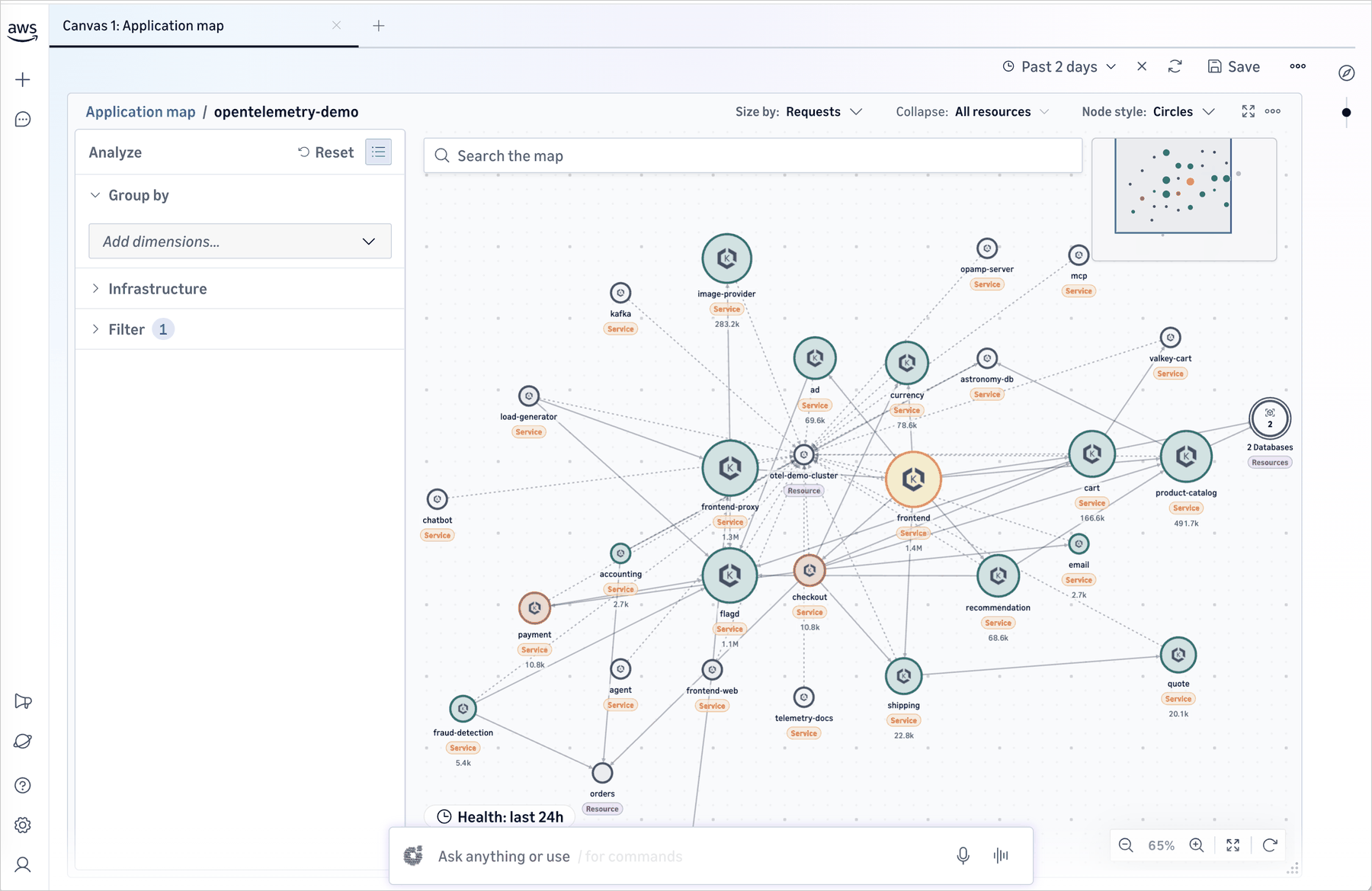
When a Space is initialized, Omni performs automated service discovery by analyzing incoming OpenTelemetry signals and AWS Config resource metadata. The platform constructs an interactive visual map of the application topology. Engineers can instantly see upstream dependencies, downstream payment gateways, database clusters, and third-party API hooks without manually drawing architectural diagrams.
3. Natural Language Telemetry Queries
Omni integrates natural language processing capabilities, allowing engineers to query their telemetry data in plain English. Instead of constructing complex log-filtering queries or custom metric expressions, an engineer can ask questions such as: "Show me all error spikes in the checkout service that correlate with increased latency in the downstream payment API over the last 30 minutes." The system instantly parses the underlying telemetry and surfaces the relevant insights.
Official Responses and Industry Context
While AWS has positioned CloudWatch Omni as a natural evolution of its enterprise monitoring suite, industry analysts view the release as a direct response to the rising prominence of specialized observability platforms like Datadog, Dynatrace, and New Relic, as well as AI-native startups focusing on LLM monitoring.
In the official AWS technical documentation and launch blogs authored by engineering leaders such as Daniel Abib, the emphasis centers squarely on reducing cognitive load and administrative overhead.
"Engineering teams spend a significant portion of their observability time maintaining dashboards, tuning thresholds, and switching between tools to piece together what happened during an incident," AWS noted in the platform’s release brief. "CloudWatch Omni changes this by organizing observability around your applications rather than individual signals, and bringing your whole team into the same workspace."
By decoupling the workspace from the AWS Management Console via IAM Identity Center integrations, AWS is also addressing a long-standing enterprise security and collaboration bottleneck. Allowing non-engineers—such as product managers, technical account managers, and executive stakeholders—to view live investigation sessions securely through enterprise single sign-on (SSO) broadens the utility of cloud telemetry far beyond the core DevOps team.
Implications for Enterprise Engineering Teams
The introduction of Amazon CloudWatch Omni carries profound implications for how organizations will architect, monitor, and troubleshoot cloud-native applications moving forward.
1. The Death of Manual Dashboard Maintenance
For decades, writing and maintaining custom Grafana or CloudWatch dashboards has been an unglamorous tax on engineering productivity. As microservices architectures expanded from dozens to thousands of endpoints, static dashboards quickly became outdated. Omni’s intent-based configuration model—where teams declare high-level objectives (SLOs, latency budgets) and let the system dynamically generate the necessary views—signals a paradigm shift toward autonomous dashboarding.
2. Streamlined Cross-Functional Incident Response
When an outage crosses organizational boundaries, the primary bottleneck is rarely technical; it is communicative. By introducing persistent, context-rich investigation sessions where historical data, automated agent analysis, and human commentary flow together, Omni eliminates the "he said, she said" friction of modern incident response. Furthermore, because the entire session history is automatically compiled, the traditional chore of writing post-mortem incident reports is vastly simplified.
3. Bridging Classical Systems and GenAI Agents
As enterprises race to integrate generative AI into core workflows, monitoring non-deterministic outputs has become a major engineering hurdle. By building an observability platform designed from the ground up to handle both traditional microservices and agentic workloads side-by-side, AWS has provided a unified standard. Developers no longer need one tool to monitor their relational databases and another to trace the execution steps of an autonomous LLM agent.
Getting Started with CloudWatch Omni
CloudWatch Omni is generally available now. Existing Amazon CloudWatch customers can begin exploring the platform immediately with minimal friction:
- Console Activation: Navigate to the Amazon CloudWatch console and select "Try CloudWatch Omni." All historical logs, metrics, traces, and alarms become instantly accessible.
- Identity Setup: System administrators can configure enterprise domains and connect identity providers (Okta, Microsoft Entra ID, and other SAML 2.0 options) via AWS IAM Identity Center.
- Space Provisioning: Define team-specific Spaces, assign application ownership boundaries, and invite team members to access the dedicated organizational URL.
- External Integration: For workloads running outside of AWS, deploy standard OpenTelemetry collectors pointing to Omni’s OpenTelemetry Protocol (OTLP) endpoints to unify multi-cloud and hybrid environments.
For complete pricing details, regional availability schedules, and advanced API documentation, visit the official Amazon CloudWatch Omni portal or consult the AWS DevOps Agent developer guides.