Expanding Horizons on Amazon Bedrock: OpenAI’s GPT-6 Lineup and Anthropic’s Claude Opus 5.5 Redefine Enterprise AI Strategy
Main Facts
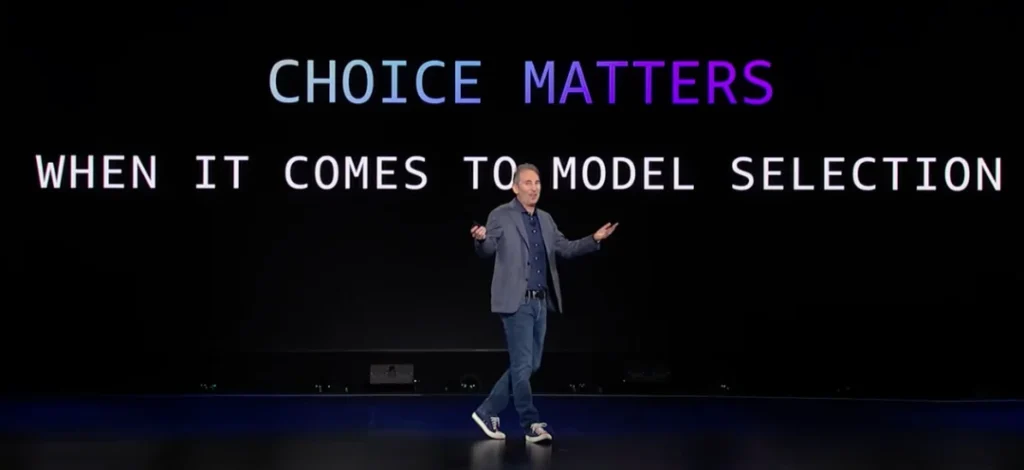
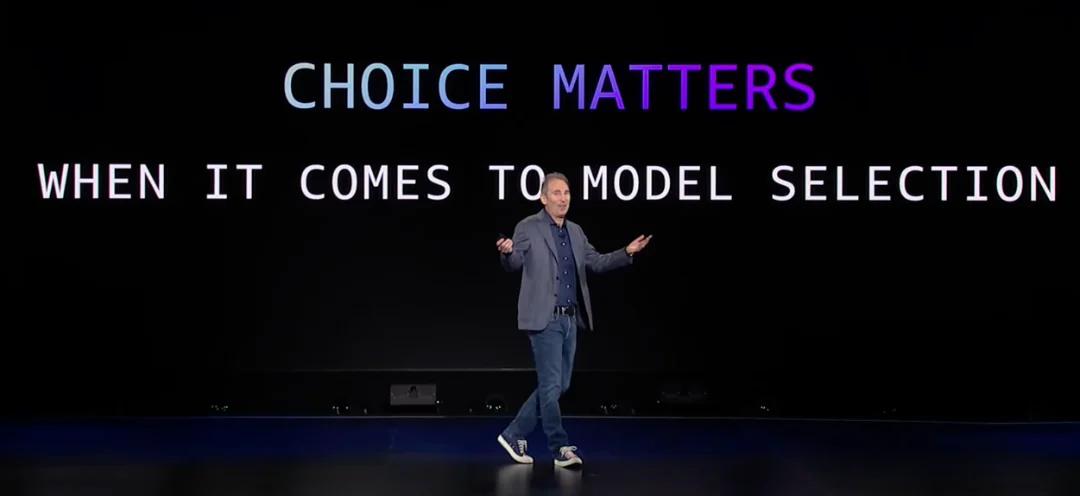
The landscape of generative artificial intelligence is undergoing a foundational shift. The defining narrative of the industry is no longer exclusively centered on raw intelligence metrics—how sophisticated a model is in a vacuum—but rather on architectural optionality, cost-efficiency, operational latency, and task alignment.
Amazon Web Services (AWS) has significantly expanded its managed AI portfolio on Amazon Bedrock to address this strategic evolution. In a major platform update, AWS announced the immediate availability of several frontier models:
- OpenAI’s GPT-6 Sol and GPT-6 Luna, which introduce new benchmarks on the intelligence-versus-efficiency curve while offering substantial cost reductions compared to their GPT-5.6 predecessors.
- Anthropic’s Claude Opus 5.5, the flagship kickoff for the Claude 5.5 model family, engineered specifically to excel in agentic workflows, complex coding tasks, and multi-step reasoning while consuming fewer tokens than its predecessor, Claude Opus 5.
These releases emphasize a growing industry consensus: enterprise architects and developers should no longer rely on a monolithic, one-size-fits-all approach to generative AI. Instead, modern cloud-native architectures require a granular matching of specific models to exact workloads, balancing capability, token economics, and response times. Furthermore, this hardware and model expansion is being closely mirrored by advancements in observability tools designed to monitor, trace, and audit autonomous AI agents operating at enterprise scale.
Chronology
The integration of these advanced frontier models into Amazon Bedrock represents the culmination of a rapid acceleration in multi-provider cloud architectures throughout the year.
- Early Predecessor Deployments (Prior Quarters): Enterprises heavily leveraged OpenAI’s GPT-5.6 series and Anthropic’s Claude Opus 5 for initial production-grade generative AI applications, encountering notable operational costs and occasional constraints in long-running autonomous workflows.
- Mid-Week Announcements: OpenAI officially launched the GPT-6 tier, introducing specialized variants designed for distinct operational thresholds. Simultaneously, Anthropic unveiled the Claude 5.5 generation, starting with the rollout of Claude Opus 5.5.
- Immediate AWS Integration: AWS engineering teams moved swiftly to incorporate these models into Amazon Bedrock. This integration provides enterprise customers with immediate, secure API access, zero-infrastructure-management deployment, and seamless connections to existing AWS data lakes and security frameworks.
- Current Operations and Ecosystem Updates: As detailed in AWS community updates by technical leaders like Daniel Abib, the focus has shifted toward educating developers on selecting the ideal model for precise workflow steps. This includes adopting newly enhanced AWS observability tooling tailored specifically for multi-agent environments.
Supporting Data
The latest additions to Amazon Bedrock introduce concrete technical shifts in performance, pricing architecture, and token efficiency:
1. GPT-6 Sol
- Target Workloads: Built explicitly for demanding, recurring software development and IT operations (DevOps) tasks.
- Performance Profile: Delivers advanced logical reasoning and code-generation capabilities, optimized for continuous integration/continuous deployment (CI/CD) pipelines, automated debugging, and architectural planning.
- Economic Advantage: Ships at a significantly lower price point than the previous GPT-5.6 generation, lowering the barrier to entry for high-frequency, automated enterprise workflows.
2. GPT-6 Luna
- Target Workloads: Designed for high-volume, focused, and repeatable enterprise tasks—such as automated data extraction, transactional categorization, content moderation, and high-throughput customer service routing.
- Performance Profile: Prioritizes ultra-low latency and high concurrency, making it ideal for real-time applications where response time directly impacts user experience.
- Economic Advantage: Engineered for maximum cost-efficiency at scale, allowing organizations to process millions of requests daily without prohibitive operational expenditures.
3. Claude Opus 5.5
- Target Workloads: Specialized for agentic coding, multi-step problem solving, and long-running autonomous execution tasks.
- Performance Profile: Features superior token efficiency, achieving more output and complex contextual understanding with fewer total tokens than Claude Opus 5. This reduction in token overhead directly decreases both cost and latency for extended prompt chains.
Official Responses and Industry Perspectives
AWS and its ecosystem partners continue to emphasize that enterprise AI adoption has matured past the experimentation phase. Developers are no longer asking "How smart is this model?" but rather "Which model fits this specific step, at this precise cost, and within this latency threshold?"
Industry analysts note that by offering GPT-6 Sol, GPT-6 Luna, and Claude Opus 5.5 side-by-side on a single managed platform, Amazon Bedrock removes the administrative and infrastructural friction typically associated with multi-vendor AI strategies. Organizations can now dynamically route queries across different models based on real-time task complexity—routing lightweight classification tasks to GPT-6 Luna, intricate codebase refactoring to GPT-6 Sol, and deep autonomous agent workflows to Claude Opus 5.5.
Furthermore, AWS community leaders have highlighted that the expansion of model choices must be matched by robust observability. As enterprises transition from simple request-response interactions to autonomous multi-agent systems—where models execute chains of tools and make independent decisions—the need for comprehensive tracking, tracing, and debugging has become paramount.
Implications
The integration of GPT-6 Sol, GPT-6 Luna, and Claude Opus 5.5 into Amazon Bedrock carries profound implications for cloud architects, software engineering teams, and enterprise financial controllers:
1. Granular Cost Optimization
With distinct pricing tiers and efficiency curves across the new models, financial operations (FinOps) teams can tightly couple AI expenditures to business value. Organizations can avoid over-provisioning expensive, high-intelligence models for routine, high-volume tasks, resulting in vastly improved return on investment (ROI) for enterprise AI initiatives.

2. Acceleration of Agentic Workflows
The specialized design of Claude Opus 5.5 for agentic coding and long-running tasks, combined with the rigorous developer focus of GPT-6 Sol, empowers engineering teams to build fully autonomous software development lifecycles. AI agents can now reason through multi-hour tasks, write code, run tests, and deploy fixes with minimal human intervention.
3. Reduced Vendor Lock-in and Enhanced Flexibility
By maintaining a diverse, up-to-date catalog of frontier models from leading providers like OpenAI and Anthropic within a unified API framework (Amazon Bedrock), AWS ensures that enterprises retain architectural flexibility. Organizations can seamlessly upgrade, downgrade, or pivot between model families as new benchmarks are established, without rewriting their core application logic.
4. Next-Gen Observability and Governance
As autonomous agents proliferate, the AWS ecosystem is rapidly evolving its monitoring infrastructure. Developers must adopt advanced observability frameworks to inspect the internal monologue, tool usage, and decision trees of models like Claude Opus 5.5 and GPT-6 Sol, ensuring enterprise compliance, security, and deterministic reliability.