The Backbone of Modern Digital Infrastructure: A Comprehensive Guide to Database Testing in Complex Software Ecosystems
In the contemporary landscape of software engineering, digital applications have evolved far beyond simple, static web pages. Driven by the proliferation of mobile ecosystems, cloud computing, and real-time transaction processing, modern applications feature highly intricate front-end interfaces supported by equally complex back-end data architectures.
As software grows more sophisticated—powering everything from everyday e-commerce and banking applications to critical healthcare systems and space exploration hardware—the integrity, security, and performance of the underlying databases have become paramount. Consequently, Database (DB) Testing has emerged as a specialized, highly sought-after discipline within software quality assurance, moving from the periphery of testing strategies to center stage.
The Evolution and Critical Role of Modern Databases
To understand the importance of database testing, one must first examine the omnipresence of data storage systems. Whether an application is deployed on the web, desktop, or mobile devices—operating within client-server, peer-to-peer, or vast enterprise networks—a database invariably sits at the backend.

Historically, relational database management systems (RDBMS) handled structured information reliably. However, the modern digital economy generates "Big Data"—massive volumes of unstructured and semi-structured information that traditional systems struggle to process. To meet these demands, organizations deploy a diverse array of database management tools, ranging from traditional relational systems like Microsoft SQL Server, Oracle, MySQL, PostgreSQL, and IBM DB2, to specialized administration platforms like Toad and phpMyAdmin.
Each tool varies significantly in cost, robustness, feature sets, and security paradigms. Because these systems dictate how organizations store, retrieve, and secure sensitive information, validating their operational readiness is no longer optional; it is a vital business imperative.
Chronology of the Database Testing Lifecycle
Executing a structured database test requires a methodical, step-by-step approach that mirrors traditional software testing methodologies while addressing unique data-centric challenges. The lifecycle generally follows a strict operational chronology:

- Environment Preparation: Setting up the test database, provisioning mock data, and establishing secure connections between the application user interface (UI) and the backend storage.
- Test Execution: Deploying test scripts—frequently written in SQL (Structured Query Language)—to interact directly with database schemas, tables, and routines.
- Result Examination: Capturing the output generated by the database queries or system transactions.
- Expected Result Validation: Comparing actual database states and outputs against formal business requirements and system design specifications (SRS/BRS).
- Stakeholder Reporting: Documenting discrepancies, performance bottlenecks, and validation metrics, followed by reporting findings to developers and project managers.
Core Pillars of Database Testing: What to Validate
Testing a database requires a multi-faceted strategy that looks beyond simple data storage. Quality assurance professionals must rigorously evaluate four foundational pillars:
1. Data Mapping and UI-to-Backend Integration
Data constantly flows between the user interface and the backend database. Testers must verify that every front-end field maps accurately to its corresponding database column. Whether a user saves a profile, updates an address, or searches for a historical record, the system must reflect these actions accurately across all integrated tables without data loss or corruption.
2. ACID Properties Validation
Every transaction processed by a robust database must strictly adhere to the ACID framework:

- Atomicity: Ensures that transactions are executed entirely or not at all. If a single step in a multi-step transaction fails, the entire operation rolls back.
- Consistency: Guarantees that the database transitions from one valid state to another, maintaining all predefined integrity rules (e.g., ensuring the sum of two related columns always equals 100).
- Isolation: Ensures that concurrent transactions execute independently without interfering with one another, preventing dirty reads or race conditions.
- Durability: Confirms that once a transaction is committed, its changes are permanent, surviving system crashes, power failures, or software errors.
3. Data Integrity across CRUD Operations
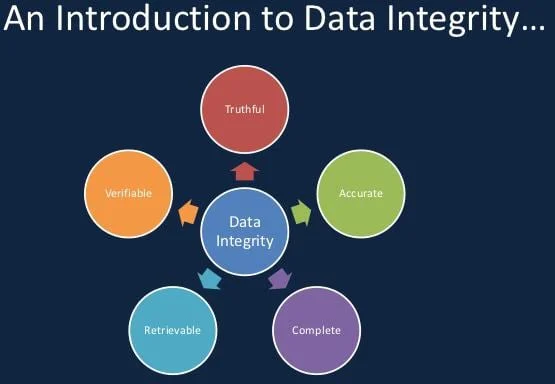
End-users interact with databases primarily through four operations: Create, Retrieve, Update, and Delete. Data integrity mandates that when information is modified in one module or screen, the most recent, up-to-date values must immediately appear across all other associated screens and forms. Stale or conflicting data across different application modules points directly to a failure in data integrity testing.
4. Business Rule Conformity and Complex Database Objects
Modern databases do more than store records; they actively execute business logic via relational constraints, triggers, stored procedures, and foreign keys. Testers must design advanced SQL queries to validate these complex objects, ensuring that automated behaviors execute flawlessly under both normal and adverse conditions.
Technical Methodologies: How to Test the Database
Executing effective database validation requires technical proficiency across several distinct testing subsets.

Transaction and Constraint Testing
Testers commonly utilize specialized SQL statements to verify database robustness. Data Definition Language (DDL) commands (CREATE, ALTER, DROP, TRUNCATE) manage schemas, while Data Manipulation Language (DML) commands handle records. Furthermore, Data Control Language (DCL) commands (GRANT, REVOKE) are tested to ensure that users possess appropriate access privileges, safeguarding sensitive corporate and customer data.
Field constraints—such as Default values, Unique value requirements, and Foreign Key relationships—must be tested both manually and via automation scripts (such as VBScript or Python scripts integrated with testing frameworks). For instance, intentionally injecting duplicate entries into a unique field or introducing orphaned records that violate foreign key constraints should immediately trigger application-level restrictions and informative error messages.
Testing Triggers and Stored Procedures
Triggers are automated code blocks executed in response to specific events on a table (e.g., automatically adding a newly enrolled student to specific class rosters upon registration). Testers validate triggers by independently executing the embedded SQL query and comparing the results against the automated trigger execution through both black-box and white-box methodologies.

Similarly, stored procedures—precompiled routines stored within the RDBMS—must be invoked and tested across various parameter inputs to ensure they return accurate result sets without degrading system performance.
Supporting Data and Practical QA Best Practices
Industry research consistently shows that organizations neglecting backend database validation face severe operational bottlenecks, security vulnerabilities, and costly production downtime. To optimize the database testing process, quality assurance teams rely on several proven strategies:
- Write Custom Queries: While relying on developer-provided queries is common, testers should ideally write their own SQL scripts to ensure unbiased validation. This deepens the tester’s understanding of the database architecture and uncovers edge cases developers might overlook.
- Leverage Database Automation Tools: For complex enterprise systems with massive data sets, manual verification is impractical. Utilizing specialized database testing tools accelerates regression testing, continuous integration pipelines, and performance benchmarking.
- Combine UI and Backend Verification: The most comprehensive test coverage occurs when an action is initiated on the front-end UI and its exact database impact is simultaneously verified via backend query execution.
Industry Implications and the Future of DB Testing
As organizations increasingly migrate to distributed cloud architectures and microservices, the complexity of database operations multiplies exponentially. Distributed databases introduce unique challenges regarding eventual consistency, network latency, and cross-node data synchronization.

Consequently, the tech industry is witnessing a significant surge in demand for quality assurance professionals who possess deep technical proficiency in database concepts, SQL scripting, and data security testing. Far from being a redundant overhead cost, rigorous database testing serves as the ultimate safeguard against data breaches, system failures, and reputational damage.
Ultimately, as software systems continue to grow in scale and ambition, the stability of the digital world will rest firmly on the meticulous validation of the data that powers it.