The Gatekeeper of Software Quality: A Comprehensive Deep Dive into Build Verification Testing (BVT)

In the fast-paced world of modern software development, the pressure to deliver continuous updates, feature enhancements, and bug fixes has never been higher. With development teams deploying code multiple times a day, ensuring that a newly compiled software package—known as a "build"—is stable before it reaches the QA (Quality Assurance) team is paramount.
Enter Build Verification Testing (BVT), widely recognized across the industry as Smoke Testing or Build Acceptance Testing (BAT). Serving as the ultimate frontline defense in the Software Development Life Cycle (SDLC), BVT acts as a rigorous gatekeeper, intercepting unstable software before it can waste valuable testing hours, drain resources, and frustrate engineering teams.
Main Facts: Understanding the Core of BVT
At its foundational level, Build Verification Testing is a targeted suite of automated tests executed against every newly compiled software build. Its primary purpose is simple yet critical: to verify that the build is testable, functionally sound, and stable enough to undergo deep, comprehensive testing by the QA department.
What Does a BVT Look For?
When a fresh build is generated, the BVT process immediately evaluates the package for core integrity. This includes:
- File Inclusion Integrity: Ensuring that all new and modified project files associated with the release have been successfully "checked in" and bundled.
- Format and Version Accuracy: Verifying that file formats, version numbers, languages, and configuration flags are correct.
- Module Integration: Confirming that various modules—often developed simultaneously by disparate engineering teams—interact correctly without causing system crashes or compilation errors.
The Automated Gatekeeper
In contemporary DevOps environments, the BVT process is almost exclusively automated. As soon as a developer pushes code and a new build is compiled, scripts trigger the BVT suite.
- If the BVT passes: The build is promoted, moving forward to the QA team for rigorous regression, functional, and exploratory testing.
- If the BVT fails: The build is instantly rejected and reassigned to the responsible developer for an immediate fix. The QA team is shielded from broken code, saving countless hours of administrative triage.
Chronology: The Lifecycle of a Build Verification Test
To fully appreciate the value of BVT, one must examine its position within the standard software release pipeline. The lifecycle of a build, from conception to QA delivery, follows a strict chronological sequence:
- Code Commit and Compilation: Developers write, review, and check in code changes to the central repository. A Continuous Integration (CI) server automatically compiles these files into a new build package.
- Automated BVT Trigger: The moment the compilation succeeds, the automated BVT suite is initiated without human intervention.
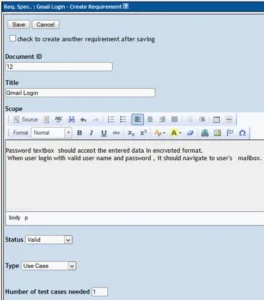
- Execution of Critical Test Cases: The system runs a predefined, highly focused set of core functionality scripts (e.g., verifying that an application launches, a login screen accepts credentials, and basic file operations succeed).
- Result Evaluation and Reporting:
- Scenario A (Success): The test suite completes with zero critical failures. Notifications are sent out, and the build is tagged as "QA-Ready."
- Scenario B (Failure): One or more critical tests fail. The build is automatically marked as "Broken," and detailed logs are routed back to the development team.
- Remediation or Handover: Developers diagnose the failure, deploy a hotfix, and a new build is generated—restarting the chronological cycle—while the QA team is protected from ever touching the flawed package.
Supporting Data: Why BVT is an Economic and Operational Necessity
While writing and maintaining a BVT suite requires upfront investment, industry data and operational metrics consistently demonstrate that early defect detection yields massive returns on investment (ROI).
- Drastic Cost Reductions: According to classic software engineering economics, finding and fixing a bug during the requirements or build phase is exponentially cheaper than discovering it during deep system testing or, worse, post-release. BVT catches fundamental showstoppers within minutes of compilation.
- Resource Optimization: In organizations without BVT, QA engineers routinely waste hours installing broken builds, writing bug reports for basic compilation errors, and waiting for developer clarifications. BVT eliminates this friction, allowing testers to focus on complex, high-value exploratory and regression testing.
- The Cost of Poor Integration: Improper module integration is a leading cause of catastrophic project delays. In severe cases, poor integration leads to complete project scrapping. BVT acts as an early warning radar specifically designed to spot integration fractures before they cascade through the architecture.
Crafting the Ideal BVT Suite: Best Practices and Official Guidelines
Building an effective BVT suite is both a science and an art. If a BVT is too sparse, it will let broken builds slip through to QA. If it is too exhaustive, it will mirror a full regression suite, defeating the purpose of a rapid verification check.
Selecting the Right Test Cases
Engineering leads must carefully curate the test cases included in an automation suite. Best practices dictate the following rules of thumb:
- Focus on the Core: Include only mission-critical functionalities (e.g., for a text editor: opening the app, typing text, saving a file, and exiting).
- Exclude Unstable Modules: Never include features that are still under active development or known to be volatile. Unstable modules yield unpredictable behavior, leading to false-positive BVT failures.
- Collaborate Across Teams: Developers, QA engineers, and product managers must negotiate the BVT test suite together, aligning on quality standards and core feature scenarios.
Sample BVT: Text Editor Application
To visualize how selective a BVT should be, consider a text editor application:
- Test Case 1: Verify that the application launches successfully without throwing exceptions.
- Test Case 2: Verify that a new document can be created and typed into.
- Test Case 3: Verify that an existing document can be opened from the local disk.
- Test Case 4: Verify that edits can be saved successfully.
These four "critical path" checks form an impenetrable baseline. If any of these fail, the application is fundamentally broken, and further testing is pointless.
Handling Failures: When the BVT Breaks
A common misconception in agile environments is that a failed BVT always equates to a software bug. While broken code is the most frequent culprit, experienced engineering teams know that BVT failures can stem from several distinct sources:
- True Code Defects: A developer introduced a regression or broke an API dependency during a file check-in.
- Test Script Errors: The application code changed legitimately, but the automated BVT test script was not updated, resulting in a false alarm.
- Automation Suite Flaws: Syntax errors, race conditions, or timing issues within the test framework itself.
- Environment and Infrastructure Failures: Network drops, database connectivity issues, or underlying hardware/virtual machine failures on the test runner.
When a BVT breaks, the team must immediately diagnose the root cause rather than reflexively blaming the development team. Establishing a rapid triage protocol ensures that false positives are resolved quickly without stalling the delivery pipeline.
Implications for the Future of Software Engineering
As the software industry transitions toward hyper-automated paradigms like GitOps, Continuous Delivery (CD), and AI-driven development, the role of Build Verification Testing is only growing in prominence.
The Shift-Left Movement
BVT represents the cornerstone of the "Shift-Left" philosophy—pushing quality control as early as possible into the development lifecycle. By catching integration faults, missing dependencies, and core compilation errors at the moment of build creation, engineering organizations can maintain high deployment velocity without sacrificing software stability.
The Human Element: Morale and Efficiency
Beyond the hard metrics of time and money, BVT has profound implications for workplace culture. Software testers are spared the demoralizing routine of processing broken builds, while developers receive precise, automated feedback on their code changes within minutes.
Ultimately, Build Verification Testing transforms the chaotic scramble of software deployment into a disciplined, predictable, and highly efficient engineering practice. Organizations that master the BVT process position themselves to deliver robust, reliable software at the speed demanded by today’s digital economy.