The intersection of legacy enterprise architecture and bleeding-edgecloud capabilities was brought into sharp focus this week across multiple fronts by Amazon Web Services (AWS). From the sun-baked agribusiness corridors of São Paulo to high-stakes cybersecurity response telemetry, the overarching theme of the week’s announcements centers on operational friction reduction: removing barriers between codebases, scaling multi-tenant infrastructure safely, and shortening the gap between zero-day vulnerability disclosures and verified automated patches.
The most notable announcements from the recent AWS release cycle include:
AWS Continuum: A generally available, comprehensive vulnerability management service that correlates repository telemetry with cloud architecture to automate isolated proof-of-concept testing and generate pull requests for remediation.
Amazon ECS Gateway: A simplified traffic-management service that decouples network architecture from application ownership, allowing up to 25 containerized services to securely share a single Application Load Balancer (ALB).
Amazon Polly Generative Engine Upgrade: A voice capability expansion introducing 14 new generative voices across 9 locales, notably including Brazilian Portuguese variants (Leo and Carolina).
TorchNeuron (Public Beta): An open-source PyTorch backend enabling native model execution on AWS Trainium chips via straightforward configuration changes rather than complete framework rewrites.
Custom SageMaker AI Training Sessions: Expanded machine learning capabilities allowing developers to build custom post-training loops and reward functions without managing underlying GPU clusters.
Chronology of the Week’s Developments
Early Week: Agribusiness, Voice Interfaces, and Threat Intelligence
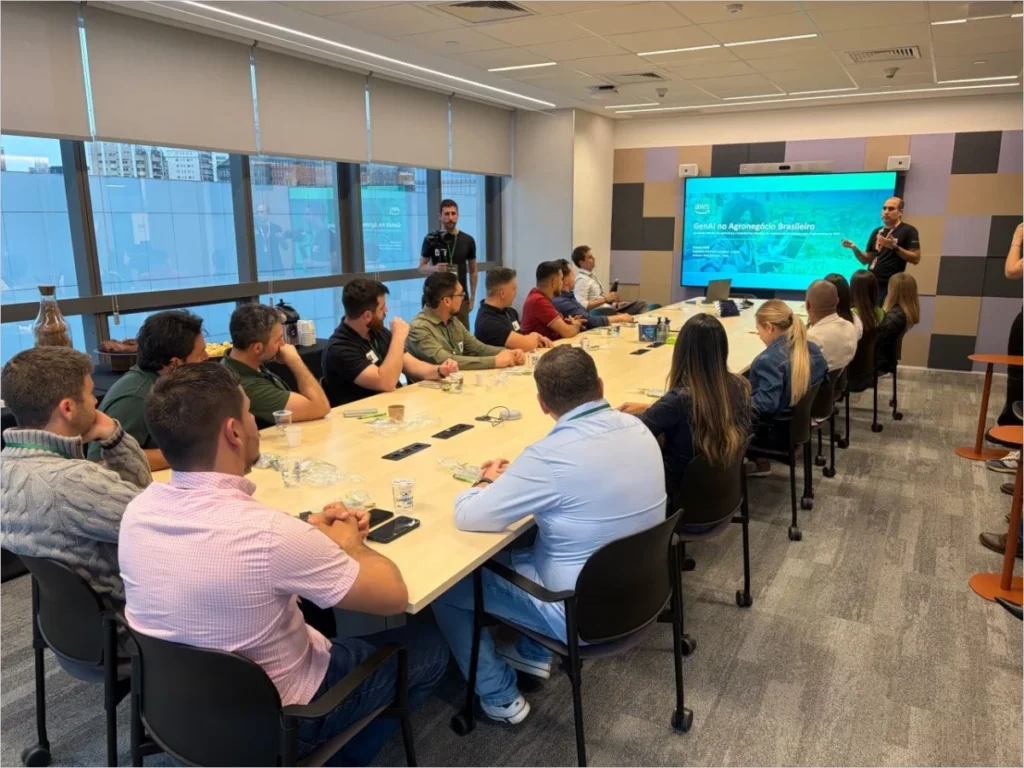
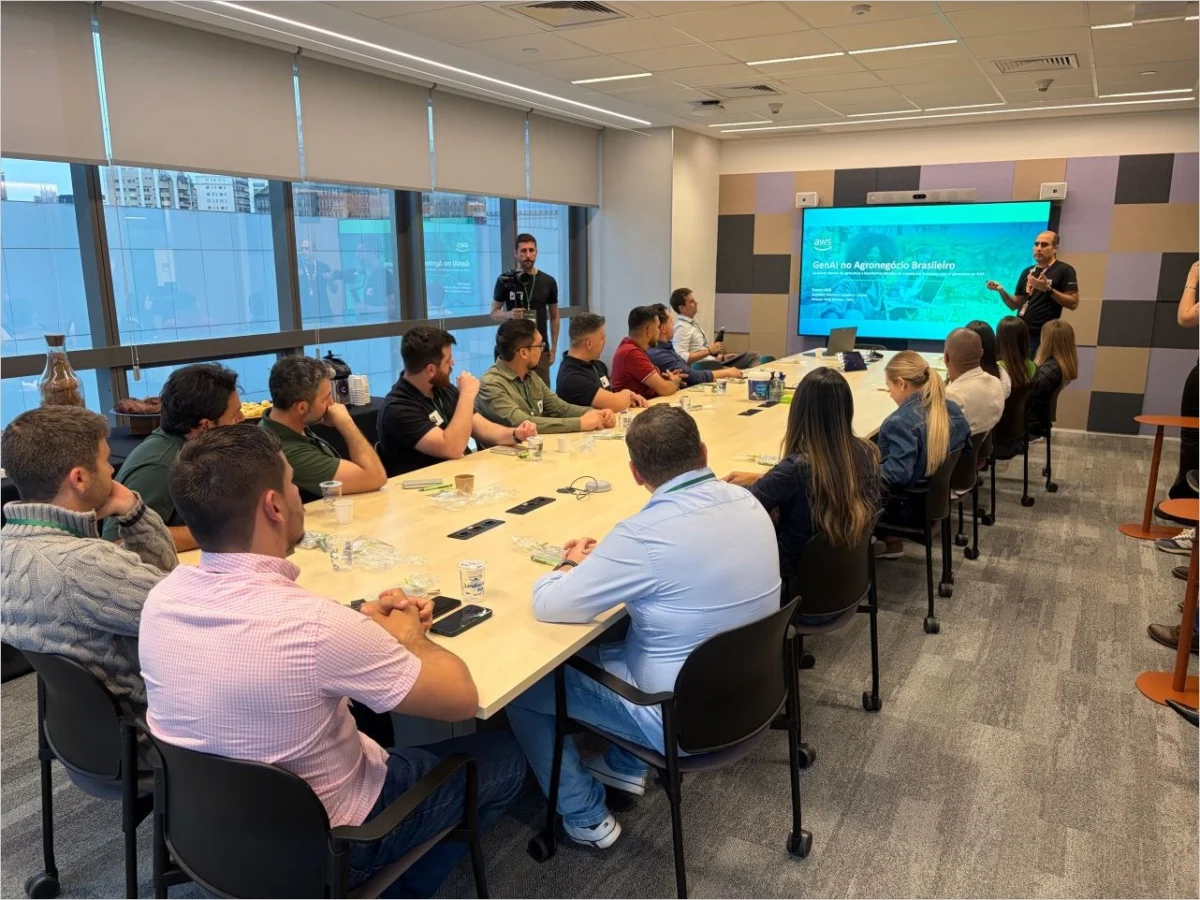
The weekly cadence kicked off with an in-person presentation at the AWS regional headquarters in São Paulo, addressing commercial and technology leaders within Brazilian agribusiness. Discussions centered less on the theoretical utility of generative AI and more on pragmatic deployment constraints—specifically, how field workers and executives managing sprawling farming operations interact with software interfaces while operating machinery or driving between remote sites.
This operational context directly underscored the strategic timing of the Amazon Polly Generative engine upgrade. By expanding its catalog to 57 voices across 11 languages—most critically adding natural-sounding Brazilian Portuguese accents—AWS addressed a fundamental requirement for voice-first enterprise applications where visual dashboards are impractical or unsafe.
Parallel to these edge-use updates, AWS Threat Intelligence captured a critical real-world security event. Telemetry from the company’s MadPot honeypots identified active exploitation attempts targeting the PHP2Shell vulnerability (CVE-2026-109618 and CVE-2026-109619) on October 17. Crucially, these attacks were detected four days prior to public vulnerability disclosure, with fully realized proof-of-concept exploits circulating on public channels roughly twelve hours before the official embargo was lifted.
Mid-Week: Infrastructure Simplification and Vulnerability Automation
As the security implications of accelerated exploit timelines rippled through the engineering community, AWS formally launched AWS Continuum to general availability. Designed to combat the shrinking window between disclosure and malicious exploitation, Continuum shifts vulnerability management from a passive reporting mechanism into an active, context-aware remediation pipeline.
Simultaneously, container orchestration teams received a major upgrade with the introduction of Amazon ECS Gateway. Addressing a historically complex workflow where application teams depended on networking personnel to provision and configure load balancers, the new gateway architecture allows platform operators to establish centralized network boundaries while empowering developers to securely onboard individual container services autonomously.
Late Week: Machine Learning, Database Migrations, and Developer Tooling
The latter portion of the week brought advanced developer and machine learning tooling to the fore. TorchNeuron entered public beta, giving PyTorch developers native hardware access to AWS Trainium2 and Trainium3 silicon without rewriting existing model training code.
Concurrently, Amazon SageMaker AI rolled out generalized support for custom training sessions, allowing practitioners to focus entirely on proprietary loss functions and reinforcement learning reward signals while AWS abstracts away distributed GPU provisioning, fault recovery, and checkpoint management. In the database sector, U.S. Bank successfully concluded a massive enterprise migration, shifting 119 terabytes of relational data from legacy Oracle Exadata infrastructure to Amazon RDS for Oracle with zero data loss.
Supporting Data and Technical Specifications
AWS Continuum Architecture and Metrics
AWS Continuum fundamentally alters traditional vulnerability scanning by performing three core programmatic actions:
Context Graph Construction: It maps relationships between source code repositories and deployed AWS runtime environments to trace true end-to-end attack paths.
Automated Sandbox Reproduction: Instead of relying solely on static severity scores, Continuum spins up isolated sandboxes to execute proof-of-concept exploits against safely duplicated environments, providing empirical evidence of vulnerabilities.
Automated Pull Request Generation: Issues are prioritized based on their proximity to business-critical systems. Once a vulnerability is verified, Continuum generates a code remediation pull request.
Control Boundary: Every remediation currently requires human-in-the-loop review and manual merging. Autonomous application of fixes is planned for future releases, gated by strict algorithmic confidence thresholds.
Regional Availability: Continuum is initially available in the US East (N. Virginia) and US West (Oregon) commercial regions.
Amazon ECS Gateway Economics and Limits
The architectural mechanics of Amazon ECS Gateway introduce significant resource efficiencies for large microservice fleets:
Service Density: Up to 25 individual ECS services can securely share a single Application Load Balancer (ALB).
Dynamic Provisioning: ECS automatically provisions the initial ALB upon a service’s first connection and gracefully tears down ALBs when dependencies are completely removed.
Cluster Association Limits: A single gateway can be associated with up to 10,000 clusters, with a maximum of 5 gateways supported per individual cluster.
Cost: Available at no additional platform charge in all commercial AWS regions where Amazon ECS is supported.
Machine Learning and High-Performance Compute Updates
Amazon Polly Generative Engine:
Total catalog size: 57 generative voices.
Language and locale coverage: 11 languages, 25 locales (including 14 newly added voices spanning 9 locales, plus native Hindi and Finnish support).
Integration: Drop-in API upgrade utilizing identical SynthesizeSpeech calls and standard pricing tiers.
Execution model: Activated via simple device re-assignment (.to('neuron')), preserving native eager execution and torch.compile compatibility.
Hardware compatibility: Optimized for AWS Trainium2 and Trainium3 instances.
SageMaker AI Training Sessions:
Post-training management: Full control over custom loss functions and reward signals.
Metering model: Customers pay strictly for active token processing cycles; the billing meter pauses during reward function batch scoring evaluations.
Model Support Expanded: Immediate support added for Muse Glimmer, Qwen 3.8, and Ministral 3 models.
Claude Structured Outputs on Amazon Bedrock:
Eliminates custom parsing, retry logic, and post-processing layers by guaranteeing schema-compliant JSON returns across both bedrock-runtime and bedrock-mantle endpoints for all Anthropic Claude models.
Official Responses and Industry Context
The juxtaposition of advanced automation tools with aggressive cyber threat intelligence has prompted a reassessment of enterprise security baselines across the cloud computing sector.
Reflecting on the discovery of the PHP2Shell exploitation window prior to public disclosure, AWS security researchers emphasized that traditional vulnerability management paradigms are fundamentally misaligned with modern adversary behavior. In an official security advisory accompanying the MadPot telemetry release, Amazon Threat Intelligence noted:
"A patch window measured in days assumes a delay that no longer exists. Modern investigations and patching strategies must originate from the earliest recorded indicator of active exploitation rather than waiting for formal CVE publication dates."
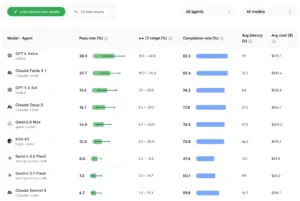
This sentiment was mirrored during technical sessions regarding software supply chain resilience. As enterprises increasingly deploy autonomous coding assistants and agentic workflows, the economic footprint of code generation—often termed "tokenomics"—demands rigorous evaluation. Benchmark tooling released by AWS this week demonstrates that intelligent routing of coding queries can reduce operational inference costs by upwards of 44.7%, with negligible impacts on code quality (recording a mean quality variance of just 4.8%).
Furthermore, enterprise customers continue to validate large-scale modernization efforts away from proprietary physical infrastructure. The successful migration executed by U.S. Bank—moving 119 TB of mission-critical financial data from Oracle Exadata to Amazon RDS for Oracle within a compressed 7-day baseline sync window and average cutover times of four hours—highlights the maturity of hybrid cloud pipelines utilizing AWS DataSync, Oracle XTTS, and Amazon EFS over bandwidth-constrained Direct Connect architecture.
Implications for Enterprises and Developers
The cumulative impact of this week’s announcements signals a profound structural shift in how cloud infrastructure is secured, managed, and deployed.
1. The Death of the Traditional Patch Window
With AWS Continuum automating both proof-of-concept verification and remediation pull requests—and threat intelligence confirming that zero-day exploits circulate hours before official disclosures—security teams can no longer rely on manual triage cycles. Organizations must accelerate their adoption of context-aware, automated remediation tooling to maintain posture integrity. While human approval remains a mandatory gate for code merges today, the velocity of modern exploits makes eventual autonomous remediation an operational inevitability.
2. Democratization of Specialized Hardware
The introduction of TorchNeuron and serverless machine learning workflows lowers the barrier to entry for custom model training. By enabling developers to leverage specialized silicon (Trainium) and fine-tune large language models without mastering the underlying complexities of distributed GPU cluster management or infrastructure failure recovery, AWS is accelerating the democratization of custom AI workloads.
3. Frictionless Microservices and Edge Interfaces
For platform engineering groups, features like Amazon ECS Gateway eliminate long-standing organizational bottlenecks between networking and development teams. By abstracting ALB provisioning and security group management into scalable, reusable gateways, organizations can achieve higher service densities at lower operational costs. Simultaneously, expansions in natural language processing—such as the regionalized Brazilian Portuguese updates to Amazon Polly—ensure that enterprise applications can meet users effectively at the operational edge, whether on the factory floor, in corporate boardrooms, or behind the steering wheel of agricultural machinery.
As preparations ramp up for the upcoming AWS re:Invent conference in Las Vegas (scheduled for November 30 to December 4), these releases establish a clear trajectory for cloud architecture: tighter integration between automated security controls, hardware-agnostic machine learning pipelines, and simplified, developer-centric infrastructure services.