AWS and Vercel Forge New Paradigm: Native Amazon S3 Integration Streamlines Cloud-Native and AI Development
SAN FRANCISCO & SEATTLE — In a move that significantly bridges the gap between cloud infrastructure and frontend deployment workflows, Amazon Web Services (AWS) and Vercel have announced a strategic native integration bringing Amazon Simple Storage Service (Amazon S3)—including Amazon S3 Tables and Amazon S3 Vectors—directly into the Vercel Marketplace and v0 by Vercel.
The announcement, made public today, eliminates much of the historical friction developers faced when pairing modern web frameworks with robust backend storage. By unifying everyday object storage, high-performance analytics, and AI-optimized vector searches under Vercel’s streamlined provisioning workflow, developers can now deploy enterprise-grade data architectures without ever leaving their deployment dashboard.
Main Facts: What the Integration Delivers
The new integration fundamentally changes how serverless and edge applications interact with AWS. Previously, spinning up an S3 bucket to accompany a Next.js application required developers to manually navigate the AWS Management Console, configure identity and access management (IAM) policies, establish trust relationships, and manually manage long-lived API keys.
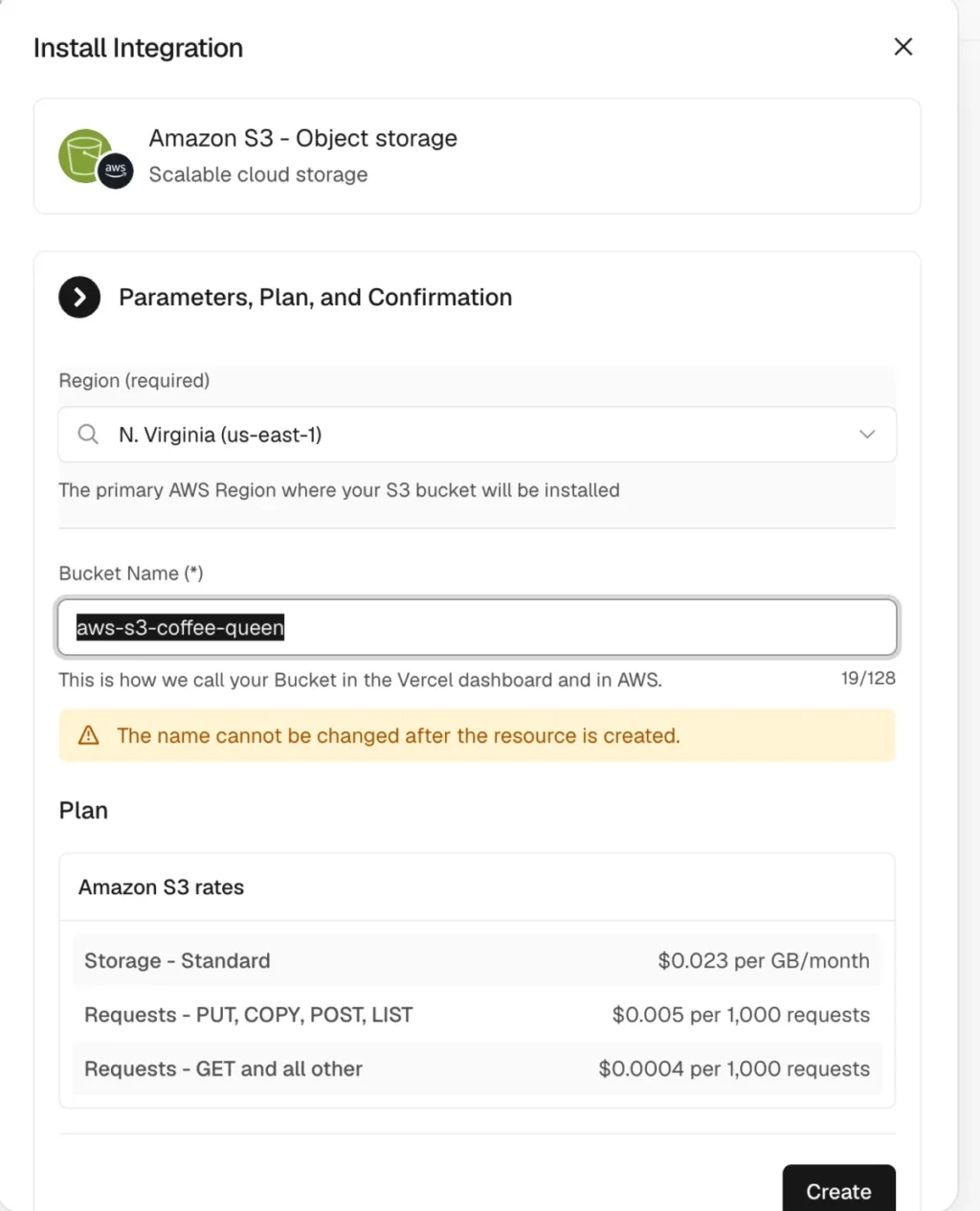
Now, the entire pipeline is automated. Developers can provision, connect, and configure Amazon S3 directly from the Vercel dashboard or leverage natural language prompting inside v0, Vercel’s generative AI UI creation tool.
The integration spans three core workloads:
- Everyday Object Storage: Traditional S3 buckets for managing static assets, user uploads, and general file handling via standard Next.js API routes or serverless functions.
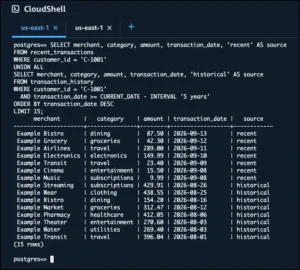
- Analytics via Amazon S3 Tables: Fully managed Apache Iceberg tables purpose-built for analytics. These tables automatically optimize query performance as data volumes grow and can be queried efficiently using tools like DuckDB embedded directly inside Vercel Functions.
- AI and Semantic Search via Amazon S3 Vectors: Purpose-built, cost-optimized vector storage designed specifically for AI agents, Retrieval-Augmented Generation (RAG) pipelines, and semantic search, removing the immediate requirement for an external standalone vector database.
Crucially, the architecture prioritizes security through ephemeral credentials. Rather than storing static access keys in environment variables where they risk exposure, Vercel utilizes OpenID Connect (OIDC). At runtime, the @vercel/functions/oidc module exchanges a short-lived OIDC token with the AWS Security Token Service (AWS STS) for temporary, tightly scoped credentials.
Chronology: The Evolution of Cloud-Frontend Synergy
The journey toward seamless cloud-frontend unification has been years in the making, driven by the explosive growth of Jamstack architectures, serverless compute, and generative AI.
- The Early Era of Decoupled Stacks: For years, frontend hosting platforms and cloud infrastructure providers operated in entirely separate silos. Developers building applications on Vercel had to manually provision AWS resources, handle CORS policies, and inject hardcoded credentials into
.envfiles. - The Rise of Database Integrations: Recognizing the friction in the developer experience, Vercel began introducing managed marketplace integrations. Over successive updates, partnerships with AWS brought database solutions like Amazon Aurora, Amazon DynamoDB, and Amazon OpenSearch Serverless directly into the Vercel ecosystem.
- The AI Turning Point (2024–2026): As generative AI and large language models (LLMs) became ubiquitous, developers demanded high-speed data ingestion, vector embeddings storage, and large-scale data lake querying capabilities directly tied to their web applications.
- The Launch of Native S3 Support: Culminating this evolution, AWS and Vercel have now integrated S3—alongside its specialized S3 Tables and S3 Vectors variants—directly into the Vercel Marketplace and v0, realizing a fully unified stack from the frontend interface down to the object storage layer.
Supporting Data and Technical Implementation
The architectural elegance of the new integration lies in how deeply it integrates with modern JavaScript frameworks and serverless runtimes.

1. Object Storage Setup
When linking an S3 bucket to a Vercel project, the platform automatically injects environment variables including AWS_REGION, AWS_ROLE_ARN, and S3_BUCKET_NAME. Developers can interact with the bucket using standard AWS SDK clients secured by Vercel’s OIDC provider:
import  S3Client, PutObjectCommand  from "@aws-sdk/client-s3";
import  awsCredentialsProvider  from "@vercel/functions/oidc";

const s3 = new S3Client(
  region: process.env.AWS_REGION,
  credentials: awsCredentialsProvider(
    roleArn: process.env.AWS_ROLE_ARN,
  ),
);

export async function POST(request)
  const formData = await request.formData();
  const file = formData.get("file");

  await s3.send(new PutObjectCommand(
    Bucket: process.env.S3_BUCKET_NAME,
    Key: file.name,
    Body: Buffer.from(await file.arrayBuffer()),
    ContentType: file.type,
  ));

  return Response.json( success: true );
2. High-Performance Analytics with S3 Tables
For analytical workloads, S3 Tables manage Apache Iceberg formats automatically. Developers can run high-speed queries using DuckDB directly inside serverless functions without spinning up a separate data warehouse cluster:
import  DuckDBInstance  from "@duckdb/node-api";
import  awsCredentialsProvider  from "@vercel/functions/oidc";

const creds = await awsCredentialsProvider(
  roleArn: process.env.AWS_ROLE_ARN,
)();

const db = await DuckDBInstance.create();
const conn = await db.connect();

await conn.run("INSTALL aws; LOAD aws; INSTALL httpfs; LOAD httpfs; INSTALL iceberg; LOAD iceberg;");

await conn.run(`
  CREATE SECRET s3cred (
    TYPE s3,
    KEY_ID '$creds.accessKeyId',
    SECRET '$creds.secretAccessKey',
    SESSION_TOKEN '$creds.sessionToken',
    REGION '$process.env.AWS_REGION'
  );
`);

await conn.run(`
  ATTACH '$process.env.AWS_RESOURCE_ARN' AS s3tables (
    TYPE iceberg,
    ENDPOINT_TYPE s3_tables
  );
`);

const rows = await (await conn.run(`
  SELECT town_city, AVG(median_price) AS avg_price
  FROM s3tables."$process.env.S3_TABLES_NAMESPACE".town_monthly
  GROUP BY town_city
  ORDER BY avg_price DESC
  LIMIT 10
`)).getRowObjects();
3. Native Vector Search for AI
With Amazon S3 Vectors, applications can perform semantic similarity searches over massive document stores without maintaining an external vector index database:
import  S3VectorsClient, QueryVectorsCommand  from "@aws-sdk/client-s3vectors";
import  awsCredentialsProvider  from "@vercel/functions/oidc";

const vectors = new S3VectorsClient(
  region: process.env.AWS_REGION,
  credentials: awsCredentialsProvider(
    roleArn: process.env.AWS_ROLE_ARN,
  ),
);

export async function POST(request)
  const  embedding  = await request.json();

  const result = await vectors.send(new QueryVectorsCommand(
    vectorBucketName: process.env.S3_VECTOR_BUCKET_NAME,
    indexName: "documents",
    queryVector:  float32: embedding ,
    topK: 5,
    returnMetadata: true,
  ));

  return Response.json( matches: result.vectors );
Official Responses and Generative Prototyping via v0
The partnership places heavy emphasis on generative development through v0 by Vercel. Instead of manually writing boilerplate configuration code, developers can use natural language prompts.
Requesting "a photo gallery where users upload images using AWS" automatically provisions a general purpose S3 bucket. Asking for "a support bot that answers questions from my PDFs" provisions Amazon S3 Vectors, while "an analytics dashboard for my clickstream data" sets up S3 Tables. v0 handles the infrastructure wiring, configures the security credentials, and outputs fully functional application code ready for preview and deployment.
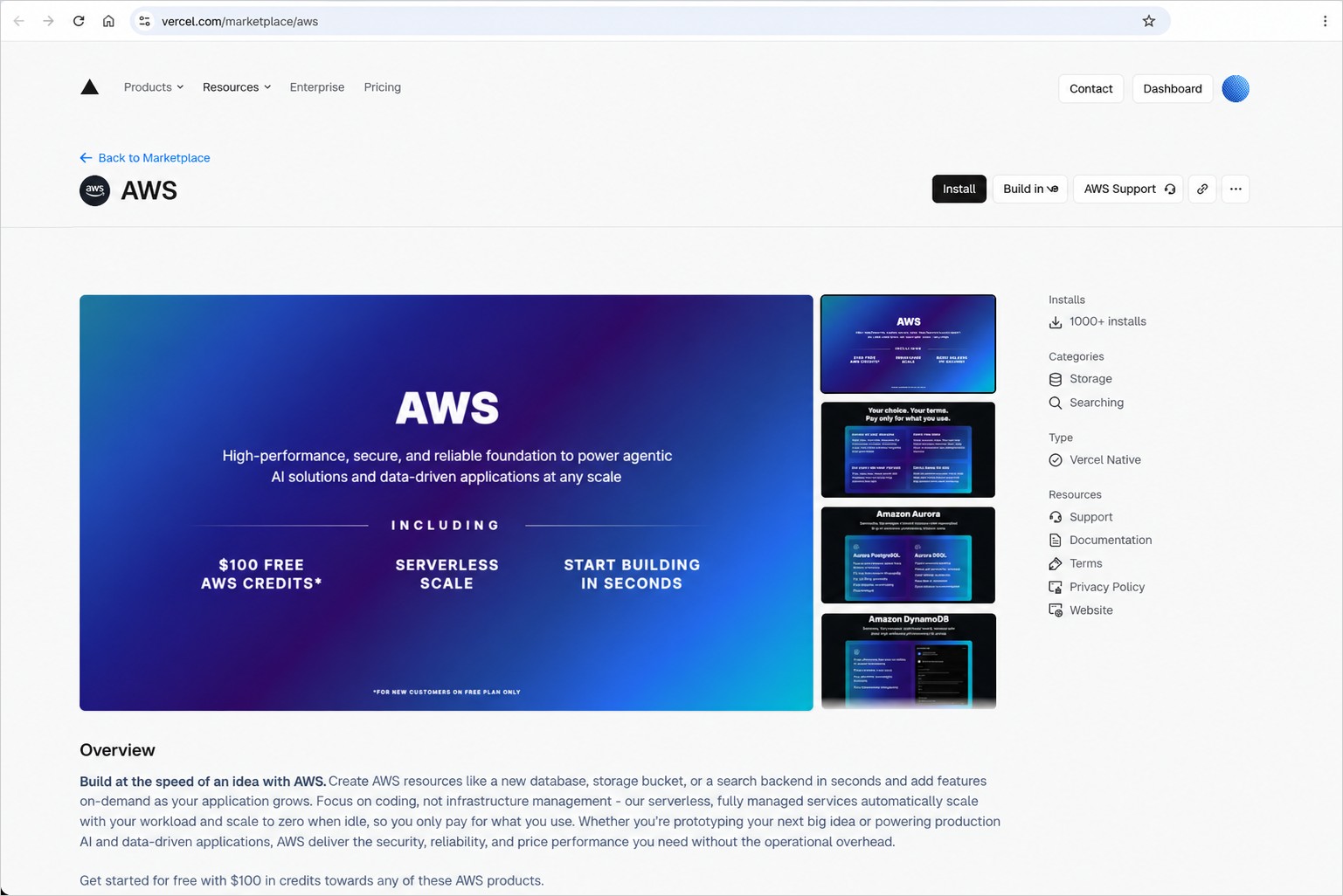
Furthermore, development teams maintain absolute control over their underlying cloud architecture. Organizations can choose to spin up a brand-new AWS account directly through the Vercel integration—complete with a promotional $100 AWS credit valid for six months—or link their existing, enterprise-grade AWS accounts to retain their current billing structures and administrative governance policies. All S3 buckets reside natively within the user’s AWS account, ensuring that engineering teams do not lose access to native AWS monitoring, compliance, and security tools.
Broader Industry Implications
The integration of core AWS storage primitives into a frontend-first deployment platform signals a maturation in how modern software is built. For years, the industry debated the merits of monolithic cloud providers versus specialized developer platforms. This partnership suggests a hybrid future: developers retain the velocity and ergonomic developer experience of platforms like Vercel, while leveraging the deep, battle-tested scalability of hyperscale cloud backends like AWS.
By breaking down the administrative barriers surrounding S3, S3 Tables, and S3 Vectors, AWS and Vercel are lowering the barrier to entry for building complex, AI-driven applications. Startups and enterprise engineering teams alike can now prototype, scale, and manage a complete application stack—spanning database, object, vector, and analytical table storage—under a single unified workflow and billing model.
Availability and Getting Started
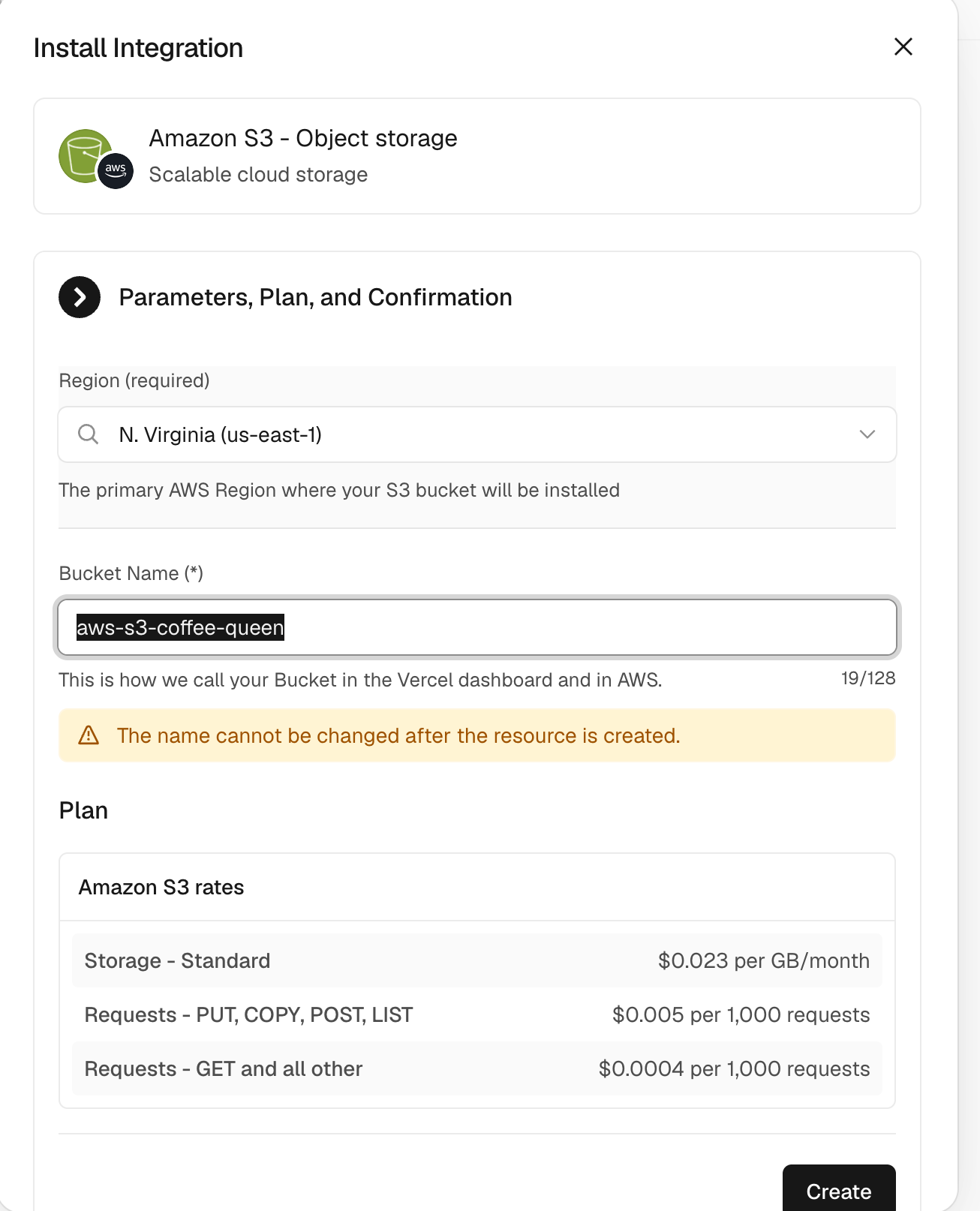
The integration is available starting today at no additional platform charge; developers pay only standard Amazon S3 resource pricing. The feature is accessible globally across all commercial AWS regions supported by Vercel through the Vercel Marketplace and v0. Developers seeking assistance can utilize the AWS Model Context Protocol (MCP) Server to query APIs and troubleshooting documentation directly within their preferred AI development tools.