AWS Expands Amazon EBS Capabilities with Cross-Account Volume Clones, Streamlining DevSecOps and Multi-Account Governance
SEATTLE — Amazon Web Services (AWS), a subsidiary of Amazon.com, Inc., has announced a significant enhancement to its storage portfolio: the introduction of cross-account copy support for Amazon Elastic Block Store (Amazon EBS) Volume Clones. This new capability allows organizations to create direct point-in-time copies of EBS volumes across distinct AWS accounts, bridging a long-standing operational gap between rigid security boundary isolations and the fluid data requirements of modern software development and testing lifecycles.
The update builds upon the foundation laid last year when AWS initially rolled out EBS Volume Clones, a feature designed to provide instant, zero-wait-state volume duplication within the same Availability Zone. By extending this functionality across account boundaries, AWS is addressing complex enterprise architectures where production, staging, and development workloads reside in heavily isolated silos for compliance, auditing, and risk-mitigation purposes.
Main Facts
The newly launched cross-account EBS Volume Clone feature enables cloud architects and DevOps engineers to securely copy block storage data from a source AWS account—typically a production or staging environment—into one or more designated target AWS accounts.
Key attributes of the release include:
- Cross-Account Interoperability: Utilizing AWS Resource Access Manager (AWS RAM), volume owners can seamlessly share block storage resources across AWS accounts or within a centralized AWS Organization.
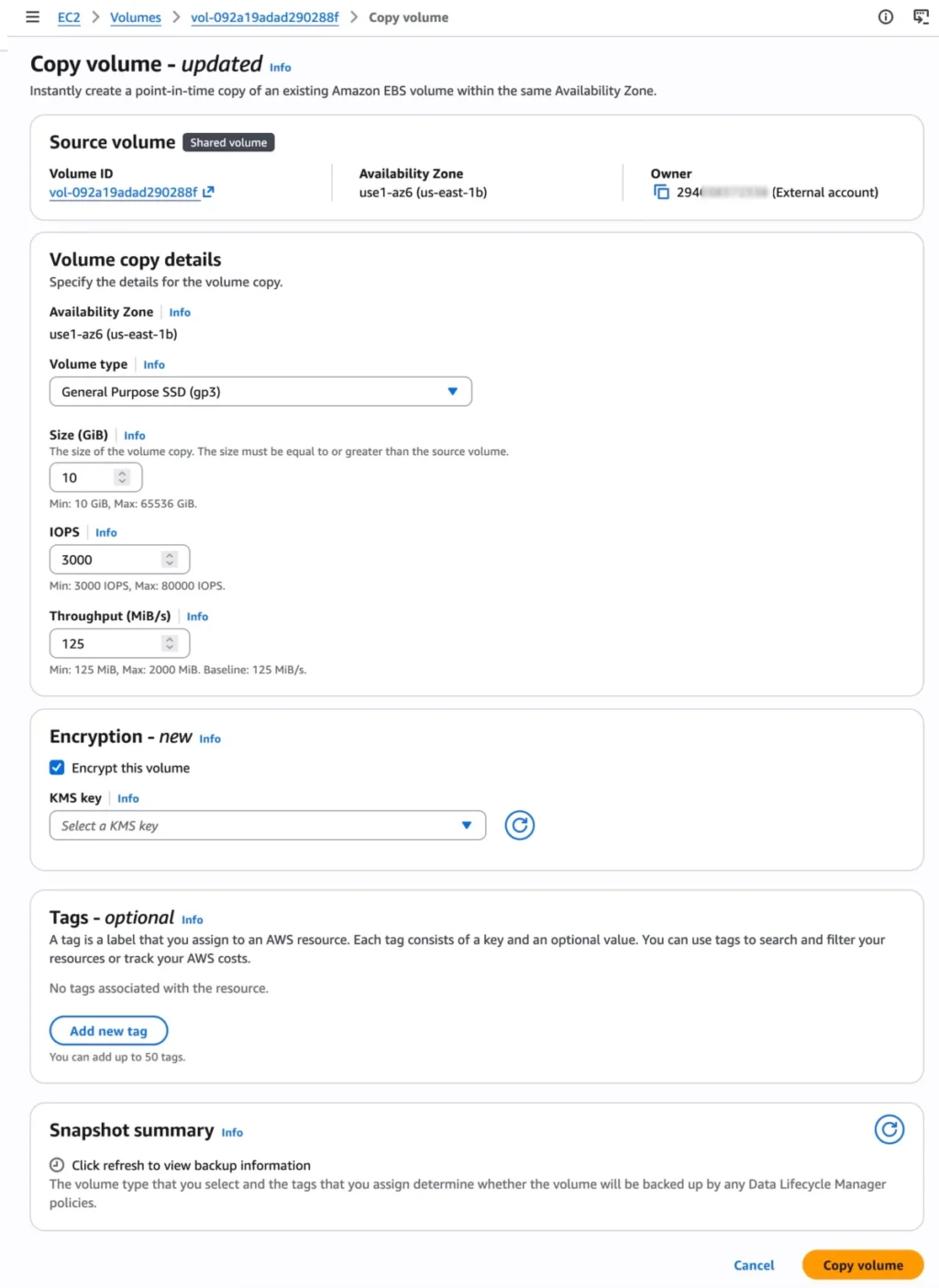
- Target-Side Re-Encryption: Upon copying the volume into a secondary account, administrators have the option to re-encrypt the data using an AWS Key Management Service (AWS KMS) key native to the target account, satisfying strict multi-tenant governance and cryptographic segregation policies.
- Streamlined Workflow Integration: The feature is natively integrated into both the Amazon EC2 and EBS management consoles, as well as being fully accessible programmatically via AWS APIs and the AWS Model Context Protocol (MCP) Server for AI-assisted coding frameworks.
- Immediate Regional Availability: The capability is rolling out globally to all AWS Regions that currently support Amazon EBS Volume Clones.
This capability fundamentally changes how organizations refresh their non-production environments. Previously, developers wanting to test updates against production-grade datasets had to rely on complex, time-consuming snapshot-and-restore procedures, or manual data export and import cycles. These legacy methods not only introduced significant latency but also multiplied storage costs and expanded the security attack surface.
Chronology and Architectural Evolution of Amazon EBS
To fully appreciate the significance of cross-account volume clones, it is instructive to examine the technological trajectory of Amazon EBS and its underlying snapshot architecture.
The Foundation of Block Storage
When AWS launched Amazon EBS in 2008, it provided persistent block-level storage volumes for use with Amazon EC2 instances. Over the subsequent decade and a half, EBS evolved from standard magnetic volumes to high-performance Solid State Drives (SSDs) like gp3 and io2 Block Express, capable of supporting mission-critical, low-latency enterprise databases such as Oracle, SAP HANA, and Microsoft SQL Server.
The Genesis of Volume Clones
Historically, backing up or duplicating an EBS volume relied heavily on Amazon EBS Snapshots. While snapshots are indispensable for long-term disaster recovery and point-in-time backups, creating an active, writable volume from a snapshot required a lazy-loading process where data blocks were pulled from Amazon S3 on-demand, occasionally resulting in initial performance latency.

To solve this, AWS introduced Amazon EBS Volume Clones last year. Volume clones leveraged advanced metadata tracking to instantly generate fully performant, writable copies of a source volume within the same Availability Zone. These clones operated independently of the source volume from the moment of creation, utilizing a redirect-on-write architecture that optimized storage efficiency.
The Cross-Account Imperative
While intra-account clones solved local duplication challenges, enterprise customers running multi-account architectures—governed by AWS Control Tower and AWS Organizations best practices—encountered administrative barriers. Enterprises routinely isolate production data away from developer sandboxes to comply with regulatory frameworks like SOC 2, HIPAA, and PCI-DSS.
Recognizing that modern DevSecOps pipelines require fresh, realistic data to accurately test security patches, database migrations, and feature releases, AWS engineering teams prioritized cross-account sharing. By integrating AWS RAM with the volume cloning engine, AWS has closed the loop, allowing data to flow securely across security boundaries without sacrificing cryptographic control.
Supporting Data and Operational Mechanics
The technical execution of a cross-account EBS volume clone relies on a coordinated handoff between the source account owner, AWS RAM, and the target account administrator.
Step-by-Step Implementation Workflow
-
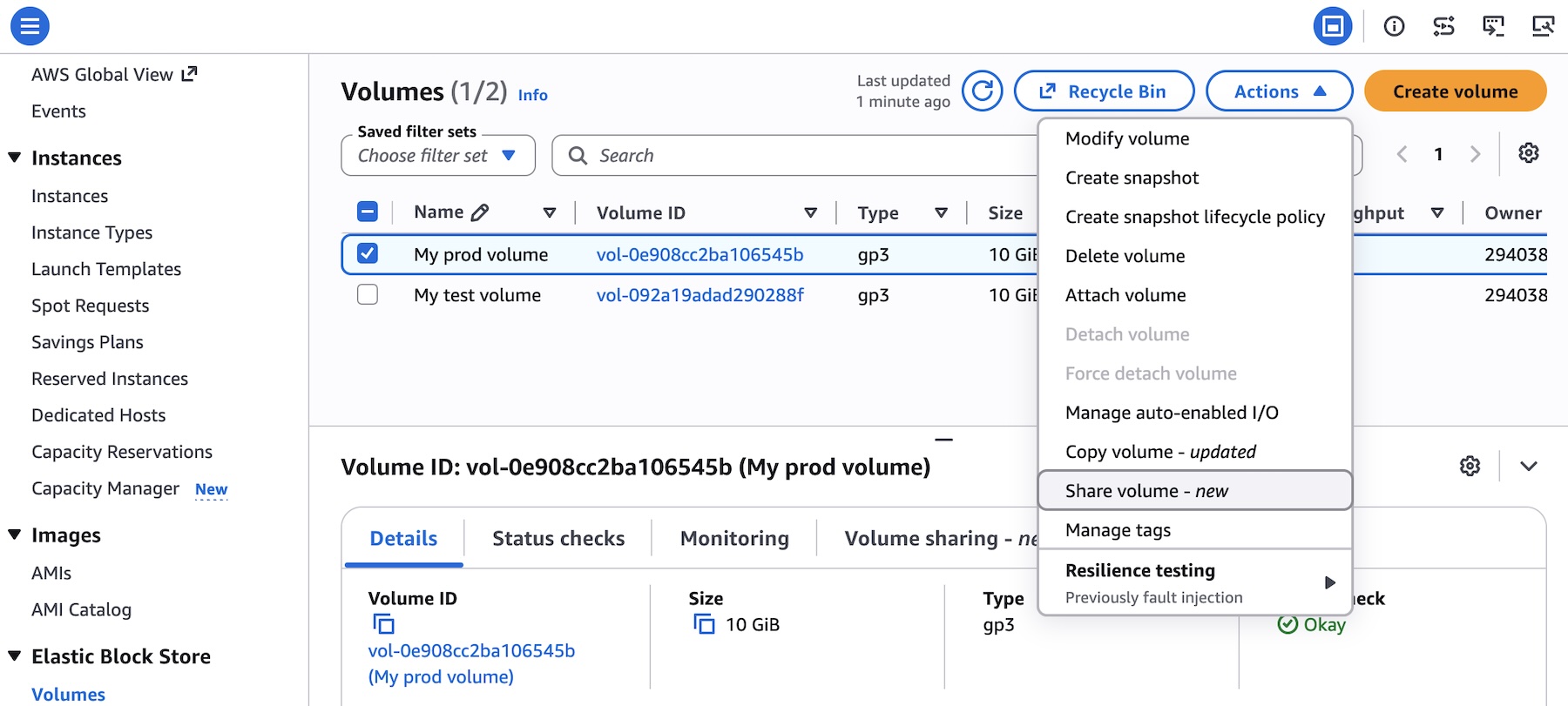
Initiation via the EBS Console:
The process begins in the Amazon EBS console, where the volume owner selects the desired source volume and clicks the Share volume action. -
Resource Sharing via AWS RAM:
Administrators can incorporate the volume into existing resource shares or build a dedicated resource share within the AWS RAM console. AWS RAM acts as the secure policy enforcement point, ensuring that only explicitly authorized AWS accounts or organizational units can view the shared asset. -
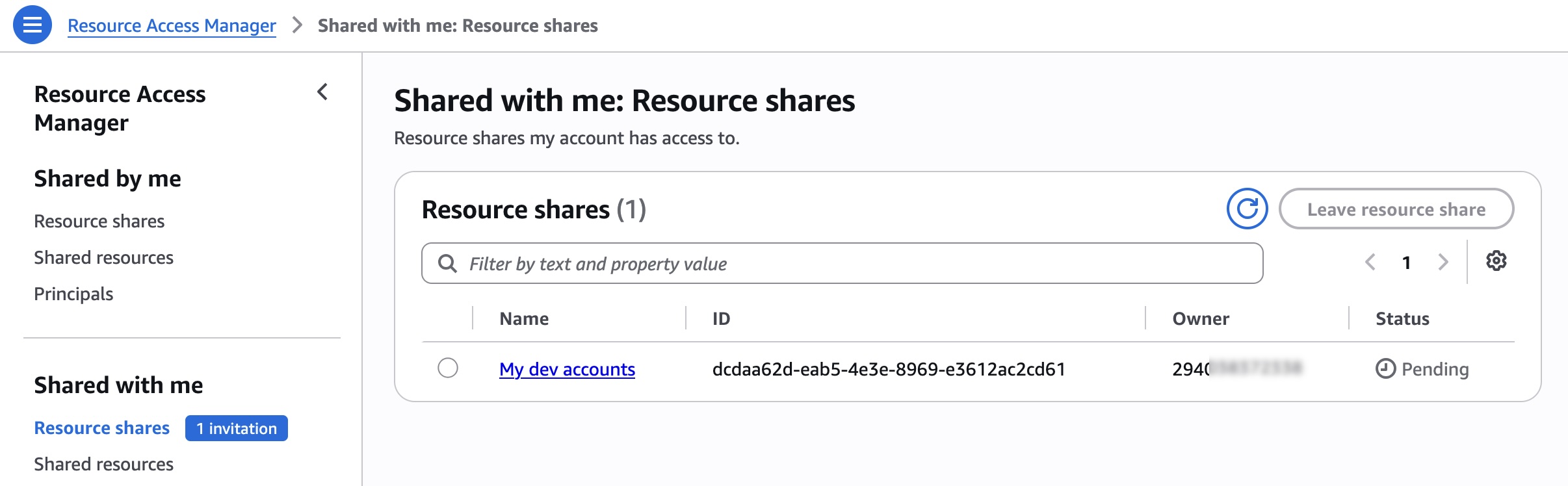
Acceptance and Verification:
Once the share is established, the target account administrator navigates to their local AWS RAM console to accept the resource share. Upon acceptance, the shared volume dynamically populates within the target account’s EBS console interface under a dedicated Volume sharing tab. -
Cloning and Re-Encryption:
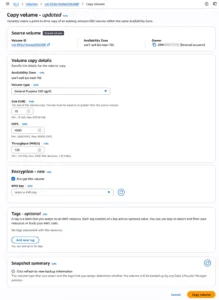
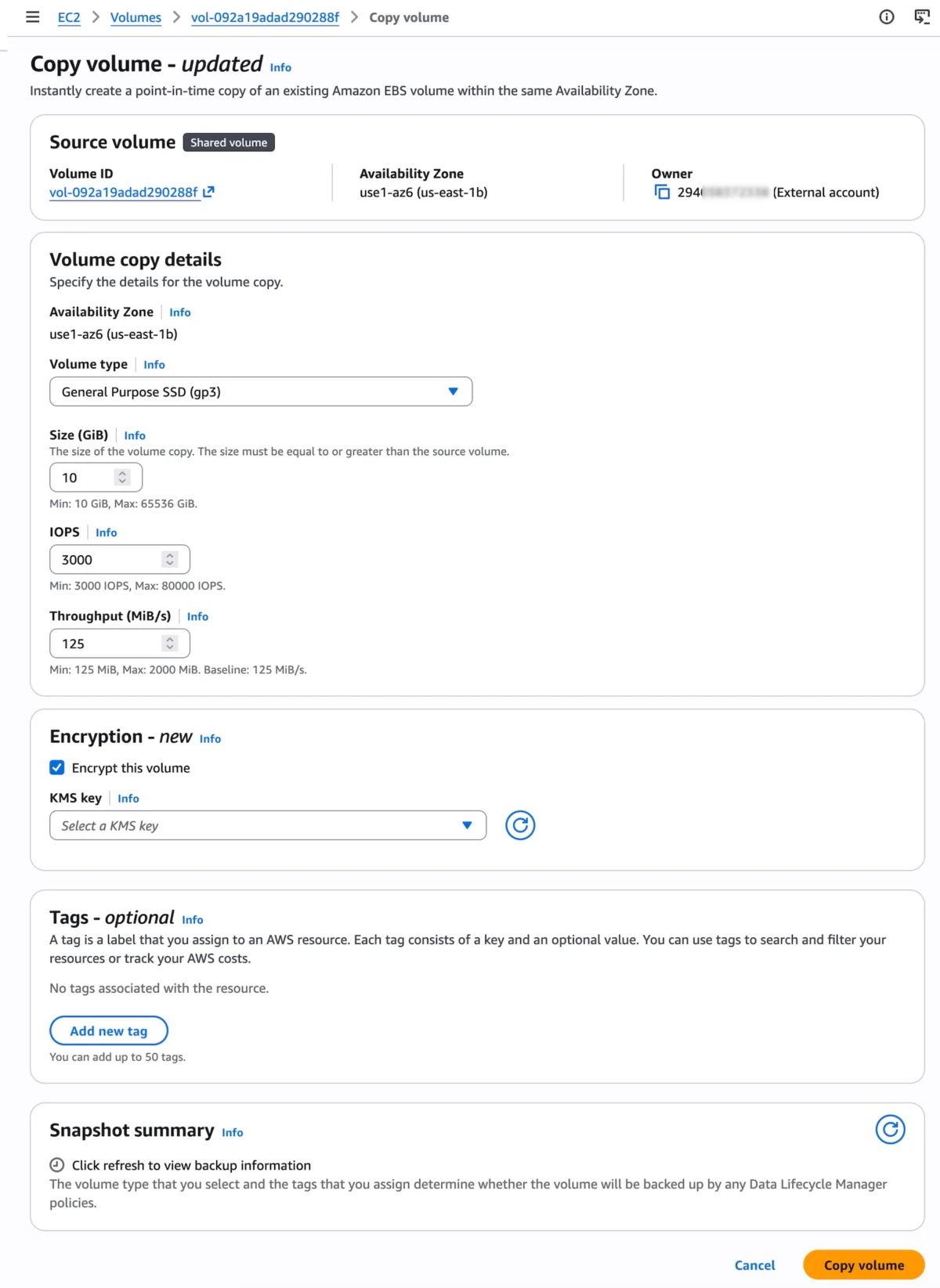
The target account user initiates the final step by selecting Copy volume. During this invocation, the user can apply a localized AWS KMS customer-managed key (CMK). This ensures that the data at rest in the development environment is governed strictly by the target account’s security parameters, completely decoupling it from the production account’s key rotation and access policies.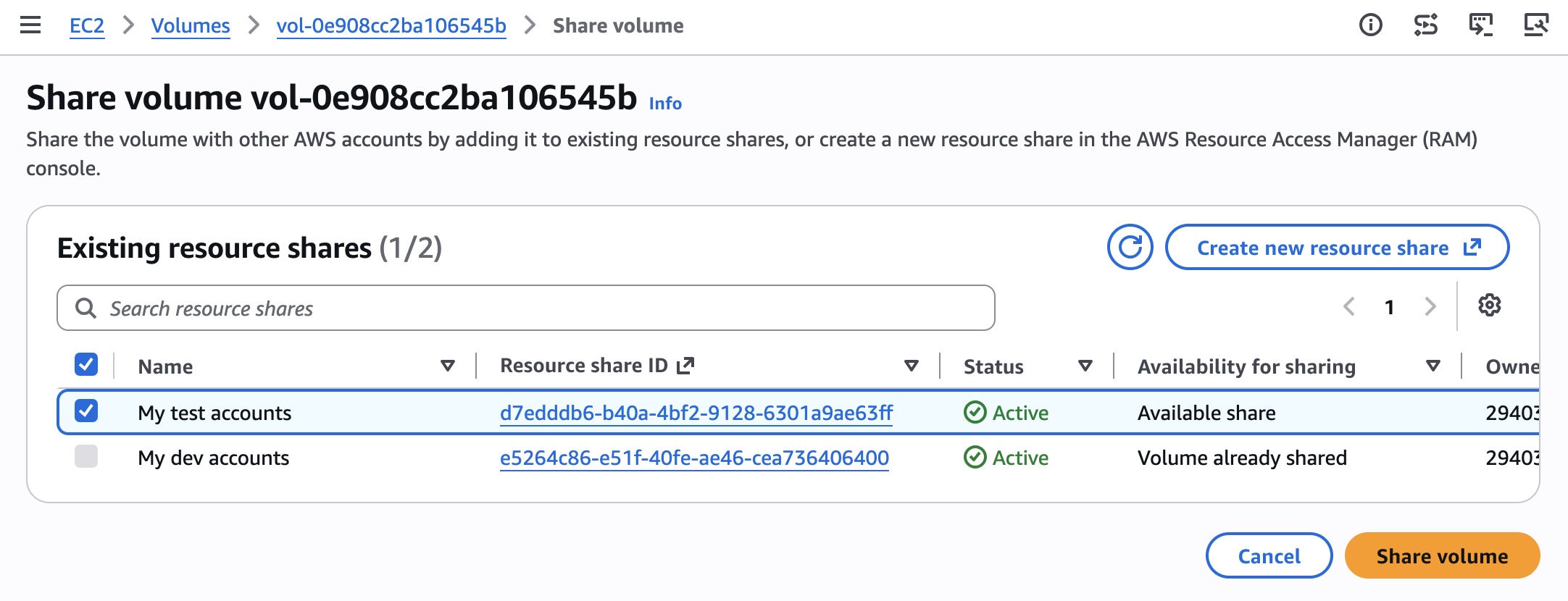
Programmatic and AI-Driven Integration
Recognizing that enterprise infrastructure is increasingly managed via Infrastructure as Code (IaC) and generative AI assistants, AWS has ensured day-one support for programmatic workflows. Developers utilizing AI coding environments can leverage the AWS MCP (Model Context Protocol) Server and associated plugins to query documentation, construct API calls, and automate cross-account volume provisioning without leaving their integrated development environments (IDEs).
Official Responses and Industry Implications
Industry analysts and enterprise DevOps leaders have responded enthusiastically to the release, viewing it as a major win for productivity and security compliance alike.
"In modern enterprise cloud engineering, the tension between agility and security is constant," noted a senior cloud infrastructure strategist at a Fortune 500 financial services firm. "Developers need production-scale data to test complex migrations, but security teams rightfully lock down production accounts. By enabling instant, cryptographically secure cross-account cloning with localized KMS keys, AWS has eliminated one of our most persistent operational bottlenecks."
From a cost-optimization perspective, the underlying metadata architecture of volume clones ensures that organizations do not pay for redundant data storage until modifications occur. The redirect-on-write mechanism means that a newly cloned volume in a target account only consumes additional storage capacity for blocks that are actively written to post-clone. This makes frequent environment refreshes economically viable for engineering teams operating under strict cloud budgets.

Furthermore, the integration with AWS Organizations and AWS RAM aligns with the AWS Well-Architected Framework’s Security and Reliability pillars. By avoiding insecure workarounds—such as exporting data to unsecured S3 buckets or sharing broad IAM role assumptions across accounts—organizations can maintain a pristine, auditable chain of custody for their most sensitive data assets.
Broader Implications for the Cloud Ecosystem
The introduction of cross-account EBS volume clones signals a broader shift in how hyperscale cloud providers are engineering services for complex, multi-account enterprise topologies. As organizations scale from a handful of AWS accounts to hundreds or thousands governed by automated landing zones, features that respect organizational boundaries while enabling seamless data mobility become paramount.
For software engineering organizations, the implications are immediate:
- Accelerated Release Cycles: Staging and QA environments can be refreshed with the exact production schema and data state in a matter of minutes, reducing time-to-market for new features.
- Enhanced Security Posture: Developers no longer require direct read or write access to production environments to troubleshoot complex bugs; they can safely replicate the failure state inside an isolated sandbox.
- Simplified Compliance Audits: Because target accounts retain absolute control over encryption keys via AWS KMS, compliance officers can easily verify that sensitive production data has been safely re-encrypted and ring-fenced within non-production boundaries.
Availability and Getting Started
Cross-account volume clones for Amazon EBS are generally available today across all AWS Regions that currently support standard Amazon EBS Volume Clones. Organizations can verify specific regional capabilities via the AWS Capabilities by Region portal.
Cloud architects and administrators can begin experimenting with the feature immediately via the Amazon EC2 and EBS management consoles. Feedback, feature requests, and technical inquiries can be directed to the AWS re:Post for Amazon EBS community forum or through standard enterprise AWS Support channels.