AWS Expands Amazon EBS Capabilities with Cross-Account Volume Clones, Streamlining Multi-Account DevOps and Enterprise Data Governance
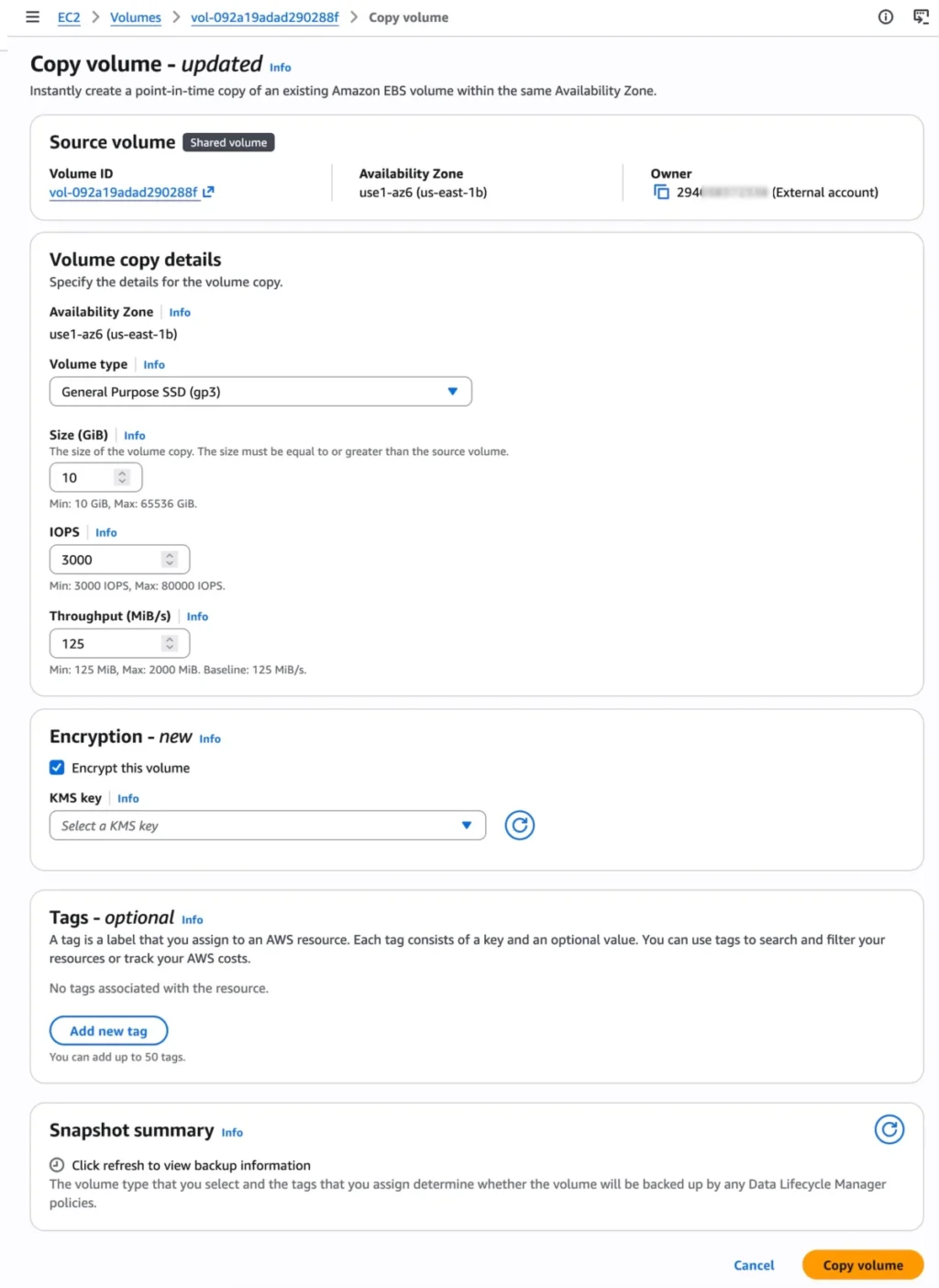
SEATTLE — Amazon Web Services (AWS), a subsidiary of Amazon.com, Inc., has announced a powerful extension to its cloud storage infrastructure: the introduction of cross-account volume cloning for Amazon Elastic Block Store (Amazon EBS). Building upon the instantaneous point-in-time volume cloning functionality launched last year, this new capability allows organizations to seamlessly copy EBS volumes across distinct AWS accounts.
By integrating AWS Resource Access Manager (RAM) and AWS Key Management Service (AWS KMS), the feature addresses a long-standing operational challenge for multi-account enterprises: safely and efficiently sharing production-grade data with isolated development, testing, and staging environments without compromising security or governance.
Main Facts
The newly released cross-account capability transforms how cloud architects, DevOps engineers, and security compliance officers manage data lifecycles across complex organizational structures.
- Cross-Account Sharing and Cloning: Organizations can now create point-in-time clones of EBS volumes originating in one AWS account and provision them directly inside a completely separate AWS account.
- Granular Security and Re-Encryption: Target accounts have the option to re-encrypt incoming volume clones using their own designated AWS KMS keys, ensuring that data isolation and enterprise key management policies remain strictly enforced.
- AWS RAM Integration: The workflow leverages AWS Resource Access Manager (RAM) and AWS Organizations to securely manage permissions, eliminating the need for cumbersome manual snapshot-and-copy routines.
- Streamlined Developer Workflows: Production data can be quickly and safely leveraged to refresh staging and development sandboxes, enabling engineering teams to test against realistic, up-to-date workloads.
- Immediate Availability: The feature is live today across all AWS Regions that currently support Amazon EBS Volume Clones.
Chronology and Evolution of Amazon EBS Clones
To understand the significance of this cross-account release, it is essential to trace the developmental trajectory of Amazon EBS data management capabilities.
The Foundation: Traditional Snapshots
For over a decade, Amazon EBS relied heavily on EBS Snapshots to back up and duplicate volume data. While reliable, traditional snapshots operate asynchronously, backing up data incrementally to Amazon Simple Storage Service (S3). Creating a usable volume from an existing snapshot in a different context often required a multi-step process: creating a snapshot, waiting for completion, sharing the snapshot across accounts, copying it to the target region/account, and finally materializing a new EBS volume from that copied snapshot. For massive datasets, this workflow introduced noticeable latency and administrative overhead.
The 2025 Breakthrough: Same-Zone Volume Clones
Recognizing the need for instant data duplication within modern microservices architectures, AWS introduced Amazon EBS Volume Clones. Released the prior year, this capability permitted users to generate instant, point-in-time, block-level copies of EBS volumes within the same Availability Zone. Unlike traditional snapshots, these clones were immediately available for read and write operations, utilizing a redirect-on-write architecture that bypassed the need to copy underlying data blocks upfront.

While revolutionary for single-account operations, enterprises operating under strict AWS Landing Zone frameworks—where workloads are purposely segregated across multiple accounts for security and billing isolation—faced a barrier. They could not directly instantiate those rapid clones outside the boundaries of the source account.
The 2026 Milestone: Cross-Account Expansion
Addressing enterprise feedback, AWS has now bridged the gap between rapid block-level cloning and multi-account governance. By integrating EBS Volume Clones with AWS RAM, cloud administrators can initiate cross-account transfers natively. This evolution marks a shift from isolated, single-account utility features to enterprise-grade, ecosystem-wide data management tools.
Supporting Data, Architecture, and Operational Workflow
Executing a cross-account EBS volume clone involves a collaborative workflow between the source account owner, the target account administrator, and AWS access control mechanisms.
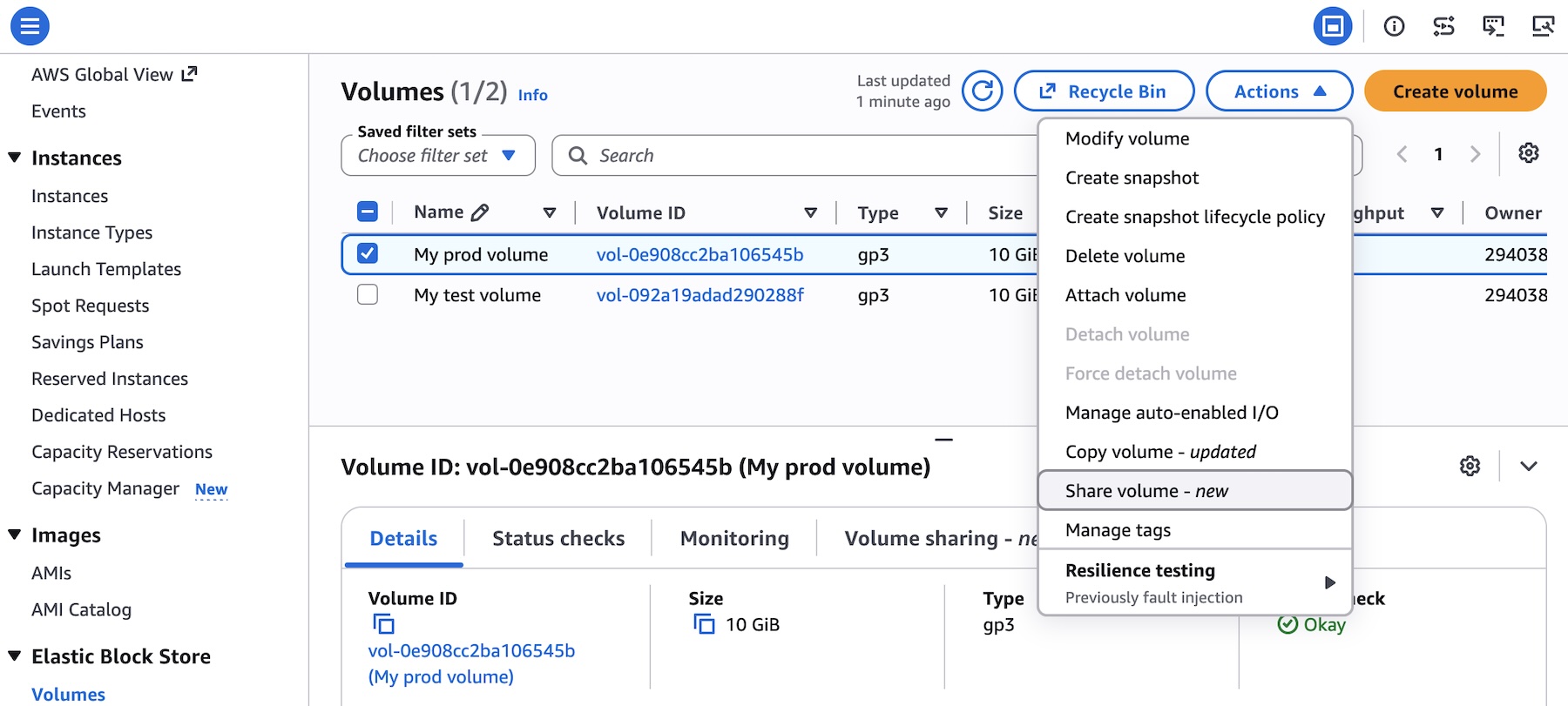
Step-by-Step Implementation Architecture
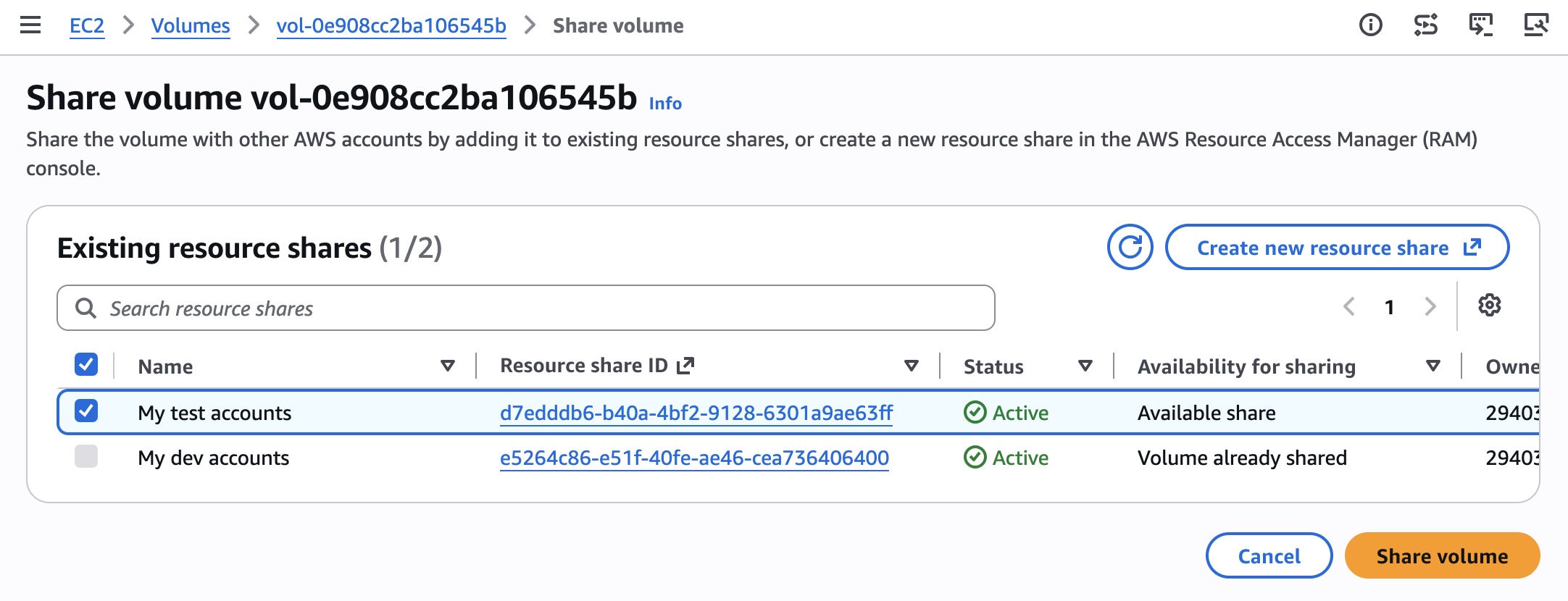
- Initiating the Share (Source Account):
The owner of the source EBS volume navigates to the Amazon EBS console, selects the target volume, and chooses the Share volume option. - Resource Configuration via AWS RAM:
Through the AWS RAM console, the volume is added to an existing resource share or a newly created resource share. This can target specific AWS accounts or entire organizational units within an AWS Organization. Once added, a confirmation appears in the Volume sharing tab of the volume’s detail page. - Accepting the Share (Target Account):
The administrator of the target AWS account logs into their respective RAM console, views the pending resource share invitation, and explicitly accepts it. - Executing the Copy:
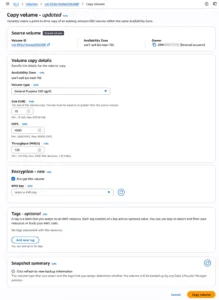
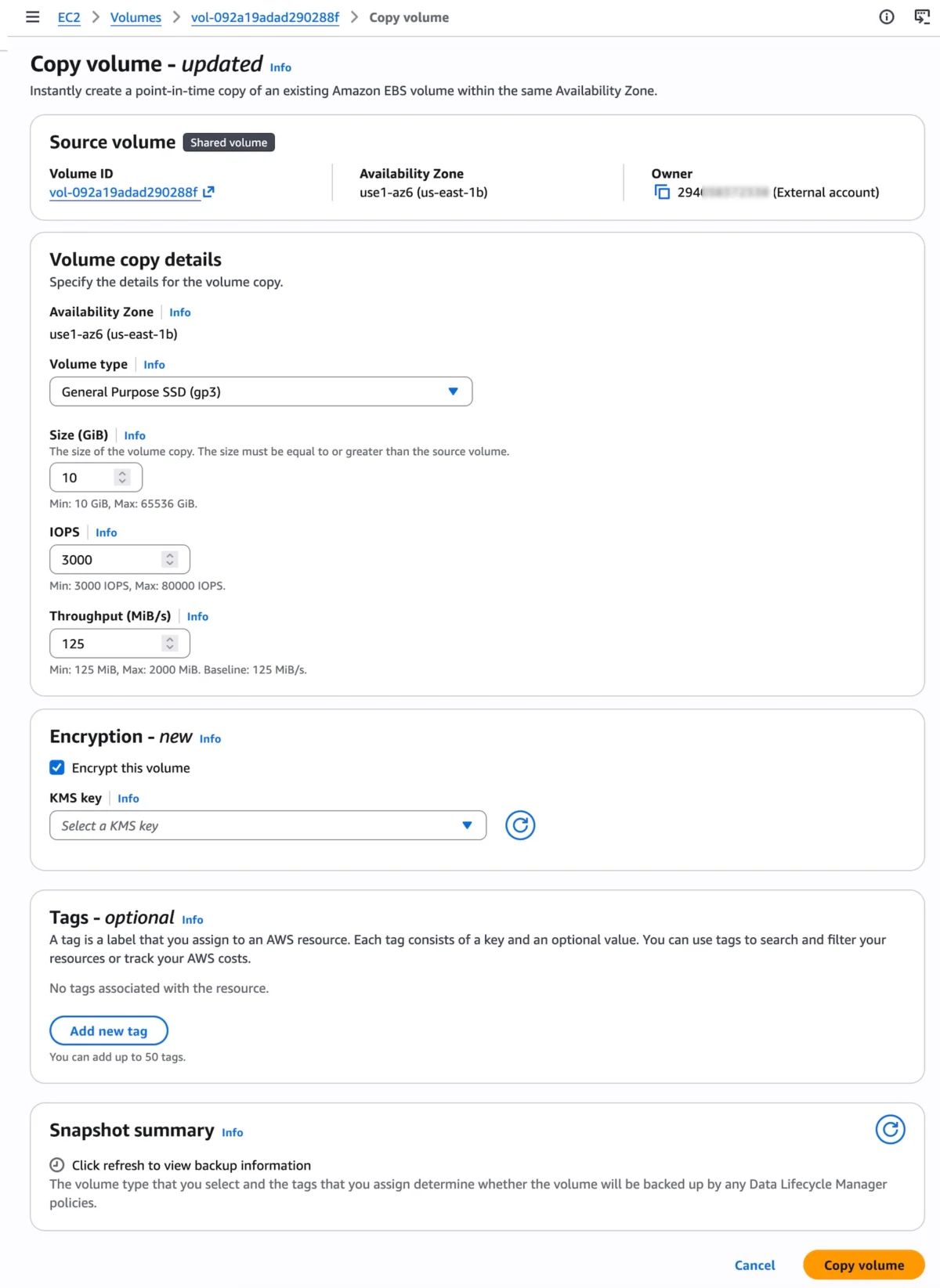
Once accepted, the shared volume automatically populates within the EBS volume dashboard of the target account. The target user selects Copy volume, at which point they can configure target performance tiers, specify alternative encryption parameters, and apply a local AWS KMS key for zero-trust data segregation.
Technical Specifications and Considerations
Behind the user-friendly console interface lie robust architectural safeguards designed to protect enterprise environments:
- IAM Permissions: Fine-grained AWS Identity and Access Management (IAM) policies dictate precisely which users or roles can initiate volume sharing and execution.
- Encryption Boundaries: Target accounts cannot view or access the source data unless explicit RAM permissions are granted and the target explicitly provisions the clone using authorized KMS keys.
- Automation and AI Tooling: For organizations embracing infrastructure-as-code and generative AI developer workflows, AWS has ensured programmatical accessibility. Teams can utilize the AWS MCP Server and associated plugins with preferred AI coding assistants to automate cross-account volume sharing and API interactions.
Implications for Enterprise DevOps and Security
The introduction of cross-account EBS volume clones carries profound implications for software delivery lifecycles, operational efficiency, and compliance postures.
Accelerating CI/CD and Quality Assurance
In modern continuous integration and continuous deployment (CI/CD) pipelines, the fidelity of testing environments is paramount. Historically, developers relied on synthetic test data or outdated snapshots that failed to capture subtle production anomalies. With instant cross-account clones, QA teams can spin up exact replicas of live production databases—masked or unmasked according to compliance policies—within seconds. This parity drastically reduces debugging cycles and catches edge-case bugs prior to production deployment.
Strengthening Multi-Account Security Governance
Security best practices, such as the AWS Well-Architected Framework, strongly advocate for the separation of duties and workloads across multiple AWS accounts. However, poorly implemented data-sharing methods can introduce shadow IT or weaken perimeter controls. By anchoring the new cloning feature inside AWS RAM and AWS KMS, AWS ensures that data sharing remains auditable, traceable, and fully compliant with regulatory standards like HIPAA, GDPR, and PCI-DSS. Security teams retain absolute sovereignty over encryption keys while granting developers the operational agility they require.
Cost Optimization and Resource Efficiency
Traditional methods of duplicating heavy datasets across accounts often resulted in redundant storage footprints and inflated egress or synchronization costs. Because Amazon EBS Volume Clones utilize an efficient underlying storage mechanism that only consumes incremental capacity as data changes, enterprises can provision multiple development sandboxes without incurring linear storage cost penalties.
Availability and Future Outlook
Cross-account volume clones for Amazon EBS are generally available starting today. The feature has been rolled out across all global AWS Regions that currently support standard Amazon EBS Volume Clones.

Cloud administrators and engineering leaders are encouraged to evaluate the feature directly within the Amazon EC2 and EBS consoles. Organizations seeking further technical documentation, API specifications, and troubleshooting steps can reference the Amazon EBS User Guide, while feedback and feature requests can be directed to the AWS re:Post community channels or designated AWS Support account teams.
As enterprises continue to scale their cloud estates, capabilities like cross-account EBS cloning underscore AWS’s ongoing commitment to marrying high-speed performance with enterprise-grade security and governance.