AWS Summit NYC 2026: A Paradigm Shift in AI-Native Development and Financial Operations
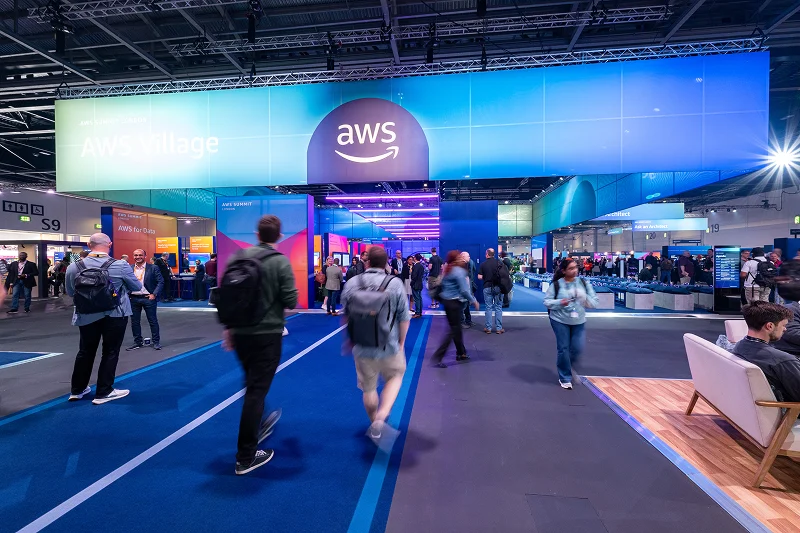
As the tech community descends upon the Javits Center for the annual AWS Summit New York, the narrative surrounding cloud computing has shifted from mere infrastructure migration to the mastery of "Agentic AI." This year’s event, characterized by a flurry of high-level announcements and strategic insights, underscores a pivotal moment for developers and enterprise leaders alike. While industry practitioners gather in Manhattan for technical sessions and networking, the broader implications of this week’s launches are being felt across the global digital landscape.
Main Facts: The New Frontier of AI-Native Engineering
The centerpiece of this year’s Summit is not just a hardware or service update, but a fundamental rethinking of how software is built. Dr. Swami Sivasubramanian, VP of Agentic AI, and Chet Kapoor, VP of Security Services and Observability, have set the stage for a future where the "developer" role is evolving into that of a "system architect" overseeing fleets of intelligent agents.
The most significant disclosure coming out of the summit involves a deep-dive study into Amazon’s own internal engineering practices. By analyzing hundreds of teams, AWS has synthesized a blueprint for "Frontier Teams"—groups that have successfully transitioned to an AI-native development lifecycle. The data is striking: these teams are not merely iterating faster; they are achieving order-of-magnitude improvements in productivity.
Furthermore, AWS has expanded its automation capabilities into the notoriously complex world of financial operations (FinOps). With the launch of the AWS FinOps Agent, the company is bridging the gap between cloud cost management and automated remediation, moving beyond static reporting into proactive, agent-driven fiscal oversight.
Chronology of the Summit Launch Cycle
The week kicked off with the highly anticipated keynote presentations, which set the tone for the developer-centric announcements that followed.
- June 14: Pre-summit momentum began with the release of architectural insights from Amazon’s internal AI adoption pilots.
- June 17: The formal keynote livestream commenced, featuring deep dives into the new "Agentic" ecosystem.
- Ongoing: Throughout the week, AWS has rolled out a series of developer-focused tools and integration previews, allowing attendees and remote builders to experiment with the new frameworks.
- The "Mobile View": Demonstrating the ubiquity of these tools, engineers are now managing infrastructure deployments and monitoring cost-anomaly alerts from virtually anywhere—from the conference floor to remote locations far outside the city.
Supporting Data: The 4.5x Productivity Multiplier
The most compelling argument for the adoption of AI-native workflows comes from a specific, controlled case study within Amazon. A team of six engineers was tasked with rebuilding the Amazon Bedrock inference engine—a project that, by traditional estimation, required 30 developers working over a period of 12 to 18 months. By leveraging AI-native development practices, this team completed the project in just 76 days.
This is not an isolated success. Across various Amazon Stores teams, the median productivity gain reached 4.5x in normalized deployment velocity. In some high-performing scenarios, teams witnessed a 10x acceleration. The tangible outcomes are transformative:
- Perfect Order Experience: A feature cycle that previously spanned two weeks was compressed into a single afternoon.
- WW Grocery: Design documentation, typically a five-day bureaucratic bottleneck, was streamlined into a process taking only a few hours.
These metrics serve as a "proof of concept" for the wider AWS customer base, suggesting that the bottleneck in modern software engineering is no longer the speed of writing code, but the overhead of context switching and manual testing.
Official Responses and Strategic Pillars
Dr. Swami Sivasubramanian’s recent publication outlines five core pillars that allow teams to reach "Frontier" status. These pillars serve as the official AWS recommendation for enterprises looking to scale AI development:
- Invest in Agent Context: Before writing a single line of production code, teams must invest in "steering files," coding standards, and structured repositories. This provides the AI with the necessary guardrails.
- Embrace the Initial Slowdown: AWS acknowledges that transitioning to AI-native workflows requires a period of process restructuring. The productivity gains are realized only after the "re-tooling" phase is complete.
- The Backlog Discipline: To keep agents running in parallel, teams must maintain a steady, well-scoped backlog. Constant human supervision acts as a throttle on potential velocity.
- Explicit Intent: Code generation is only as good as the requirements provided. Teams must shift toward structured specifications—explicitly defining the "what" before the AI handles the "how."
- Shift Testing Left: Agents must be equipped to self-correct during the development phase, ensuring that bugs are identified and resolved before the code ever reaches the deployment pipeline.
The AWS FinOps Agent: Automation of Fiscal Responsibility
While developer productivity dominated the headlines, the introduction of the AWS FinOps Agent represents a crucial advancement in cloud governance. As cloud environments grow in complexity, "bill shock" has become a recurring issue for CTOs and CFOs.
The FinOps Agent is designed to act as a specialized autonomous worker that:
- Queries Costs: Provides natural language answers to complex billing inquiries.
- Surface Opportunities: Automatically identifies idle resources, suggests rightsizing, and monitors Savings Plans.
- Autonomous Remediation: Perhaps most impressively, the agent can initiate action, such as opening Jira tickets for engineering teams or notifying stakeholders via Slack when a cost anomaly is detected.
By integrating directly with AWS Cost Optimization Hub and AWS Compute Optimizer, the agent moves FinOps from a reactive, manual process to a continuous, automated feedback loop.

Implications: The Future of the "Builder"
The implications of these developments are profound. We are witnessing the end of the era where "developer" was defined solely by the volume of code produced. The focus is shifting toward architectural oversight and the curation of intelligent systems.
Impact on Developer Culture
As AI agents take over repetitive tasks, the primary skill set for an engineer will become "intent architecture"—the ability to clearly define system requirements and maintain the integrity of the agentic environment. This shift will likely necessitate a change in how engineering teams are structured, potentially favoring smaller, more agile units over the large, monolithic squads of the past.
The Security and Operational Frontier
While the current announcements focus on velocity and cost, AWS has signaled that the next phase of this strategy will address the "heavier" aspects of the software lifecycle: security operations, complex release management, and end-of-life (EOL) upgrades. For security teams, this means that the same AI-native principles used to build code will soon be used to defend it, creating a "self-healing" infrastructure paradigm.
The Macro Perspective
For those attending the AWS Summit, the message is clear: the transition to AI-native development is no longer optional for those who wish to remain competitive. Whether it is through the adoption of agent-based FinOps or the implementation of Frontier Team development practices, the integration of AI is moving from the experimental periphery to the center of the enterprise core.
As the week continues at the Javits Center, the technical community is left with a clear roadmap. The challenge for the next year will not be the availability of tools—AWS has provided those in abundance—but the cultural and structural willingness of organizations to restructure their workflows to accommodate the next generation of software engineering.
For those unable to attend the Summit in person, the recorded sessions from Dr. Swami Sivasubramanian and Chet Kapoor remain the definitive guides to these new capabilities. Builders are encouraged to visit the AWS Builder Center to participate in ongoing discussions and access the resources necessary to implement these new architectural paradigms.