Beyond the Horizon: Lessons from the DARPA Lift Challenge
For decades, the Defense Advanced Research Projects Agency (DARPA) has served as the primary catalyst for the most ambitious technological leaps in human history. From the early seeds of the internet (ARPANET) to GPS and modern robotics, the agency has built a reputation for funding "mad science" that often transitions from the fringe of possibility to the bedrock of modern utility. However, the agency’s latest endeavor—the DARPA Lift Challenge—serves as a fascinating case study in how, even in the pursuit of radical innovation, the laws of physics and the reliability of conventional engineering often dictate the ultimate victors.
The challenge was simple in its prompt but daunting in its execution: design a Vertical Take-Off and Landing (VTOL) aerial vehicle capable of carrying a payload four times its own dry weight. While the goal invited wild, futuristic concepts, the results highlight a sobering reality for aerospace engineering: in the race for efficiency, the "tried and true" often outperforms the avant-garde.
The Core Mandate: Challenging the Physics of Flight
The DARPA Lift Challenge was conceptualized to solve a persistent bottleneck in logistics and tactical operations. Modern military and civilian drone operations often struggle with the "payload-to-weight" ratio. Most current-generation unmanned aerial vehicles (UAVs) are heavy, battery-dependent, and lack the lift capacity required for meaningful cargo transport.
DARPA sought to break this paradigm by incentivizing a new generation of high-efficiency VTOL designs. The primary objective was to achieve a lift ratio of 4:1—a threshold that, if reached, would revolutionize how the military transports medical supplies, ammunition, and reconnaissance equipment in contested or inaccessible environments. By opening the challenge to private developers, academia, and independent innovators, DARPA aimed to uncover novel aerodynamic configurations that could bypass the limitations of traditional airframes.
Chronology of the Competition
The Launch Phase (2025–2026)
When the Lift Challenge was initially announced, the aerospace community responded with an influx of submissions. These ranged from bio-mimetic flappers and complex multi-rotor configurations to experimental tilt-wing designs. The initial months were spent vetting submissions for flight safety, structural integrity, and the theoretical feasibility of their propulsion systems.
The Evaluation Phase
As the entries moved from digital simulations to physical prototypes, the field began to thin. DARPA officials emphasized that this was not merely a contest of aesthetics; it was a grueling test of endurance, power-to-weight management, and autonomous flight stability.
The Final Fly-Off (2026)
The culmination of the project saw a select group of finalists gather to demonstrate their hardware. The atmosphere was one of high expectation, with spectators hoping for a display of revolutionary, never-before-seen aerial mechanics. Instead, the final results showcased a surprising shift toward refinement over reinvention.
Supporting Data: The Triumph of the Conventional
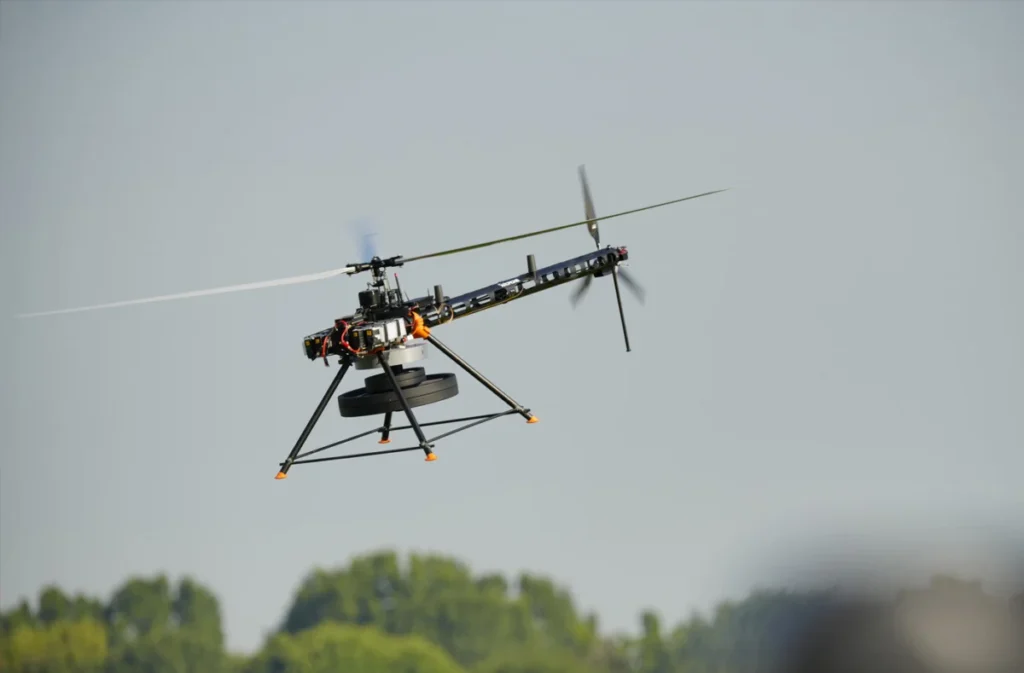
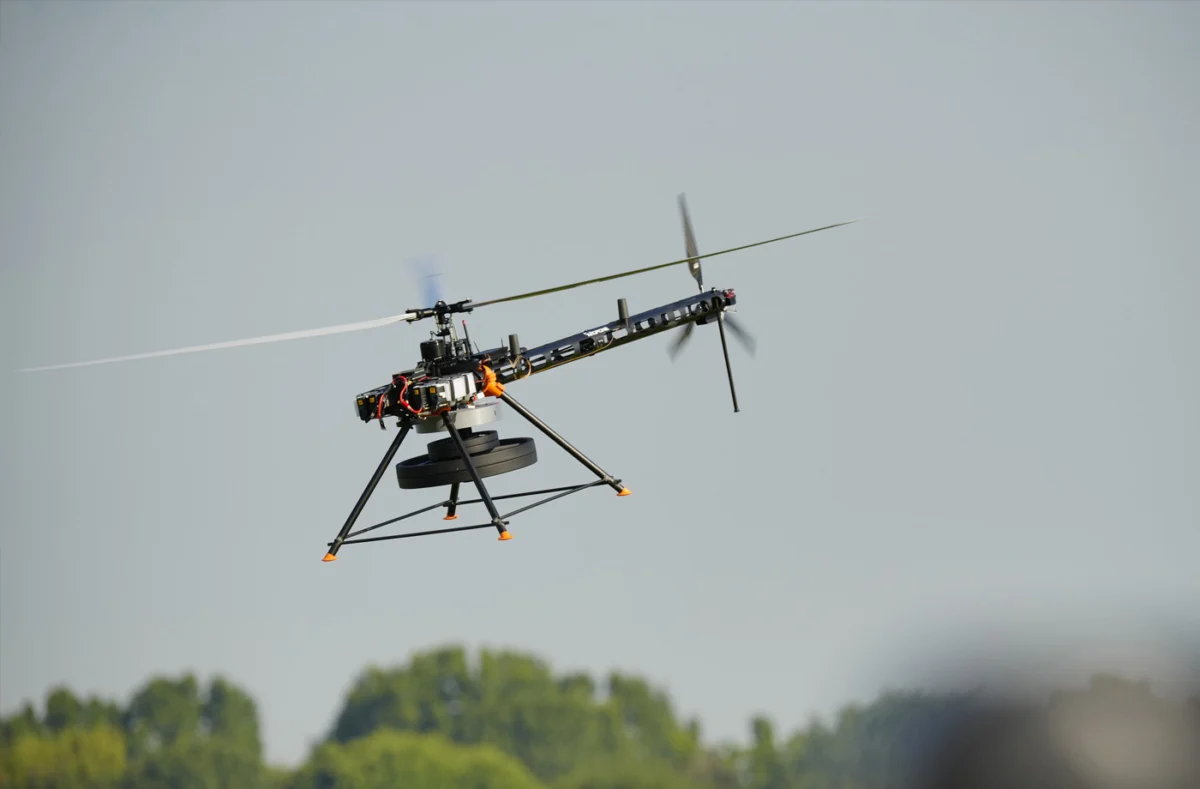
Perhaps the most striking finding of the Lift Challenge was the performance of the winning entry. AVIDrone, Inc., a company known for its precision engineering, took home the top prize. Their vehicle was not a sleek, sci-fi masterpiece, but rather a masterclass in the optimization of the classic helicopter configuration.
Technical Performance Breakdown
- The Winner (AVIDrone): The AVIDrone entry utilized a high-efficiency single main rotor with a tail rotor configuration. While the layout was traditional, the "secret sauce" lay in the materials science. By integrating advanced carbon-fiber composites and state-of-the-art solid-state battery technology, the team achieved a lift ratio of 3.84:1—an incredible feat that saw the craft lift 112 lbs of payload.
- The Runner-Up (Hexrotor): Second place went to a battery-powered hexrotor design, which reached a 3.64:1 lift ratio. Its success underscored the rising efficacy of multi-rotor systems, which provide superior stability at the cost of slight aerodynamic drag.
- The Turbine Surprise: In third place, a turbine-powered helicopter proved that while electric propulsion is the current darling of the industry, traditional combustion still holds a massive advantage in energy density. The turbine engine’s ability to sustain power over long durations remains a hurdle that current battery technology struggles to overcome.
Official Responses and Expert Analysis
DARPA representatives noted that while the "four-times-weight" goal was not surpassed in the final testing, the progress made in structural efficiency was unprecedented.
"The challenge was never just about winning," stated a DARPA program manager during the post-event briefing. "It was about understanding where the ceiling of current technology lies. We saw designs that were brilliant in theory, but they failed to account for the harsh realities of real-world turbulence and the complexities of power management."
Industry experts observing the competition noted that the result serves as a "sanity check" for the industry. There is a common tendency in drone design to over-engineer configurations in search of novelty. AVIDrone’s success is a reminder that the helicopter—a design that has existed for decades—is still arguably the most efficient way to achieve vertical lift. The innovation, in this case, was not in the shape of the aircraft, but in the materials and power systems fueling it.
Implications for Future Aerospace Development
The DARPA Lift Challenge has profound implications for both military and commercial sectors. As we look toward the 2028 iteration of the challenge, several key takeaways emerge:
1. The Energy Density Wall
The fact that a turbine engine took third place highlights the current limitations of lithium-ion and solid-state batteries. For cargo drones to truly replace ground transport, they must be able to carry heavy payloads over long distances—a task that currently demands the energy density found only in liquid fuels. Future entries will likely focus on hybrid-electric systems to bridge this gap.
2. Radical Geometry vs. Proven Aerodynamics
While the "giant lift rotor" concepts (where the drone body itself becomes the propeller) are academically fascinating, they often suffer from stability issues and complex control-law requirements. DARPA’s funding will continue to support these high-risk, high-reward projects, but the industry is clearly signaling that incremental improvements to traditional airframes are currently yielding the most reliable return on investment.
3. Democratization of Innovation
The inclusion of smaller, independent teams alongside established aerospace firms shows that the barriers to entry in aviation are lowering. With advancements in CAD software, 3D printing, and accessible drone flight controllers, an individual hobbyist or a small startup can now test theories that were once the exclusive domain of multi-billion-dollar defense contractors.
Looking Ahead: The Road to 2028
As the agency pivots toward the 2028 challenge, the focus will likely shift from "can we lift this" to "how reliably can we transport this in a combat zone." The lessons from the 2026 challenge—namely the importance of lightweight composites and the efficiency of optimized conventional rotors—will serve as the baseline for the next generation of entries.
For the aspiring engineers and "mad scientists" reading this, the path forward is clear: do not discount the classics. A well-executed traditional design, pushed to the absolute limits of material science and power efficiency, remains the gold standard. Whether it is turning a drone body into a rotor or perfecting the turbine-electric hybrid, the next million-dollar breakthrough is likely hiding in the intersection of old-school aerodynamics and cutting-edge material physics.
DARPA’s Lift Challenge has proven that even in the age of autonomous systems and AI-driven flight, the fundamental laws of gravity and lift remain the ultimate adversary. Winning isn’t just about dreaming up the bizarre; it’s about refining the conventional until it transcends its own limitations. As we look to 2028, the question remains: will the next revolution be a complete departure from the past, or will it be the ultimate perfection of the helicopter? Only time—and the next round of tax-funded experimentation—will tell.