Beyond the Microcontroller: BrisbaneSilicon’s ELM11-Feather Brings Native Lua to FPGA Hardware
In the rapidly evolving landscape of embedded systems, developers have long been caught in a binary choice: the rapid, high-level iteration of Python-based environments like MicroPython and CircuitPython, or the high-performance, complex world of C/C++ and VHDL. While Python has democratized microcontroller programming, it often hides the underlying hardware behind layers of abstraction, leading to inefficiencies.
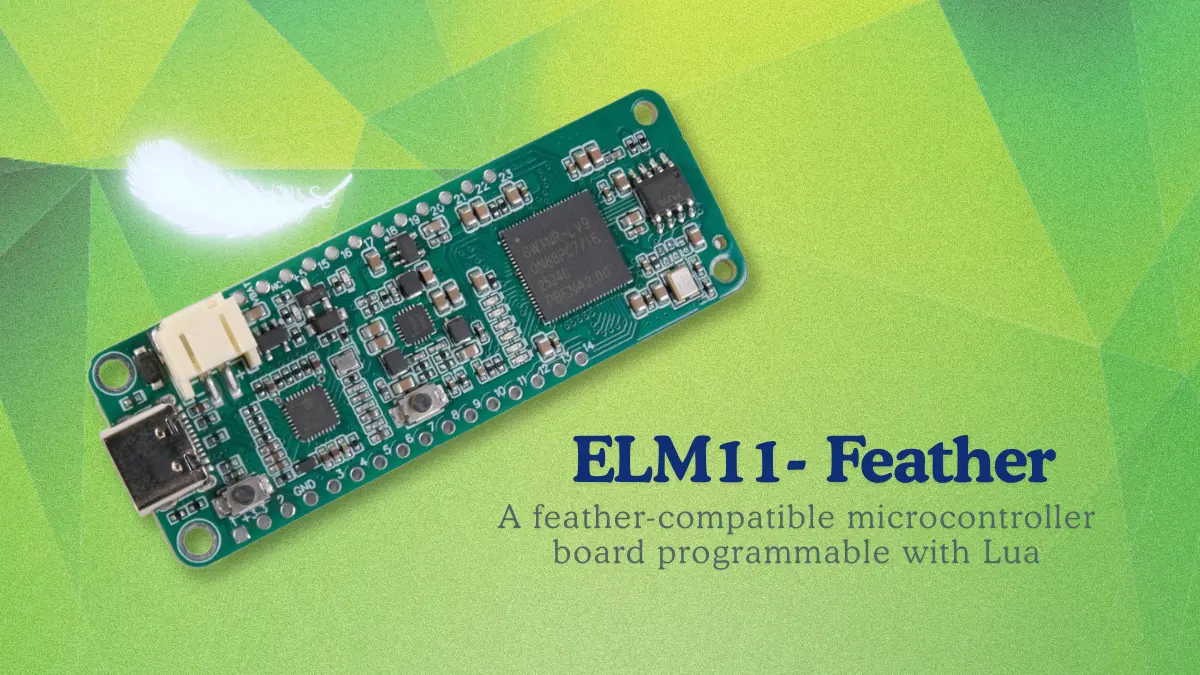
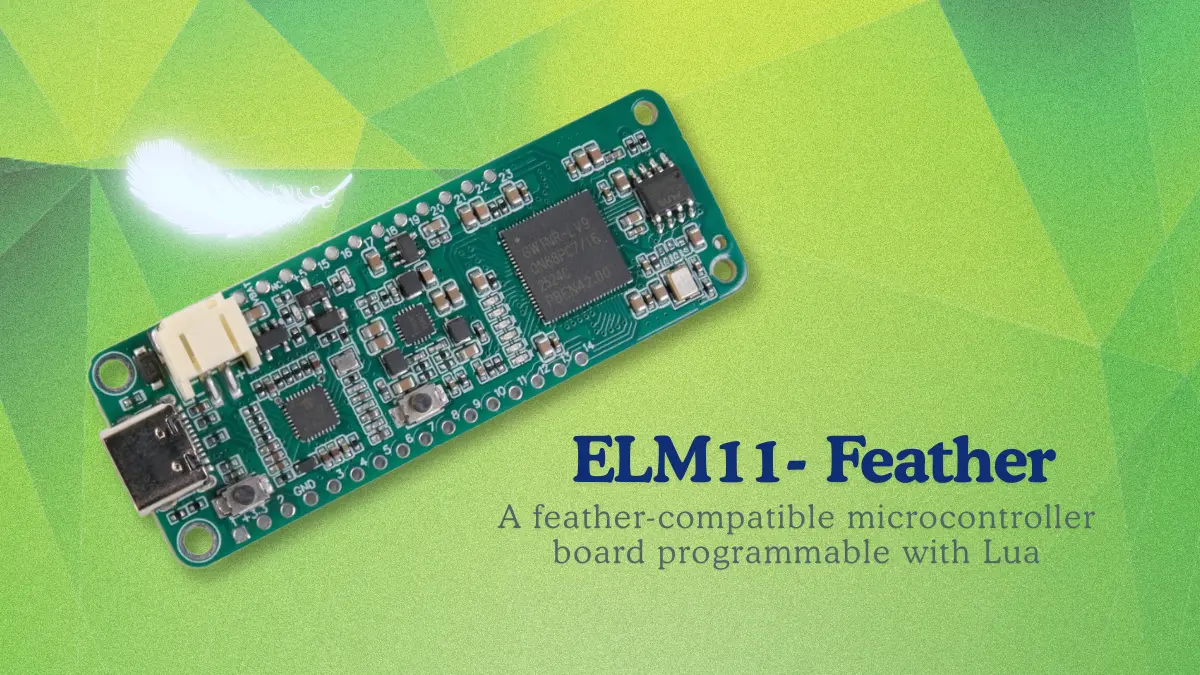
Enter BrisbaneSilicon, a boutique semiconductor firm based in Brisbane, Australia, which is looking to bridge this divide. Their latest innovation, the ELM11-Feather, is not just another development board; it is a fundamental shift in how we approach microcontroller architecture. By leveraging the flexibility of an FPGA (Field Programmable Gate Array) to run the Lua programming language natively, BrisbaneSilicon is offering developers a "full-stack" approach to hardware design that maintains the ease of a REPL-driven workflow.
The Core Concept: Redefining the Microcontroller
Most modern microcontroller boards rely on fixed architectures—chips with predetermined peripherals, memory constraints, and instruction sets. If you need a specialized hardware feature that isn’t hardwired into your MCU, you are often out of luck or forced into complex workarounds.
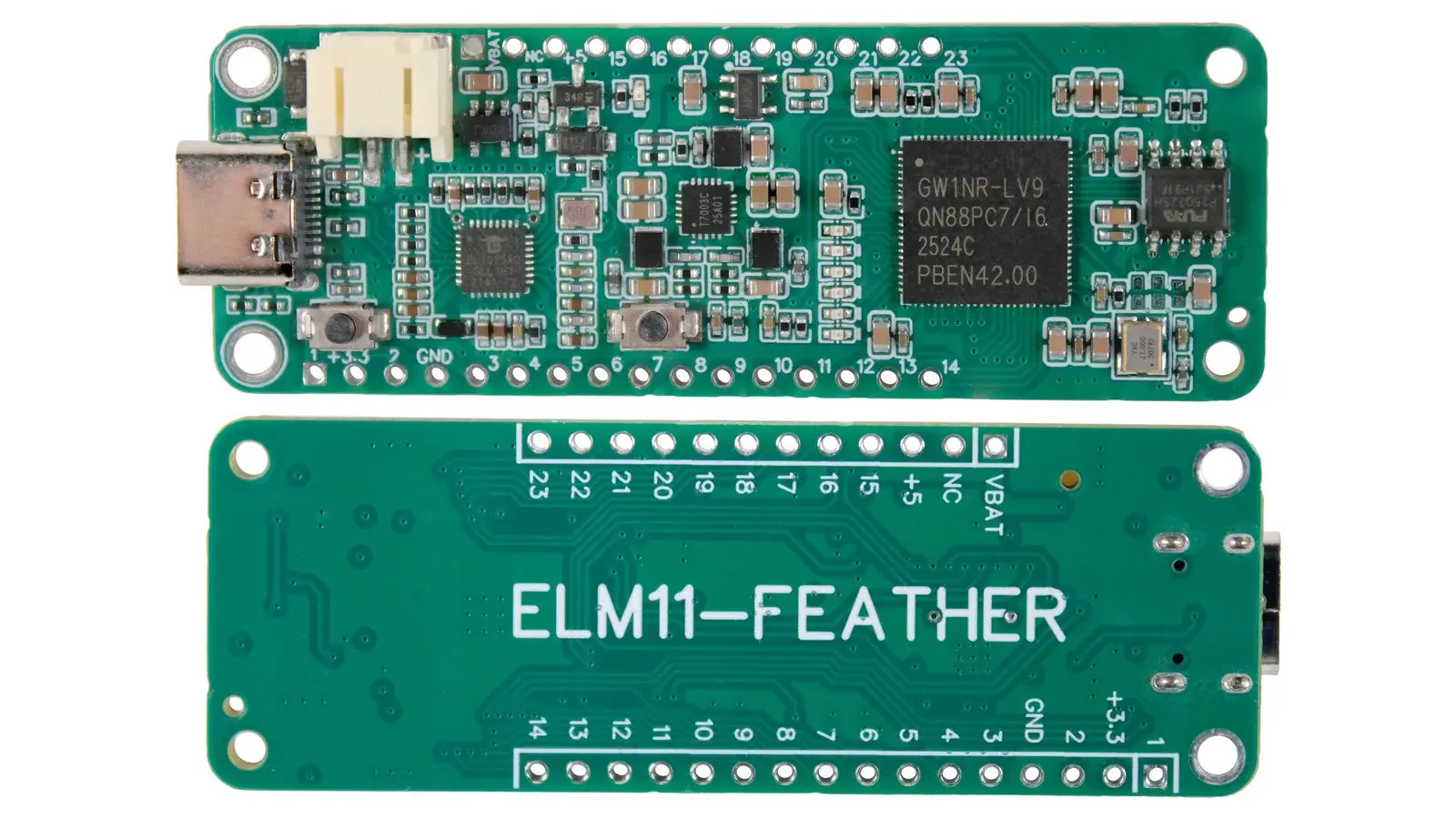
The ELM11-Feather changes this by abandoning the traditional microcontroller entirely. At its heart lies a GOWIN FPGA, configured to run a dual-core setup that executes Lua natively. This is the "clever bit": because the hardware is defined by the FPGA configuration rather than silicon gates, the user is not locked into the vendor’s decisions. BrisbaneSilicon is effectively exposing the entire hardware stack to the user, allowing for a level of customization previously reserved for engineers with deep expertise in HDL (Hardware Description Languages).
Key Specifications at a Glance
- Core Architecture: GOWIN FPGA with a dual-core Lua REPL.
- Memory: 1 MB of RAM.
- I/O Flexibility: 23 user-configurable pins (GPIO, PWM, UART, SPI, I²C).
- Form Factor: Standard Feather-compatible (22.86 x 64.65 x 4.85 mm).
- Weight: 5.2 grams.
- Power Management: Integrated 500 mA LiPoly charger with status LED.
- Additional Features: Hardware watchdog, 5 user-programmable LEDs.
- Price: $39 USD.
Chronology: From Concept to Crowd Supply
The journey of the ELM11-Feather is rooted in the success of its predecessor, the original ELM11. BrisbaneSilicon recognized that while the first iteration proved the technical viability of native Lua on an FPGA, the developer community required a more standardized interface to truly integrate these boards into professional and hobbyist projects.
- Phase 1 (The ELM11 Prototype): BrisbaneSilicon developed the initial ELM11 to test the feasibility of a Lua-native FPGA soft-core. The success of this internal project proved that an interpreted language could perform reliably on FPGA fabric without the massive overhead typically associated with soft-processors.
- Phase 2 (The Feather Standard): Recognizing the massive ecosystem of "FeatherWing" add-on boards developed by Adafruit and the broader community, the company decided to transition the ELM11 into the Feather form factor. This move was strategic, ensuring immediate compatibility with hundreds of existing sensors, displays, and communication modules.
- Phase 3 (The Crowd Supply Launch): As of this week, the ELM11-Feather has moved into the public eye via its crowdfunding campaign on Crowd Supply. Unlike many campaigns that start with only a concept, BrisbaneSilicon has already manufactured and tested a small batch of five pre-production units, providing a tangible layer of confidence to early backers.
The "Full-Stack" Philosophy
Perhaps the most significant value proposition of the ELM11-Feather is what the designers call "Full-Stack Programmability." In traditional embedded development, there is a distinct wall between the software application, the driver layer, and the hardware logic.
With the ELM11-Feather, this wall is dismantled. BrisbaneSilicon envisions a three-tier development ecosystem:
- The Application Layer: Programmed in Lua. This is where the user writes their high-level logic, utilizing the REPL for rapid, no-compile testing.
- The Driver Layer: Programmed in C. This layer bridges the gap between the application and the hardware, allowing for optimized routines that can be called directly by Lua.
- The Hardware Layer: Defined by VHDL or SystemVerilog. This allows the user to implement custom hardware peripherals—such as specialized motor controllers or high-speed data acquisition modules—directly into the FPGA fabric.
The Role of Arvore IDE
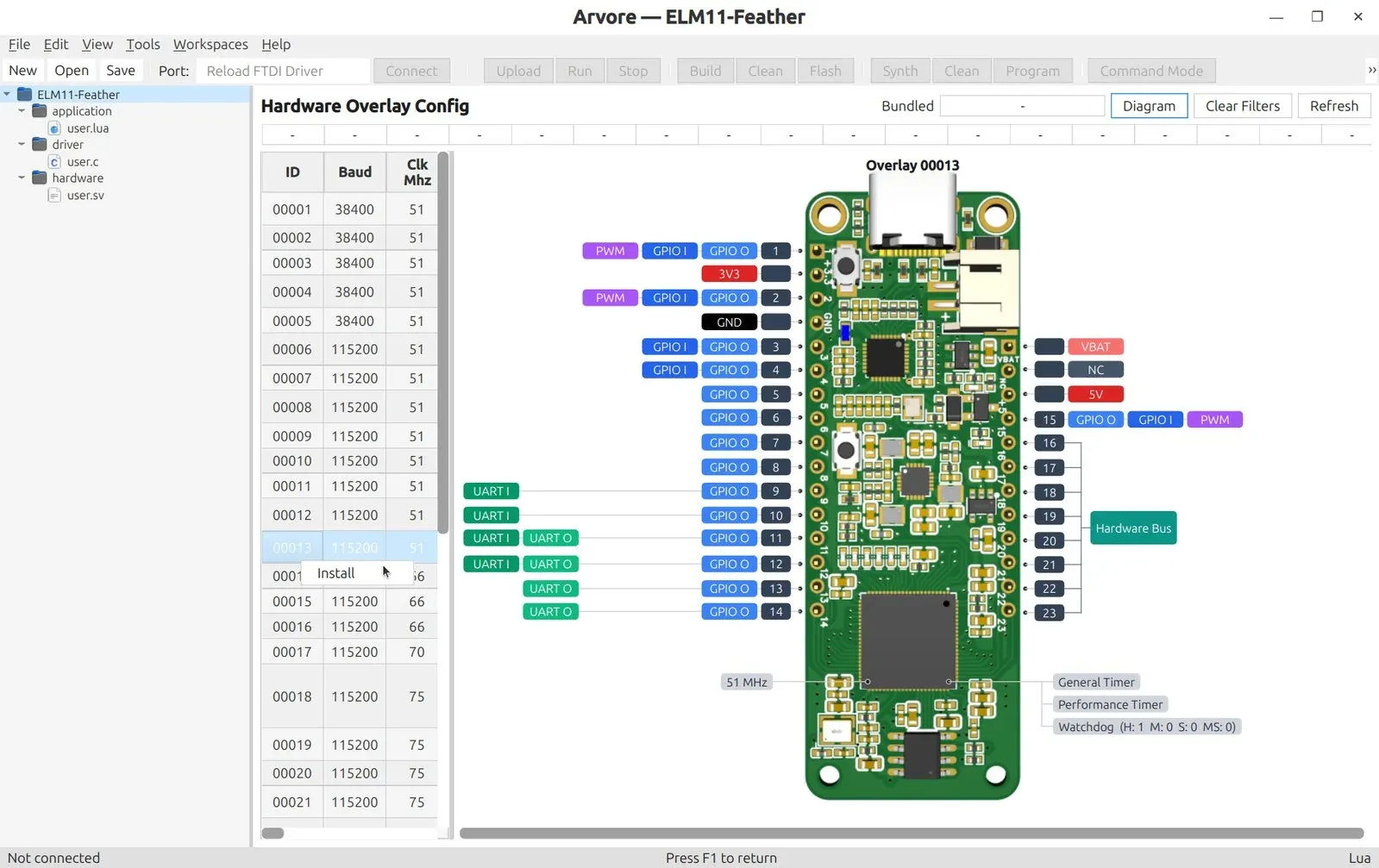
To manage this complexity, BrisbaneSilicon has introduced Arvore, a proprietary IDE designed to unify these three layers. Arvore streamlines the workflow, allowing developers to create projects, upload firmware, and—most importantly—extend the Lua API from a single interface.

For the user, this means that a custom hardware module designed in VHDL can be exposed to the Lua environment as a simple function call. For example, a complex custom quadrature encoder logic can be abstracted into a single command like quadrature_encoder_speed(). The IDE handles the underlying plumbing, making the power of FPGAs accessible to those who might otherwise be intimidated by the toolchains associated with FPGA development.
Implications for the Embedded Industry
The arrival of the ELM11-Feather signals a potential shift in how we think about "general purpose" boards.
1. The Death of Fixed I/O
On a standard microcontroller, a pin is often limited by its hardware mapping. If you run out of PWM pins, you are forced to switch boards or use bit-banging, which wastes CPU cycles. Because the ELM11-Feather uses an FPGA, any of the 23 I/O pins can be reconfigured dynamically to suit the needs of the application. This flexibility allows one board to serve roles that would typically require a diverse inventory of microcontrollers.
2. Democratizing FPGA Development
FPGAs have historically been the domain of aerospace, telecommunications, and high-end signal processing. The learning curve—often requiring a degree in electrical engineering or computer architecture—has kept them out of reach for many makers. By wrapping this power in the familiar, high-level syntax of Lua and a streamlined IDE, BrisbaneSilicon is lowering the barrier to entry for custom silicon design.
3. Open Source and Longevity
BrisbaneSilicon has committed to releasing the hardware schematics and the firmware API under the MIT license once the campaign concludes. This is a crucial move for long-term viability. By fostering an open ecosystem, the company is encouraging the community to develop their own "Hardware Overlays," which could lead to a repository of pre-built FPGA modules for the community to share.
Addressing the Risks: A Measured Outlook
As with any hardware project on a crowdfunding platform, there are inherent risks. The semiconductor market is notoriously volatile; BrisbaneSilicon explicitly notes that the primary risks involve the availability of the GOWIN FPGA and the BL702 chips used on the board.
Potential backers should note that while the team has tested a small batch of boards, mass production is a different beast entirely. Supply chain bottlenecks, component lead times, and unforeseen manufacturing defects are common hurdles. Furthermore, the Arvore IDE is currently in beta. While promising, users should expect the usual "growing pains" associated with new software ecosystems, including potential bugs and documentation gaps.
However, the team’s transparency regarding the status of the project and their clear roadmap for open-sourcing the design files place the ELM11-Feather in a category of "serious" projects. It is not a rebranded white-label board, but a custom-engineered solution aimed at a specific technical niche.
Conclusion: Is the ELM11-Feather Right for You?
The ELM11-Feather is an intriguing proposition for three distinct groups:
- The Lua Enthusiast: If you love the simplicity and speed of the Lua REPL but are tired of the limitations of standard MCUs, this board offers the performance you need without abandoning your preferred language.
- The FPGA Curious: If you have always wanted to dip your toes into hardware description languages but were afraid of the steep learning curve, the Arvore IDE and the "Full-Stack" approach offer a soft landing.
- The Prototyping Engineer: If you are building a product that requires custom hardware logic but want to keep the application layer flexible and easily patchable, the ability to modify all three layers—hardware, driver, and application—from one IDE is a significant time-saver.
At $39, the board is competitively priced against other professional-grade development platforms. While it may not replace the $5 Arduino Nano for basic projects, it offers a level of capability and "future-proofing" that is hard to find in the current market.
As BrisbaneSilicon moves toward production, the success of the ELM11-Feather will likely depend on the community’s willingness to embrace the "Full-Stack" philosophy. If they can build a robust library of hardware overlays and maintain the momentum of their Arvore IDE, they may very well set a new standard for how we design the next generation of embedded devices. For those who value control, flexibility, and the elegance of Lua, the ELM11-Feather is a project worth watching closely.