
Beyond the RTL-SDR: The ESP32’s Undocumented Radio Potential
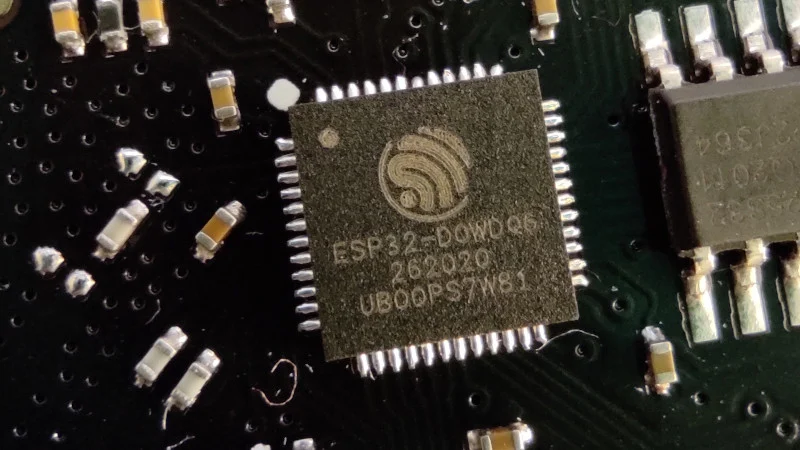
The world of Software-Defined Radio (SDR) has long been dominated by accessible, mass-produced hardware. Perhaps no device has been more influential in democratizing RF exploration than the RTL-SDR—a cheap, repurposed digital TV tuner that inadvertently unlocked the spectrum for hobbyists and researchers alike. For years, the community has wondered if other ubiquitous, radio-enabled microcontrollers might harbor similar "secret" capabilities. Recent findings confirm that the ESP32 family of microcontrollers hides a powerful, undocumented feature: the ability to stream raw I/Q (In-phase and Quadrature) data directly from the radio front-end.
This discovery, which has sent waves through the maker and RF engineering communities, was made independently by the researcher known as "Espargos" and a Reddit user operating under the handle "h0m3us3r." By bypassing the standard Wi-Fi modem stack, these users have demonstrated that the ESP32’s internal radio can be used as a raw data source for external SDR software, effectively transforming a humble IoT chip into a specialized radio receiver.
Main Facts: Unlocking the RF Front-End
At its core, the ESP32 is designed as a low-power, high-performance system-on-a-chip (SoC) for Wi-Fi and Bluetooth connectivity. However, like many modern RF SoCs, the underlying silicon includes a sophisticated radio front-end capable of digitizing incoming signals before they are processed by the Wi-Fi modem.
The "undocumented mode" identified by researchers involves tapping into the I/Q data stream at a stage prior to the modem’s demodulation and packet-handling processes. By reconfiguring the internal registers of the radio peripheral, users can force the chip to output raw I/Q samples over high-speed interfaces like USB or UART.
Key Technical Constraints:
- Hardware Compatibility: This feature is present in ESP32 chips utilizing the earlier Tensilica-based architectures, including the popular ESP32-S3. Notably, low-power Bluetooth-only variants and the P4 series, which lack integrated radio front-ends, are excluded from this capability.
- Directionality: The feature is strictly limited to the receive (RX) path. There is currently no evidence that this mode can be used for arbitrary RF transmission (TX).
- Frequency Range: Depending on the specific microcontroller model, the system supports both the 2.4 GHz and 5 GHz bands, offering a significant, if narrow, window into the crowded ISM spectrum.
- Throughput: Initial reports from h0m3us3r indicate streaming capabilities at up to 80 MS/s (megasamples per second) on an ESP32-S3, which is a remarkable throughput for a device of this class.
Chronology: The Emergence of the Discovery
The revelation did not occur in a vacuum, but rather as the result of a convergence of reverse-engineering efforts within the open-source hardware community.
Early 2024: The Preliminary Probing
Throughout the early months of the year, several developers working on deep-dive ESP32 driver projects noted anomalies in the documentation regarding the radio peripheral’s DMA (Direct Memory Access) capabilities. While the official documentation focused on Wi-Fi packet processing, the silicon register maps suggested the presence of "test modes" that were never fully deprecated by the manufacturer.
Mid-2024: Independent Validation
In a classic case of parallel discovery, two distinct entities began documenting their findings. The researcher "Espargos" published a detailed walkthrough on their website, espsdr, outlining the methodology for intercepting the raw data stream. Simultaneously, a user on the r/esp32 subreddit, h0m3us3r, posted a technical breakdown of their success in achieving 80 MS/s raw streaming on the S3 variant. These posts served as the catalyst, turning a niche register-hacking curiosity into a viable project for the broader SDR community.
Present Day: Community Integration
Since the publication of these findings, the community has begun developing "glue" software—scripts designed to ingest these raw ESP32 packets and format them for consumption by industry-standard SDR software, such as GNU Radio or SDR#. While still in the "alpha" stages of development, the tools are rapidly evolving to make this hidden feature more accessible to non-specialists.
Supporting Data: Understanding the I/Q Stream
To understand why this is significant, one must understand what I/Q data represents. In traditional radio, we think of signals in terms of frequency and amplitude. In SDR, we represent these signals as complex numbers consisting of an "In-phase" (I) component and a "Quadrature" (Q) component.
The ESP32’s radio front-end performs analog-to-digital conversion (ADC) to turn incoming 2.4 GHz signals into these I/Q pairs. Normally, the chip’s firmware immediately feeds these into the Wi-Fi MAC layer to look for headers and frames. By accessing the "undocumented mode," researchers have essentially "short-circuited" this process, redirecting the raw data to the chip’s output buffer before the Wi-Fi logic can interfere or discard non-Wi-Fi data.
The data rates observed—approaching 80 MS/s—are substantial. While an RTL-SDR typically operates with a bandwidth of around 2 MHz, the ESP32-S3’s ability to process at higher rates suggests that the internal ADC is significantly more capable than its intended use-case would imply. This allows for the monitoring of wider swaths of the 2.4 GHz spectrum than previously possible with low-cost, off-the-shelf microcontrollers.
Official Responses and Manufacturer Stance
As of this writing, there has been no formal, public statement from Espressif Systems, the manufacturer of the ESP32 line, regarding the utilization of these undocumented radio modes.
In the world of semiconductor engineering, "undocumented modes" are rarely the result of a malicious "backdoor." Rather, they are almost universally artifacts of the chip’s development and validation cycle. Engineers often include internal debug modes to verify the integrity of the radio front-end during the fabrication process. Once a chip goes to production, these modes are often left in the silicon—either because the cost of masking them out is prohibitive, or because they are considered harmless and effectively hidden by the complexity of the proprietary register maps.
However, the lack of official documentation poses a challenge for users. Without a datasheet for these registers, researchers are essentially flying blind, relying on trial-and-error to determine if certain settings cause the radio to overheat, degrade in performance, or potentially cause interference in unauthorized ways. The community is currently operating under the assumption that these features are "use at your own risk," acknowledging that Espressif provides no guarantees regarding the stability of the hardware when operating in these modes.
Implications for the Future of SDR
The implications of this discovery are profound for the DIY radio community, though they must be balanced with realistic expectations.
1. A New Educational Frontier
For students and educators, the ESP32-S3 now serves as a dual-purpose platform. It can act as both the controller for an IoT device and a tool for learning the fundamentals of RF signals. By providing a hardware platform that is orders of magnitude cheaper than dedicated SDR equipment, the discovery lowers the barrier to entry for teaching signal processing, modulation schemes, and spectral analysis.
2. Limitations vs. Possibilities
It is important to clarify that the ESP32 is not a "killer" for the RTL-SDR. The RTL-SDR benefits from years of community-refined drivers, extensive documentation, and a stable ecosystem of software. The ESP32, by contrast, is currently a "hacky" solution. Users may encounter synchronization issues, buffer overflows, and difficulty in calibrating the frequency offset, as the ESP32’s internal clock was never intended for high-precision SDR applications.
3. The "On-Chip" SDR Dream
The article mentions a question that has been on the minds of many: Can the ESP32 perform the SDR processing itself?
In theory, the ESP32-S3 has enough processing power (dual-core Xtensa LX7) to handle basic demodulation tasks, such as decoding OOK (On-Off Keying) signals used in garage door openers or simple IoT sensors. However, performing full-scale, real-time SDR processing—such as decoding complex digital signals—might strain the CPU’s resources. The community is currently debating whether a lightweight, firmware-based SDR stack could run natively on the chip, potentially turning it into a standalone "receiver-in-a-box."
4. Regulatory and Ethical Considerations
As with any RF-related exploration, the community must remain mindful of regulatory boundaries. The ESP32 is designed to operate within the ISM (Industrial, Scientific, and Medical) bands. While receiving signals is generally permitted in most jurisdictions, the "undocumented mode" opens up the possibility of observing sensitive data traffic on Wi-Fi and Bluetooth networks. Researchers and hobbyists are urged to use these capabilities ethically, focusing on signal analysis and educational exploration rather than the interception of private communications.
Conclusion
The discovery of raw I/Q streaming on the ESP32 is a testament to the curiosity of the open-source hardware community. What began as a question about chip architecture has evolved into a new avenue for RF research. While the RTL-SDR remains the gold standard for budget SDR, the ESP32 offers a compelling, integrated alternative that challenges our understanding of what a "simple" microcontroller is capable of.
As developers continue to refine the software bridges between the ESP32 and SDR applications, we can expect to see a surge in innovative projects—ranging from home-grown spectrum analyzers to sophisticated sensor-network monitors. The ESP32 has always been a powerful tool for connecting the physical world to the digital; now, it appears it is also a powerful tool for connecting us to the invisible world of radio waves that surrounds us. Whether or not this becomes a supported feature, the "secret" is out, and the community is already busy putting it to work.







