Beyond the Script: How an AI Virtual Speaker Survived Internet Drops, Stage Glitches, and Made History in Blumenau
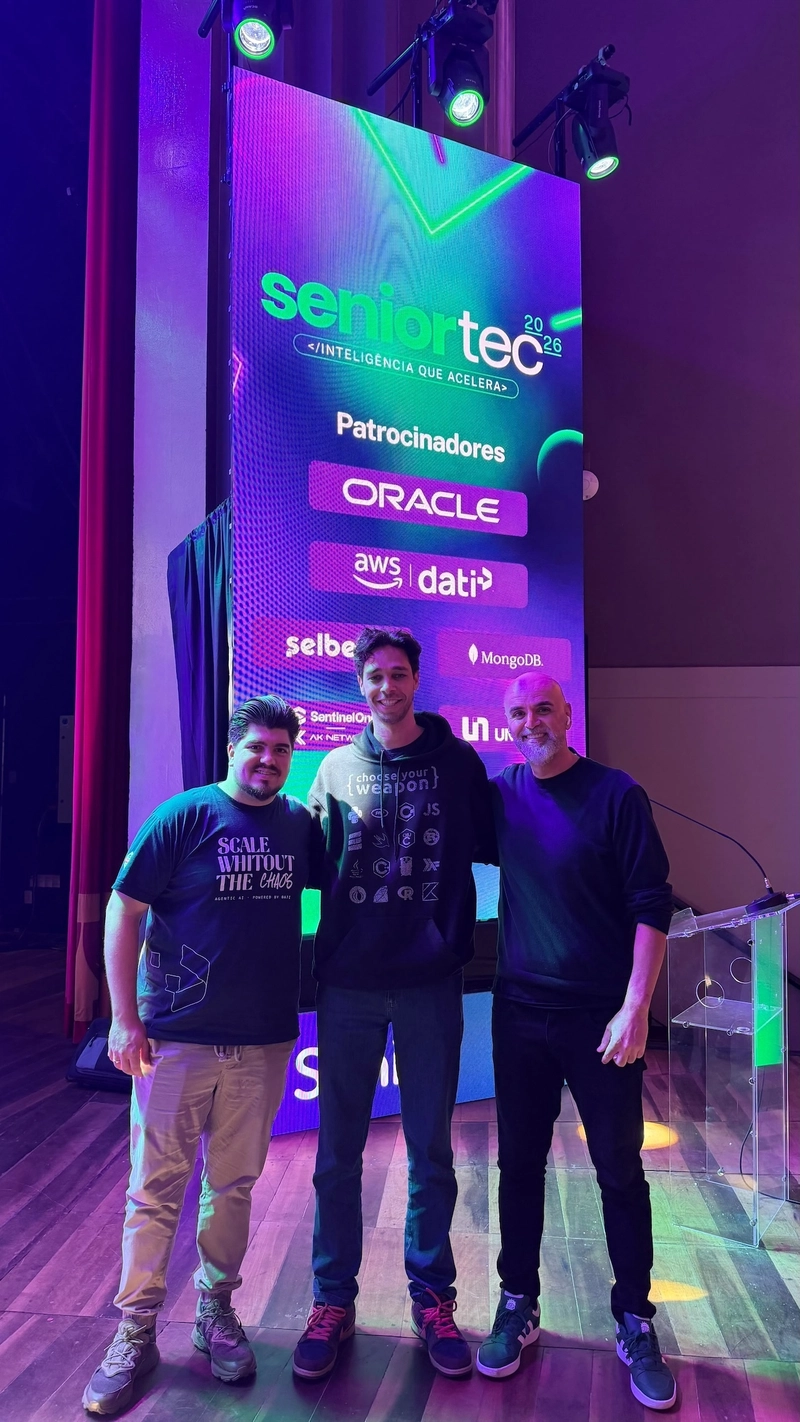
BLUMENAU, SANTA CATARINA — On the morning of September 23, 2026, the historic Teatro Carlos Gomes in Blumenau was charged with an electric sense of anticipation. By 11:15 a.m., the venue’s grand auditorium was packed to capacity with over 900 live attendees, while thousands more tuned in via a simultaneous YouTube livestream. The focal point of the buzz was not a traditional keynote speaker, but a groundbreaking experiment in generative technology: a virtual speaker powered entirely by artificial intelligence, slated to take center stage and deliver a presentation before handing the microphone over to her human creator.
However, behind the polished facade of technological triumph lay a harrowing tale of last-minute internet outages, technical failures, backstage panic, and the ultimate realization that no matter how advanced machine learning becomes, human resilience remains the true safety net of modern innovation.
Main Facts: The Anatomy of a High-Stakes AI Debut
The deployment of the AI virtual speaker at the SeniorTec event—hosted in partnership with technology firm Senior and engineered by DatiLabs, the AI and modernization division of Dati—represented a major milestone in interactive presentation formats.
- The Core Innovation: A hyper-realistic AI avatar capable of self-introduction, dynamic content delivery, and handling live Q&A sessions.
- The Stakes: Over 900 live audience members, an online broadcasting audience numbering in the thousands, and two months of intensive engineering by a dedicated technical team.
- The Crisis Points: A complete internet blackout twenty minutes before showtime, followed by an abrupt system crash during the live Q&A segment.
- The Resolution: A meticulously designed fail-safe architecture combining edge boundaries, manual human overrides, and quick-witted stage presence to salvage the presentation and successfully convey the core technological message.
Chronology of Events: From Night-Before Confidence to Stage-Side Chaos
To understand how the presentation ultimately crossed the finish line as a success, one must retrace the timeline of the event, where Murphy’s Law seemed to actively target the engineering team.

T-Minus 24 Hours: The Illusion of Perfection
The night before the grand event, the core technical team—consisting of the project’s lead developer, Juan, and colleague Palladino—stood on the stage of Teatro Carlos Gomes for final dry runs. Everything worked with clockwork precision. The virtual speaker executed a flawless six-minute presentation, seamlessly fielded test questions, and smoothly transitioned to announcing the subsequent human-led session detailing the engineering challenges behind her creation. The team retired for the evening with cautious optimism, though the lead developer’s night would be plagued by anxious nightmares of systemic failure.
T-Minus 20 Minutes: The Blackout
At approximately 10:55 a.m. on September 23, disaster struck. With mere minutes to spare before the virtual speaker’s scheduled entrance, the venue’s primary internet connection crashed completely. Panic set in. Two months of sleepless coding, rigorous model training, and architectural planning hung in the balance.
The creator rushed to the control room, where Juan was scrambling to establish a workaround. While switching to a 5G mobile network was viable for localized data transfer, it lacked the bandwidth required to maintain the high-definition YouTube livestream. Trusting his engineering colleagues to find a network alternative, the creator sprinted back to the backstage area to renegotiate entry logistics with event organizers. The revised plan mapped out a complex choreography: the master of ceremonies would introduce the virtual speaker, who would then be mediated by her creator for audience questions before transitioning into a standard human technical address.
The Five-Minute Reprieve and the First Hurdle
Just five minutes before curtain, a stage assistant delivered the sweet word of relief: the internet connection had spontaneously recovered.

As the master of ceremonies took the stage and introduced the AI avatar, the creator listened from the wings. Hearing the virtual speaker articulate her opening lines brought not a wave of triumphant joy, but a profound sense of exhausted relief. The machinery was holding together.
The presentation of the avatar proceeded smoothly until the transition into the live Q&A phase. As the human creator stepped onto the stage to field inquiries and posed the first question to the avatar, the system abruptly blinked out of existence. The virtual speaker vanished mid-event.
Facing a dead screen and a bewildered audience, the creator relied on improvisation, cracking a self-deprecating joke: “I guess someone forgot to pay the speaker’s fee!” The quip drew genuine laughter from the crowd, easing the palpable tension in the auditorium, even as the engineer’s heart pounded against his ribs.
Supporting Data and Technical Architecture: The Guardrails of Success
Rather than treating the technical glitches as an unmitigated disaster, the post-mortem analysis conducted by the DatiLabs team categorized the event as a resounding success. The objective was never absolute mechanical perfection; the objective was communication and the validation of strict structural boundaries.

During his technical presentation following the avatar’s collapse, the creator detailed the four foundational guardrails that kept the AI system stable up to the point of failure:
- Strict Knowledge Boundaries: The AI was hard-coded never to invent facts or speak outside a rigorously pre-approved script and slide deck.
- Restricted Context Windows: Due to architectural limitations designed to prevent runaway generations, the avatar had zero awareness of the broader presentation; it could only process the exact textual contents of the slide currently displayed on screen.
- Controlled Improvisation: Limited autonomy was granted solely for opening self-introductions and brief, context-aware transitional jokes, injecting natural human cadence without risking factual hallucination.
- Human-in-the-Loop Fail-Safes: Recognizing the inherent fragility of multi-component AI pipelines—where voice models, avatar rendering engines, and network stability intersect—the team implemented a literal "panic button" in the control room.
The Ultimate Fail-Safe: Human Replacement
The architecture acknowledged a fundamental truth: complex generative AI ecosystems can hallucinate, third-party avatar providers can suffer outages, and network stability can evaporate. In the worst-case scenario, the contingency plan dictated that Juan would hit the panic button, cutting the AI feed entirely, allowing the human creator to seamlessly step in and pick up the presentation right where the machine left off.
In a poetic reversal of modern techno-anxieties, the ultimate safety net of the AI revolution proved to be a human being taking the place of a failing machine.
Official Responses and Team Reflections
Reflecting on the psychological toll and ultimate triumph of the day, the project leaders emphasized that public speaking and technological deployment are fundamentally about message transfer rather than rigid theatrical perfection.

"Success does not mean that everything must go according to plan. Success is not about achieving perfection, but about achieving objectives. And our objective was achieved," noted Palladino during the team’s post-event evaluation.
Credit for the success was widely distributed across the collaborative ecosystem:
- DatiLabs: The specialized AI and modernization division responsible for architecting the fragile yet resilient bridge between human speakers and artificial intelligence.
- Senior: The enterprise technology partner that posed the initial challenge of deploying an AI speaker on the major stage of the SeniorTec conference.
- Dati Marketing Team: Praised for crafting visually striking, cohesive slides that allowed the audience to absorb information without suffering cognitive overload between reading text and listening to the speaker.
Implications: What Blumenau 2026 Teaches the Tech Industry
The events at Teatro Carlos Gomes serve as a microcosm for the current state of artificial intelligence integration in public spaces. As enterprises rush to adopt generative avatars, automated presenters, and real-time LLM-driven interfaces, several critical lessons emerge from the Blumenau experiment:
- Resilience Over Utopia: Systems must be built with the absolute expectation of failure. Network drops and API timeouts are not edge cases; they are statistical certainties in live environments.
- The Indispensability of the Human Element: The narrative of AI replacing human labor is frequently overblown. As demonstrated on September 23, the sophistication of modern AI relies entirely on human architecture, human monitoring, and human intervention when parameters collapse.
- Effective Communication Transcends Medium: Whether a presentation is delivered by a human orator, a synthetic avatar, or a mixture of both, the ultimate metric of success is whether the core idea successfully travels from the sender to the receiver’s mind.
As the development team at DatiLabs prepares to publish further deep-dive blog posts detailing the architectural origins of the project—which traces its roots back to July 2026—the technological community watches closely. The virtual speaker of Blumenau may have stumbled on stage, but in doing so, she paved the way for a more mature, resilient, and honestly bounded future for human-AI collaboration.