Bridging the Gap: Qualcomm Accelerates Linux Mainlining for Snapdragon X2 Series Laptops
In a significant move for the open-source community, Qualcomm has officially unveiled an early developer preview of Linux support for its Snapdragon X2 Series laptops. This strategic initiative marks a departure from traditional closed-ecosystem approaches, signaling a concerted effort to integrate high-performance ARM silicon into the mainline Linux kernel. By inviting kernel developers, distribution maintainers, and hardware enablement engineers to participate in early testing, Qualcomm is laying the groundwork for a future where Snapdragon-powered laptops are first-class citizens in the Linux ecosystem.
However, it is vital to manage expectations: this initiative is strictly for developers and technical enthusiasts. It is not currently intended for the average end user seeking a drop-in Linux distribution for their daily driver.
The Chronology of Open-Source Intent
The roots of this announcement can be traced back to the Snapdragon Summit of 2025. Since that time, Qualcomm has been quietly building the infrastructure necessary to transition from proprietary, out-of-tree patches—which historically plagued ARM-based laptop support—to a sustainable, upstream-first development model.
By prioritizing mainline integration, Qualcomm aims to eliminate the "maintenance debt" that often forces distribution maintainers to carry complex, fragile patch sets to keep hardware functioning. This shift indicates a maturing strategy, where the company recognizes that long-term success in the professional and enthusiast laptop market depends on seamless compatibility with the upstream Linux kernel.
Technical Architecture: Under the Hood
The current developer preview leverages a Debian 13 "Trixie" userspace, chosen for its stability and alignment with modern development standards. While the operating system layer is familiar to many, the underlying machinery is where the real innovation lies.
Bootstrapping and Core I/O
The system utilizes systemd-boot acting as the UEFI manager, providing a standardized boot process that aligns with modern Linux practices. Core Input/Output (I/O) is handled through a robust driver architecture that includes support for PCIe, USB, and the Qualcomm Universal Peripheral serial engine, which facilitates UART, I2C, and SPI connections. This level of hardware enablement is critical for ensuring that peripherals function predictably across various Linux distributions.
Graphics and Compute
One of the most impressive aspects of the current preview is the reliance on Mesa’s open-source drivers. By leaning on established projects, Qualcomm is ensuring that its hardware benefits from the collective wisdom of the Mesa community:
- Freedreno: Handles OpenGL workloads with increasing efficiency.
- Turnip: Provides the backbone for Vulkan 1.3, enabling modern graphical performance.
- Rusticl: A key component for OpenCL compute, allowing developers to harness the parallel processing power of the GPU for non-graphical tasks.
While these drivers are still in active development, the current state of the art allows for functional display output, hardware-accelerated browser rendering, and significant GPU compute capabilities.
AI Inference and the FastRPC Mechanism
Perhaps the most notable inclusion in this preview is the focus on the Hexagon NPU. Through the FastRPC driver, Qualcomm is providing a bridge for routing compute tasks from the CPU to the DSP. By pushing this mechanism upstream, Qualcomm is effectively opening the door for developers to experiment with local AI inference workloads on Linux. Coupled with ongoing improvements in power management and thermal regulation, this indicates that the Snapdragon X2 is being positioned as a viable platform for AI-heavy development workflows.
Navigating the Two Build Paths
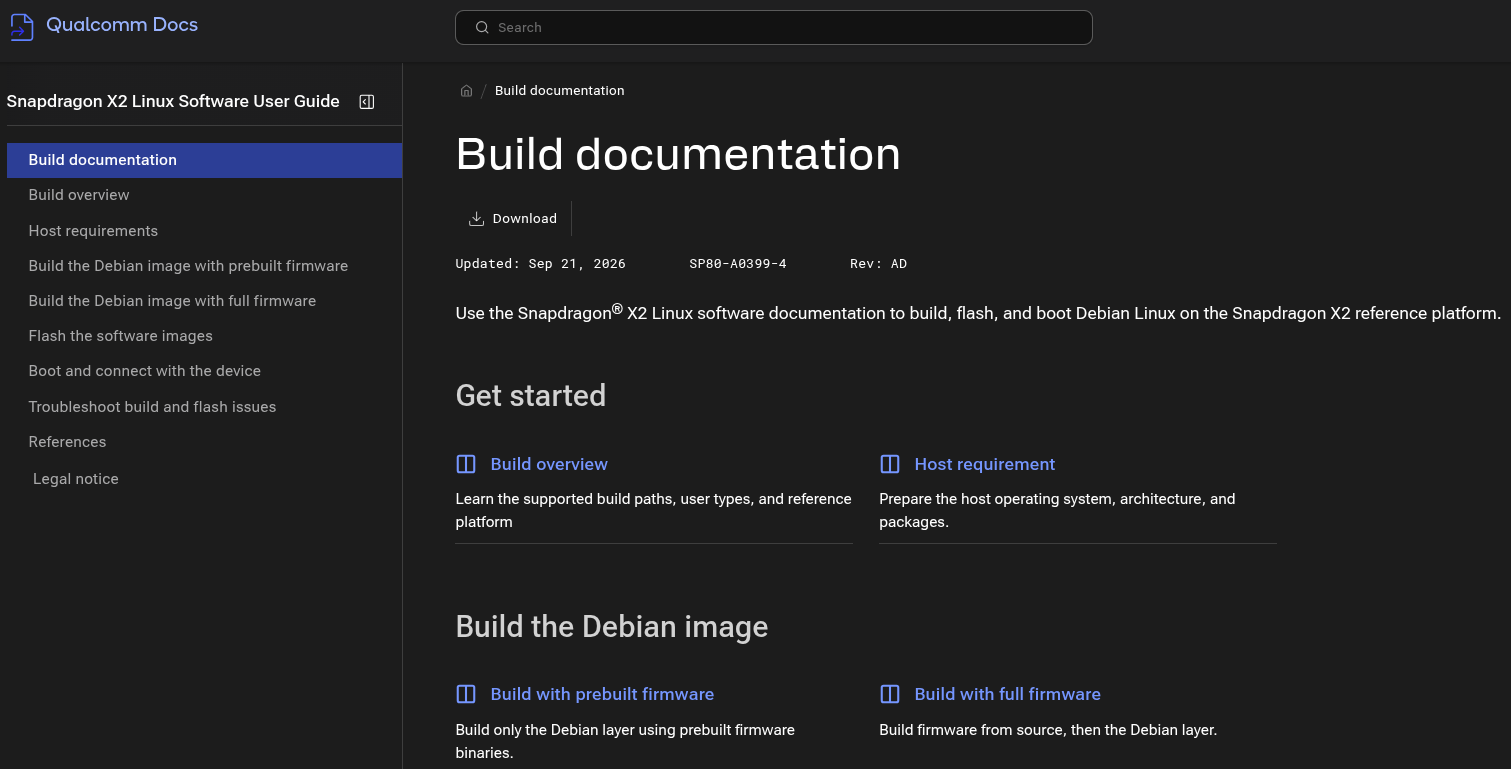
Qualcomm has structured its documentation to accommodate different levels of access and technical requirements, providing two distinct paths for developers:

- The Unregistered Path: This allows developers to construct the Debian OS layer using prebuilt firmware binaries. It is the quickest way to get a development environment up and running without requiring a formal Qualcomm developer account.
- The Full-Access Path: For those who require complete control, this path grants access to full firmware source code. This allows for deeper customization and building the entire stack from scratch, though it necessitates a registered Qualcomm developer account.
Infrastructure Requirements
The hardware requirements for building this environment are bifurcated based on the target component:
- Debian Layer: Requires an ARM64 machine running Ubuntu 24.04 LTS or a newer version, or Debian Trixie.
- Firmware Build: Requires an x86_64 host running Ubuntu 22.04 LTS or newer.
These requirements reflect the cross-platform reality of modern embedded systems development, where the build host often differs from the target architecture.
Implications for the Linux Ecosystem
The decision by a major silicon vendor to prioritize upstreaming represents a paradigm shift. Historically, ARM-based laptops were "islands" of hardware, difficult to support and prone to obsolescence once the manufacturer stopped providing custom kernels.
Reducing Technical Debt
Every driver that lands in the mainline kernel is a victory for the Linux community. It reduces the burden on distribution maintainers like those at Fedora, Arch, or Debian, who no longer need to maintain custom, out-of-tree forks of the kernel just to keep a laptop’s Wi-Fi or GPU functioning. As more components are mainlined, the barrier to entry for end users will naturally lower, eventually leading to a day where a standard Linux ISO will "just work" on a Snapdragon-powered laptop.
A Blueprint for Other Silicon Vendors
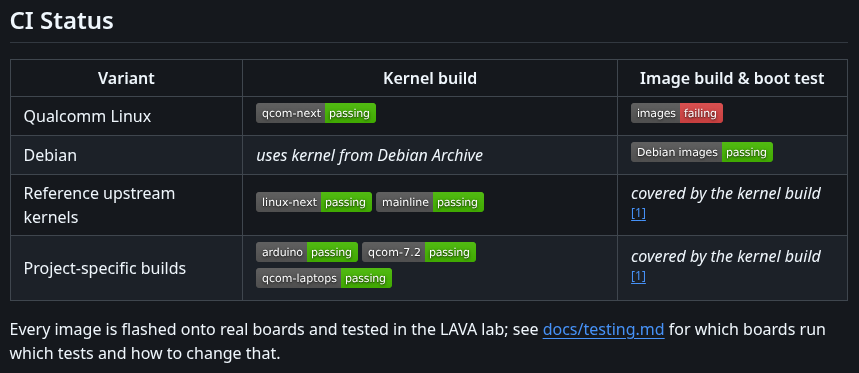
Qualcomm’s approach—characterized by a staged roadmap, a transparent documentation portal, and public-facing build repositories—should be viewed as a gold standard for other vendors. By actively soliciting feedback from the community and providing the necessary tools to build from source, Qualcomm is building a bridge of trust with the open-source community that has been missing in the ARM laptop space for years.
Industry Response and Future Outlook
At the Snapdragon Summit, early adopters have been given the opportunity to see these developments in action. The presence of functional Linux environments on the latest X2 hardware has generated significant buzz, not because it is perfect, but because it is possible.
For the professional developer, the ability to run a native Linux environment on a highly efficient, high-performance ARM chip is a compelling value proposition. As the drivers mature and thermal management becomes more refined, we can expect the Snapdragon X2 Series to become a favorite for Linux developers who prioritize battery life and high-performance I/O.
The Path Forward
The journey from an early developer preview to a fully polished, daily-driver experience is long, but the trajectory is clear. The focus for the next 12 to 18 months will likely be on:
- Refining Power Management: Ensuring that the platform meets the high battery-life standards expected of the Snapdragon brand under Linux.
- Expanding Peripheral Support: Broadening the scope of supported hardware, including audio subsystems, specialized sensors, and power-management features.
- Community Engagement: Converting the initial "early access" interest into a sustainable ecosystem of contributors who will help debug and optimize the platform.
Conclusion: Linux Wins
The announcement from Qualcomm is a testament to the persistent pressure from the open-source community for hardware transparency. By moving away from proprietary silos and embracing the mainline kernel, Qualcomm is not just helping its own hardware; it is helping the Linux ecosystem grow.
For those interested in contributing, the resources provided by Qualcomm are a gateway to shaping the future of ARM on Linux. As the drivers move through the upstreaming process and into the hands of kernel maintainers, the Snapdragon X2 Series stands to become a pivotal platform in the history of Linux hardware enablement.
While the "average user" should wait for these improvements to reach the main kernel branches and their preferred distributions, developers and enthusiasts are encouraged to dive into the documentation. In the world of open source, every commit matters—and in this case, it might just be the commit that finally brings high-performance ARM laptops into the Linux fold for good.