Bridging the Visibility Gap: How FlexiVan and Hoopo are Transforming Intermodal Logistics with Advanced IoT Intelligence
By [Industry Analyst / Technology Correspondent]
Edited by Erik Linask
Main Facts: Transforming the Unpowered Asset Landscape
In the high-stakes world of global supply chains and freight transportation, intermodal chassis serve as the vital mechanical connective tissue. These unpowered steel frames carry shipping containers seamlessly between maritime ports, bustling rail terminals, massive distribution centers, and final customer facilities. Yet, despite their critical role, they have historically existed in a state of operational obscurity. Unlike motorized transport, chassis lack their own power sources, and when dispersed across vast, congested yards and sprawling transport corridors, they frequently turn into operational "blind spots."
For decades, supply chain operators have wrestled with a fundamental Internet of Things (IoT) challenge: how to achieve total visibility over a massive population of mobile, unpowered assets operating within harsh, radio-frequency-constrained environments. A simple dot on a digital map is rarely enough. Fleet managers need to know whether a specific chassis is bare or carrying a heavy container, how long it has sat dormant in a yard, and whether its physical movement deviates from expected commercial routes.
Addressing this monumental challenge head-on, FlexiVan Leasing—a leading provider of national intermodal chassis pools—has embarked on a large-scale deployment to equip a significant share of its nationwide SmartChassis fleet with advanced tracking technology. By selecting Hoopo’s rugged hoopoSense Titan trackers and seamlessly integrating their high-frequency, location-based data feeds into FlexiVan’s proprietary AIM360 software environment, the companies are establishing a new benchmark for asset intelligence.
The core elements of this initiative include:
- Edge-Level Multi-Modal Sensing: Utilizing GNSS, Wi-Fi observation, Bluetooth Low Energy (BLE), and cellular communications to guarantee tracking continuity in stacked container yards and signal-deprived zones.
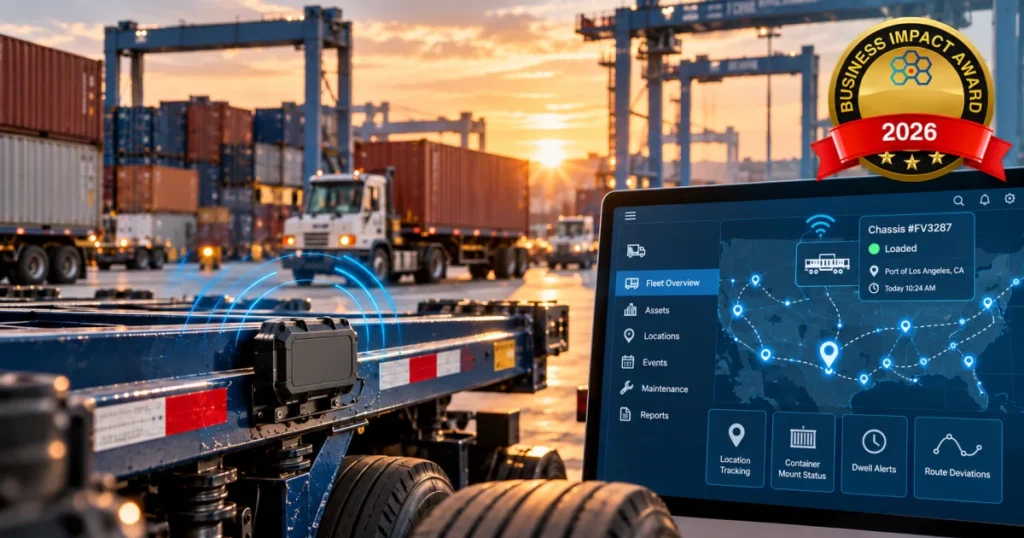
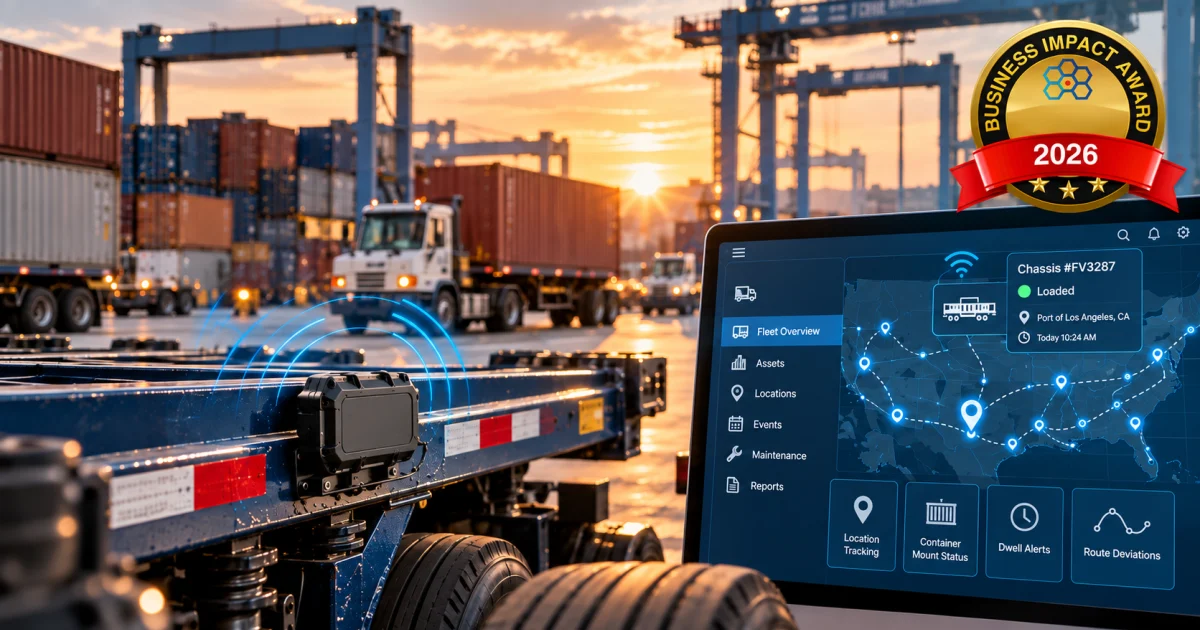
- Integrated Mount Detection: Deploying onboard radar and advanced algorithms to instantly determine whether a chassis is loaded with a container or rolling empty.
- Machine Learning Event Classification: Automatically categorizing complex real-world events, such as gate entries and exits, cross-border migrations, idle periods, and container mounting/unmounting.
- Enterprise-Wide Data Ingestion: Routing edge intelligence directly into FlexiVan’s AIM360 platform to power multiple operational departments, ranging from maintenance and billing to loss prevention and executive business intelligence.
This comprehensive approach earned Hoopo’s Titan solution prominent Business Impact Award recognition, highlighting how hardware durability, smart power management, and deep software integration can successfully eradicate supply chain friction.
Chronology: The Evolution of FlexiVan’s Smart Fleet Strategy
To fully understand the significance of the current Hoopo deployment, it is necessary to examine the systematic evolution of FlexiVan’s technology roadmap and its ongoing quest to modernize intermodal asset management.
Phase 1: Laying the Digital Foundation
Years prior to the Hoopo integration, FlexiVan recognized that traditional, manual tracking methods were insufficient to meet the accelerating demands of modern logistics. The company began constructing a centralized software infrastructure capable of processing high-volume telematics feeds. This foundation materialized as AIM360, a sophisticated, GPS-agnostic management platform engineered to handle billing, maintenance workflows, and customer-facing analytics.
Phase 2: Scaling the SmartChassis Fleet
As port congestion intensified and supply chain volatility became the norm, FlexiVan aggressively scaled its SmartChassis fleet. By embracing a multi-vendor strategy and partnering with established GPS and telematics providers—including BlackBerry Radar alongside Hoopo—the company built an expansive data estate. This platform eventually grew to encompass nearly 8,000 digitally geofenced intermodal facilities across North America, processing well over half a billion discrete chassis and shipment data events on an annual basis.
Phase 3: Solving the Unpowered Asset Conundrum
Despite these early successes, traditional GPS units faced persistent limitations when deployed on unpowered equipment. Batteries would deplete prematurely in remote yards, and heavy metal stacking in container depots frequently blocked standard satellite signals. Recognizing these technical barriers, FlexiVan initiated trials for next-generation edge devices capable of surviving harsh outdoor conditions while offering sophisticated sensor capabilities beyond simple latitude and longitude coordinates.
Phase 4: Full Deployment of the hoopoSense Titan
The partnership reached a major milestone when FlexiVan selected the hoopoSense Titan for nationwide integration into its AIM360 environment. Engineered specifically for unpowered assets like chassis and trailers, the Titan introduced a breakthrough combination of multi-modal positioning and radar-based mount detection. Today, the deployment spans both direct-to-customer arrangements and extensive pool-based operations, embedding real-time intelligence directly into the daily routines of FlexiVan’s technical, commercial, and operational teams.
Supporting Data: Engineering Excellence and Enterprise Scale
The success of the FlexiVan and Hoopo deployment rests on a foundation of robust hardware engineering, intelligent software algorithms, and massive data processing capabilities.
Hardware Specifications and Sensor Intelligence
The hoopoSense Titan is purpose-built to endure the grueling physical and environmental conditions of intermodal transport. Key technical parameters include:
- Rugged Durability: The device carries an IP67 rating, ensuring complete protection against dust ingress and heavy water immersion, a vital requirement for equipment frequently exposed to maritime salt spray, heavy rain, and unpaved terminal yards.
- Multi-Modal Positioning: By combining GNSS (Global Navigation Satellite System), Wi-Fi observation, and Bluetooth Low Energy (BLE), the device circumvents the traditional urban and depot canyon limitations of GPS-only trackers. When satellite visibility is blocked by stacked shipping containers, the unit can triangulate its position using nearby Wi-Fi signatures or local beacons.
- Extended Battery Longevity: Power management is one of the most critical hurdles in unpowered asset tracking. The Titan features an optimized battery architecture that delivers up to 10 years of operational life, drastically minimizing the maintenance and replacement overhead that has historically doomed large-scale IoT rollouts.
- Integrated Radar Mount Detection: Unlike basic vibration or tilt sensors, the Titan incorporates an advanced radar sensor to accurately determine container mount status. Combined with continuous breadcrumb historical logging, this feature achieves greater than 99 percent accuracy for location and event detection.
Software Architecture and Scale Metrics
Hardware alone cannot resolve supply chain inefficiencies; it requires a receptive software ecosystem to interpret and act upon incoming telemetry. FlexiVan’s operational ecosystem demonstrates remarkable scale:
- Fleet Size: The company’s SmartChassis fleet has officially surpassed 75,000 units.
- Geofenced Infrastructure: The platform actively monitors nearly 8,000 geofenced intermodal facilities nationwide, including port complexes, rail intermodal yards, and shipper warehouses.
- Data Volume: The AIM360 system ingests and processes more than 500 million chassis and shipment data events annually.
- Interoperability: Because AIM360 is GPS-agnostic, it easily ingests and normalizes data feeds from multiple hardware vendors, ensuring that Hoopo’s mount and movement intelligence flows smoothly into legacy operational workflows rather than creating isolated data silos.
Official Responses: Perspectives on Industry Impact
Industry leaders involved in the partnership emphasize that the true value of this technology lies in enabling proactive operational decision-making rather than passive data collection.
Don Alfarone, Vice President of Technical Services at FlexiVan, underscored the strategic philosophy driving the initiative:
"Our goal is not simply to capture location, but to enable true operational intelligence. By deploying advanced edge-sensing technology and integrating it seamlessly into AIM360, we are empowering our teams to optimize routing, swiftly identify stalled or idle assets, and proactively schedule field maintenance long before minor issues transform into costly operational failures."
Hoopo’s leadership similarly highlighted how the hoopoSense Titan bridges the gap between physical logistics constraints and digital enterprise software. By designing a device that addresses the unique power, signal, and sensing limitations of unpowered chassis, Hoopo has provided fleet operators with an industrial-grade tool capable of converting raw movement into actionable business value. Industry analysts observing the collaboration have echoed these sentiments, noting that winning a Business Impact Award validates the practical, bottom-line advantages of treating sensing, integration, and workflow design as a single, unified system.
Implications: The Future of Intermodal Logistics and IoT
The successful deployment of the hoopoSense Titan across FlexiVan’s massive chassis fleet carries profound implications for the broader transportation, logistics, and supply chain sectors.
1. Eradicating Operational Blind Spots
For decades, container logistics has suffered from an invisible friction—chassis lost in massive pools, disputes over dwell times, and uncertainties regarding equipment availability. By making unpowered assets fully legible to both human operators and automated enterprise systems, this deployment sets a new standard for asset transparency. Stakeholders can now verify equipment status instantly, eliminating guesswork at port gates and railheads.
2. Shifting from Reactive to Proactive Maintenance
Traditionally, chassis maintenance was predominantly reactive. A technician would only inspect equipment when a driver reported a failure at a gate or during an annual inspection. With continuous telemetry, automated anomaly detection, and precise usage metrics streaming into AIM360, fleet managers can predict mechanical wear, schedule targeted preventive maintenance, and significantly reduce roadside breakdowns.
3. Optimizing Equipment Turns and Asset Utilization
In intermodal freight, velocity is everything. Assets that sit idle cost money, while faster turns drive profitability. By utilizing machine learning rules engines to flag abnormal dwell periods, route deviations, and utilization bottlenecks, companies can dynamically reallocate chassis to high-demand corridors. This optimization directly mitigates port congestion and improves overall supply chain resilience.
4. Blueprint for Enterprise IoT Success
Finally, the FlexiVan-Hoopo collaboration serves as a masterclass in modern IoT architecture. Many early industrial IoT projects failed because they treated sensors as standalone gadgets rather than components of a broader enterprise workflow. By ensuring hardware durability, multi-modal positioning redundancy, and open API interoperability with platforms like AIM360, this deployment proves that IoT creates maximum value when sensing, data integration, and business logic operate as one cohesive system.
As global supply chains continue to face complex logistical hurdles, innovations like the hoopoSense Titan demonstrate that even the most traditional, unpowered assets can be successfully integrated into the digital future, paving the way for a smarter, faster, and more transparent freight ecosystem.