
Collabora Online 26.04: A Decade of Open Source Sovereignty Meets the AI Era
For the past ten years, Collabora Productivity has stood as a bulwark against the creeping monopolization of the digital workspace. While giants like Microsoft and Google have spent the last decade tightening their grip on enterprise data through proprietary cloud ecosystems, Collabora has charted a different course. By championing a self-hostable, open-source office suite, they have proven that organizations do not need to sacrifice control over their infrastructure or intellectual property to enjoy the benefits of modern collaborative software.
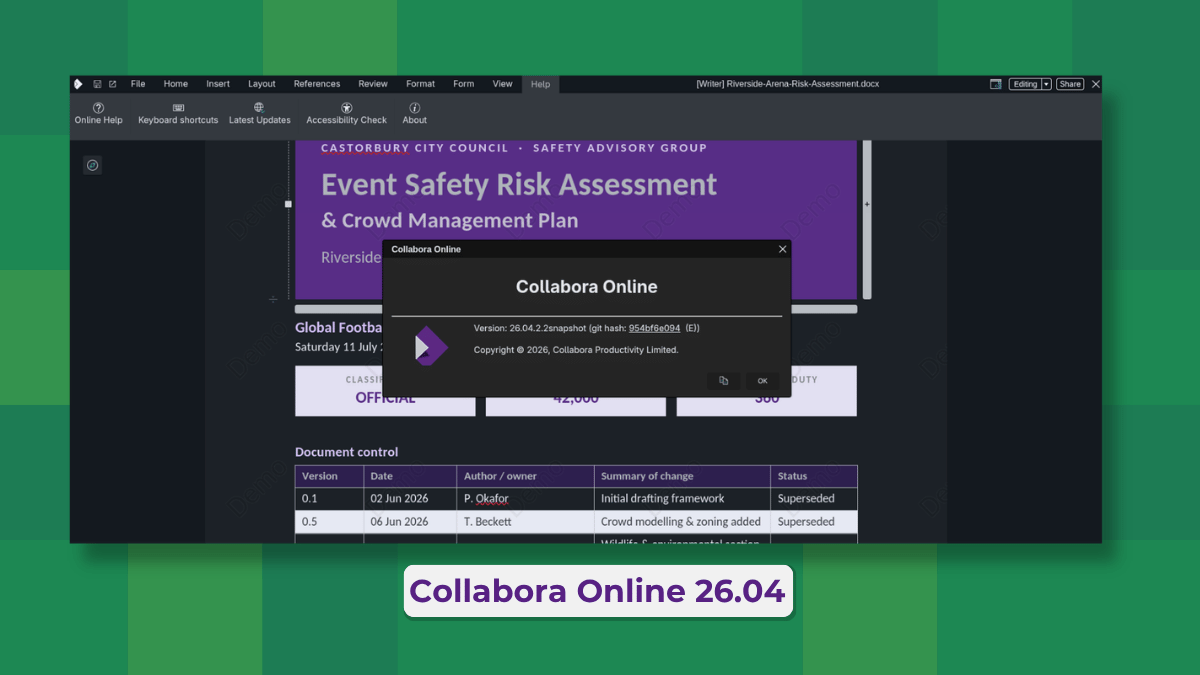
With the launch of Collabora Online 26.04, the company is marking a significant milestone in its history. This release is not merely a feature update; it is a declaration that the open-source community is ready to embrace the future of AI-driven productivity without the "vendor lock-in" tax typically associated with Big Tech alternatives.
The Evolution of an Open Source Powerhouse: A Chronology
To understand the gravity of the 26.04 release, one must look at the trajectory of Collabora. Founded by a team of veteran open-source engineers, the company has spent years refining the underlying engine of Collabora Online, which is built upon the robust foundations of LibreOffice.
- 2016–2019: The Foundation Phase. During its early years, Collabora focused on translating the deep functionality of LibreOffice into a web-based environment. The goal was parity: could a web browser truly handle the complex formatting and data processing required by enterprise users?
- 2020–2023: The Remote Work Surge. As the global pandemic forced a paradigm shift toward remote collaboration, Collabora pivoted to emphasize real-time co-authoring, security, and integration with platforms like Nextcloud and ownCloud.
- 2024–2025: Maturity and Modularization. The introduction of the CODE (Collabora Online Development Edition) release cycle allowed the community to participate in "stress-testing" new features before they reached enterprise-grade stability. This created a virtuous cycle of rapid innovation followed by rigorous, SLA-backed deployment.
- 2026: The AI Integration Milestone. The release of 26.04 represents the culmination of this decade-long journey. It integrates high-level AI capabilities while maintaining the strict privacy boundaries that define the Collabora ethos.
Deep Dive: What’s New in 26.04
The 26.04 release brings a suite of enhancements across Writer, Calc, and Impress that aim to reduce friction in the document creation process. Much of this functionality was previewed in the CODE 26.04 release earlier this summer, but the finalized enterprise version offers the polish and reliability expected by IT departments.
The AI Imperative
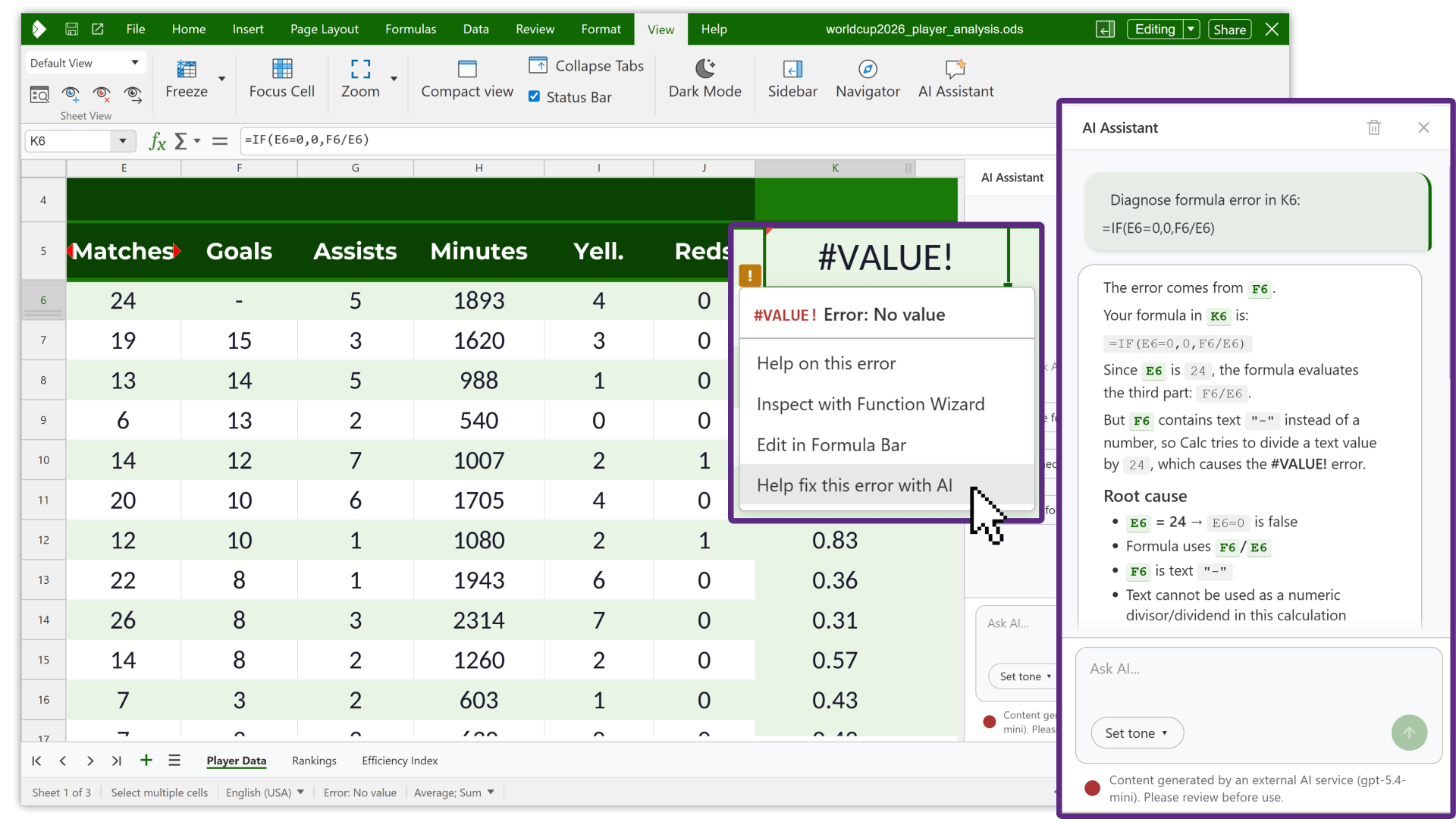
Perhaps the most notable addition is the implementation of AI assistance across the entire suite. Unlike cloud-native competitors that force users to route sensitive data through proprietary LLM pipelines, Collabora’s approach is decentralized by design.
The AI tools—which assist in drafting text in Writer, debugging complex spreadsheet logic in Calc, and summarizing presentations in Impress—do not run on a "mandatory" basis. Instead, organizations can choose their own path. Whether a team opts to connect a commercial API they already trust or prefers to deploy a self-hosted, air-gapped model, the power remains in the user’s hands. This "vendor-neutral" AI strategy ensures that document confidentiality is never compromised by third-party data-mining practices.

Calc: Precision and Collaboration
Spreadsheets are the backbone of modern enterprise decision-making, and the updates to Calc are designed for high-stakes data environments. The new "per-user sheet views" are a game-changer. Historically, shared spreadsheets were prone to "filter wars," where one user’s sorting preferences would disrupt another’s workflow. With 26.04, individuals can filter and rearrange data locally without affecting the shared state of the master file.
Furthermore, the introduction of pivot table calculated values and an expanded library of mathematical functions positions Calc as a legitimate competitor for power users who were previously tethered to Excel.
Impress: The "Follow-Me" Presentation
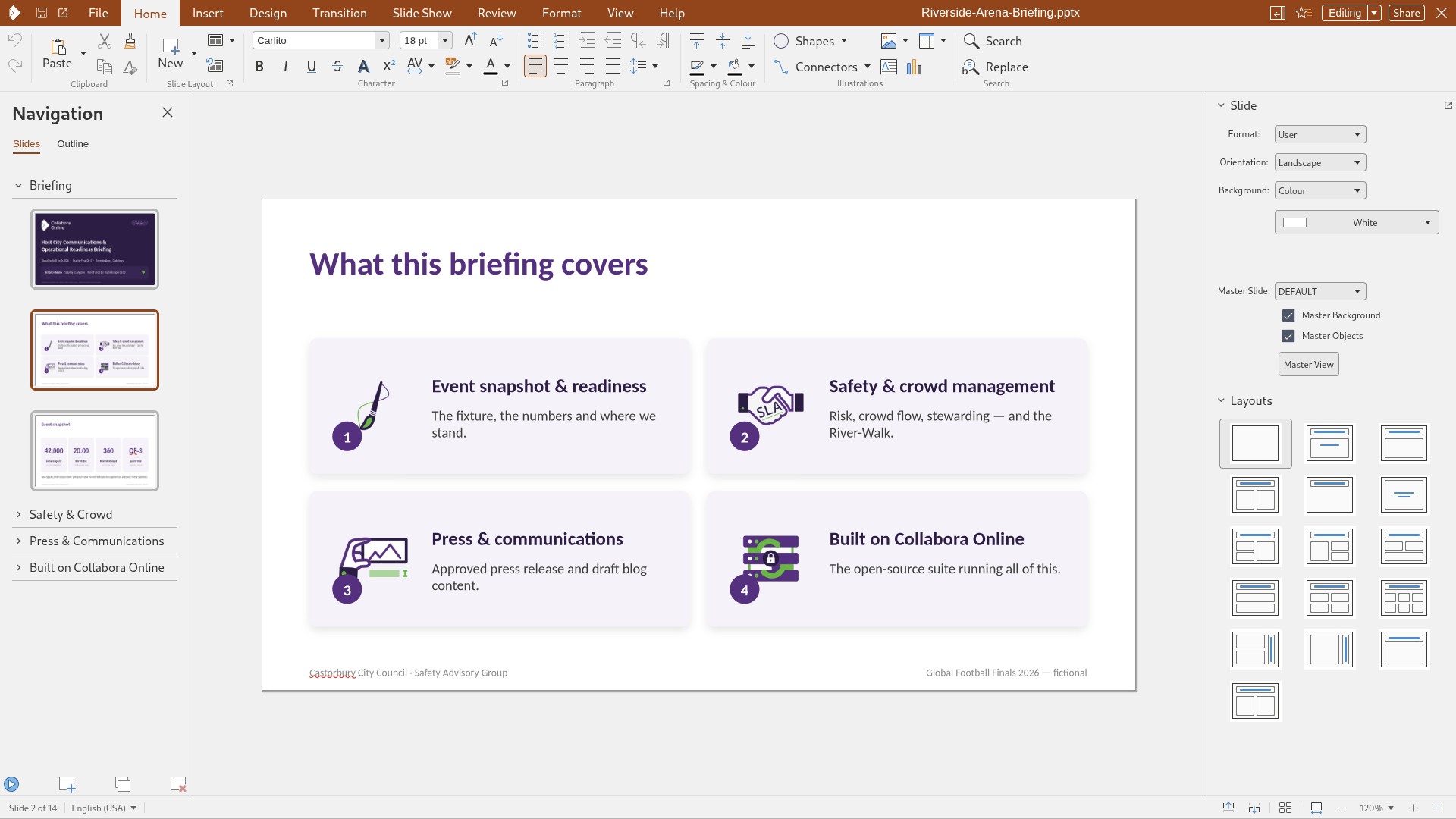
Public speaking and internal briefings are being redefined by the new "Follow-Me Slideshow" feature. In a virtual presentation setting, this allows the audience to automatically track the presenter’s slides. Crucially, it provides a "pause" and "scroll-back" functionality, allowing viewers to revisit a missed slide without interrupting the live stream, before seamlessly rejoining the current presentation flow.
Writer: The New Standard for Document Review
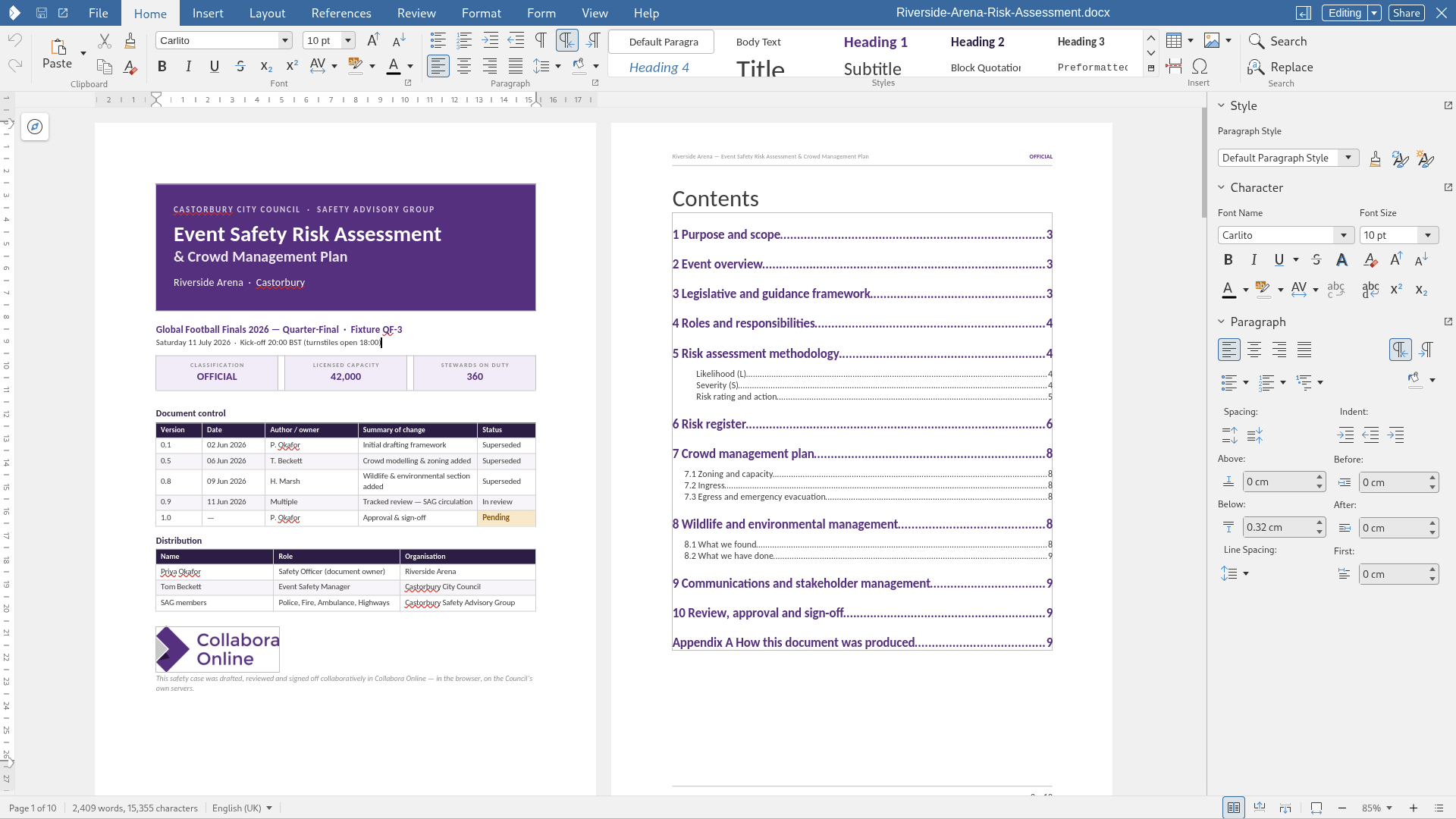
Document comparison has received a massive architectural overhaul. In the enterprise world, version tracking and audit trails are non-negotiable. Collabora’s new comparison tool allows users to pull an older version—whether stored on a local server or a remote repository—and visualize every single change made between drafts. These changes are clearly attributed to specific users, with time-stamped logs, providing a transparent history of the document’s evolution. The addition of BITV 2.0 accreditation further underscores the company’s commitment to digital accessibility.
Official Perspectives: The Philosophy of Control
Commenting on the release, Michael Meeks, CEO of Collabora Productivity, emphasized that the goal of the 26.04 update is to blend innovation with security.
"Collabora Online 26.04’s highly customizable and tightly controlled AI assistance enables users to safely accelerate their document-related tasks," Meeks stated. "Likewise, the new editing and review features, improved accessibility, and greater document interoperability will smooth the everyday experience for all users, making it more intuitive and flexible."
Meeks’ focus on "interoperability" is key. By adhering to open standards, Collabora ensures that documents created in their environment remain portable. Unlike proprietary formats that can change without warning, Collabora’s reliance on the OpenDocument Format (ODF) ensures that the data belongs to the user today, tomorrow, and a decade from now.
Implications for the Enterprise Landscape
The release of 26.04 carries significant implications for the broader IT industry.
- Sovereignty as a Service: As regulations like GDPR and the EU AI Act tighten, the ability to control where data is processed is becoming a legal necessity. Collabora’s model allows for complete infrastructure sovereignty, which is a stark contrast to the "black box" approach of Silicon Valley providers.
- The "CODE" Feedback Loop: By maintaining a transparent, community-led development branch (CODE), Collabora has built a robust testing ground. This ensures that when features land in the paid enterprise product, they have already been battle-tested by thousands of community contributors, resulting in a higher quality of stability.
- Cost and Maintenance: For organizations tired of escalating subscription fees for Microsoft 365 or Google Workspace, Collabora offers a predictable, cost-effective alternative. While the enterprise version is a paid product, it provides a clear value proposition: an SLA, professional security updates, and direct access to the engineers who actually build the software.
Choosing the Right Path: Collabora’s Ecosystem
Collabora has carefully structured its offerings to suit different organizational needs:
- CODE (Collabora Online Development Edition): The bleeding-edge, free, self-hosted version for developers and early adopters.
- Collabora Office & Office Classic: Desktop-based suites that bring the power of the core engine to local workstations.
- Collabora Online: The flagship enterprise solution, providing the full suite of collaborative tools, supported by professional service level agreements, dedicated security patches, and long-term maintenance cycles.
Conclusion: A Future Built on Open Standards
The 26.04 release is more than a software update; it is a testament to the longevity and necessity of open-source software in a world that is increasingly dominated by closed-source, data-extractive platforms. By successfully integrating AI while respecting user privacy, and by refining the collaborative tools that teams use every day, Collabora is proving that "open" does not mean "lesser."
For the CIO or the independent IT manager, the message is clear: there is a viable, high-performance, and secure path forward that does not require signing away the digital sovereignty of the organization. As we move further into the age of AI, the importance of platforms that provide transparency and user-controlled data processing will only grow. With 26.04, Collabora has signaled that it is ready to lead that charge for the next ten years and beyond.





