Elevating DevSecOps: A Comprehensive Deep Dive into the Evolution of AWS Security Agent
The paradigm of software development is undergoing a seismic shift. As organizations move toward increasingly complex, cloud-native architectures, the traditional "security-at-the-end" model has become a bottleneck, often resulting in delayed deployments and reactive patch management. At re:Invent 2025, Amazon Web Services (AWS) introduced the AWS Security Agent—a cornerstone of the newly minted AWS Continuum—to address this friction by embedding security intelligence throughout the entire software development lifecycle (SDLC).
Following a successful preview phase, AWS has now unveiled a suite of major enhancements that transform the agent from a reactive scanning tool into a proactive, agentic partner for development and security teams. By integrating deep code analysis, automated threat modeling, and seamless IDE integration, AWS is redefining what it means to build "secure by design."
1. The Core Facts: A Unified Security Ecosystem
AWS Security Agent is designed to bridge the gap between developers, who prioritize velocity, and security teams, who prioritize risk mitigation. By operating across the design, development, and deployment phases, the agent provides a holistic view of an application’s security posture.

Key Capabilities Now Available:
- Proactive Penetration Testing: Now in General Availability (GA), this feature allows users to perform on-demand, customized penetration tests that verify exploitability, moving beyond simple vulnerability identification to actual risk validation.
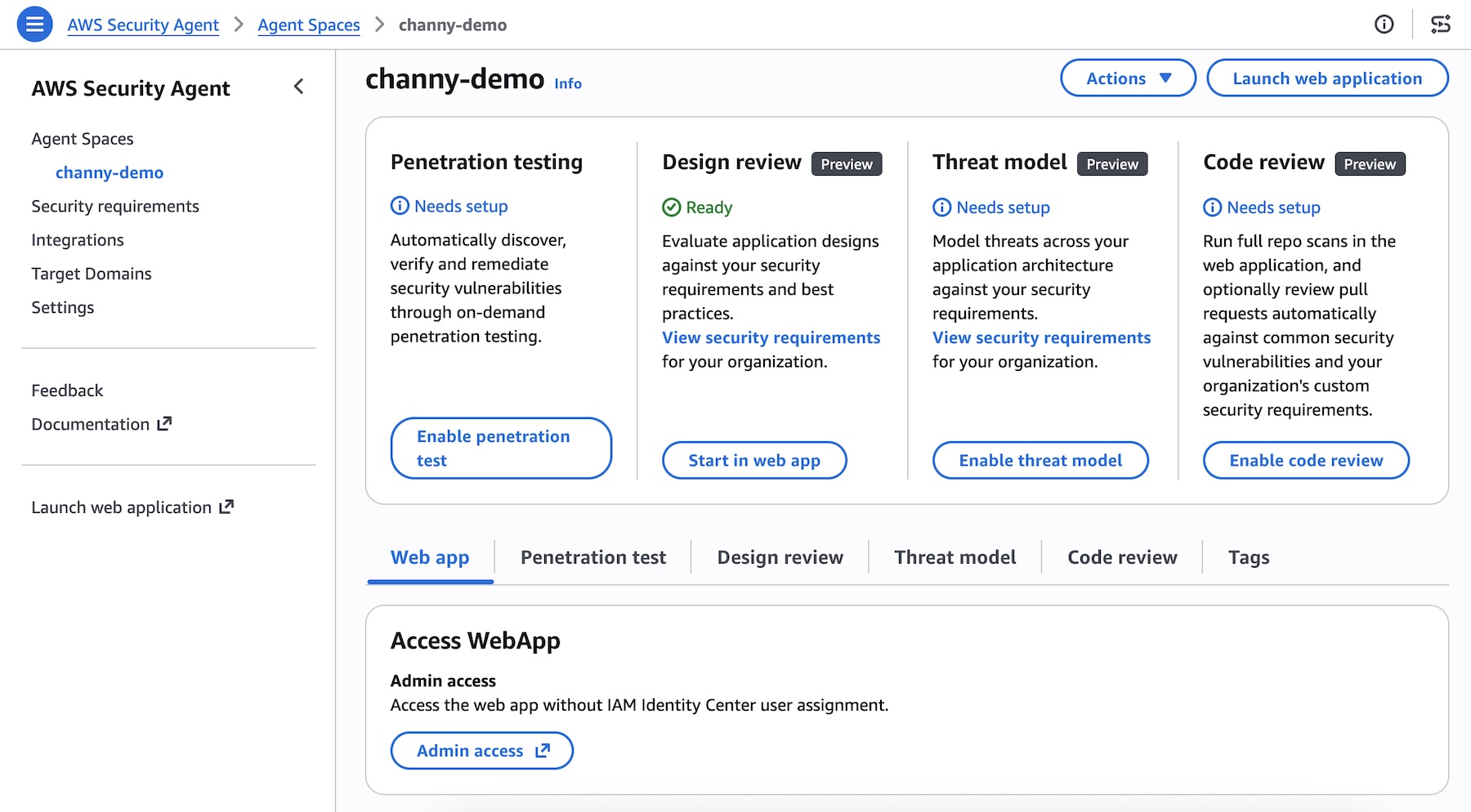
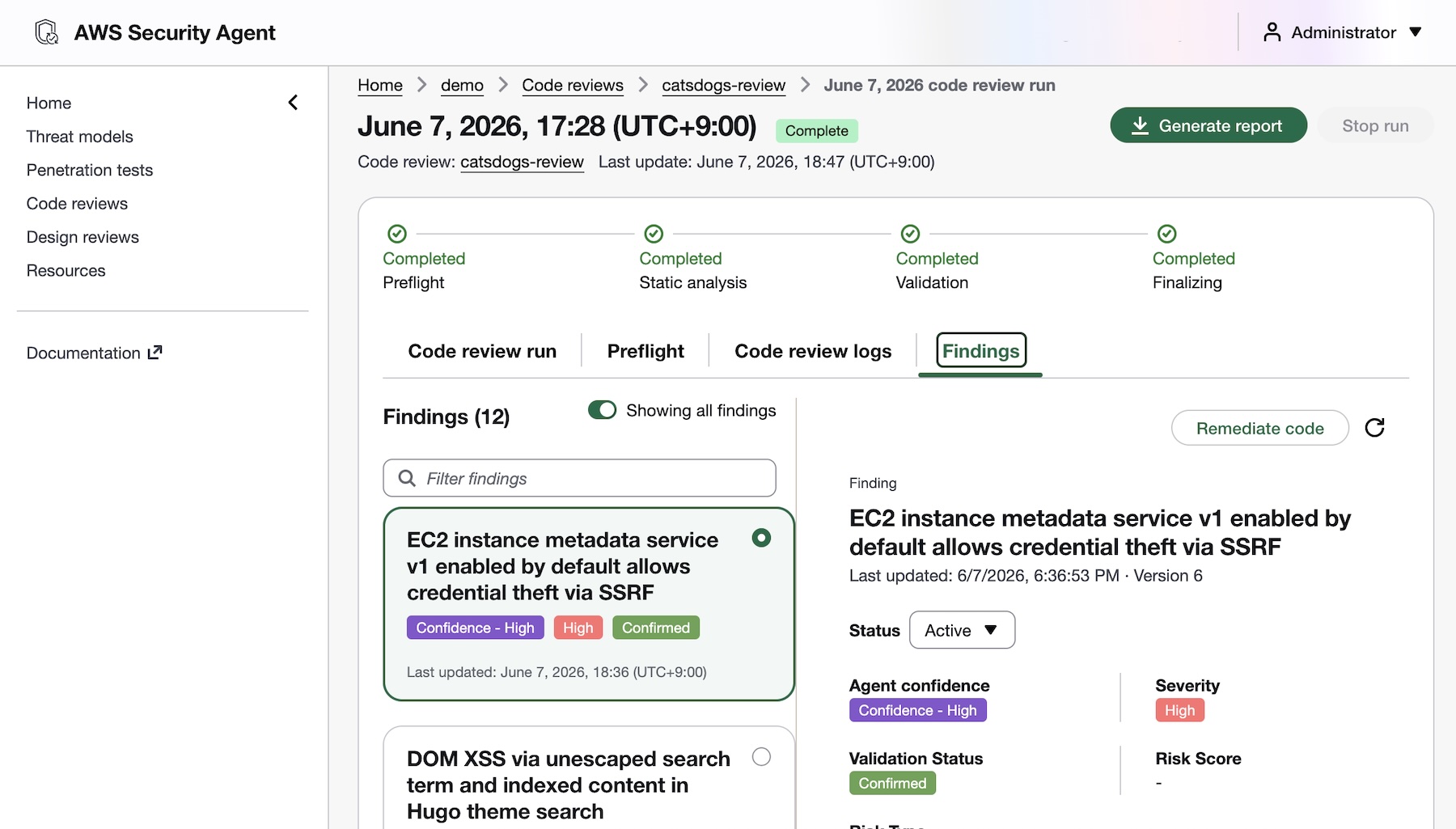
- Context-Aware Code Review: Currently in preview, this feature performs deep analysis of entire repositories, utilizing reasoning-based intelligence to identify vulnerabilities that traditional pattern-matching tools often miss.
- Automated Threat Modeling: The agent can now generate sophisticated threat models by ingesting design documentation and repository code, mapping data flows, trust boundaries, and potential attack vectors.
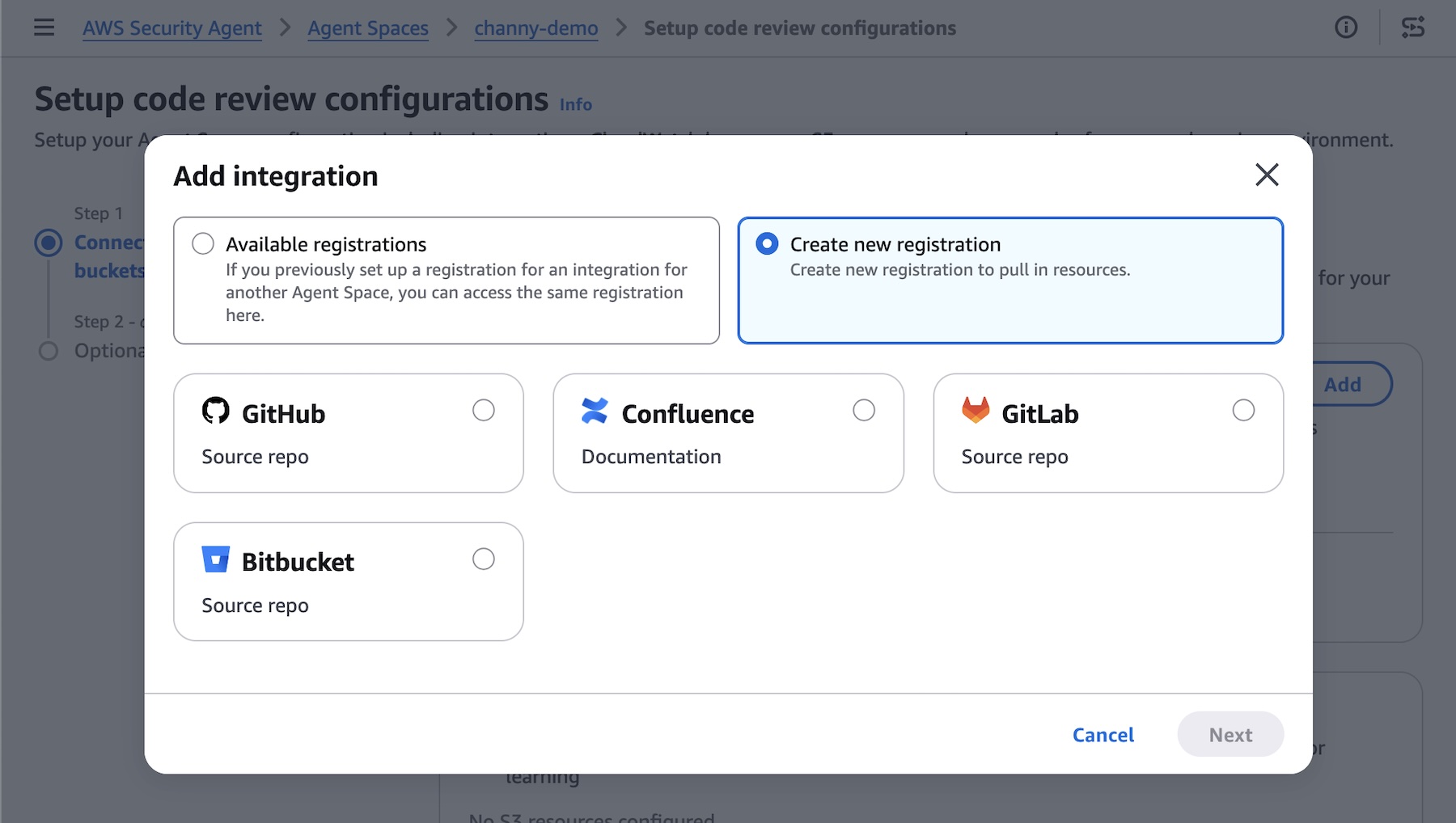
- Ecosystem Integration: Expanded support now includes GitLab and Bitbucket (SaaS and self-hosted) in addition to GitHub, along with Confluence integration to provide organizational context for security reviews.
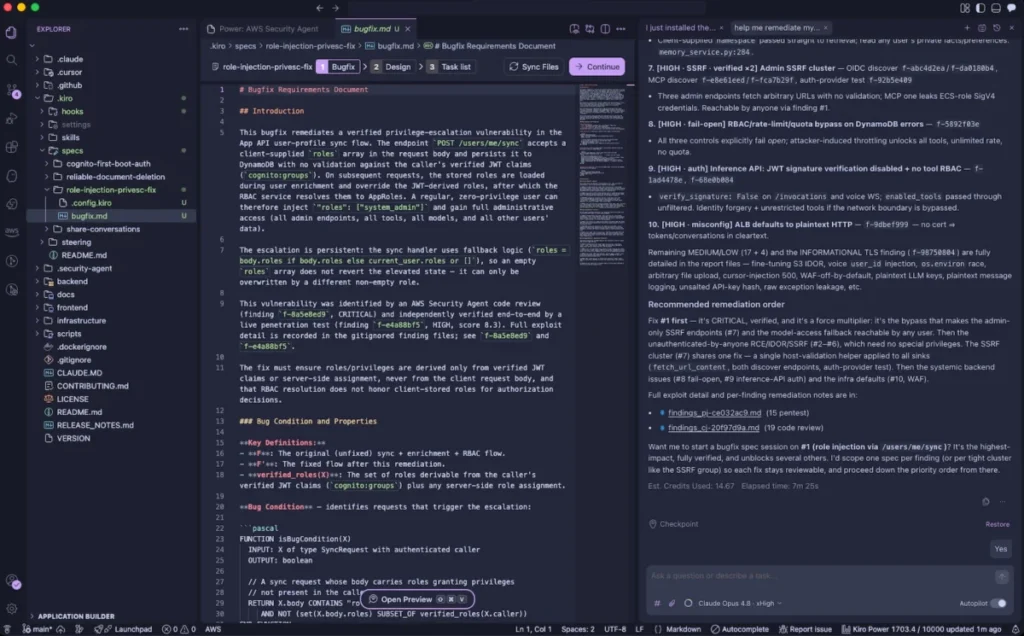
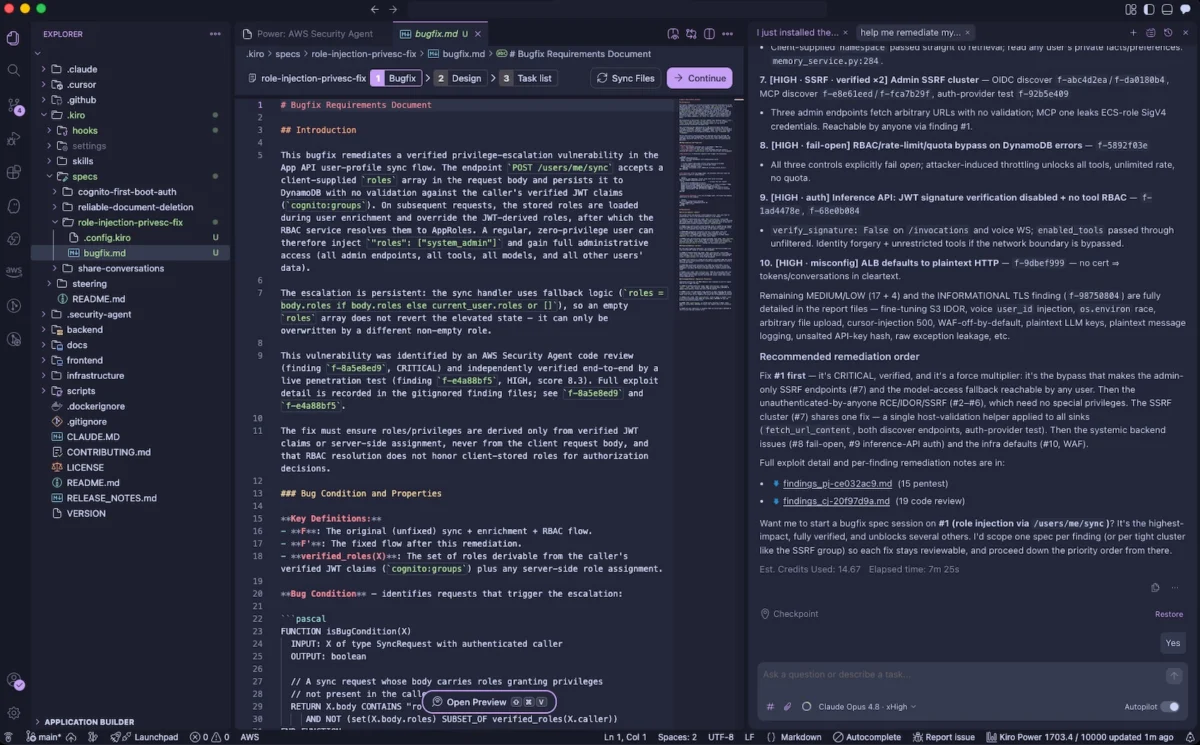
- Agentic IDE Integration: Through the new Kiro Power and Claude Code plugins, developers can now interact with the AWS Security Agent directly within their IDE using natural language, effectively turning their development environment into a security-first command center.
2. Chronology of Evolution: From Preview to Powerhouse
The journey of AWS Security Agent has been rapid, reflecting the urgency of modern cloud security challenges.
- November 2025 (re:Invent): AWS introduces the AWS Security Agent in preview. The goal is set: secure applications proactively from design to deployment.
- March 2026: AWS announces the General Availability of on-demand penetration testing, empowering teams to simulate real-world attacks in their specific application environments.
- May 2026: The preview for full-repository code review is launched, enabling developers to conduct deep-dive security analysis across their entire codebase rather than just individual pull requests.
- June 2026 (Current Update): AWS unveils a massive expansion, adding support for external code repositories (GitLab/Bitbucket), documentation integration (Confluence), and the groundbreaking Kiro Power/Claude Code plugins for IDE-native security workflows.
3. Supporting Data and Technical Architecture
The technical strength of the AWS Security Agent lies in its move away from simple regex-based scanning toward reasoning-based analysis. Unlike static application security testing (SAST) tools that flag every potential issue, the Security Agent uses AI-driven logic to determine if a vulnerability is actually exploitable within the specific context of the application’s architecture.
Bridging the Compliance Gap
The agent utilizes "managed compliance packs" that allow teams to map findings directly to industry-standard frameworks, including:

- AWS Well-Architected Framework: Ensuring cloud best practices are baked into the infrastructure.
- NIST CSF (Cybersecurity Framework): Helping government and enterprise clients meet rigorous regulatory standards.
- PCI DSS: Streamlining the path to compliance for organizations handling payment card data.
By allowing users to import internal organizational requirements via Confluence, the agent ensures that security reviews are not just checking for generic flaws, but are enforcing company-specific security policies.
4. Official Perspectives: The "Agentic" Shift
AWS’s strategy for the Security Agent is rooted in the philosophy of "shifting left" without shifting the burden onto the developer. By providing "fix commits" and remediation guidance directly within the Git workflow, the agent acts as an automated security engineer.
Channy Yun, a principal developer advocate at AWS, emphasizes that the goal is to remove the "context switching" that plagues modern developers. "You can trigger threat models and code reviews directly from your IDE," Yun noted during the launch, highlighting that the results are surfaced inline. This allows a developer to stay in their flow state, address a potential vulnerability, and move on—all without leaving their IDE or waiting for a security ticket to be processed by a different team.
The launch of the Claude Code plugin and the Kiro Power integration marks a pivotal moment in developer tooling. By leveraging the AWS Security Agent MCP (Model Context Protocol) server, developers can now ask, "Build a threat model for this application" or "Run a full security scan on this repo," and receive actionable, high-fidelity results instantly.
5. Strategic Implications: The Future of DevSecOps
The introduction of these features has profound implications for the industry.
Reducing "Security Debt"
One of the primary inhibitors to fast deployment is the accumulation of security debt—a backlog of vulnerabilities that developers struggle to address. By providing automated remediation, the AWS Security Agent effectively reduces the time-to-remediate. When the agent identifies a bug, it doesn’t just point it out; it offers the fix. This transforms the security team from a "gatekeeper" to an "enabler," providing the tools and guardrails necessary for developers to move fast safely.
The Rise of Agentic Security
We are witnessing the transition from "Tool-based Security" to "Agentic Security." Traditional tools provided reports that required manual interpretation. The AWS Security Agent, conversely, acts as an agent. It understands the application’s architecture, its data flows, and its trust boundaries. It can simulate an exploit to prove a risk exists, and it can write the code to fix it. This is a fundamental change in the economics of application security.
Audit-Ready by Default
For enterprises, the ability to map every finding back to a compliance posture—be it NIST or internal policy—is a game changer for audit season. Because the Security Agent continuously monitors the repository and design documents, it maintains a persistent, updated log of an application’s security state, making the documentation phase of compliance significantly more efficient.
6. How to Get Started
For organizations looking to adopt these new capabilities, the process is streamlined:
- Console Enablement: Navigate to the AWS Security Agent console to enable code reviews and threat modeling for your existing repositories.
- Integrate Repositories: Connect your GitLab, Bitbucket, or GitHub accounts to begin the scanning process.
- Install Plugins: For developers, installing the Kiro Power or Claude Code plugin is the fastest way to integrate security into the daily coding workflow.
- Leverage the Trial: AWS is currently offering a 2-month free trial for the Security Agent, allowing teams to evaluate the impact on their specific development pipelines without immediate financial commitment.
A Closing Note on Security
As with all security tools, the AWS Security Agent is most effective when integrated into a broader organizational culture of security. While the agent provides the intelligence and the automation, the human element—setting organizational policies, defining risk appetite, and reviewing the agent’s recommendations—remains vital.
The launch of these new features represents a mature step forward for AWS. By combining the power of the cloud, the reasoning capabilities of advanced AI, and a deep integration into the developer’s native environment, AWS is making "secure by default" a realistic goal rather than an aspirational slogan. Whether you are a startup building your first microservice or an enterprise managing thousands of repositories, the evolution of the AWS Security Agent provides the clarity and the speed required to navigate today’s complex threat landscape.