From Concept to Certification: The Rise of the Open Alliance for PostgreSQL Education
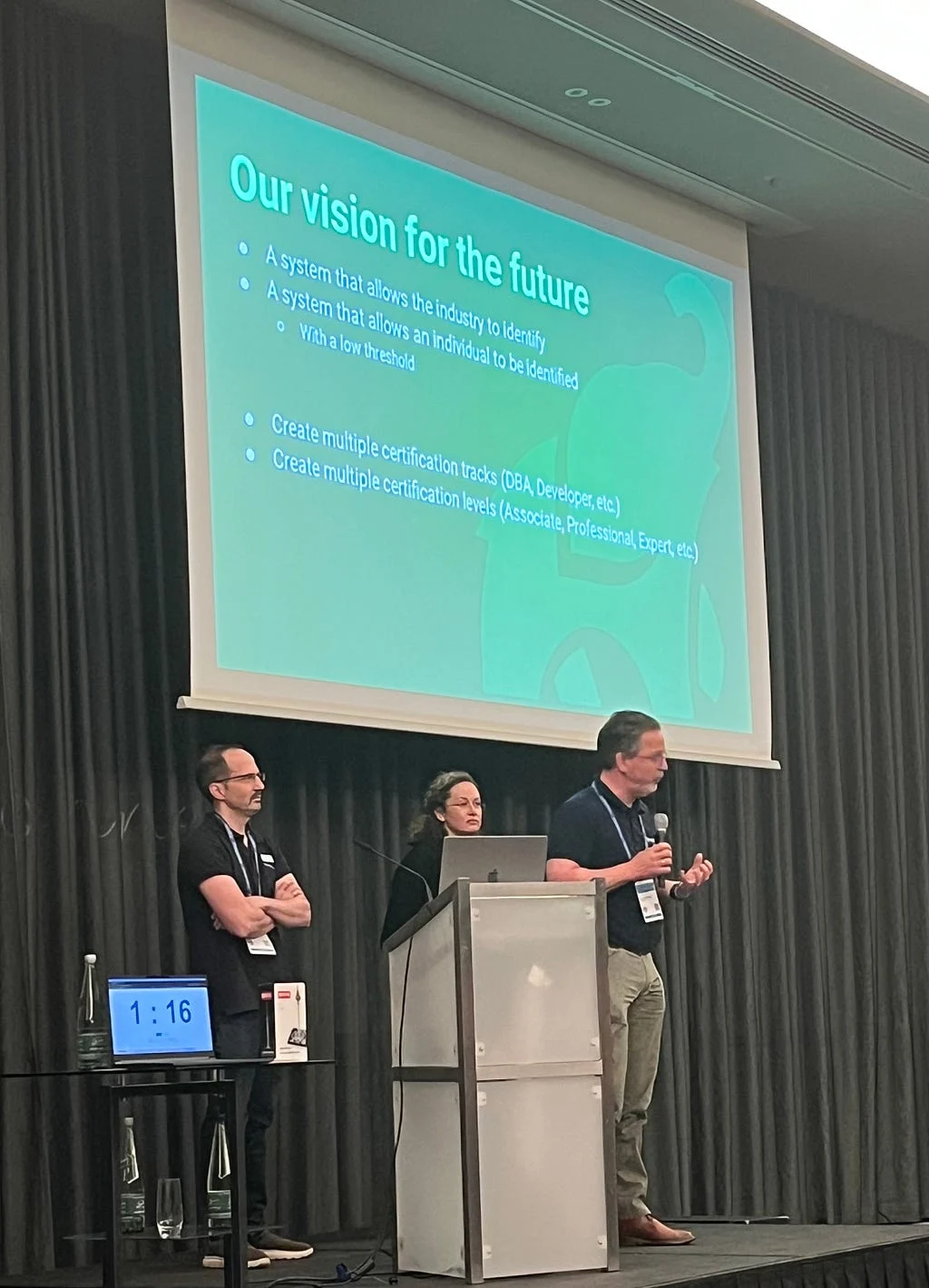
In the world of open-source software, PostgreSQL stands as a titan—a robust, reliable, and highly extensible relational database system that powers everything from small startups to global financial institutions. Yet, for all its technical dominance, the ecosystem has long lacked a cornerstone piece of professional infrastructure: a vendor-neutral, community-governed certification.
For years, the absence of an independent standard for PostgreSQL proficiency was an unspoken hurdle for the industry. That changed in 2024, when a small group of enthusiasts gathered over coffee in Europe to ask a simple, transformative question: “Why doesn’t an independent certification exist, and what would it take to build one?”
That conversation ignited the Open Alliance for PostgreSQL Education (OAPE), a non-profit organization that has evolved from a grassroots idea into a global movement. This October, at PGConf.EU 2026 in Valencia, the OAPE will officially move from the whiteboard to the testing center, launching its inaugural DBA-1 certification exam. This article explores the trajectory of an initiative that aims to standardize expertise while preserving the spirit of open-source collaboration.
The Genesis: A "What-If" Moment
The journey began in the spring of 2024. Cornelia Biacsics and Jan Karremans, two professionals deeply embedded in the PostgreSQL community, were discussing the state of database education. They identified a systemic gap: while many vendors offered training, there was no globally recognized, community-backed benchmark for PostgreSQL database administrators (DBAs) that wasn’t tied to a specific commercial product or service.
"There are moments when an idea seems so obvious that you wonder why it doesn’t already exist," Biacsics recalls. "Then you start digging into the details and realize why nobody has built it yet."
The barrier to entry was not a lack of interest, but the sheer complexity of building a high-stakes certification program. A vendor-neutral exam requires rigorous technical validation, legal frameworks, and a governance structure that prevents any single corporate interest from capturing the standard. It is a monumental task that requires the collective "sweat equity" of engineers, educators, and community leaders.
Chronology of a Movement: From Coffee Shop to Global Standard
The evolution of the OAPE can be traced through distinct phases of strategic development:
1. Building the Coalition (Mid-2024)
Following the initial spark, the founders sought to assemble a team with the technical depth and organizational experience to execute the vision. A pivotal meeting in Frankfurt brought together industry experts, including Diego Calvo de Nó, Dirk Aumüller of Proventa, and Ilya Kosmodemiansky and Valeria Kaplan of Data Egret. This group established the core values that would govern the project: radical transparency, vendor neutrality, and community ownership.
2. Legal and Organizational Frameworks (Late 2024)
To ensure the project remained truly independent, the group formalized the Open Alliance for PostgreSQL Education as a non-profit entity. This was a critical step in distancing the certification from corporate influence. With the legal foundation set, they began the arduous process of drafting bylaws and creating the infrastructure necessary for an international volunteer workforce.
3. Developing the Curriculum (2025)
The team transitioned from administrative tasks to the intellectual labor of defining what a PostgreSQL DBA actually needs to know. This involved intense debates over learning objectives. They had to balance the need for foundational knowledge with the realities of modern database architecture. Every exam question underwent a rigorous peer-review process—checked for accuracy, bias, and technical validity—by a global cadre of volunteers.
4. The Public Unveiling (PGConf.de 2025)
The project made its first major public appearance at PGConf.de 2025. The reception was overwhelmingly positive. The industry clearly recognized the need for a "neutral seal of approval" that could travel with an engineer regardless of their current employer. It was here that the OAPE began to expand, recruiting new contributors and formalizing a Technical Board to oversee the ongoing quality of the exam.
Supporting Data and Technical Governance
The OAPE model is built on a distributed, peer-reviewed methodology. Unlike proprietary certifications that are often shrouded in secrecy, the OAPE process is designed to be as open as the database engine itself.
Key pillars of their framework include:
- The Technical Board: Led by Alicja Kucharczyk, this body serves as the final arbiter for the exam’s content. Their mandate is to ensure that the certification remains relevant to the evolving PostgreSQL ecosystem, incorporating feedback from community members who are active in the field.
- The Review Cycle: Every question in the OAPE pool is subjected to a "double-blind" style technical validation. Contributors check for ambiguities and ensure that questions don’t lean toward vendor-specific "gotchas" that don’t apply to the core PostgreSQL engine.
- Collaborative Infrastructure: Using modern collaboration tools—from Signal for quick communication to a dedicated Slack workspace—the OAPE has managed to coordinate efforts across multiple time zones, proving that complex, high-stakes project management is possible within a purely volunteer-driven environment.
Official Perspective: Why Neutrality Matters
When asked about the importance of the OAPE, the founding team emphasizes that the certification is not about creating a new barrier to entry, but about fostering a shared language.
"This certification doesn’t belong to me, and it doesn’t belong to a company," says Biacsics. "It belongs to the community."
The OAPE’s mission statement underscores that the organization serves as a custodian of the community’s expertise. By offering a vendor-neutral certification, they aim to raise the overall quality of PostgreSQL deployments globally. For employers, the certification provides a reliable way to verify skills. For employees, it provides a portable, verifiable credential that validates their expertise in an increasingly competitive job market.
The involvement of industry stalwarts like Proventa and Data Egret demonstrates that the business community also stands to gain. By fostering a larger pool of certified, highly skilled professionals, the entire ecosystem benefits from improved reliability and reduced downtime in database operations.
Implications: The Future of PostgreSQL Education
The launch of the DBA-1 exam in Valencia is not the end of the road; it is the beginning of a long-term roadmap. The implications for the PostgreSQL community are significant:
- Standardization of Skill Sets: The existence of a global standard will likely influence training programs and university curricula, pushing PostgreSQL education toward a more unified pedagogical approach.
- Growth of the Ecosystem: A certified workforce gives enterprises more confidence to migrate to PostgreSQL, knowing that there is a proven, reliable way to source and train the necessary talent.
- Future Certification Tiers: The OAPE has already confirmed that the DBA-1 is the first of many levels. Future iterations will likely include certifications for advanced performance tuning, high availability, and security architecture.
- A Model for Other Open Source Projects: If the OAPE succeeds in maintaining its independence while delivering a high-quality product, it could serve as a blueprint for other major open-source projects—such as Linux, Kubernetes, or Python—to establish their own community-governed certification programs.
Conclusion: A Community Effort
As October 2026 approaches, the mood among the OAPE contributors is one of quiet, determined excitement. The thousands of hours spent reviewing documentation, arguing over technical nuances, and designing the brand identity have culminated in a moment of truth.
The first group of OAPE-certified DBAs will represent more than just a passing grade on an exam; they will represent the collective knowledge and standards of a global community. For those interested in joining the movement or witnessing the launch, the upcoming OAPE Meetup at PGConf.EU in Valencia offers an opportunity to engage directly with the architects of this new standard.
Ultimately, the OAPE project serves as a reminder that the most powerful tools in technology are not just the software we write, but the communities we build to support them. PostgreSQL has always been about "the power of the many," and with the launch of this certification, the community is ensuring that the next generation of DBAs is better prepared, better trained, and better connected than ever before.