Power, Perception, and Privacy at the Edge: Sixfab and DEEPX Bring 25 TOPS Local Intelligence to the Raspberry Pi 5
Main Facts: The Intersection of High-Efficiency NPU and SBC
The democratization of artificial intelligence has officially moved past the phase of cloud-reliant, subscription-based demo applications. For millions of engineers, students, educators, and embedded hardware makers, the defining challenge of modern AI is deployment: keeping models running continuously at the edge—watching, understanding, and responding in real time—without demanding massive power budgets or persistent, high-latency cloud connectivity.
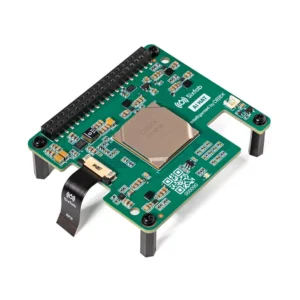
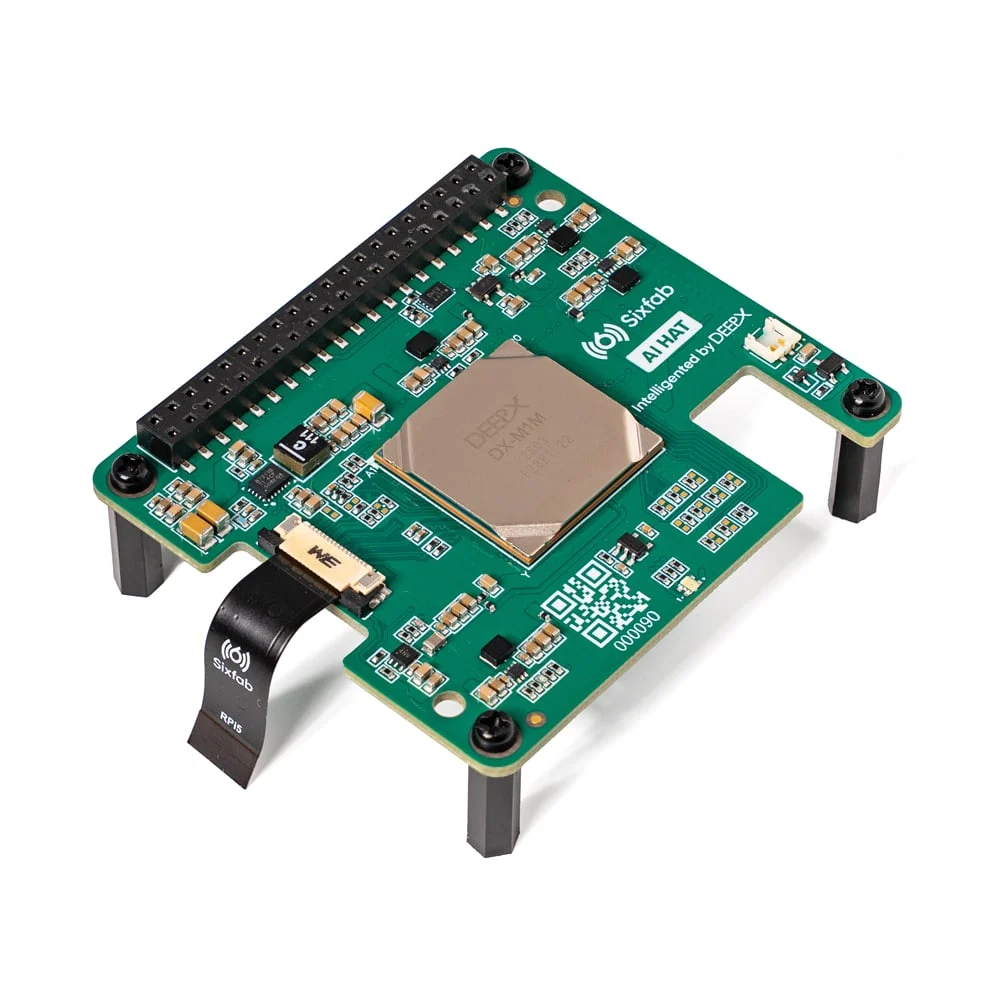
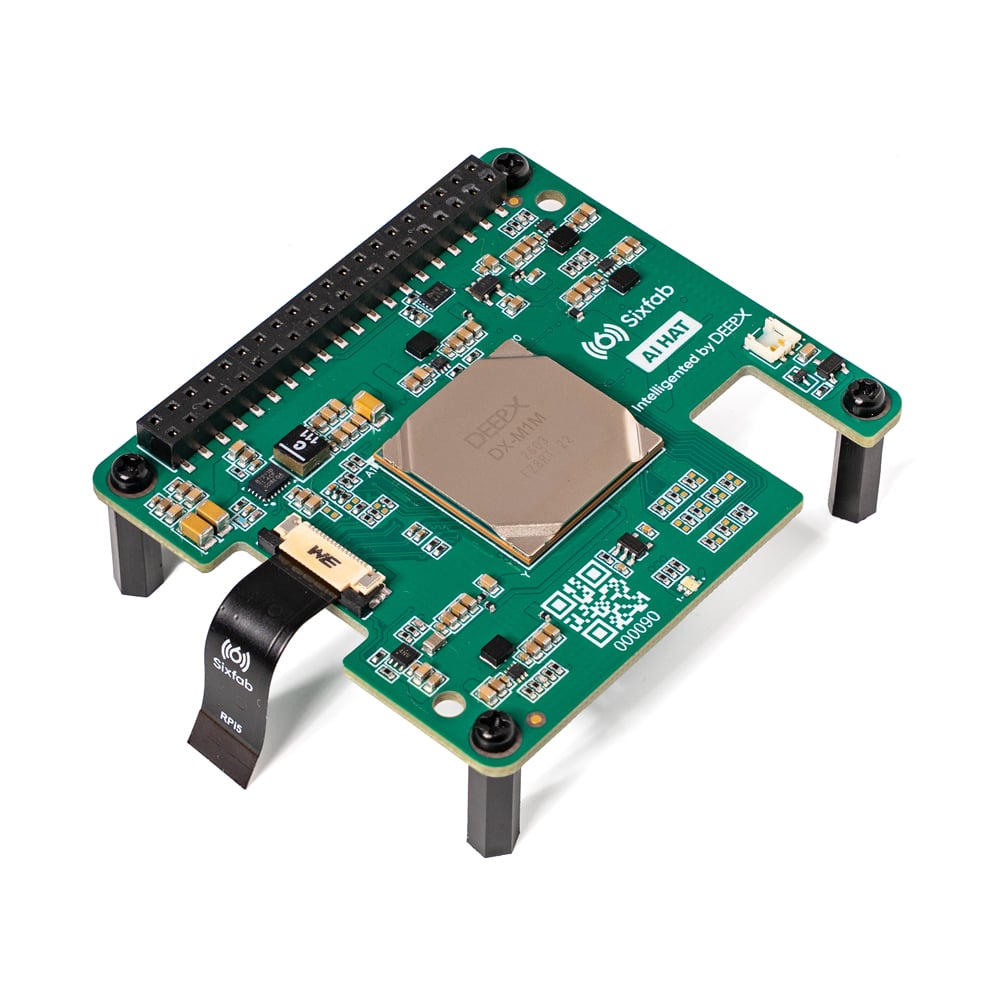
Enter the Sixfab AI HAT+ for Raspberry Pi 5, a third-party AI accelerator board built around the DEEPX DX-M1M Neural Processing Unit (NPU). This hardware pairing introduces a dedicated 25 TOPS (Tera Operations Per Second) of AI acceleration while pulling a typical sustained power draw of just 3 watts. By offloading heavy matrix math to the NPU, the Raspberry Pi 5’s main CPU is left entirely unhindered, free to manage camera inputs, system application logic, networking peripherals, and general-purpose device control.
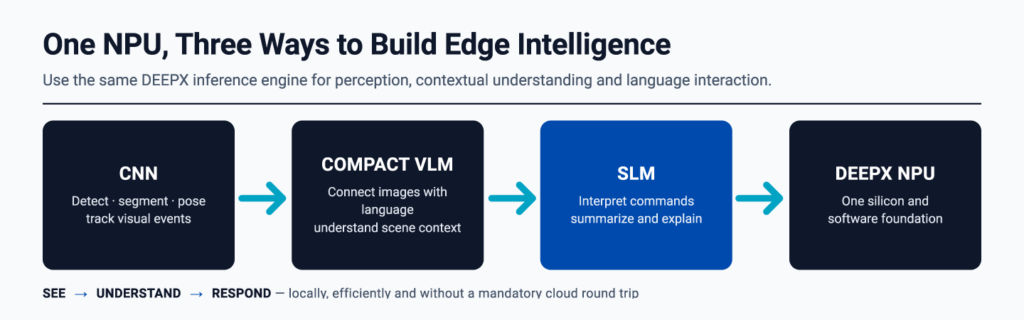
This development reflects a broader industry realignment. While massive server-side accelerators chase astronomical parameter counts and hundreds of watts of power consumption, edge hardware design is governed by strict physical and thermal constraints. The collaboration between Sixfab and DEEPX aims to prove that high-performance vision and compact language processing are no longer exclusive to power-hungry industrial PCs or expensive workstation environments. Instead, they can be squeezed onto a single-board computer powered by a few watts.
Chronology: From Academic SBCs to Production-Ready Edge AI
To understand the significance of the Sixfab AI HAT+, one must look at the evolutionary trajectory of the Raspberry Pi ecosystem and its relationship with machine learning.
- The Early Era (2012–2018): Raspberry Pi boards were introduced primarily as educational tools to teach programming. Early experiments with computer vision on the platform were severely bottlenecked by CPU constraints. Running a basic MobileNet model often yielded single-digit frames per second (FPS), rendering real-time applications virtually impossible.
- The Coprocessor Phase (2019–2023): As edge AI gained traction, the community began adopting USB-connected and PCIe-attached accelerators, such as early tensor processing units. While these devices proved that inference could be accelerated, they often suffered from complex driver fragmentation, immature tooling, or thermal throttling within compact enclosures.
- The Raspberry Pi 5 Generation (Late 2023–Present): The release of the Raspberry Pi 5 fundamentally altered the hardware landscape by introducing a native PCIe interface, vastly improved CPU performance, and robust power management features. This set the stage for dedicated HAT (Hardware Attached on Top) modules capable of unleashing high-throughput local inference.
- The Launch of the Sixfab AI HAT+: Capitalizing on the Pi 5’s architectural upgrades, Sixfab and DEEPX introduced the DX-M1M-powered accelerator board. Designed to bridge the gap between simple object detection and complex multimodal edge interactions, the platform integrates a complete software toolchain (DX-COM, DX-RT, and DX-Stream) to streamline the transition from raw ONNX models to optimized edge deployments.
Supporting Data: Benchmarking the DX-M1M and DX-M1 Modules
When evaluating edge hardware, marketing metrics like peak TOPS can obscure real-world execution speeds. Performance is ultimately dictated by memory bandwidth, thermal dissipation, and quantization efficiency. The architectural differences between DEEPX’s DX-M1 and DX-M1M chips highlight these engineering trade-offs, particularly regarding memory technology (LPDDR5 versus LPDDR4X).
Real-world benchmarks captured on a Raspberry Pi 5 (8GB variant) running the official Sixfab software release illustrate the capabilities of the platform across diverse workloads:
| Workload | DX-M1M (NPU) | DX-M1 (NPU) | Key Architectural Factors |
|---|---|---|---|
| MobileNet v2 (240×240) | 2,361 FPS | 3,223 FPS | High-throughput classification suited for rapid visual sorting. |
| DeepLabV3+ (512×512) | 155 FPS | 231 FPS | Semantic segmentation for complex boundary and region tracking. |
| Qwen3-1.7B (96 prefill tokens) | TTFT: 599.04 ms TPS: 4.64 tok/s |
TTFT: 544.58 ms TPS: 11.60 tok/s |
Small language model generation supported by on-module LPDDR4x/LPDDR5 memory. |
(Note: The variance in performance between the DX-M1 and DX-M1M is primarily attributed to the memory architecture; the DX-M1 utilizes LPDDR5, while the DX-M1M employs LPDDR4X to hit specific form-factor and power targets.)
Furthermore, the module integrates 2GB of dedicated on-module LPDDR4x memory directly alongside the NPU silicon. This local memory pool is crucial, as it ensures that vision-language models (VLMs) and small language models (SLMs) can load their weights without exhausting the system memory resources of the host Raspberry Pi 5.
Official Responses and Engineering Insights: The Three-Watt Philosophy
In technical statements released alongside the hardware debut, representatives from both Sixfab and DEEPX emphasized that thermal and energy efficiency remain the ultimate arbiters of edge AI success.
"Peak TOPS figures make good marketing, but most edge products live and die by their power and thermal budget," engineering leads noted during the platform’s technical unveiling. "The real system still needs headroom for the Raspberry Pi itself, a camera, local storage, networking hardware, and whatever physical actuators the device actually controls."
By maintaining an average sustained NPU power draw of approximately 3 watts under heavy workloads, developers can design significantly smaller, sealed enclosures. This eliminates the necessity for loud, failure-prone active cooling fans in favor of passive heat dissipation. Consequently, systems can run continuously in field deployments—ranging from agricultural monitoring nodes to industrial robotics—without risking thermal shutdown.
DEEPX’s approach to quantization also addresses a notorious pitfall in edge AI: accuracy degradation. Converting floating-point models to INT8 precision often introduces severe degradation when facing adverse real-world conditions like low light, motion blur, glare, or unusual camera angles. DEEPX treats INT8 optimization as an accuracy-aware engineering process rather than a blind automated conversion, preserving model reliability where it matters most.
Implications: Transforming Edge Architecture Across Industries
The widespread availability of a 25 TOPS, 3-watt NPU HAT for the Raspberry Pi 5 carries profound implications for multiple sectors, shifting the paradigm from centralized cloud processing to localized, autonomous intelligence.
1. Consumer and Smart Home Applications
At the hobbyist and prosumer level, the hardware enables sophisticated local monitoring. A workbench camera can continuously analyze a 3D printing job, instantly recognizing print failures (such as spaghetti blobs) and dispatching an alert accompanied by a natural-language description of the error. Similarly, smart doorbell systems can locally classify visitors—distinguishing between delivery personnel, family members, or loiterers—while summarizing daily activity logs without streaming private video feeds to external servers.
2. Industrial Automation and Robotics
In industrial environments, where network connectivity can be intermittent or insecure, local vision processing is essential. The Sixfab AI HAT+ allows automated production lines to run low-power visual quality assurance and safety monitoring. For robotics applications, the NPU handles real-time perception (object detection, depth estimation, and pose tracking) while the Raspberry Pi’s CPU runs the Robot Operating System (ROS 2) and motor control loops concurrently.
3. Retail, Healthcare, and Smart Spaces
Privacy regulations heavily restrict how video data can be collected and transmitted. Edge devices powered by local NPUs can perform anonymous occupancy tracking, behavioral analytics, and crowd density estimations locally. Because raw video frames never leave the device—only structured metadata or text summaries are processed—compliance with stringent privacy frameworks (such as GDPR) becomes significantly easier to maintain.
The Developer Workflow: From First Boot to Production Inference
Adoption hinges on software accessibility. The Sixfab and DEEPX software stack is engineered to minimize friction for developers transitioning from prototype to deployment. The architecture comprises four core pillars:
- DX-COM: An optimization and compilation engine that converts standard ONNX models into DEEPX-optimized
.dxnndeployment artifacts. - DX-RT: A runtime environment providing clean C++ and Python APIs to execute compiled models directly on the target hardware.
- DX-Stream: A specialized toolkit designed to construct GStreamer-based pipelines for video capture, hardware-accelerated inference, and post-processing.
- ModelZoo: A repository of pre-optimized example architectures spanning object detection, image classification, semantic segmentation, and pose estimation.
Getting started on Raspberry Pi OS requires only a few terminal commands to establish the repository and verify system telemetry:
sudo apt update && sudo apt install apt-repo-sixfab
sudo apt update && sudo apt install sixfab-dx
dxrt-cli -s        # Confirm NPU hardware and software status
run_hello_world    # Execute a packaged baseline inference example
dxtop              # Monitor real-time NPU utilization, clocks, and temperature
Through tools like dxtop, developers gain granular visibility into hardware performance, ensuring that custom models can be profiled and tuned directly on the edge device.
Setting Realistic Boundaries: What the Platform is Not For
A mature engineering approach requires acknowledging the explicit limitations of edge hardware. The Sixfab AI HAT+ is not designed to replace cloud-scale data centers or compete with massive server-grade GPUs.
Applications requiring exhaustive world knowledge, massive conversational memory contexts, or continuous online learning will always necessitate the computational muscle of the cloud. The DEEPX DX-M1M excels specifically when deployed for tightly scoped, always-on intelligence situated directly next to a sensor or camera lens. For use cases where privacy, zero latency, offline resilience, and a single-digit power budget dictate the engineering constraints, this platform offers a robust, highly capable solution.
Availability and Next Steps
The 25 TOPS Sixfab AI HAT+ for Raspberry Pi 5 is available for purchase directly through Sixfab, with lower-power variants (such as the 13 TOPS edition) slated for release later in the product lifecycle. Comprehensive documentation, developer guides, and community support channels are accessible via the DEEPX Developer Portal and the open-source DX-AllSuite and ModelZoo repositories on GitHub.