Revolutionizing Machine Learning at Scale: Google Announces the Official Release of TensorFlow GNN 1.0
MOUNTAIN VIEW, Calif. — In a significant milestone for artificial intelligence and data science, Google has officially announced the release of TensorFlow GNN 1.0 (TF-GNN). Developed through a robust cross-functional collaboration between Google Research, Google Core ML, and Google DeepMind, this production-tested library is designed to bridge a long-standing gap in machine learning: the ability to seamlessly process, analyze, and learn from complex relational data at a massive, enterprise-grade scale.
Traditional machine learning architectures have historically excelled at processing regular, uniform inputs. Whether dealing with pixels in a computer vision grid, words in a natural language processing sequence, or tabular rows in a database, standard algorithms assume a uniform structure. However, the real world is inherently interconnected and irregular. From global transportation networks and financial supply chains to biomedical interactions and social graphs, the relationships between objects are often just as critical—if not more so—than the attributes of the objects themselves.
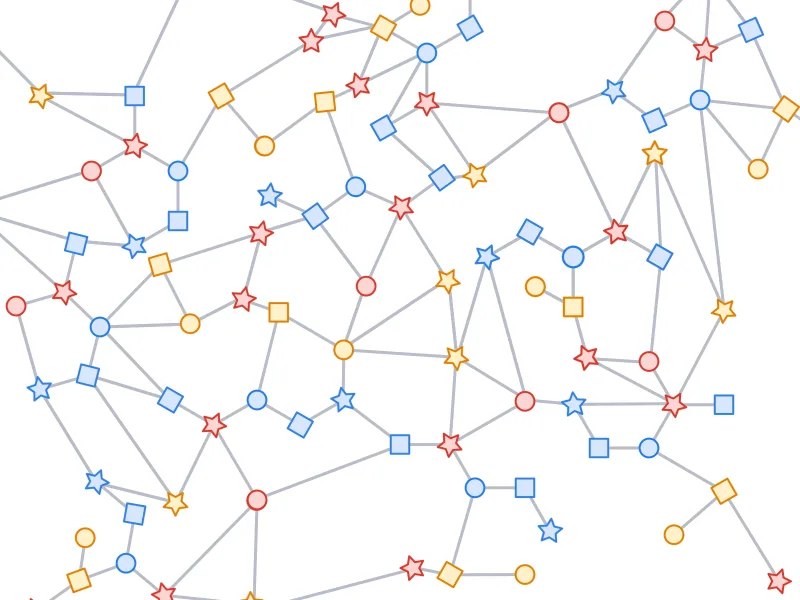
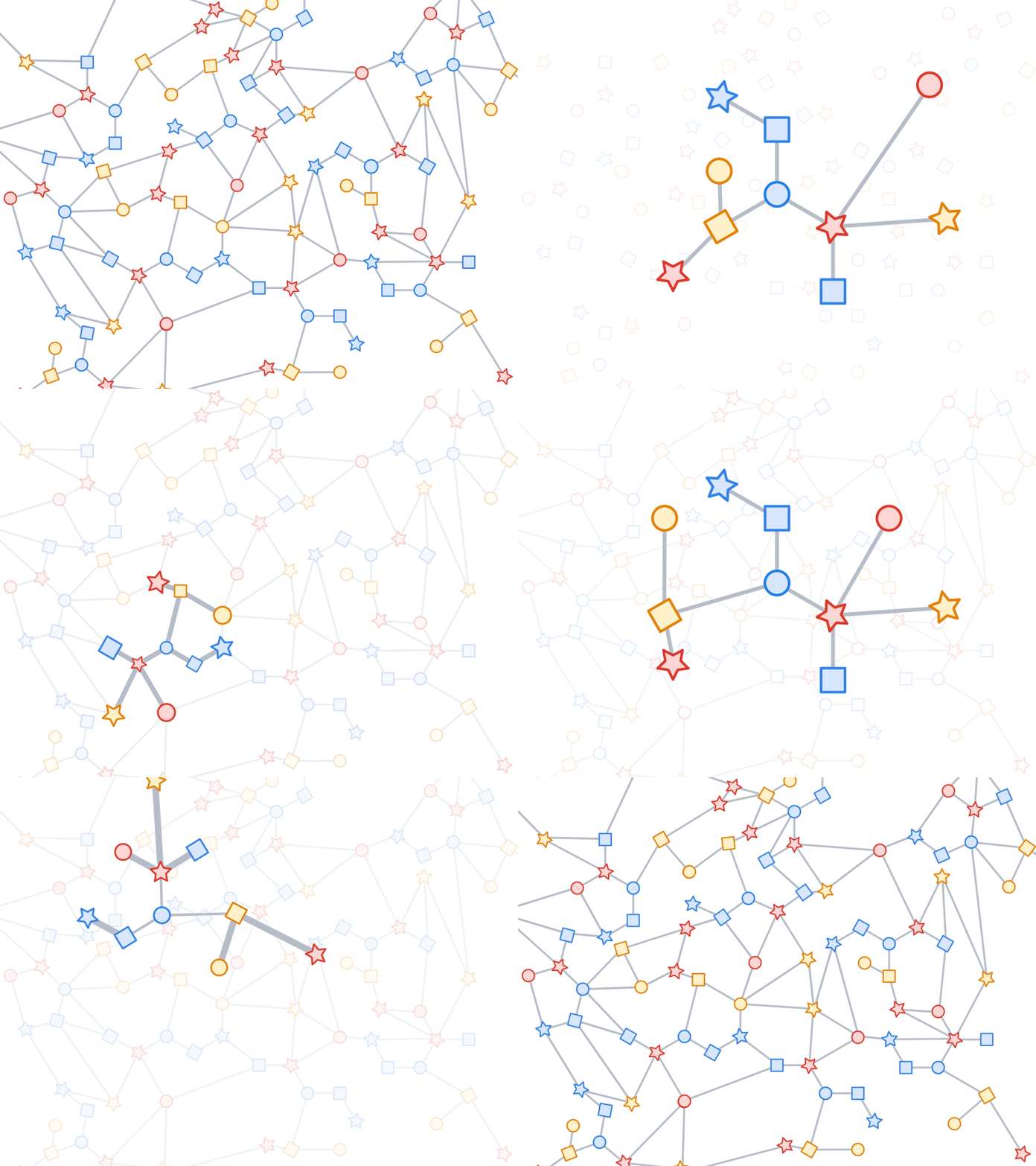
Discrete mathematics has long formalized these complex, irregular structures as "graphs," consisting of nodes arbitrarily connected by edges. With the launch of TF-GNN 1.0, developers and researchers now possess a first-class, highly scalable native toolkit to bring the power of deep learning directly to graph-structured data within the TensorFlow ecosystem.
Main Facts: What is TensorFlow GNN 1.0?
TensorFlow GNN 1.0 is an enterprise-ready, open-source library built from the ground up to facilitate the creation, training, and deployment of Graph Neural Networks (GNNs) using TensorFlow.
Unlike traditional graph analysis algorithms—such as DeepWalk or Node2Vec, which primarily leverage network connectivity—GNNs synthesize both the structural connectivity of a graph and the rich feature data embedded within its nodes and edges. TF-GNN translates discrete, relational graph information into continuous representations (embeddings), allowing this data to be naturally integrated into broader deep learning workflows.
Key technical pillars of TF-GNN 1.0 include:
- Native Heterogeneous Graph Support: Real-world entities and relationships involve diverse types. TF-GNN natively represents distinct types of nodes and edges without requiring flattened or homogenized workarounds.
- First-Class Tensor Integration: Graphs are represented within TensorFlow using
tfgnn.GraphTensor, a composite tensor type that operates as a first-class citizen within standard data pipelines liketf.data.Datasetandtf.function. - Flexible Subgraph Sampling: To train on massive datasets comprising millions of nodes and billions of edges, TF-GNN incorporates dynamic and batch subgraph sampling, scaling seamlessly from interactive Google Colab notebooks to distributed clusters running Apache Beam.
- Keras API Compatibility: Trainable transformations and advanced GNN layers can be defined intuitively using high-level Keras API standards or custom low-level primitives.
Chronology: The Journey to Production-Grade Graph Neural Networks
The path to TensorFlow GNN 1.0 reflects years of academic research, internal Google deployment, and community-driven iterations.

The Theoretical Foundation
For decades, computer scientists utilized graph theory to model relational data. However, applying gradient-based optimization to these discrete structures remained an open challenge. The advent of Graph Neural Networks and message-passing architectures—pioneered by academic breakthroughs and research labs—demonstrated that neural networks could effectively "pass messages" across edges, allowing nodes to aggregate contextual information from their neighborhoods.
Internal Incubation and Research (2022–2023)
As Google services increasingly relied on massive knowledge graphs, recommendation systems, and code intelligence platforms, the need for a unified, production-grade GNN framework became paramount. In July 2022, foundational research papers outlining the architecture were published, laying the groundwork for how heterogeneous graphs could be efficiently processed inside TensorFlow. Throughout 2023, engineering teams at Google Research, Core ML, and DeepMind collaborated to stress-test the library against industrial-scale workloads.
The 1.0 Release (February 2024)
Culminating months of refinement, optimization, and community feedback, TF-GNN 1.0 was officially released in early 2024. The milestone delivery established a stable, backward-compatible API, comprehensive user documentation, pre-built model templates, and advanced orchestration tools like the TF-GNN Runner.
Supporting Data: Architecture, Sampling, and Performance
To understand the engineering achievement of TF-GNN 1.0, one must examine how it handles the fundamental bottlenecks of graph machine learning: scale, memory management, and message passing.
Overcoming the Scale Barrier
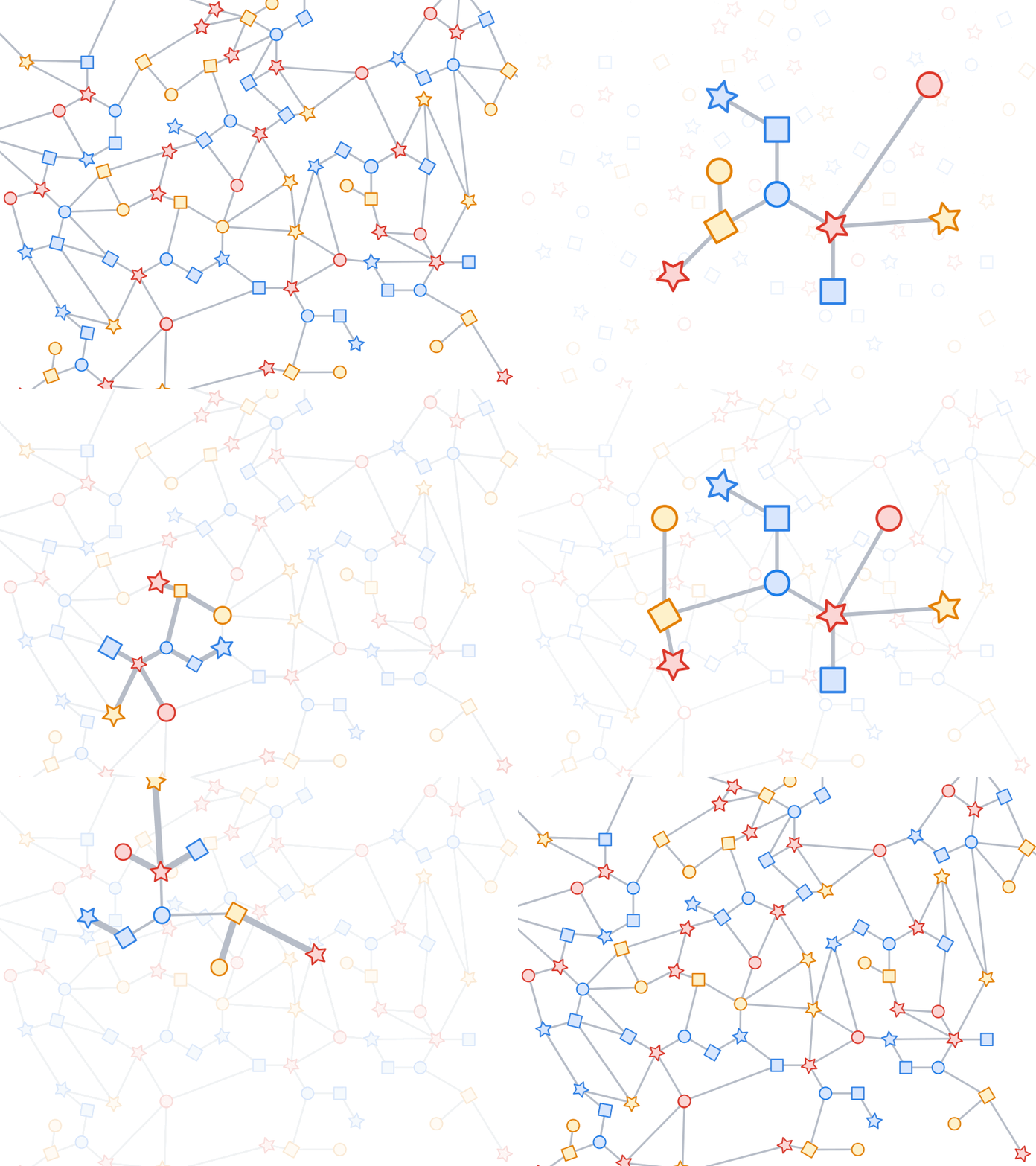
Training a neural network requires processing massive datasets—often millions of labeled examples. Yet, individual gradient descent steps can only accommodate relatively small training batches (hundreds of examples). In graph structures, computing the representation of a single central (root) node requires pulling in its immediate neighbors, the neighbors’ neighbors, and so on. Left unchecked, this "neighborhood explosion" causes memory requirements to grow exponentially.
TF-GNN solves this through subgraph sampling. Instead of loading an entire planetary-scale graph into memory, the library extracts small, tractable subgraphs that contain sufficient contextual information around a target node.
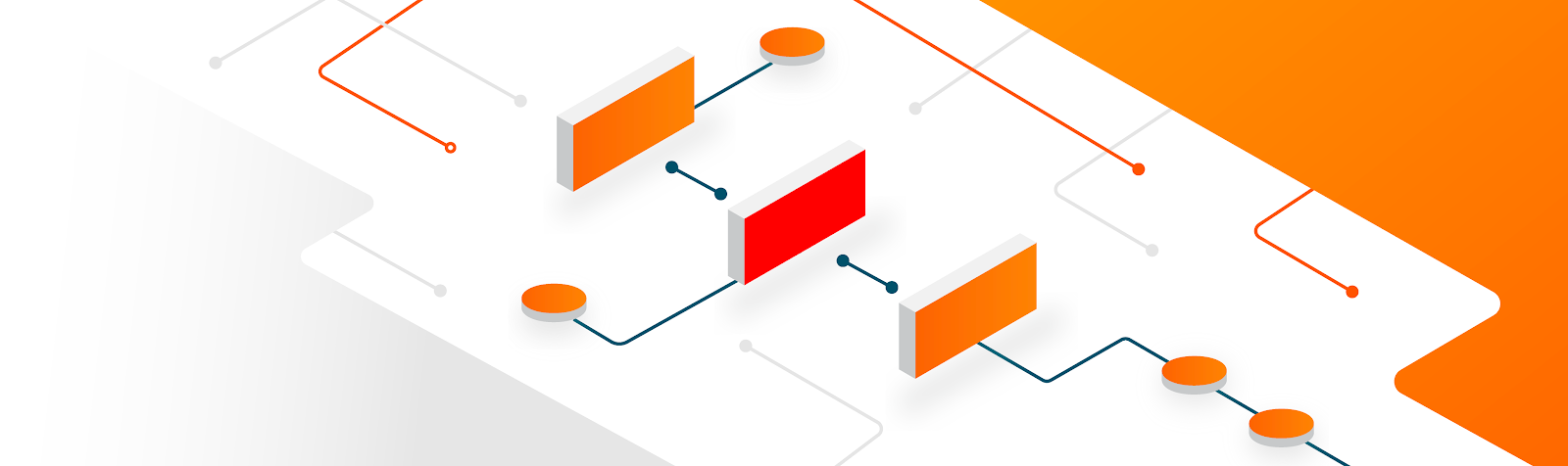
The framework supports three distinct scaling tiers:
- Interactive Notebooks: For rapid prototyping and exploration in Google Colab.
- In-Memory Sampling: For efficient execution on a single training host with moderate datasets.
- Distributed Beam Sampling: Leveraging Apache Beam to process massive datasets stored on network file systems containing hundreds of millions of nodes and billions of edges.
Message-Passing Mechanics
Once subgraphs are sampled, the GNN executes message-passing operations. In each round of message passing, nodes receive information from their adjacent neighbors along incoming edges, updating their internal hidden (latent) states. After $n$ rounds of message passing, the hidden state of a root node encapsulates structural and feature data from all nodes within $n$ hops.
In heterogeneous graphs—such as an academic citation network linking authors, papers, and conferences—TF-GNN allows developers to assign separately trained hidden layers to distinct types of nodes and edges, ensuring that domain-specific semantics are preserved.
Code Simplicity via Keras
Building a GNN model is streamlined through high-level abstractions. Below is an example of how developers can define a GNN model using TF-GNN and Keras layers:
import tensorflow_gnn as tfgnn
from tensorflow_gnn.models import mt_albis

def model_fn(graph_tensor_spec: tfgnn.GraphTensorSpec):
  """Builds a GNN as a Keras model."""
  graph = inputs = tf.keras.Input(type_spec=graph_tensor_spec)

  # Encode input features
  graph = tfgnn.keras.layers.MapFeatures(
      node_sets_fn=set_initial_node_states)(graph)

  # Execute rounds of message passing
  for _ in range(2):
    graph = mt_albis.MtAlbisGraphUpdate(
        units=128, message_dim=64,
        attention_type="none", simple_conv_reduce_type="mean",
        normalization_type="layer", next_state_type="residual",
        state_dropout_rate=0.2, l2_regularization=1e-5,
    )(graph)

  return tf.keras.Model(inputs, graph)
Furthermore, the TF-GNN Runner simplifies training orchestration, handling distributed training strategies (such as Cloud TPU padding and mirrored strategies) and enabling joint multi-task training—allowing engineers to mix supervised objectives (like classification) with unsupervised contrastive losses (such as DeepGraphInfomax) seamlessly.
Official Responses and Collaborative Leadership
The release of TensorFlow GNN 1.0 represents a monumental team effort across multiple premier artificial intelligence divisions within Alphabet. The official release was spearheaded by a distinguished collective of researchers and engineers.
The core development team spans three major pillars of Google’s AI ecosystem:
- Google Research: Sami Abu-El-Haija, Neslihan Bulut, Bahar Fatemi, Johannes Gasteiger, Pedro Gonnet, Jonathan Halcrow, Liangze Jiang, Silvio Lattanzi, Brandon Mayer, Vahab Mirrokni, Bryan Perozzi, Anton Tsitsulin, and Dustin Zelle.
- Google Core ML: Arno Eigenwillig, Oleksandr Ferludin, Parth Kothari, Mihir Paradkar, Jan Pfeifer, and Rachael Tamakloe.
- Google DeepMind: Alvaro Sanchez-Gonzalez and Lisa Wang.
While individual statements emphasize the open-source ethos of the project, the collaborative deployment underscores Google’s commitment to democratizing advanced graph analytics. By open-sourcing the exact tooling used internally for massive web-scale graph processing, Google aims to accelerate academic research and industrial adoption alike. Engineers behind the project have highlighted that TF-GNN is not merely an experimental framework, but a battle-tested library forged in the crucible of production environments.
Implications: The Future of Graph Machine Learning
The arrival of TensorFlow GNN 1.0 carries profound implications for numerous industries reliant on interconnected data structures. By translating discrete relationships into continuous vector spaces, TF-GNN unlocks new frontiers across multiple technical domains:
1. Drug Discovery and Molecular Chemistry
In computational biology, molecules are naturally modeled as graphs where atoms act as nodes and chemical bonds act as edges. GNNs powered by TF-GNN can predict molecular properties, forecast biochemical reactions, and accelerate drug discovery pipelines by screening millions of compounds with unprecedented accuracy.
2. Cybersecurity and Fraud Detection
Financial institutions and cybersecurity firms monitor complex transaction webs and user behaviors. Relational fraud detection requires identifying malicious rings and coordinated attack patterns that are invisible to traditional tabular models. GNNs excel at node and edge classification in transaction graphs, drastically improving real-time anomaly detection.
3. Recommendation Systems and Knowledge Graphs
E-commerce platforms, streaming services, and search engines rely heavily on massive knowledge graphs connecting users, products, queries, and content. By generating rich node embeddings via unsupervised and supervised GNN training, companies can deliver hyper-personalized recommendations that account for multi-hop contextual relationships.
4. Interpretability and Model Trust
A historical critique of deep learning has been its "black box" nature. TF-GNN addresses this head-on by integrating native support for integrated gradients. Developers can inspect gradient values mapped directly onto the GraphTensor structure, illuminating precisely which features and relational paths contributed most significantly to a model’s prediction.
Getting Started
For developers and data scientists eager to explore TensorFlow GNN 1.0, Google has provided a comprehensive suite of resources. Users can test-drive the library immediately via an interactive Colab Demo utilizing the popular OGBN-MAG benchmark—requiring no local installation.
Additional documentation, in-memory and beam-based sampling user guides, and pre-trained model collections are publicly accessible via the official TensorFlow GNN GitHub Repository. As graph-based data structures continue to proliferate across science and industry, TF-GNN 1.0 stands ready to power the next generation of intelligent, context-aware machine learning systems.