Scaling the Ecosystem: A Comprehensive Mid-Year Report on the Evolution of crates.io
Six months have passed since the last major development update from the crates.io team, and in that time, the central hub of the Rust programming language has undergone a transformative series of updates. As the Rust ecosystem continues its meteoric rise in popularity and enterprise adoption, the infrastructure supporting its package management—crates.io—must remain robust, transparent, and user-friendly.
The latest suite of improvements, rolled out throughout the first half of 2026, represents a significant leap forward in security auditing, identity management, and developer experience. From the introduction of a native source code viewer to the successful completion of a massive frontend migration, these changes underscore the Rust team’s commitment to maintaining a world-class package registry.
The New Frontier: Source Code Transparency
Bridging the Gap Between Repository and Registry
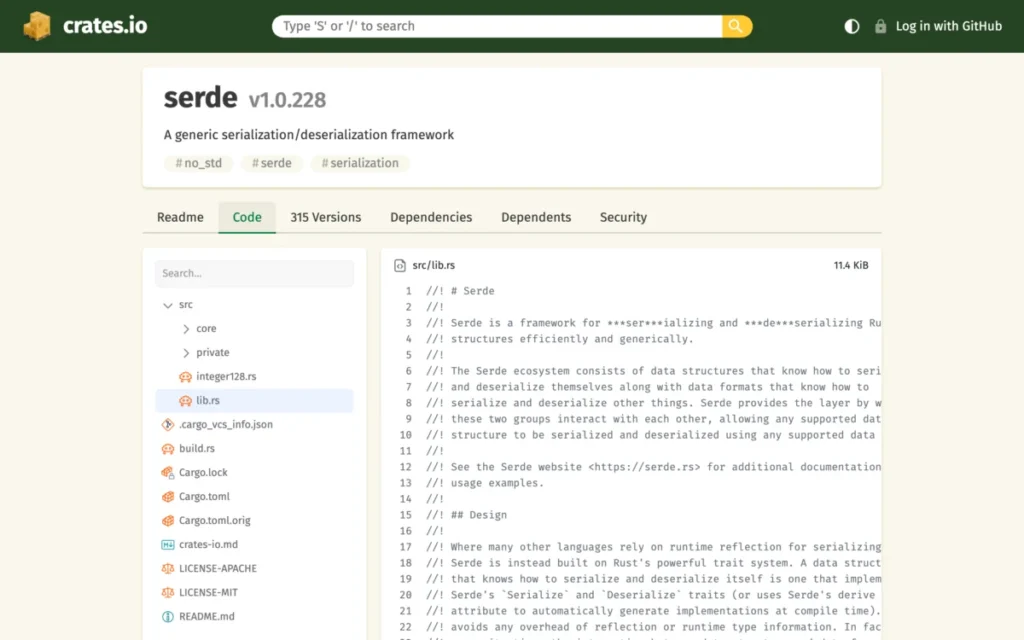
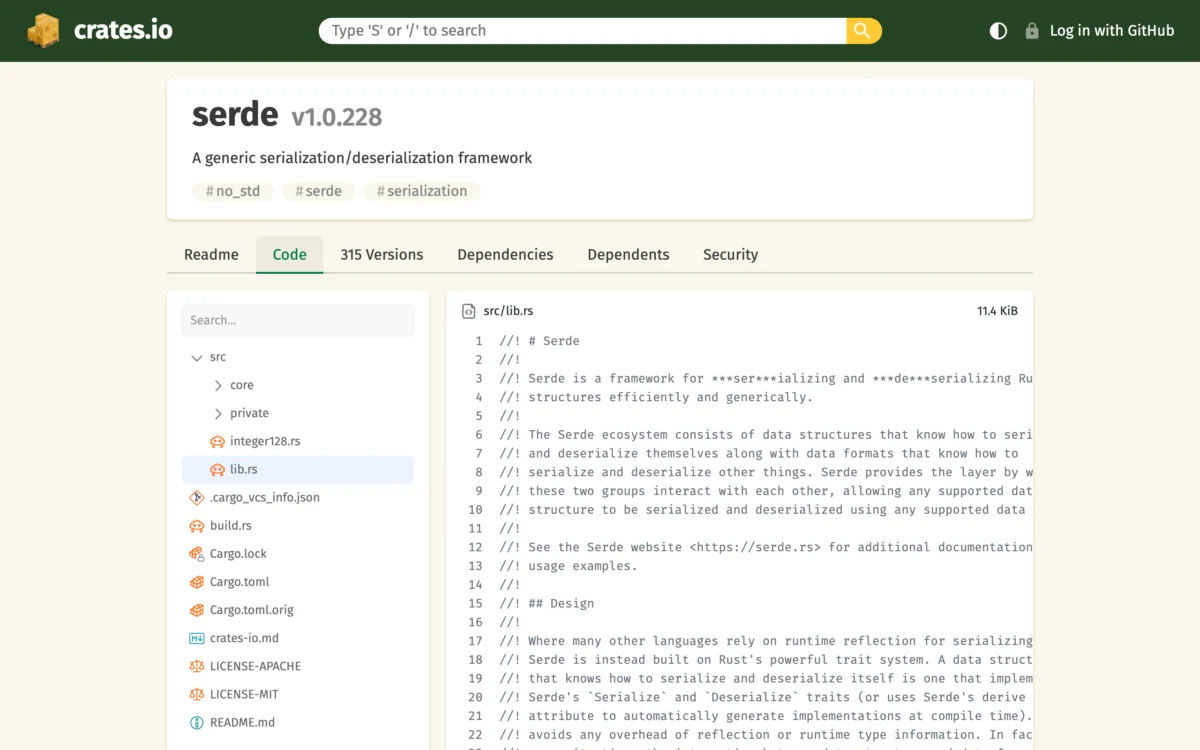
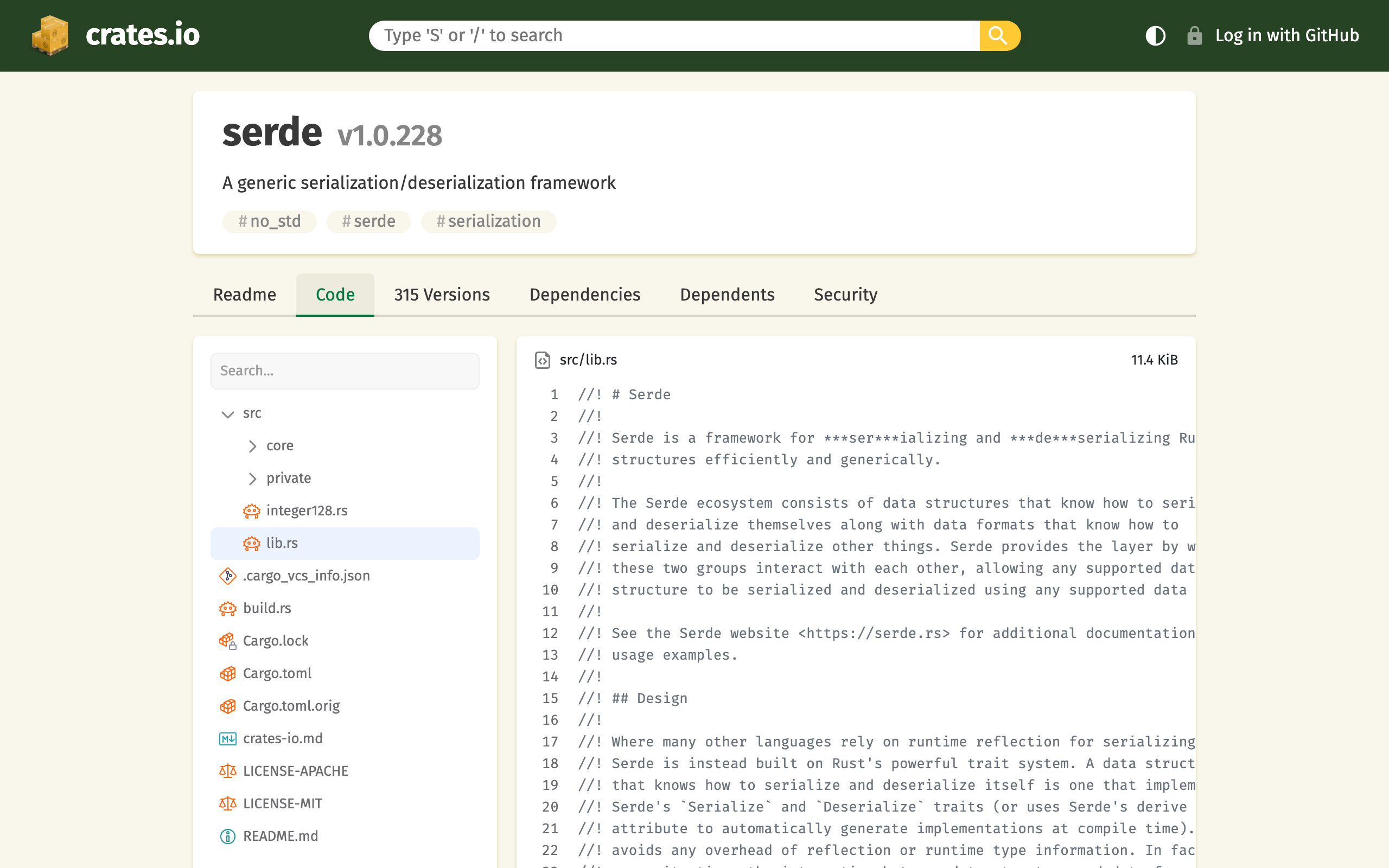
One of the most requested features in the history of crates.io has finally arrived: the integrated Source Code Viewer. Previously, developers looking to audit a dependency had to navigate away from the registry to a third-party source repository, such as GitHub or GitLab. This approach presented a fundamental blind spot: the code hosted in a repository is not always identical to the code packaged into the .crate file that cargo actually downloads and executes.
By introducing a "Code" tab directly on crate pages, the crates.io team has empowered developers to inspect the exact files contained within the published version. This is critical for security, as it exposes normalized Cargo.toml files and other build artifacts that may not exist in the source control repository but are present in the final binary-distributed package.
Architecture Behind the Viewer
The engineering behind this feature is a marvel of efficiency. Because the .crate files distributed by the registry are gzipped tarballs—which do not natively support random access—the server now performs a background process for every published version. It re-packs the content into a seekable zip archive and generates a JSON manifest.
This architecture allows the frontend to fetch only the necessary manifest and retrieve specific files via HTTP range requests. The result is a seamless, high-speed browsing experience that adds virtually no load to the primary crates.io API servers. Furthermore, the team has backfilled this data for all existing crate versions, meaning the entire history of the Rust ecosystem is now auditable via this new interface.
Decoupling Identity: Moving Beyond GitHub
A Strategic Shift in Account Management
For the entirety of its existence, crates.io has been tethered to GitHub. Signing into the registry meant signing in with GitHub, and your identity was synonymous with your GitHub handle. While this made for a low-friction start, it created a structural dependency that the Rust team identified as a limitation for future growth.
Following the acceptance of RFC #3946 in May 2026, the team has begun the complex process of untangling these two identities. The initiative aims to introduce native crates.io usernames that exist independently of any third-party provider. This is not merely a cosmetic change; it is a foundational prerequisite for the future implementation of multi-factor authentication (MFA) and the integration of alternative identity providers.
The rollout is intentionally slow and methodical. Given the security-critical nature of package registry authentication, the team is prioritizing stability over speed. Users can expect to see iterative updates regarding profile management in the coming months, eventually leading to a platform where your developer identity is decoupled from your social coding profile.
Proactive Security: Advisories and Maintenance
Protecting the Supply Chain
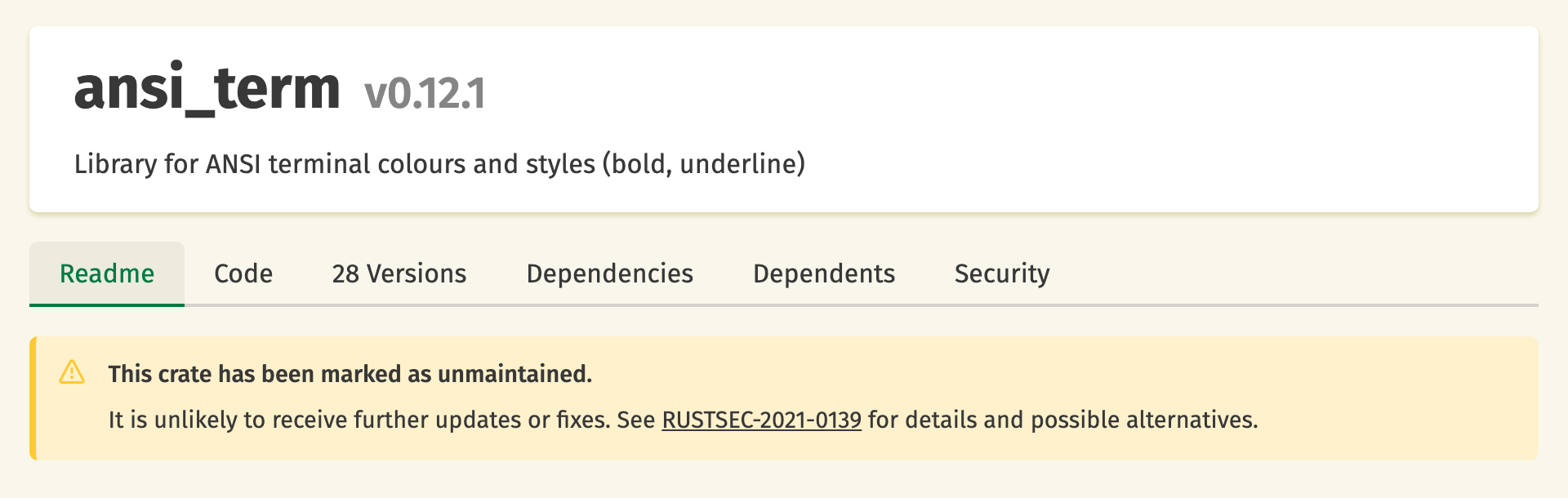
Security is the cornerstone of any language ecosystem. Building upon the "Security" tab introduced earlier this year, which pulls data from the RustSec database, the team has expanded its defensive posture. Crate pages now feature prominent warning banners for packages flagged as "unmaintained" by the RustSec community.
This serves a dual purpose: it warns developers against using abandoned code and provides a direct, contextual link to the advisory details and recommended alternatives. By surfacing this information at the exact point of consumption, the registry is successfully nudging the ecosystem toward more secure, actively maintained dependencies.
Reducing Dependency Bloat
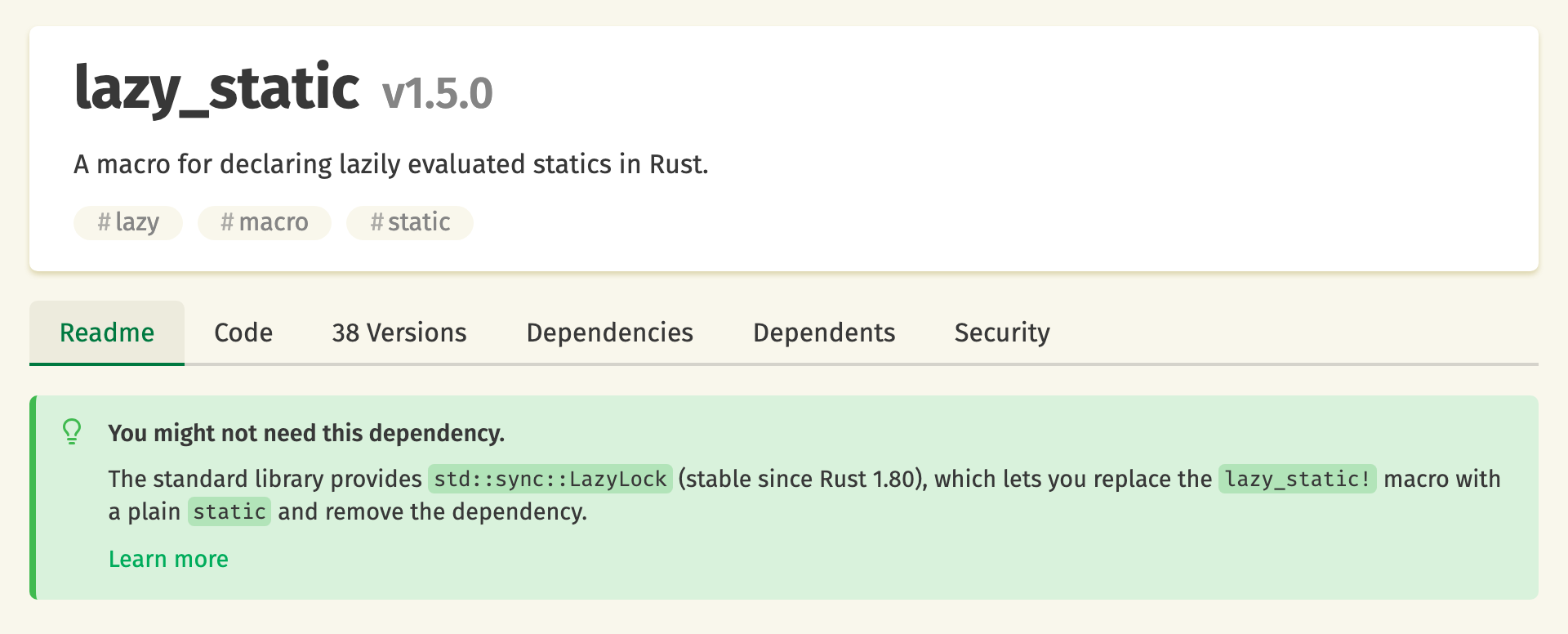
In a similar vein, the registry is now actively identifying instances where third-party crates have been rendered redundant by updates to the Rust Standard Library. A prime example is lazy_static, which has been largely superseded by std::sync::LazyLock in recent stable releases of Rust.
Crate pages for such packages now display a "You might not need this dependency" banner. This effort is supported by the new rust-lang/std-replacement-data repository, which enforces a strict inclusion policy. This ensures that only verified, stable replacements are recommended, and it provides a transparent "notice-and-comment" period for maintainers, preventing arbitrary removals or shifts in the ecosystem.
Technical Debt and Future-Proofing
The Svelte Migration
The most significant "under the hood" achievement this year was the complete transition of the crates.io frontend from Ember.js to Svelte. For years, the team relied on Ember, which served the registry well during its formative stages. However, as the demands of the frontend grew—specifically regarding complexity and load times—a transition to a more modern framework became inevitable.
The migration concluded in May 2026 after a rigorous public testing phase. The new Svelte-based frontend maintains feature parity with the previous version, ensuring that the transition was invisible to the average user. For the development team, however, the impact is profound. The codebase is now leaner, more maintainable, and significantly more approachable for new contributors. This modernization is what allowed for the rapid development of the new code viewer and sets the stage for future features like version-to-version diffing.
The Human Element: Delight in the Details
Amidst the heavy lifting of security, infrastructure, and framework migrations, the team hasn’t lost sight of the "Rust spirit." A whimsical update has been applied to the registry’s error pages: the mascot, Ferris, now tracks the user’s mouse cursor with its eyes. While purely cosmetic, these touches are vital for maintaining the community-focused, approachable culture that makes the Rust ecosystem unique. It serves as a reminder that behind the massive infrastructure of a global package registry, there is a human team dedicated to a positive user experience.
Looking Ahead: The Road to Version Diffing
As the team looks toward the second half of 2026, the focus is shifting toward even greater transparency. The infrastructure built for the source code viewer is already being adapted to support a version-to-version diff viewer.
This feature will allow developers to click a button and see a line-by-line comparison of code changes between two published versions of a crate. Being able to audit exactly what changed in a dependency—without needing to clone repositories or run local diff tools—will be a game-changer for supply chain security.
Summary of Recent Developments
| Feature | Status | Primary Benefit |
|---|---|---|
| Source Code Viewer | Live | Increased transparency and security auditing. |
| Identity Decoupling | In Progress | Future-proofing auth and provider flexibility. |
| Maintenance Banners | Live | Reducing usage of abandoned/deprecated crates. |
| Svelte Migration | Completed | Faster iteration and easier contribution. |
| Version Diffing | In Development | Granular auditability between releases. |
Final Thoughts and Community Feedback
The progress made by the crates.io team over the last six months is a testament to the health and maturity of the Rust ecosystem. By balancing radical infrastructure improvements—like the frontend framework migration—with practical, high-impact security features, the team is ensuring that Rust remains the preferred language for modern, secure systems development.
The team continues to encourage active participation from the community. Whether through contributing to the std-replacement-data repository or providing feedback on the ongoing identity migration, user involvement is what keeps crates.io resilient. Discussions and feedback are actively monitored on the Rust Zulip and the GitHub repository. As the ecosystem grows, so too does the need for a registry that is as robust as the language it serves. The team remains committed to this goal, with more updates expected in the months to come.