Streamlining Security: AWS Revolutionizes Certificate Management with Native ACME Support
In an era where digital trust is the bedrock of global commerce, the lifecycle management of Transport Layer Security (TLS) certificates has become an increasingly daunting task for infrastructure engineers and security professionals. Today, Amazon Web Services (AWS) has announced a significant evolution in its security suite: native support for the Automatic Certificate Management Environment (ACME) protocol within AWS Certificate Manager (ACM).
This integration marks a paradigm shift, moving away from fragmented, manual, or third-party-dependent certificate management toward a centralized, automated, and policy-driven ecosystem. By enabling ACME support, AWS is providing organizations with the tools to meet the tightening regulatory timelines mandated by the CA/Browser Forum, which will see certificate validity periods shrink to 100 days by 2027 and a mere 47 days by 2029.

The Core Facts: Bridging Automation and Governance
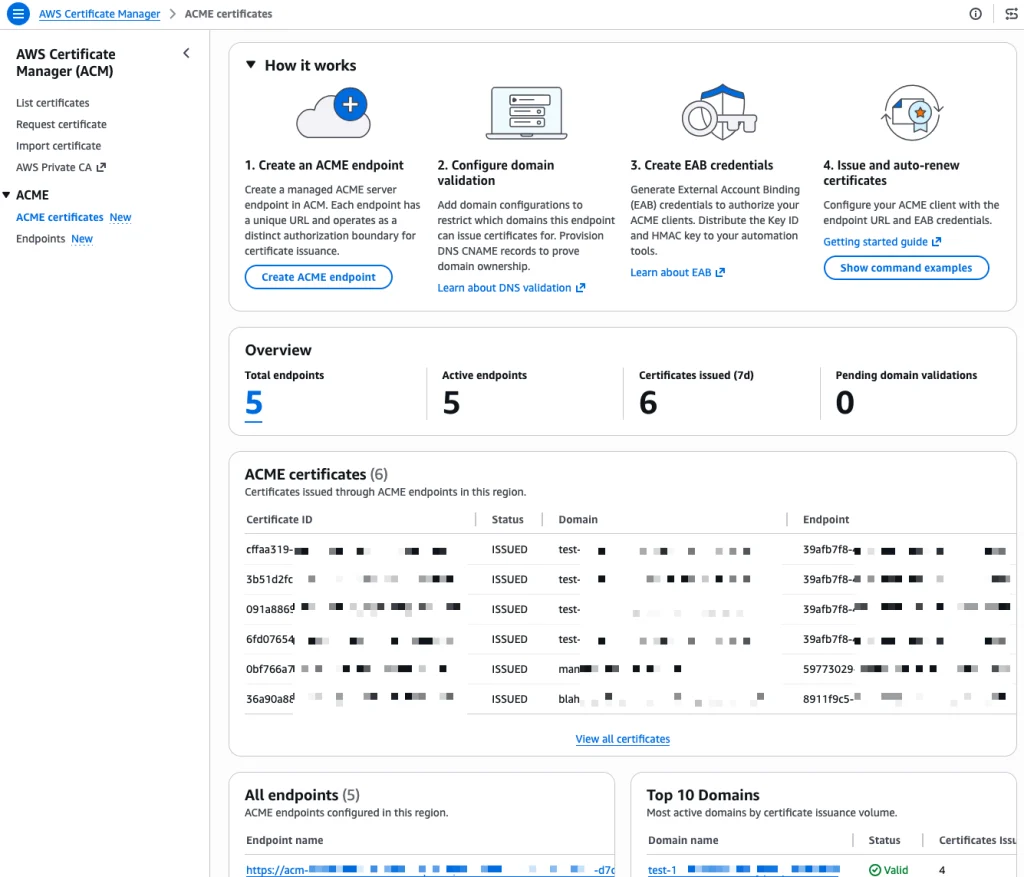
The introduction of ACME support into ACM allows users to leverage the industry-standard protocol for requesting, renewing, and revoking TLS certificates without human intervention. By deploying a managed ACME server endpoint within ACM, AWS enables compatibility with any ACMEv2-compliant client, including industry staples such as Certbot, cert-manager for Kubernetes, and acme.sh.
Key Technical Capabilities
- Managed Endpoints: Organizations can now spin up dedicated ACME endpoints tailored to specific business units or applications.
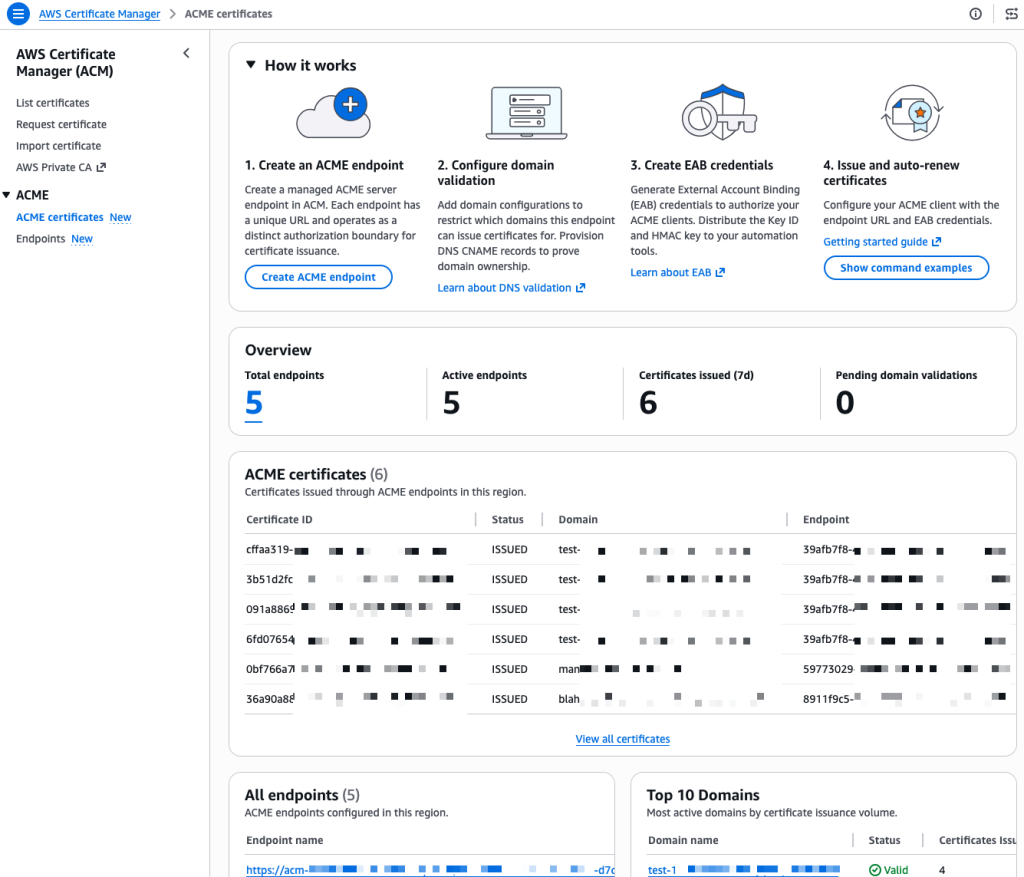
- Centralized Visibility: For the first time, certificates issued via ACME appear alongside those requested through the AWS Management Console or API, providing a "single pane of glass" for PKI administrators.
- Granular Access Control: By binding AWS Identity and Access Management (IAM) roles to ACME accounts, administrators can enforce strict controls on which domains a client is authorized to request.
- Automated Validation: Through deep integration with Amazon Route 53, the system automates the DNS-01 challenge process, eliminating the need for developers to manually manage DNS records.
Chronology: The Shift Toward Shorter Validity
The move toward automation is not merely an operational preference—it is a necessity driven by industry standards.

- The Pre-ACME Era: Historically, organizations relied on a mix of manual tracking and disparate third-party tools. This often resulted in "certificate blindness," where expired certificates led to catastrophic service outages and broken customer trust.
- The Rise of ACME: Originally popularized by Let’s Encrypt, the ACME protocol transformed the internet by automating the issuance process. However, integrating this with enterprise-grade AWS workflows often meant running external services, creating a fragmented security perimeter.
- The Regulatory Push: The CA/Browser Forum has aggressively shortened the lifespan of public TLS certificates. With the 100-day limit approaching in 2027 and the 47-day limit in 2029, manual renewal is effectively dead.
- The AWS Integration: Following years of customer feedback, AWS has finally unified the convenience of ACME with the rigorous security and auditability of the AWS environment.
Supporting Data: Why Centralization Matters
The operational overhead of managing certificates at scale is significant. In decentralized environments, PKI teams struggle to answer basic questions: Who requested this certificate? Which domain does it cover? When does it expire?
With the new ACME-ACM integration, AWS provides a comprehensive audit trail:
- AWS CloudTrail: Every certificate issuance request is logged, ensuring complete auditability for compliance teams.
- Amazon CloudWatch: Operational metrics allow teams to monitor the health and throughput of their certificate lifecycle processes.
- Unified Search: Administrators can query the status of all certificates, regardless of the issuance method, directly within the ACM dashboard.
This architectural shift effectively replaces the need for "shadow IT" certificate solutions, which often lack the enterprise-grade monitoring capabilities required by highly regulated industries.
Implications for PKI Administrators and Developers
The introduction of this service creates a distinct separation of concerns that benefits both security teams and application developers.
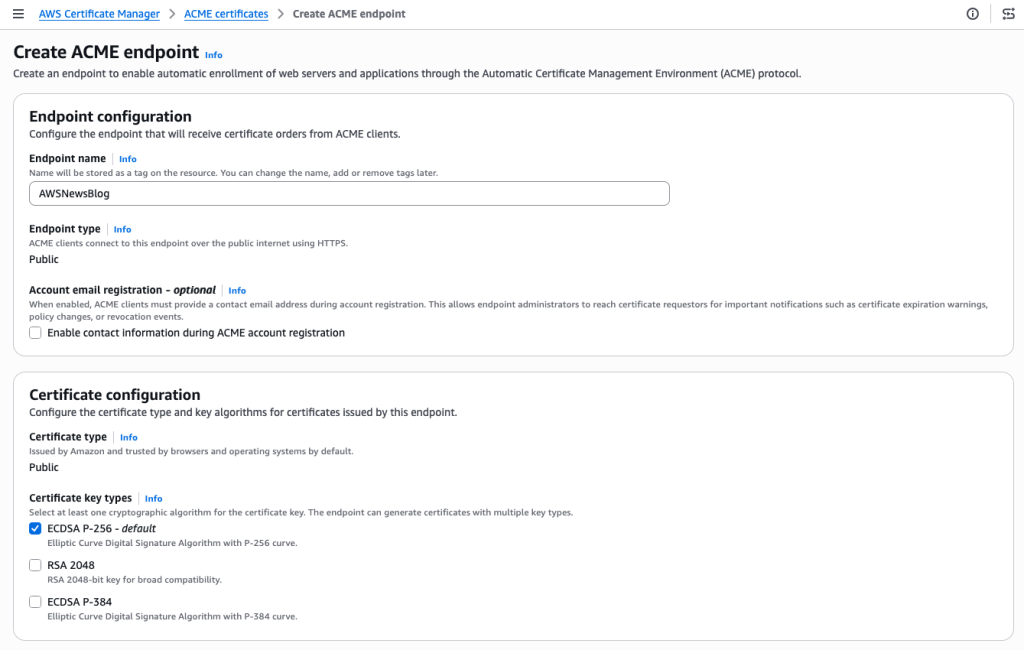
For the PKI Administrator
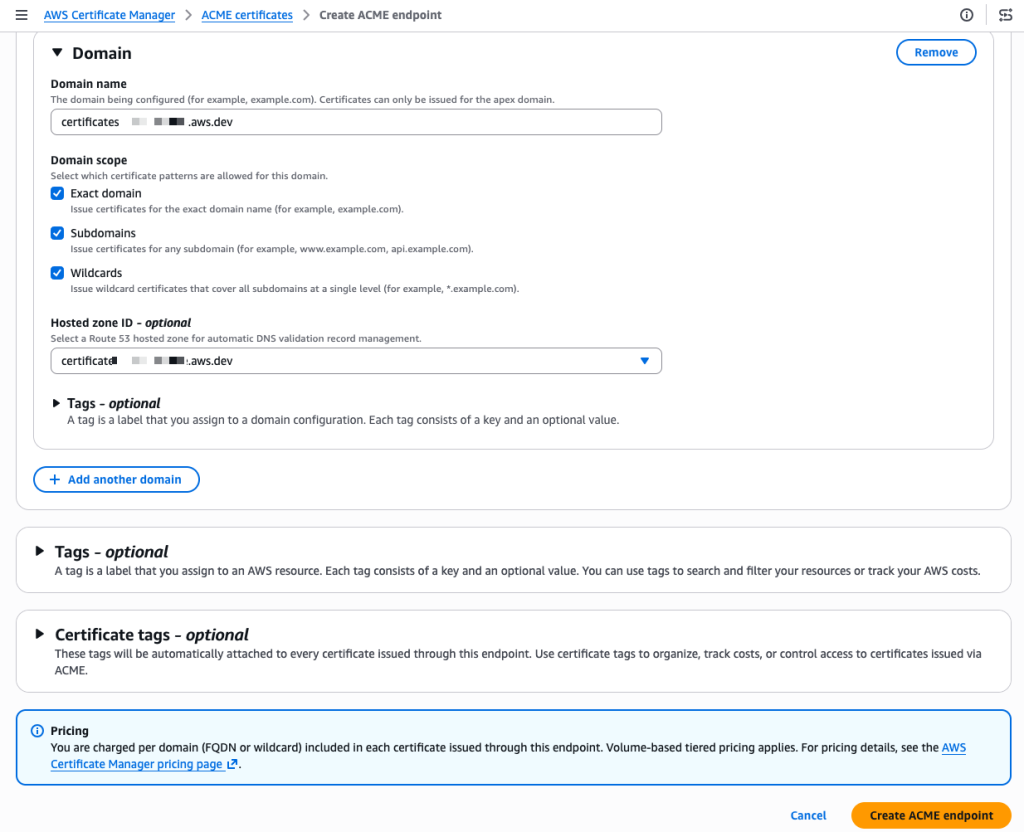
The administrator now acts as a policy architect. By configuring domain scopes at the endpoint level, they can determine if a client is permitted to request "Exact domain" certificates, "Subdomains," or "Wildcards." This prevents developers from accidentally requesting broad, over-privileged wildcard certificates that could compromise the security posture of the entire domain.
For the Application Developer
The developer’s workflow is simplified to a single configuration step. Once the PKI team has established the endpoint and provided the External Account Binding (EAB) credentials, the developer simply points their existing ACME client (such as Certbot) at the AWS endpoint. The heavy lifting of DNS validation is handled by the platform, meaning developers no longer need access to sensitive DNS management credentials.
Deep Dive: How the Workflow Functions
Setting up the new system involves a straightforward, repeatable process:
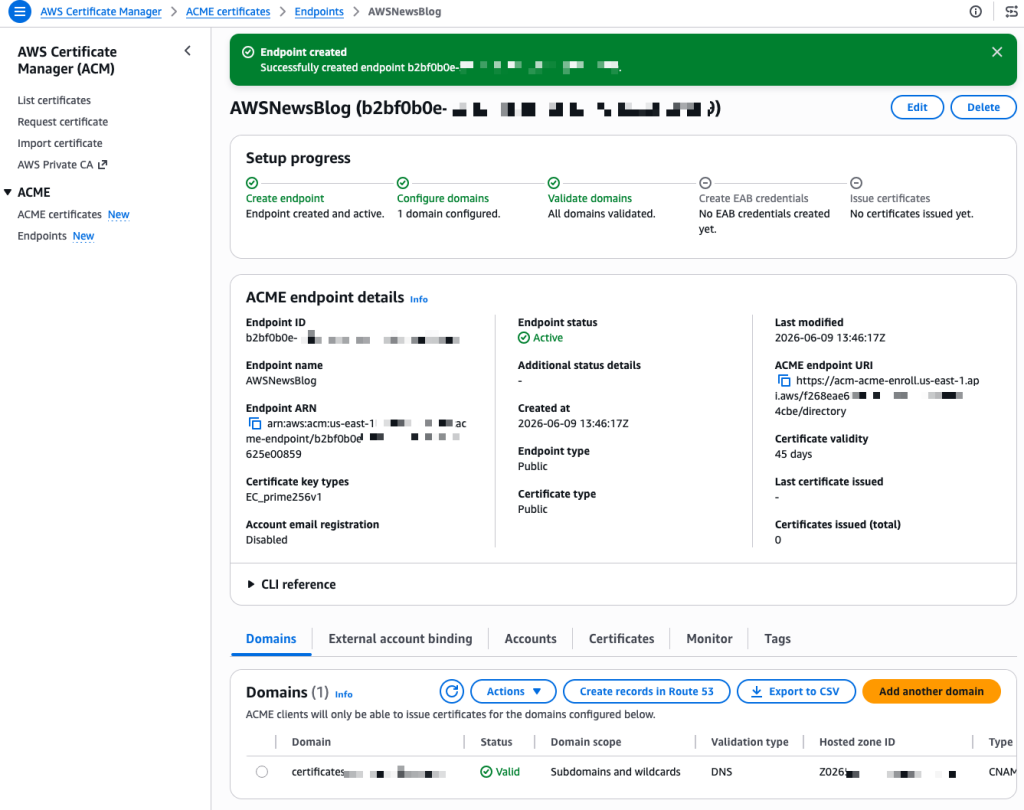
- Endpoint Creation: In the ACM console, the user defines an ACME endpoint, choosing between Public or Private types.
- Domain Scoping: The admin selects the allowed patterns for certificate requests. This acts as a protective guardrail for the domain.
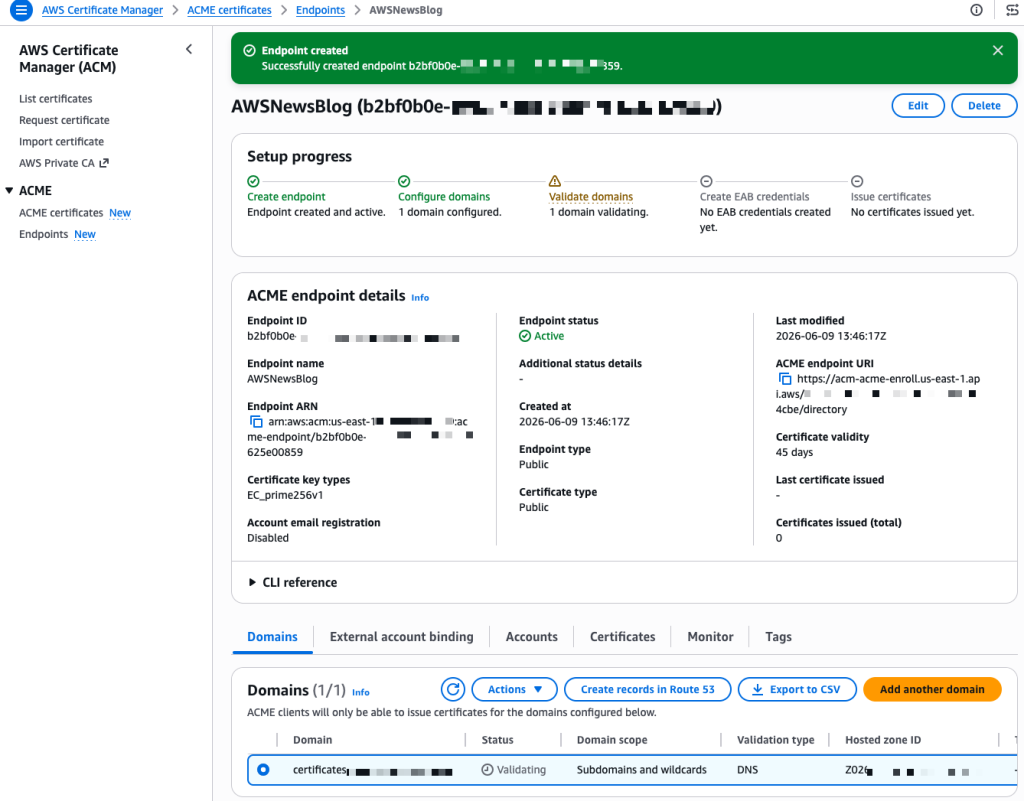
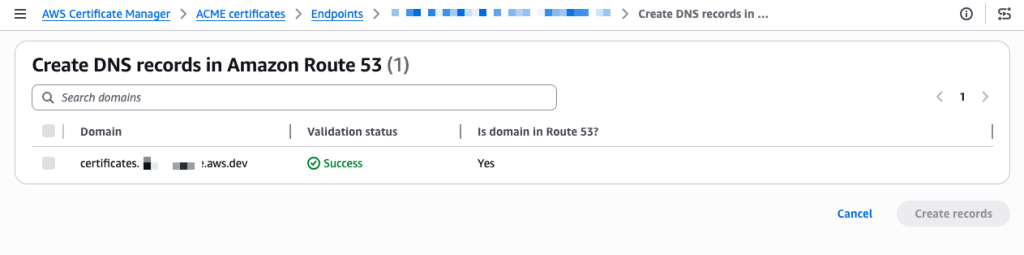
- DNS Validation: Through integration with Route 53, ACM manages the CNAME records required for domain verification automatically.
- EAB Credential Generation: The admin generates a Key ID and an HMAC key. These are the "passports" provided to ACME clients.
- Client Execution: The developer runs the command-line client, using the EAB credentials to authenticate. The certificate is issued, signed by Amazon Trust Services, and ready for immediate deployment.
Official Perspective and Future Outlook
While AWS has not issued a singular, high-profile press release for this specific feature, the documentation and technical guidance provided by AWS engineers highlight a clear strategic intent. The company is positioning ACM as the definitive home for certificate lifecycle management in the cloud.
"By providing a managed, scalable, and secure ACME server," noted one AWS developer advocate, "we are removing the final barrier to universal certificate automation."
The service is currently available in all commercial AWS Regions, with roadmaps in place to expand availability to the AWS GovCloud (US), China Regions, and the AWS European Sovereign Cloud. This geographic rollout ensures that even the most strictly regulated sectors—such as government, healthcare, and finance—can adopt the standard.
Economic Impact
The pricing model is designed for scale. Costs are calculated based on the number of domains included in each certificate at the time of issuance, with clear distinctions between standard domains and wildcards. The inclusion of volume-based tiers ensures that large enterprises with thousands of microservices are not penalized for automating their security.
Conclusion: A New Standard for Digital Identity
The integration of ACME into AWS Certificate Manager is more than just a convenience feature; it is an infrastructure-wide upgrade to the internet’s security architecture. By standardizing the way certificates are requested and managed, AWS is enabling organizations to move faster while simultaneously reducing the risk of human error.
As the industry marches toward the 47-day certificate validity era, the ability to automate, monitor, and govern TLS certificates will become a core competency of any successful engineering organization. With this release, AWS has handed its customers the keys to that future, providing a robust, scalable, and fully integrated solution that meets the demands of modern, high-velocity cloud development.
For security professionals, the task is no longer about fighting the manual renewal battle; it is about building the policies that govern the automation. In the world of cloud-native infrastructure, this is the final step toward truly "set it and forget it" security.