The 2.5KB Rebellion: How an Ex-Microsoft Engineer Proved Modern Software Bloat is Optional
In the modern era of computing, the definition of a "simple utility" has shifted dramatically. Where once a text editor was a lightweight bridge between a user’s thoughts and a saved file, today’s standard-bearer—Microsoft Notepad—has transformed into a sprawling ecosystem of cloud-connected services, AI-driven suggestions, and mandatory telemetry. For many, this evolution represents a frustrating "bloat-ware" creep.
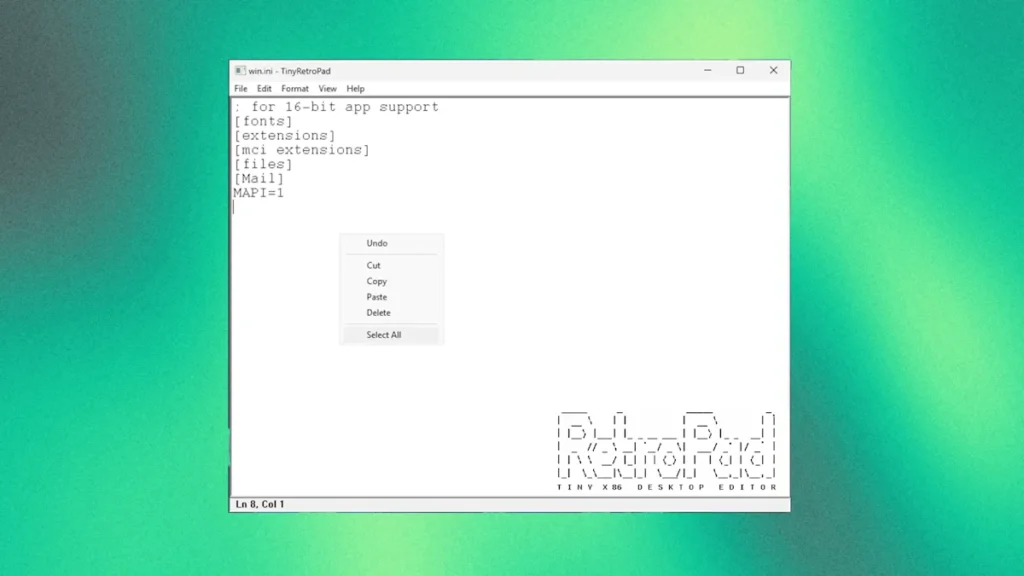
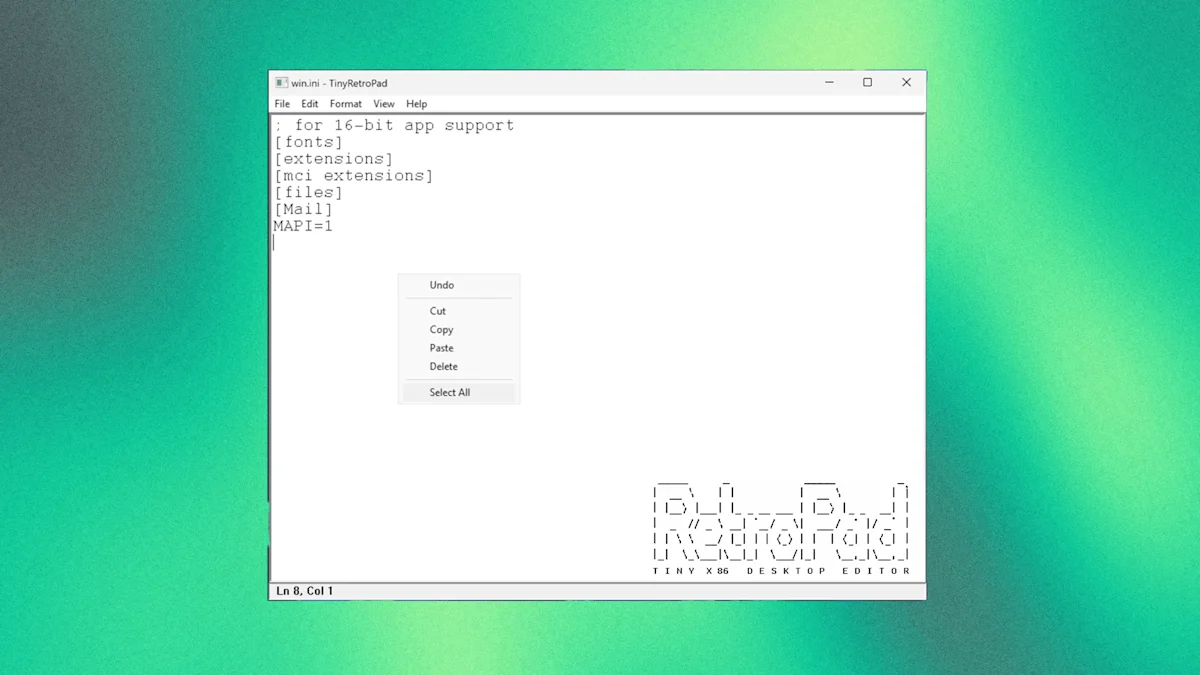
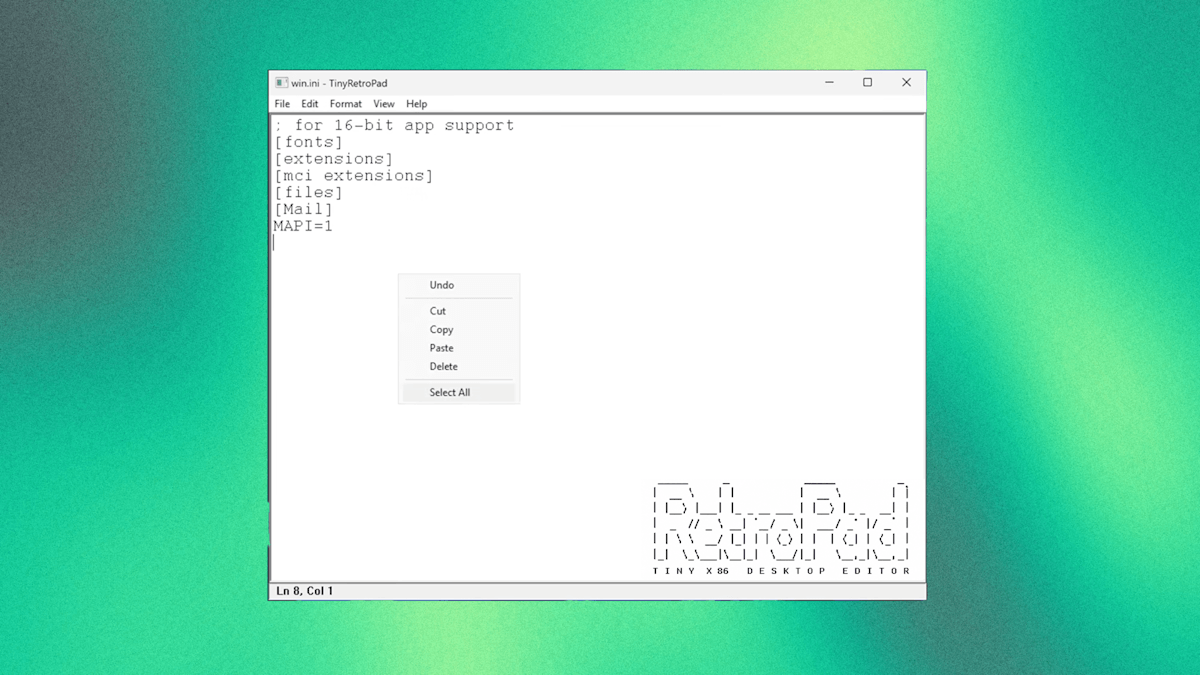
However, David "Dave" Plummer, the legendary former Microsoft engineer credited with creating the original Windows Task Manager, has delivered a masterclass in minimalist software engineering. His latest project, TinyRetroPad, is a fully functional Notepad clone that occupies a mere 2.5KB of storage. In an industry obsessed with feature-parity and cloud integration, Plummer’s project serves as a stark, provocative reminder: the fundamental requirements of software are often lost in the pursuit of "innovation."
The Evolution of the "Bloat": Notepad’s Identity Crisis
For decades, Notepad was the quintessential "no-frills" application. It was the tool you opened when you needed to strip formatting from a copied paragraph or quickly jot down a configuration snippet. It was fast, local, and entirely devoid of distractions.
In recent years, Microsoft has pivoted, treating Notepad as a flagship for its AI-integrated software suite. The application now features deep Markdown support, cloud-tied credits, and complex account requirements. The transition is profound: users are now prompted to sign in with a Microsoft account simply to monitor their monthly "AI credit" balance.
While these features provide value to a specific segment of users, they impose a structural cost on the application. The software is no longer a localized utility; it is a networked service. This transformation has sparked a quiet, growing resentment among power users who argue that the application’s core mission—opening and editing text files—has been obscured by an unnecessary layer of modern "slop."
Chronology: Tracing the Lineage of TinyRetroPad
TinyRetroPad did not materialize in a vacuum. It is the culmination of a long-standing personal mission by Plummer to explore the boundaries of x86 assembly and Windows API efficiency.
1. The Genesis: tiny.asm
Years ago, Plummer authored tiny.asm (also known as HelloAssembly). It was a foundational experiment designed to demonstrate how little code was truly required to interface with the Windows kernel. It served as a proof-of-concept for minimalist programming, stripping away the overhead of high-level languages like C++ or C#.
2. The Middle Era: Dave’s Tiny Editor (DTE)
Building upon the logic established in tiny.asm, Plummer collaborated on Dave’s Tiny Editor (DTE). DTE refined the approach, proving that an editor could remain functional while staying under the radar of typical memory-intensive application standards.

3. The Current Milestone: TinyRetroPad
Released as an open-source project on GitHub under the Apache 2.0 license, TinyRetroPad is the most refined iteration of this lineage. By leveraging the built-in Windows component RICHEDIT50W—a robust text-editing engine that has been native to Windows for years—Plummer was able to bypass the need for custom, heavy-duty rendering code. The result is an executable that is nearly microscopic by modern standards, yet offers a full menu bar, font selection, find-and-replace, and native print support.
The Engineering Behind the 2.5KB Miracle
To achieve such a minuscule footprint, Plummer employed a combination of low-level assembly and advanced optimization techniques.
Leveraging Windows Native Components
A critical misconception about TinyRetroPad is that Plummer "wrote a text editor from scratch." He did not. Instead, he recognized that the Windows operating system already contains powerful, pre-compiled rendering engines. By "wrapping" the RICHEDIT50W component, he offloaded the heavy lifting of text processing to the OS, allowing his own code to function merely as a lightweight interface controller.
The Role of MASM and Crinkler
The build process itself is a technical marvel. The code was written using the Microsoft Macro Assembler (MASM), an x86 assembler that allows for direct manipulation of machine code. To shrink the final output further, Plummer utilized Crinkler, a highly specialized compressor designed specifically for tiny Windows executables. Crinkler is often used in the "demoscene" community, where engineers compete to create complex visual and functional software within extreme byte constraints.
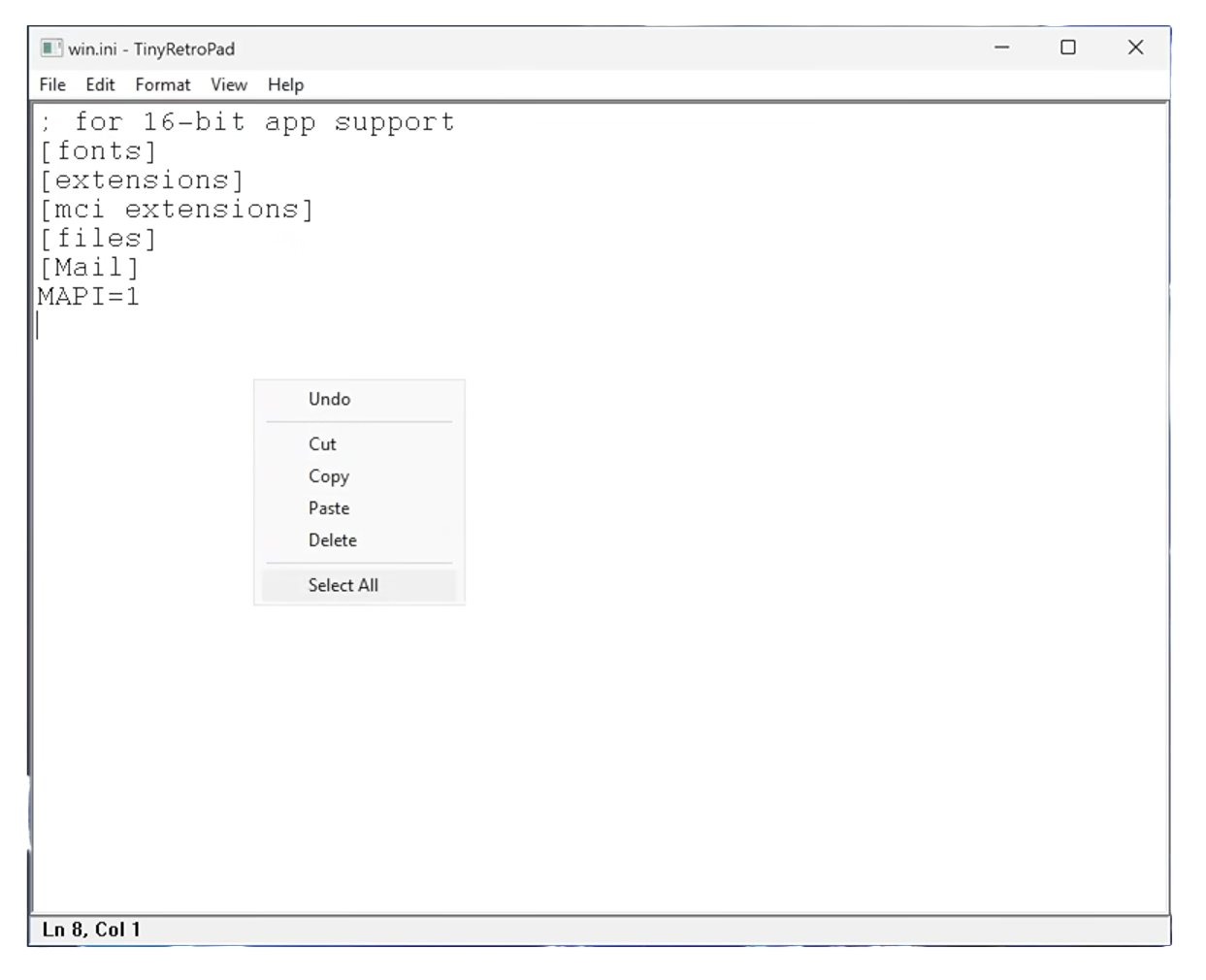
The resulting executable is not just small; it is efficient. It requires no background services, no telemetry "phone-home" functions, and no persistent cloud handshake. It simply opens when clicked and closes when finished.
Implications: The Linux Perspective
While the Windows community reacts with a mix of nostalgia and shock to the existence of a 2.5KB editor, the Linux ecosystem views this as a standard baseline.
For Linux users, the debate over "bloat" was settled long ago. Desktop environments like GNOME and KDE provide users with lightweight, efficient text editors—GNOME Text Editor and Kate—that are performant, feature-rich, and entirely independent of cloud accounts or AI subscriptions. Projects like Geany and Sublime Text have occupied the middle ground between simplicity and professional utility for years, all without sacrificing the user’s autonomy.
The existence of TinyRetroPad acts as a mirror to the Windows ecosystem. It highlights that the "bloat" seen in modern Windows apps is a design choice, not a technical necessity. When an ex-Microsoft engineer can recreate the core functionality of a flagship product in a fraction of a percent of the original’s file size, the argument for mandatory cloud-tethered features loses its technical justification.

The Philosophical Divide: Features vs. Utility
The emergence of TinyRetroPad reignites a fundamental debate in software engineering: What is the purpose of an application?
Microsoft’s current strategy treats the desktop as a gateway to its wider ecosystem. In this model, every application is a touchpoint for AI, data collection, and cloud subscription management. From a business perspective, this is a logical, revenue-generating path. From a user-experience perspective, however, it is an intrusion.
Plummer’s project challenges the premise that software must constantly evolve in complexity. By stripping away the bells and whistles, TinyRetroPad forces the user to confront the efficiency of their own tools. It posits that there is a quiet, profound power in software that "stays in its lane."
Official Responses and Community Reception
While Microsoft has not issued a formal statement regarding TinyRetroPad, the project has gained significant traction on platforms like GitHub and Reddit. The developer community has largely hailed it as a "digital protest." Many users have begun to fork the code, testing its limits, and even contributing their own optimizations to see if the 2.5KB footprint can be reduced even further.
The project’s Apache 2.0 license ensures that it will remain a permanent fixture in the open-source landscape. Whether or not it becomes a daily driver for the average user, its presence ensures that the debate over software minimalism will continue.
Conclusion: A Reminder of Potential
TinyRetroPad is not a threat to Notepad; it is a correction. It does not replace the utility of a modern, feature-heavy editor for a professional developer or a power user who requires AI-assisted coding or cloud synchronization. However, it serves as a critical proof-of-concept for the rest of us.
It proves that the machines we use every day are capable of much more than we are currently allowing them to do. When software is stripped of telemetry, forced cloud-login requirements, and unnecessary UI fluff, it regains its speed, its security, and its clarity.
Dave Plummer has handed the Windows crowd a mirror. Whether they choose to look at what software could be—rather than what it has become—remains to be seen. In an age of gigabyte-sized updates and constant background processes, the 2.5KB rebellion is perhaps the most refreshing development in tech this year. It is a humble, quiet, and exceptionally small reminder that, in the world of computing, less is very often more.