The Agentic Evolution: Inside the AWS Summit New York City and the Future of Cloud Innovation
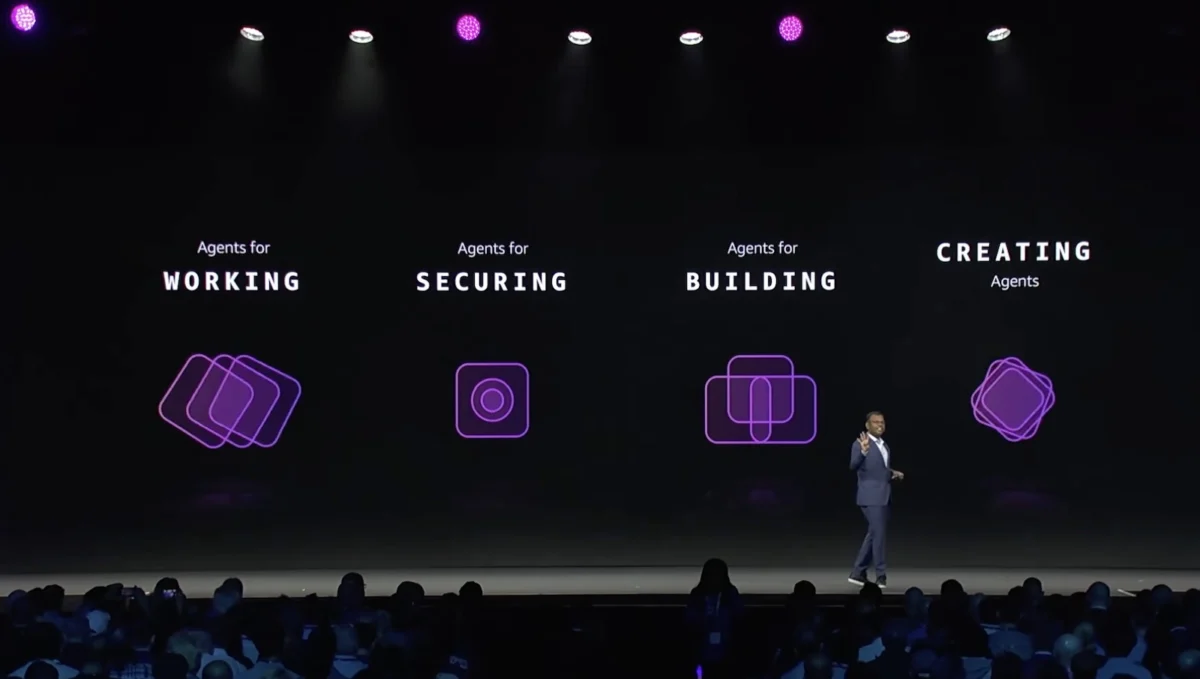
Last week, the tech industry turned its collective gaze toward the Javits Center in New York City, where Amazon Web Services (AWS) hosted its annual AWS Summit. The event, which drew thousands of builders, cloud architects, and corporate decision-makers, served as the launchpad for a fundamental shift in how the industry approaches artificial intelligence.
At the heart of the proceedings was a clear, unified message delivered by Dr. Swami Sivasubramanian, Vice President of Agentic AI at AWS. The core thesis of this year’s summit was not merely about generative AI—a topic that has dominated headlines for two years—but about the transition toward "Agentic AI." These are systems designed not just to create content, but to take action, compound value over time, and execute complex workflows with minimal human oversight.
The Core Thesis: Agents That Compound Value
In his keynote address, Dr. Sivasubramanian outlined a vision for the future of cloud computing that moves beyond the static chatbot. "We are moving from an era of generative AI, where models provide answers, to an era of Agentic AI, where systems provide outcomes," he remarked.
The fundamental shift here is the concept of "compounding value." Traditional software provides value linearly; it does what it is programmed to do. Agentic AI, however, leverages the feedback loops inherent in AWS infrastructure to learn, refine, and optimize processes. By integrating Large Language Models (LLMs) with existing enterprise toolsets and data pipelines, AWS is positioning its platform as the primary operating system for autonomous agents.
This shift has significant implications for how businesses will architect their future. Instead of building monolithic applications, developers are increasingly looking toward modular agent architectures that can retrieve data, perform API calls, and maintain state over long-running operations.
Chronology of the Summit: A Day of Innovation
The summit functioned as a high-velocity environment for announcements. The day began with a series of technical deep dives into the latest updates for Amazon Bedrock, the company’s flagship service for building and scaling generative AI applications.
- Morning Session: The focus was on infrastructure optimization. Engineers showcased new integration patterns for Amazon SageMaker and Bedrock that reduce latency for real-time agentic decision-making.
- Mid-Day Keynote: Dr. Sivasubramanian took the stage to unveil a new stack of AI capabilities specifically engineered for enterprise security and data privacy. The announcement emphasized "responsible agency," ensuring that agents operating on sensitive corporate data adhere to strict governance protocols.
- Afternoon Workshops: The event transitioned into hands-on labs where developers were introduced to new orchestration frameworks. These frameworks allow agents to manage multi-step workflows, such as automated ticket resolution, supply chain reconciliation, and personalized customer outreach, without requiring constant human intervention.
Supporting Data: The Economic and Technical Case for AI Agents
The move toward agentic systems is supported by a growing body of evidence regarding the efficiency gains of automated workflows. AWS internal studies presented at the summit highlighted that organizations adopting agent-based architectures saw a 35% reduction in manual oversight requirements for complex data analysis tasks.
Furthermore, the integration of these agents into the existing AWS ecosystem provides a "flywheel effect." As more data flows through these agents, the models are refined using Reinforcement Learning from Human Feedback (RLHF) at a faster rate than ever before. This data-driven approach to model refinement ensures that agents become more accurate, more efficient, and more context-aware the longer they operate within an organization’s environment.
Official Responses and Strategic Direction
The leadership at AWS has been clear about their strategy: they are not just providing the models; they are providing the "plumbing" that makes those models viable for high-stakes enterprise use.
"Our goal is to remove the friction from AI adoption," said a senior AWS spokesperson during a roundtable session. "By providing the infrastructure, the security layers, and the orchestration tools, we allow developers to focus on the business logic of their agents rather than the underlying compute constraints."
This strategy directly addresses the concerns of many enterprise customers who have struggled with the "POC Purgatory"—the phase where generative AI prototypes fail to make the transition to production-grade, value-generating assets. By focusing on Agentic AI, AWS is providing the framework necessary to bridge that gap.
Implications: The Future of Cloud Architecture
The shift to agentic systems is likely to have a profound impact on the future of the cloud. Here are the key areas where we expect to see the most disruption:
1. The Death of the "Static Application"
We are entering a phase where software will no longer be static. Applications will become dynamic entities that evolve based on user intent and situational context. This will require a fundamental rethink of CI/CD pipelines, security monitoring, and resource allocation within AWS.
2. Democratization of Complex Workflows
Tasks that once required a team of data analysts and software engineers—such as real-time market sentiment analysis or automated regulatory compliance monitoring—are becoming accessible through agentic templates. This democratizes high-level cognitive work, allowing smaller teams to compete with larger enterprises.
3. Security and Governance
As agents gain the ability to "act," the security perimeter must expand. AWS is responding to this with identity-based access controls for agents, ensuring that even if an agent is autonomous, its actions are always logged, audited, and confined to specific permission sets. This "Guardrail Architecture" is becoming the gold standard for enterprise AI deployment.
Price Reductions and Operational Efficiency
A hallmark of AWS’s strategy has always been the "virtuous cycle" of price reductions. By passing on the savings from operational efficiencies and hardware improvements, AWS ensures that the barrier to entry for these high-compute AI tasks remains low. During the summit, the company highlighted several new price reductions across their storage and compute tiers, specifically designed to support the heavy data-processing requirements of AI agent training and inference.

These reductions are not just marketing; they are strategic. By making it cheaper to run large-scale AI workloads, AWS is incentivizing the very behaviors—massive data ingestion and high-frequency model updates—that solidify their position as the dominant provider of AI-ready cloud infrastructure.
Looking Ahead: The Builder’s Roadmap
For developers, the message from the summit is clear: now is the time to build. The tools are available, the infrastructure is scaling, and the focus is shifting from "how do we generate text?" to "how do we drive outcomes?"
AWS is encouraging developers to plug into the AWS Builder Center, a community-driven resource designed to help engineers navigate this transition. Whether through upcoming virtual events, community days, or hands-on certification paths, the goal is to upskill the workforce to meet the demands of the agentic era.
Conclusion
The AWS Summit in New York City was more than a trade show; it was a manifesto for the next decade of computing. As the industry moves past the novelty of generative AI, the focus on "agents that compound value" represents a shift toward maturity. The infrastructure is being laid, the security protocols are being hardened, and the path toward a future of autonomous, value-driven software is becoming clearer.
As Channy and the AWS team continue to track these developments in the Weekly Roundup, it is evident that the pace of innovation is not slowing down. For those who can leverage these new tools effectively, the potential for compounding growth is significant. We invite our readers to stay tuned to the official AWS announcements page and continue exploring the resources provided by the Builder Center.
The era of the agent is here, and the cloud is the engine powering it forward.